
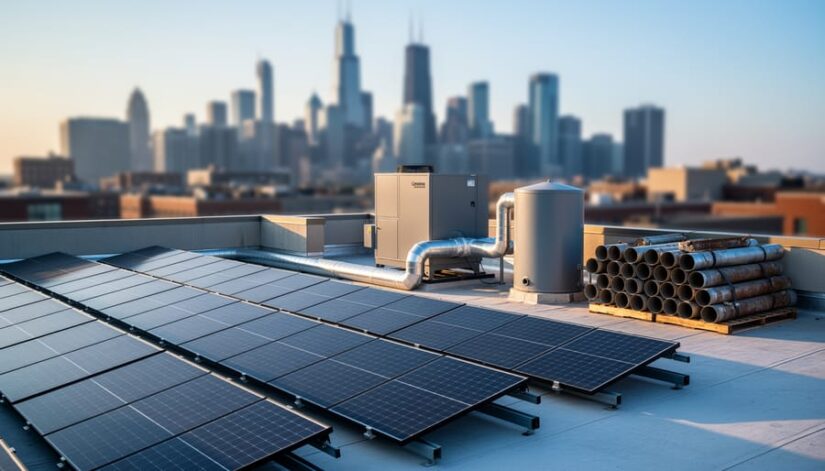
How Circular Economy Practices Slash Your Energy Bills and Carbon Footprint
Every year, businesses and property owners discard materials that could power operations, reduce energy bills, and slash carbon footprints. The circular economy transforms this waste into opportunity by keeping resources in use longer, designing out waste from the start, and regenerating natural systems. For Illinois property owners paying premium energy costs during harsh winters and humid summers, this approach delivers measurable savings: reusing materials eliminates the energy-intensive manufacturing of replacements, while recovering heat from processes that typically waste it can cut heating expenses by 30% or more.
The connection between circular practices and energy efficiency runs deeper than simple recycling. When you extend equipment lifespan through maintenance rather than replacement, you avoid the embedded energy costs of manufacturing, shipping, and installing new systems. When you capture waste heat from refrigeration units to warm water, you’re implementing circular principles that directly reduce grid dependence. These strategies align naturally with renewable energy adoption, creating compounding benefits that traditional linear “take-make-dispose” models cannot match.
Illinois businesses and homeowners have particular advantages in pursuing circular economy practices. The state’s robust manufacturing sector provides access to reclaimed materials, while local expertise in renewable energy integration makes transitioning to circular systems more accessible than ever. Understanding how circular economy principles reduce energy waste while supporting sustainability goals isn’t theoretical—it’s a practical pathway to lower operating costs and environmental impact that starts with examining where your energy and resources currently go.
What Circular Economy Actually Means for Energy Use
The circular economy represents a fundamental shift in how we think about resources and energy. Unlike the traditional linear economy—where we take resources, make products, use them, and dispose of them—a circular economy keeps materials and products in use for as long as possible. Think of it as creating a closed loop rather than a straight line ending in a landfill.
This approach directly impacts energy consumption in ways that matter to Illinois homeowners and businesses. Every time we extract raw materials, manufacture new products, and transport them to market, we use substantial amounts of energy. When we throw these items away and repeat the process, we waste that embedded energy. The circular economy breaks this wasteful cycle.
Consider a practical example: manufacturing a new smartphone requires significant energy for mining rare earth metals, processing materials, and assembly. If that phone gets replaced after two years and discarded, all that energy investment is lost. However, repairing, refurbishing, or recycling that phone extends its useful life and preserves the energy already invested in its creation.
For Illinois property owners, this principle applies to everything from building materials to equipment. When a local business chooses refurbished office furniture instead of buying new, they save the energy that would have gone into manufacturing replacement pieces. When homeowners repair appliances rather than replacing them, they avoid the substantial energy costs of production and shipping.
The connection to energy efficiency becomes even clearer with larger investments. Solar panels exemplify circular thinking—they generate clean energy for 25 years or more, then their components can be recycled into new products. This extended lifecycle maximizes energy return while minimizing waste.
Understanding circular economy principles helps you make informed decisions that reduce both your energy bills and environmental impact. By keeping resources in productive use longer, we collectively decrease the energy demand associated with constant manufacturing and disposal, creating efficiency gains that benefit both your budget and the broader community.
The Energy Hidden in Your Waste Streams

Why Making New Materials Costs More Energy Than Reusing Old Ones
Creating new materials from scratch demands significantly more energy than reusing or recycling existing ones. This difference directly impacts both operational costs and environmental footprint for Illinois property owners and businesses.
Consider aluminum production as a clear example. Manufacturing new aluminum from raw bauxite ore requires approximately 95% more energy than recycling existing aluminum products. The extraction, refining, and smelting processes needed for virgin aluminum are incredibly energy-intensive. When you recycle aluminum instead, you eliminate most of these steps while producing the same quality material.
Steel follows a similar pattern. Producing virgin steel from iron ore consumes about 75% more energy than recycling steel scrap. For Illinois construction projects and industrial facilities using substantial amounts of steel, this energy difference translates into real cost savings and reduced carbon emissions.
Concrete production also carries a heavy energy burden. Manufacturing cement, the key ingredient in concrete, requires heating limestone to extremely high temperatures. This process accounts for roughly 8% of global carbon emissions. When construction projects incorporate reclaimed concrete as aggregate instead of always using virgin materials, they significantly reduce the energy requirements.
Even seemingly simple materials like glass require 30% less energy to recycle than to produce from raw materials. For Illinois businesses replacing windows or working with glass products, choosing recycled content makes economic and environmental sense.
By understanding these energy differences, you can make informed decisions about material selection in your projects. Prioritizing recycled, reclaimed, or reused materials reduces your energy footprint while often lowering costs—a practical approach that complements energy efficiency strategies like solar installations.
Where Energy Disappears in Traditional Building and Operations
Traditional building and operations follow a linear “take-make-dispose” model that wastes significant energy at every stage. Consider the energy embedded in manufacturing new construction materials—producing virgin steel, concrete, and plastics requires enormous amounts of electricity and fuel. When these materials reach building sites, transportation adds another energy burden.
During construction, inefficient processes generate substantial waste materials that end up in landfills, representing lost energy investments. The demolition of old buildings discards materials that still contain embodied energy from their original production.
Operational energy losses continue throughout a building’s lifetime. Poor insulation, outdated HVAC systems, and inefficient lighting waste electricity daily. When equipment breaks down, the default response is replacement rather than repair, which means manufacturing new items and disposing of old ones—both energy-intensive activities.
Traditional maintenance practices also contribute to energy waste. Using non-renewable resources for repairs and failing to optimize system performance means buildings consume more power than necessary. Without tracking material lifecycles or planning for eventual reuse, conventional approaches miss opportunities to recapture and redirect energy investments. These cumulative losses make traditional building practices a significant contributor to unnecessary energy consumption, highlighting why circular economy principles offer such promising alternatives.
Circular Practices That Cut Energy Consumption Right Now
Design for Longevity and Adaptability
Designing for longevity means choosing systems and materials that last longer and perform better over time, directly reducing the energy needed for replacements and repairs. When Illinois property owners invest in durable solar panels with extended warranties and high-quality mounting systems, they maximize energy production while minimizing the environmental impact of manufacturing new equipment.
Smart design also means planning for adaptability. Solar installations configured with expansion in mind allow you to add capacity as your energy needs grow without replacing existing equipment. This approach reduces waste and spreads your investment over time. Similarly, deep energy retrofits that improve building insulation and air sealing work hand-in-hand with solar systems, reducing the total system size needed while extending equipment life through reduced cycling and strain.
Consider modular solar designs that accommodate future technology upgrades, such as battery storage or updated inverters, without full system replacement. Proper equipment placement protects components from Illinois weather extremes, extending their operational life. Regular maintenance schedules catch small issues before they become major problems, preserving both performance and your investment. By designing systems that adapt and endure, you create circular solutions that deliver energy efficiency benefits for decades while minimizing resource consumption throughout the equipment lifecycle.
Material Reuse and Recycling in Construction
The construction industry generates significant waste, but material reuse and recycling offer powerful opportunities to reduce both environmental impact and energy consumption. When you incorporate reclaimed materials into your building projects, you avoid the substantial energy required to manufacture new materials from scratch. For example, recycled steel uses 75% less energy than producing new steel, while reclaimed lumber eliminates the energy-intensive processes of harvesting, milling, and treating fresh timber.
Designing for deconstruction takes this concept further by planning how buildings can be disassembled at the end of their lifespan, allowing materials to be reused rather than landfilled. This approach involves using mechanical fasteners instead of adhesives and creating modular designs that separate easily. Illinois property owners can work with local contractors who understand these principles to create buildings that remain valuable resources throughout their lifecycle.
Material reuse also complements solar energy installations perfectly. When you’re renovating or constructing with reclaimed materials, you’re already reducing your project’s embodied energy, the total energy consumed during material extraction, manufacturing, and transportation. Pairing these efficiency measures with solar panels amplifies your environmental impact by addressing both operational and embodied energy simultaneously. This integrated approach represents the practical application of circular economy thinking, where every decision considers the complete lifecycle of materials and energy use.
Maintenance and Repair Over Replacement
When your solar panels, HVAC system, or building envelope shows signs of wear, repair should be your first consideration rather than immediate replacement. This repair-first approach preserves the significant embodied energy invested during manufacturing and transportation while keeping your systems running at peak efficiency.
Solar panels, for instance, often need only simple fixes like cleaning, inverter repairs, or cable replacements to restore full functionality. Regular maintenance catches small issues before they become major problems, extending panel life well beyond the typical 25-year warranty. Similarly, HVAC systems benefit enormously from routine filter changes, coil cleaning, and refrigerant checks that prevent energy waste and costly breakdowns.
Your building envelope—including insulation, windows, and weatherstripping—deserves the same attention. Sealing air leaks and repairing damaged insulation can dramatically improve energy efficiency without the environmental cost of full replacement. These proactive maintenance practices align perfectly with smart building practices that prioritize longevity and resource conservation.
By maintaining equipment properly, Illinois property owners reduce landfill waste while avoiding the energy-intensive process of manufacturing new components. This practical approach saves money, conserves resources, and keeps your renewable energy systems operating efficiently for decades.
Energy Recovery and Cascading Use
Energy that would typically dissipate as heat during industrial processes, commercial operations, or even home heating and cooling represents a significant opportunity for savings. Energy recovery and cascading use involves capturing this waste energy and redirecting it to productive purposes rather than allowing it to escape unused.
In practical terms, waste heat recovery systems capture thermal energy from equipment like boilers, manufacturing processes, or data centers and repurpose it for space heating, water heating, or preheating incoming air. This approach can reduce overall energy consumption by 10-50% depending on the application. For Illinois businesses operating through cold winters, redirecting waste heat from production equipment to warm facilities makes both economic and environmental sense.
Energy recovery systems offer similar benefits for commercial and residential buildings by capturing heat from outgoing ventilation air to preheat incoming fresh air, significantly reducing heating and cooling demands.
Energy cascading takes this concept further by using energy multiple times at progressively lower temperature levels before final discharge. For example, steam used for high-temperature industrial processes can subsequently heat office spaces, then preheat water, maximizing value from every unit of energy consumed.
When paired with solar installations, these recovery strategies further enhance efficiency. Solar energy can power the pumps and fans needed for heat recovery systems, creating a truly circular approach where renewable generation supports waste reduction, and recovered energy decreases the overall load that solar panels need to offset.
Solar Energy as a Circular Economy Cornerstone
How Solar Panels Close Energy Loops
When you generate electricity right where you use it, you eliminate a significant source of energy waste. Traditional power generation requires electricity to travel long distances from centralized plants to your property, losing up to 5% of energy along transmission lines. On-site solar panels close this loop by producing power directly at the point of consumption, creating a highly efficient, localized energy system.
This represents a perfect example of circular economy thinking applied to energy. Instead of extracting fossil fuels, burning them miles away, and transmitting the resulting electricity across aging infrastructure, solar energy integration creates a tight, self-contained cycle. Your roof captures sunlight, converts it to electricity, and delivers it instantly to your operations with minimal loss.
Illinois property owners gain additional circular benefits through net metering programs. When your solar system produces more electricity than you need, the excess flows back to the grid, earning credits on your utility bill. During periods of high demand or at night, you draw from those credits. This bidirectional energy flow creates a larger circular system where nothing goes to waste. Your solar panels contribute to community energy resilience while maximizing the value of every kilowatt-hour generated. This closed-loop approach reduces dependence on external energy sources, cuts transmission waste, and keeps energy dollars circulating within local communities rather than flowing to distant power plants.


End-of-Life Planning for Solar Equipment
When you invest in solar panels for your Illinois home or business, planning for their eventual end-of-life is an important part of creating a truly circular approach to energy. Modern solar panels typically last 25-30 years, but what happens after that matters for both the environment and the circular economy.
Solar panel recycling is becoming increasingly accessible and sophisticated. These panels contain valuable materials including silicon, glass, aluminum, and small amounts of silver and copper that can be recovered and reused. Rather than sending old panels to landfills, specialized recycling facilities can recover up to 95% of these materials. The glass becomes new products, the aluminum frames return to manufacturing, and even the silicon cells can be processed for reuse in new panels or other electronics.
Planning ahead makes responsible disposal easier. When working with your solar installer, ask about their end-of-life programs and manufacturer take-back policies. Many reputable solar companies are now establishing relationships with certified recyclers and can help facilitate proper disposal when the time comes. Some manufacturers even factor recycling into their product warranties.
Component recovery extends beyond the panels themselves. Inverters, mounting hardware, and wiring also contain recyclable metals and materials. By thinking about recovery from the installation phase forward, you’re contributing to a system where today’s solar equipment becomes tomorrow’s resources. This forward-thinking approach reduces mining for new materials, saves energy in manufacturing, and closes the loop on your renewable energy investment. A truly circular solar installation considers the full lifecycle, ensuring your commitment to clean energy doesn’t end when the panels do.
Making Circular Economy Work for Illinois Properties
Starting Small: First Steps Toward Circular Energy Efficiency
You don’t need to overhaul your entire operation to begin adopting circular energy practices. Starting with simple, manageable steps can lead to significant efficiency gains while building momentum for larger sustainability initiatives.
Begin with a professional energy audit to identify where your property loses energy and resources. Many Illinois utility companies offer free or subsidized audits that reveal opportunities for improvement. This baseline assessment helps you prioritize investments and track progress over time.
Next, establish a preventive maintenance schedule for your existing systems. Regular HVAC filter changes, sealing air leaks, and cleaning equipment prevent energy waste from neglected infrastructure. These straightforward actions often deliver immediate cost savings while extending equipment lifespan, embodying circular principles by maximizing resource value.
Consider implementing smart energy habits like programmable thermostats and LED lighting upgrades. These accessible changes reduce consumption without sacrificing comfort or productivity.
Document your current energy usage patterns to establish benchmarks. Understanding when and how you consume energy reveals opportunities to shift demand to off-peak hours or identify underutilized equipment that could be repurposed elsewhere.
These foundational steps prepare your property for more ambitious circular practices, including solar energy integration. As a locally owned Illinois company, we’ve seen countless property owners successfully transition to circular energy efficiency by starting with these practical measures before expanding to comprehensive renewable energy solutions.
Illinois-Specific Opportunities and Incentives
Illinois offers several programs that make circular economy practices more accessible and financially viable for residents and businesses. The Illinois Solar for All program provides incentives for low-to-moderate income households and community organizations to adopt solar energy, directly supporting the circular economy principle of renewable resource use. Additionally, the Adjustable Block Program offers renewable energy credits to solar energy system owners, making clean energy investments more attractive.
The state’s Future Energy Jobs Act established significant funding for energy efficiency programs across residential, commercial, and industrial sectors. Through utility company programs like ComEd’s Energy Efficiency Program and Ameren Illinois’s Act on Energy initiative, property owners can access rebates for energy-efficient equipment upgrades, building improvements, and renewable energy installations. These incentives reduce upfront costs while supporting long-term sustainability goals.
Illinois has also implemented progressive waste reduction policies that align with circular economy principles. The state’s Commercial Food Waste Composting Pilot Program and expanded electronics recycling requirements encourage businesses to divert materials from landfills, reducing environmental impact and creating opportunities for resource recovery.
For businesses exploring circular economy strategies, the Illinois Green Economy Network provides technical assistance and connections to sustainable business practices. These resources help companies identify opportunities to reduce waste, improve energy efficiency, and transition to renewable energy sources while maintaining profitability in Illinois’s growing green economy.
Adopting circular economy practices offers Illinois property owners a clear path to meaningful energy savings while reducing environmental impact. By rethinking how we use materials, manage waste, and approach energy consumption, businesses and homeowners can lower utility costs, extend the life of valuable resources, and contribute to a more sustainable future. The connection between circular thinking and energy efficiency isn’t theoretical—it’s a practical framework that delivers measurable results.
Whether you’re implementing waste heat recovery systems, optimizing material reuse, or exploring renewable energy options, every circular practice contributes to reduced energy demand and improved operational efficiency. These strategies work particularly well when combined with clean energy solutions like solar installations, which align perfectly with circular economy principles by generating power without depleting finite resources.
At Illinois Renewables, we understand that transitioning to more sustainable practices requires local expertise and practical guidance. Our team specializes in helping Illinois property owners implement energy-efficient solutions that make both environmental and financial sense. From assessing your current energy usage to designing systems that complement circular practices, we’re here to support your sustainability goals.
Now is the time to evaluate your current energy approach. Consider where waste occurs in your operations, identify opportunities to close resource loops, and explore how renewable energy fits into your long-term strategy. Small changes today create lasting benefits—for your bottom line, your community, and the environment we all share.
