

How Biophilic Design Slashes Your Energy Bills While Making Your Space Healthier
Biophilia in architecture transforms ordinary buildings into living environments that reduce stress, boost productivity, and cut energy costs by up to 30 percent. This design philosophy integrates natural elements—daylight, vegetation, natural materials, and organic patterns—with building systems to create spaces that honor our innate connection to nature while delivering measurable performance benefits.
For Illinois property owners, biophilic design offers particular advantages in our climate of cold winters and humid summers. Strategic window placement maximizes natural daylight during shorter winter days, reducing artificial lighting needs by 40 to 60 percent. Living walls and green roofs provide natural insulation, keeping buildings cooler in summer and warmer in winter. When combined with solar energy systems, these nature-inspired features create buildings that generate their own power while fostering occupant wellbeing.
The business case proves compelling. Office workers in biophilic environments show 15 percent higher productivity and take fewer sick days. Retail spaces with natural design elements see increased customer dwell time and sales. Residential properties incorporating these principles command premium market values while delivering lower utility bills year-round.
Energy integration represents the frontier of biophilic architecture. Solar panels mimic leaf patterns on rooftops while generating clean electricity. Passive solar design uses thermal mass and strategic glazing to naturally regulate interior temperatures. Ventilation systems incorporate fresh air circulation patterns inspired by forest canopy airflow. These approaches don’t just reduce environmental impact—they create healthier, more comfortable spaces that align with how humans naturally thrive.
Understanding how to combine these natural design principles with renewable energy systems positions Illinois building owners to create spaces that serve both people and planet effectively.
What Biophilia Really Means in Modern Architecture
The Science Behind Our Connection to Nature
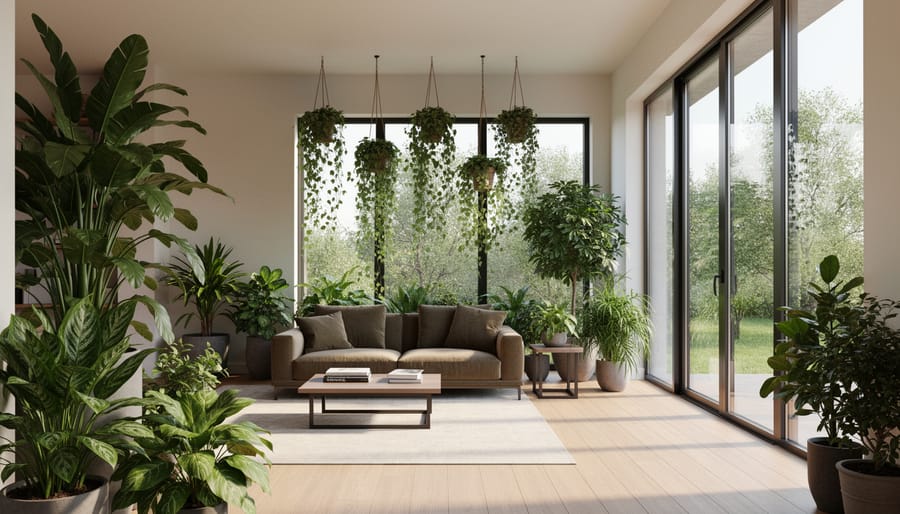
The human attraction to natural elements in built environments isn’t just aesthetic preference—it’s rooted in our biology. This innate connection, called biophilia, evolved over thousands of years when our ancestors depended on natural surroundings for survival. Our brains are hardwired to respond positively to elements like natural light, greenery, water features, and organic patterns.
Research consistently shows that incorporating these elements into buildings delivers measurable benefits. Spaces with abundant natural light and views of nature reduce stress hormones, lower blood pressure, and improve mood. Workers in biophilic office environments report higher productivity and fewer sick days. For Illinois homeowners and businesses, this translates to healthier, more comfortable spaces.
Natural light exposure is particularly important—it regulates our circadian rhythms, improving sleep quality and overall well-being. This is where thoughtful architectural design intersects with energy efficiency. Strategic window placement and skylights not only bring nature’s benefits indoors but also reduce artificial lighting needs during daylight hours. When combined with solar energy systems, buildings can harness natural light for both psychological benefits and power generation, creating spaces that support human health while minimizing environmental impact.
Core Elements of Biophilic Design
Biophilic design brings the natural world into our built environments through several key elements that work together to create healthier, more comfortable spaces. Natural light stands as perhaps the most fundamental component, reducing the need for artificial lighting while supporting our natural circadian rhythms. Large windows, skylights, and strategic building orientation maximize daylight exposure throughout the day.
Living plants and green walls introduce organic elements that improve indoor air quality and create visual connections to nature. Water features, whether small fountains or larger installations, add soothing sounds and movement that help reduce stress and enhance focus.
Natural materials like wood, stone, and bamboo provide tactile and visual connections to the outdoors. These materials not only look appealing but often require less processing than synthetic alternatives, supporting sustainable building practices.
Views of nature through windows or outdoor spaces give occupants direct sight lines to greenery, sky, and natural landscapes. Even in urban Illinois settings, thoughtful design can incorporate these elements effectively.
When combined with energy-efficient technologies, these biophilic elements create spaces that are both environmentally responsible and deeply connected to nature, offering real benefits for wellbeing while reducing operational costs.
Where Energy Efficiency Meets Natural Design
Natural Light as Your Best Energy Asset
Natural daylight isn’t just beautiful—it’s one of the most cost-effective energy assets available to Illinois property owners. By strategically maximizing sunlight in your building design, you reduce dependence on artificial lighting while creating healthier, more productive spaces that connect occupants with nature.
The financial benefits are substantial. Buildings designed with optimal natural light can reduce lighting energy consumption by up to 75% during daylight hours. For Illinois homeowners and business owners, this translates to noticeable reductions in monthly electricity bills, particularly during our long summer days when the sun sets after 8 PM.
Strategic window placement is essential for Illinois’s climate. South-facing windows capture maximum winter sunlight when the sun sits lower in the sky, providing passive solar heating that reduces heating costs during our cold months. Meanwhile, properly sized overhangs prevent excessive summer heat gain. East and west exposures require careful consideration—morning eastern light energizes spaces naturally, while western windows need shading solutions to prevent afternoon overheating.
Integrating natural light design with smart home energy systems creates even greater efficiency. Daylight sensors automatically dim or shut off artificial lighting when sufficient natural light is available, optimizing energy use without requiring occupant intervention.
Consider light shelves, clerestory windows, and light tubes to distribute daylight deeper into interior spaces. These biophilic design elements reduce the need for midday lighting while creating dynamic interior environments that change with the seasons—fulfilling both energy efficiency goals and our innate connection to natural cycles.
Passive Climate Control Through Biophilic Elements
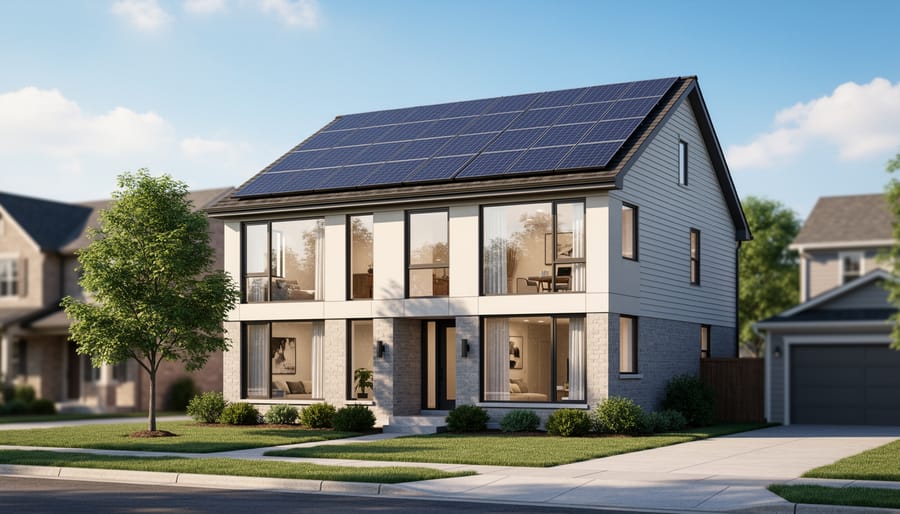
Nature provides some of the most effective climate control solutions available, and incorporating biophilic elements into your Illinois building offers practical temperature regulation benefits. Green walls, living roofs, and thoughtful landscaping work as natural insulation systems that significantly reduce heating and cooling demands throughout the year.
Living roofs, also called green roofs, create an additional insulation layer that keeps buildings cooler in summer and warmer during Illinois winters. The soil and vegetation absorb heat that would otherwise transfer directly into your building, reducing the workload on your HVAC system. Studies show green roofs can lower roof surface temperatures by up to 30-40 degrees compared to conventional roofing materials.
Green walls function similarly by adding thermal mass to building exteriors and interiors. The plants and growing medium create air pockets that naturally insulate walls, while the vegetation itself helps regulate humidity levels and filters the air. In Illinois, where we experience significant temperature swings between seasons, this natural buffering effect translates to measurable energy savings.
Strategic landscaping around your property provides additional passive climate control. Deciduous trees planted on the south and west sides of buildings offer shade during hot summer months while allowing warming sunlight through bare branches in winter. Evergreen windbreaks on the north side reduce heat loss from cold winter winds common across Illinois.
These biophilic strategies work hand-in-hand with solar energy systems. By reducing your overall energy consumption through natural climate control, you maximize the effectiveness of your solar investment, potentially allowing for smaller system sizes while still achieving energy independence goals.
Solar Energy Integration in Biophilic Architecture
Designing Solar Arrays That Complement Natural Spaces
Strategic placement of solar panels doesn’t mean sacrificing your connection to nature. With thoughtful design, solar arrays can enhance rather than compete with biophilic elements in your Illinois property.
Start by conducting a shade analysis to identify roof areas that receive optimal sunlight while preserving views and natural light access from interior spaces. South-facing roof sections often provide excellent solar exposure without blocking windows that bring daylight into your building. This approach maintains the visual connection to outdoor spaces that makes biophilic design so effective.
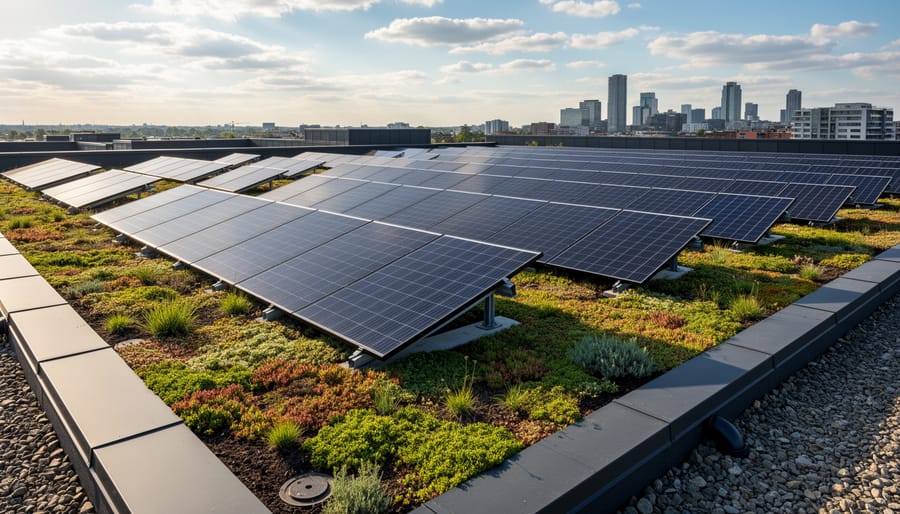
For properties with extensive green roofs or rooftop gardens, consider elevated mounting systems that allow vegetation to thrive beneath panels. This dual-layer approach provides both renewable energy generation and the cooling benefits of living roofs, particularly valuable during Illinois summers. The panels create partial shade that can actually benefit certain plant species while reducing heat island effects.
Ground-mounted arrays offer flexibility for properties with ample land. Position these installations away from primary sight lines and outdoor gathering spaces. Strategic landscaping with native Illinois prairie grasses or pollinator gardens around panel perimeters integrates the technology into the natural environment rather than isolating it.
Consider solar canopies over parking areas or pathways as another option. These structures generate clean energy while providing shade and protection, creating comfortable outdoor spaces that connect people with their surroundings. The key is viewing solar infrastructure as part of your overall landscape design, ensuring technology and nature work together harmoniously to create healthier, more sustainable spaces.
Green Roofs and Solar: A Powerful Combination
Green roofs represent one of nature’s most elegant solutions for improving building performance, and when paired with solar panels, they create a surprisingly effective partnership. While it might seem counterintuitive, living roofs can actually boost solar panel efficiency by helping panels operate at optimal temperatures.
Solar panels lose efficiency as they heat up during hot Illinois summers. A conventional dark roof can reach temperatures exceeding 150 degrees Fahrenheit, causing nearby solar panels to overheat. Green roofs, however, stay significantly cooler through evapotranspiration—the natural process of water evaporating from plants and soil. This cooling effect can reduce ambient temperatures by 30-40 degrees, helping solar panels maintain their peak performance and potentially increasing energy output by 5-10 percent.
Beyond efficiency improvements, this combination delivers multiple biophilic benefits. The vegetation creates habitat for pollinators and birds, manages stormwater runoff, and provides building occupants with visual connections to nature. In Chicago’s downtown district, several commercial buildings have successfully integrated solar-powered green spaces that demonstrate this synergy, combining renewable energy generation with accessible green areas for employees and visitors.
Installation requires careful planning to ensure structural capacity and proper drainage, but the long-term benefits make the investment worthwhile. The green roof extends the lifespan of roofing membranes by protecting them from UV exposure and temperature fluctuations, while the solar panels provide clean energy that can offset building operation costs.
For Illinois property owners considering solar installation, evaluating whether your roof can accommodate both technologies opens opportunities for enhanced energy performance while creating healthier, more resilient buildings that reconnect occupants with natural systems.
Practical Biophilic Energy Solutions for Illinois Properties
For Homeowners: Start Small, Think Big
You don’t need a complete home renovation to embrace biophilic design with energy efficiency. Starting with strategic, manageable improvements can transform your Illinois home while reducing energy costs and strengthening your connection to nature.
Begin with natural lighting enhancements. Installing skylights or solar tubes brings daylight deep into your home, reducing daytime electricity use while creating spaces that feel more open and connected to the outdoors. When positioned thoughtfully on south-facing roofs, these features complement solar panel installations, maximizing your roof’s energy potential. Energy-efficient windows with low-E coatings preserve views of your garden or landscape while maintaining comfortable indoor temperatures year-round.
Consider incorporating solar-powered water features in your outdoor spaces. These elements add the soothing sound of moving water without increasing your electricity bill. A small fountain or birdbath powered by a compact solar panel creates a focal point that attracts wildlife and provides natural ambiance. Inside, strategically placed plants near windows improve air quality while benefiting from abundant natural light, reducing the need for artificial lighting during daytime hours.
Green walls or vertical gardens on exterior south or west-facing walls provide natural insulation, reducing cooling costs during Illinois summers. These living installations can be irrigated using rainwater collection systems, another sustainable feature that connects your home to natural cycles.
Window placement matters significantly. When planning additions or renovations, orient new windows to capture views of trees, gardens, or natural landscapes. This visual connection to nature reduces stress while allowing you to monitor natural light conditions, helping you manage artificial lighting use more efficiently.
These improvements align with broader Illinois energy innovations, demonstrating how residential properties can integrate sustainable design principles affordably. Each enhancement builds toward a more energy-efficient, naturally connected home environment.
For Business Owners: Creating Productive, Efficient Spaces
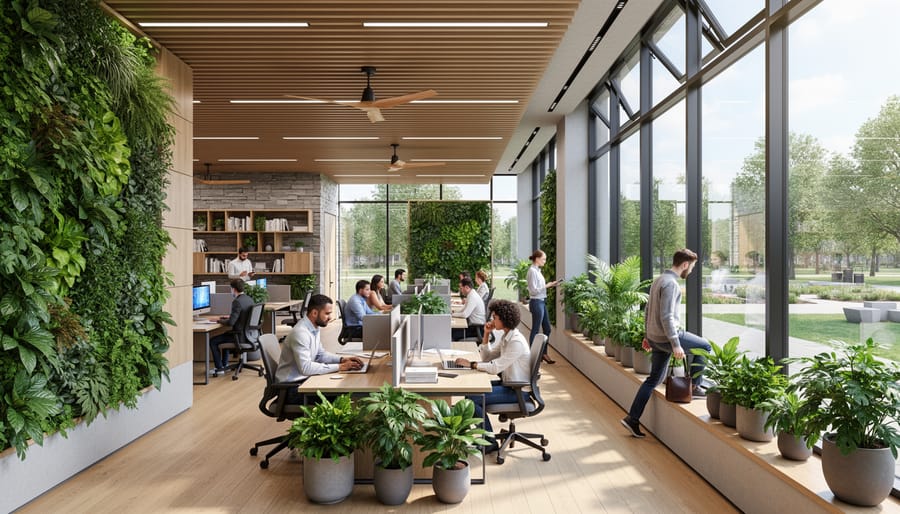
For business owners in Illinois, integrating biophilic design into commercial properties offers a compelling return on investment through reduced operational costs and measurable improvements in workforce performance. Research consistently shows that employees in spaces with natural light, living plants, and views of nature take fewer sick days and demonstrate higher levels of focus and creativity.
The energy savings potential is particularly significant. Strategic placement of vegetation and water features around building exteriors can reduce cooling costs by up to 15% during Illinois summers by naturally lowering ambient temperatures. Large windows that maximize daylight reduce artificial lighting needs, while green walls provide natural insulation that stabilizes interior temperatures year-round. When combined with rooftop solar installations, these natural cooling strategies create a synergistic effect that dramatically reduces energy consumption.
Commercial properties can start with simple implementations like adding plant walls in reception areas, creating interior courtyards, or installing skylights in previously dim spaces. These changes don’t require complete building renovations but deliver immediate benefits. Pairing biophilic elements with energy monitoring solutions allows business owners to track exactly how design changes impact utility bills, providing concrete data on cost savings.
Break rooms and common areas benefit particularly from natural materials like wood finishes and stone, combined with energy-efficient appliances, creating spaces where employees feel genuinely refreshed during breaks. This investment in workplace environment translates directly to reduced turnover costs and improved productivity metrics.
As a locally owned company with expertise in solar energy, we’ve observed that Illinois businesses incorporating biophilic design principles alongside solar installations experience faster payback periods and higher employee satisfaction scores, making this integrated approach both financially sound and beneficial for workforce wellbeing.
Real Cost Savings and Return on Investment
Combining biophilic design with energy-efficient systems delivers measurable financial returns that often surprise property owners. When you integrate natural elements alongside solar panels and efficient building systems, you’re creating multiple revenue streams through energy savings, increased property values, and reduced operational costs.
In Illinois, commercial buildings that incorporate biophilic design alongside solar installations typically see energy consumption decrease by 15-25% compared to conventional designs. This reduction stems from strategic natural lighting that minimizes artificial lighting needs, living walls that provide insulation, and optimized building orientation that works with solar panel placement. For a mid-sized commercial property in the Chicago area, this translates to approximately $8,000-$15,000 in annual energy savings.
The payback period for integrated biophilic and solar systems ranges from 6-10 years, depending on project scale and available incentives. Illinois offers strong financial support through programs like the Illinois Shines solar incentive program and various green building grants that can reduce upfront costs by 30-50%. These incentives significantly accelerate your return on investment.
Property values also increase substantially. Research shows that buildings with biophilic elements and energy-efficient systems command 7-12% higher sale prices and rental rates. In the Illinois market, this premium reflects growing demand for sustainable, health-focused spaces. Tenants consistently pay more for environments with natural light, living elements, and lower utility costs.
Operational savings extend beyond energy bills. Buildings with integrated natural ventilation and plant systems require less HVAC maintenance, saving businesses $2-$5 per square foot annually. Employee productivity gains in biophilic workspaces add another layer of value, with studies documenting 8-15% improvements in performance and reduced absenteeism.
For residential properties, homeowners combining solar installations with biophilic features like green roofs or strategic landscaping see energy bills drop 20-40%, with systems typically paying for themselves within 8-12 years while enjoying a healthier, more comfortable living environment throughout that period.
Working With Experts Who Understand Both Worlds
Successfully implementing biophilic design alongside renewable energy systems requires professionals who understand both disciplines from the ground up. When evaluating contractors and design teams, look for those who discuss natural light optimization, vegetation integration, and solar panel placement as interconnected elements rather than separate considerations.
The right partner will conduct site assessments that examine sun exposure patterns, existing vegetation, and structural opportunities simultaneously. They should explain how decisions about window placement affect both your connection to nature and your energy consumption, or how rooftop gardens can coexist with solar arrays. This integrated planning approach prevents costly redesigns and ensures your space achieves both biophilic benefits and energy efficiency goals.
Ask potential contractors about their experience with projects that combine natural design elements with renewable energy systems. Request examples of how they’ve addressed challenges like shading from vegetation near solar panels or positioning water features to complement natural cooling strategies. Professionals experienced in both areas will discuss thermal performance, daylight harvesting, and system efficiency in practical terms you can understand.
As a locally owned company with deep roots in Illinois communities, we recognize that every property presents unique opportunities for integrating nature-inspired design with solar energy solutions. Our team evaluates your specific site conditions, architectural goals, and energy needs to develop comprehensive plans that honor both your vision for connecting with nature and your commitment to sustainable energy independence.
Biophilic design combined with energy-efficient systems creates spaces that truly work for both people and the planet. By bringing natural elements into your Illinois property while integrating renewable energy solutions like solar panels, you’re investing in a future that’s healthier, more sustainable, and more cost-effective. The benefits extend beyond just lower utility bills—these spaces improve air quality, boost productivity, enhance mental well-being, and reduce your environmental impact.
Illinois property owners are uniquely positioned to take advantage of these integrated solutions. Our state’s solar incentives, combined with the growing availability of locally owned renewable energy experts, make this the ideal time to explore how biophilic design principles can transform your home or business. Whether you’re planning a new construction project or considering renovations to an existing building, incorporating natural light, green spaces, and solar energy systems creates a powerful combination that delivers results year after year.
The path forward starts with understanding your property’s potential. Consulting with experienced solar professionals who understand both energy systems and sustainable design principles ensures you’ll make informed decisions that align with your goals. These experts can assess your space, explain available options in clear terms, and help you create an environment that connects you with nature while generating clean, renewable energy. Your journey toward a healthier, more sustainable space begins with a simple conversation about what’s possible for your property.
