
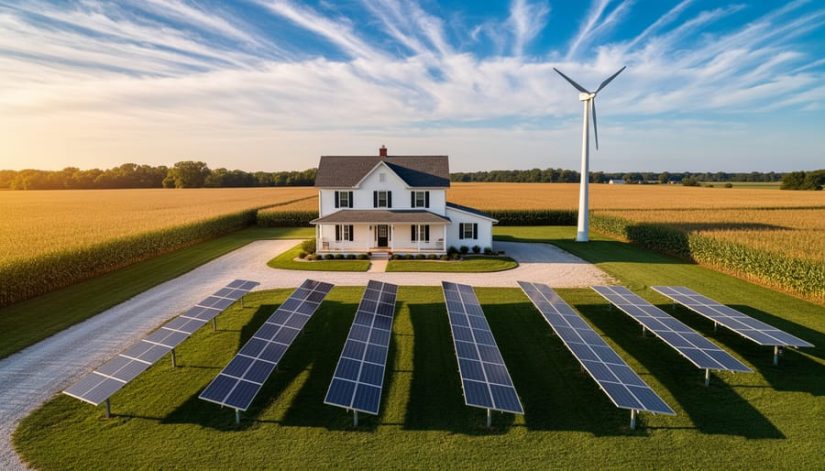
How Earth’s Six Wind Belts Could Power Your Illinois Property
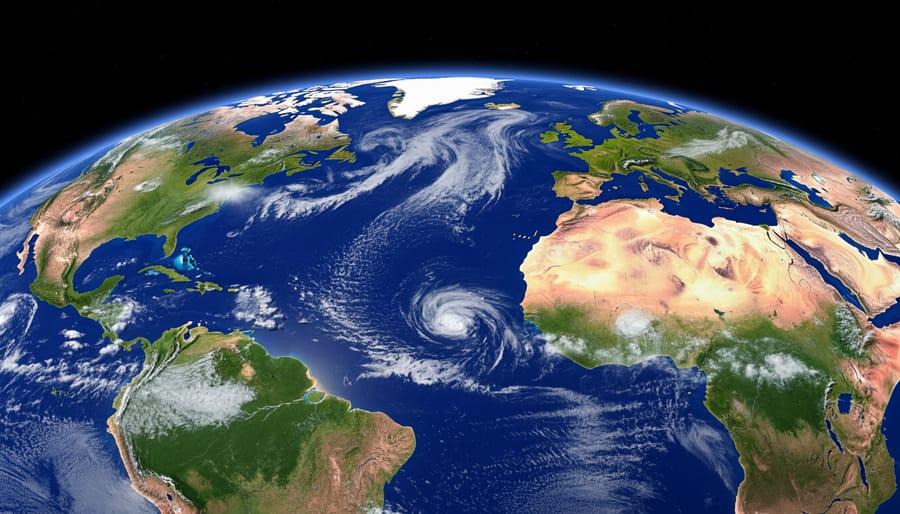
The Earth’s atmosphere circulates in six distinct wind belts that determine weather patterns, climate zones, and energy resources across every continent. These global air currents—three in each hemisphere—move predictably based on solar heating at the equator and cooling at the poles, creating the trade winds, westerlies, and polar easterlies that have shaped human civilization for millennia.
Understanding these wind patterns reveals crucial insights about renewable energy potential in different regions. The prevailing westerlies that dominate Illinois’ latitude between 30 and 60 degrees north create consistent wind resources, but also influence cloud cover and solar radiation availability. For Illinois property owners evaluating renewable energy investments, recognizing how your location within these global wind belts affects both wind and solar potential determines which technology delivers better returns.
The six wind belts operate as nature’s conveyor system, redistributing heat and moisture around the planet. Between the equator and 30 degrees latitude, trade winds blow steadily toward the equator. From 30 to 60 degrees, the westerlies flow toward the poles. Above 60 degrees, polar easterlies complete the circulation. Illinois sits squarely in the northern westerlies, where these air currents bring variable weather that impacts energy generation.
This atmospheric science directly connects to your energy decisions. While wind belts create theoretical wind power potential, practical factors like local terrain, property constraints, and seasonal variability often make solar energy the more reliable choice for Illinois homes and businesses seeking sustainable power solutions.
What Are the Six Global Wind Belts?
Earth has six major wind belts that circle the globe in predictable patterns. These wind systems form because of two main factors: temperature differences between the equator and the poles, and the rotation of our planet. Understanding these patterns helps explain weather systems and can inform decisions about renewable energy sources.
The six wind belts exist in pairs, with one in the Northern Hemisphere and one in the Southern Hemisphere. Starting near the equator, we have the Trade Winds. These steady winds blow from east to west in both hemispheres, roughly between the equator and 30 degrees latitude. Sailors historically relied on these consistent winds for ocean voyages.
Moving toward the mid-latitudes, between 30 and 60 degrees in both hemispheres, we find the Westerlies. Unlike the Trade Winds, the Westerlies blow from west to east. Here in Illinois, we experience the Northern Hemisphere’s Westerlies, which significantly influence our weather patterns and seasonal changes. These winds bring weather systems across the continent and affect temperature fluctuations throughout the year.
Finally, near the North and South Poles, between 60 and 90 degrees latitude, the Polar Easterlies complete the pattern. These cold, dry winds blow from east to west, moving air away from the polar regions.
Earth’s rotation causes these winds to curve rather than blow straight north or south. This curving effect, called the Coriolis effect, creates the distinctive east-to-west or west-to-east patterns we observe. Warm air rises at the equator, travels toward the poles at high altitudes, cools and sinks at roughly 30 degrees latitude, then returns toward the equator as the Trade Winds. Similar circulation patterns create the other wind belts, forming a global system that distributes heat and moisture around our planet.
How Wind Belts Shaped Human Energy Use Throughout History
For thousands of years, humans have observed and harnessed the predictable patterns of Earth’s wind belts to power exploration, trade, and daily life. Ancient mariners discovered that sailing routes aligned with these global wind patterns made ocean crossings possible. The trade winds, blowing steadily between 30 degrees north and south of the equator, enabled European explorers to reach the Americas and establish vital shipping lanes that connected continents. These same wind patterns facilitated the spice trade and cultural exchanges that shaped civilizations.
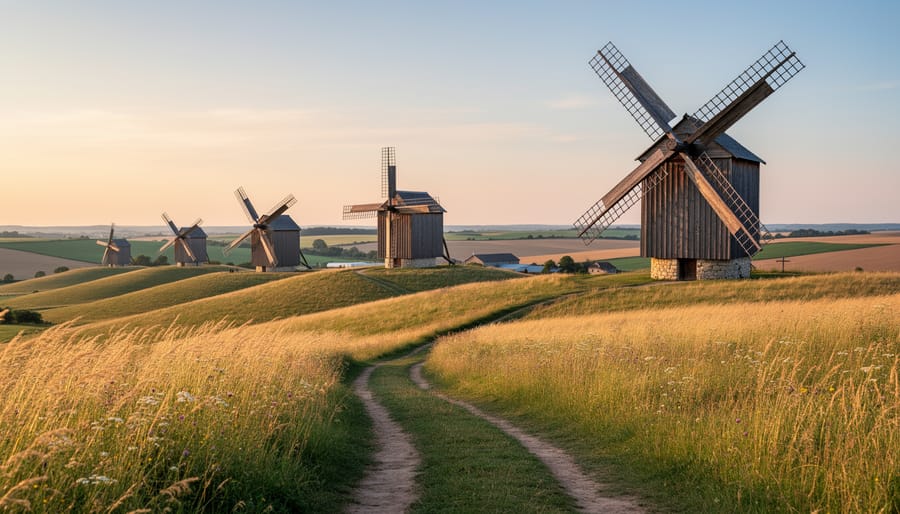
Beyond sailing, communities recognized wind as a renewable power source for mechanical work. Persian engineers built vertical-axis windmills around 500-900 AD to grind grain and pump water, positioning them to capture prevailing westerlies. European windmills, emerging in the 12th century, became iconic symbols of sustainable energy, converting consistent wind belt patterns into practical applications for agriculture and industry. The wind power throughout history demonstrates humanity’s long-standing relationship with atmospheric circulation.
This historical understanding directly connects to today’s renewable energy landscape. Just as ancient civilizations studied wind patterns to optimize their technologies, modern Illinois property owners benefit from understanding local conditions when planning energy solutions. While Illinois experiences variable winds influenced by continental air masses rather than consistent trade wind belts, the principle remains constant: working with natural patterns produces better results.
The evolution of energy sources shows how observing nature’s patterns leads to smarter choices. Today, that same observational approach helps Illinois homeowners and businesses evaluate which renewable technologies suit their specific location, whether wind, solar, or hybrid systems that maximize local environmental conditions.
Where Illinois Sits in the Global Wind Pattern
Illinois sits firmly within the Prevailing Westerlies belt, one of the planet’s most important wind zones. This belt stretches across the mid-latitudes, roughly between 30 and 60 degrees north and south of the equator. For Illinois, positioned at approximately 37 to 42 degrees north latitude, this means the state experiences consistent winds predominantly from the west and southwest throughout much of the year.
The Prevailing Westerlies create relatively steady air movement across Illinois, though the strength and exact direction vary with the seasons. During winter months, these winds often intensify as temperature differences between polar and tropical air masses increase. Spring typically brings the strongest winds, while summer sees somewhat calmer conditions. This seasonal variation affects both wind patterns and overall weather systems moving through the state.
What does this mean for renewable energy? The consistent westerly flow provides Illinois with reliable wind resources, particularly in the northern and central regions where the terrain is flatter and less obstructed. However, wind energy isn’t the only renewable option worth considering. While our position in the Prevailing Westerlies offers decent wind potential, Illinois also receives substantial sunlight throughout the year, making solar energy an increasingly attractive and practical choice for homeowners and businesses.
Understanding these global wind patterns helps property owners make informed decisions about renewable energy investments. The same atmospheric conditions that bring consistent winds also influence cloud cover, temperature, and seasonal weather patterns, all factors that impact energy planning for Illinois residents and businesses.
Why Wind Belt Knowledge Matters for Your Energy Decisions
Wind vs. Solar: Making the Right Choice for Illinois
Illinois sits within a favorable wind belt, receiving consistent air movement that contributes to the state’s growing wind energy sector. You might wonder whether wind or solar power makes more sense for your property given these natural resources.
While Illinois benefits from moderate to strong winds, particularly in northern and central regions, wind energy typically requires significant infrastructure investment. Commercial wind turbines stand 200 to 300 feet tall and demand substantial land area, making them impractical for most residential and business properties. The upfront costs for small-scale wind systems often exceed $50,000, and these installations face strict zoning regulations in many Illinois communities.
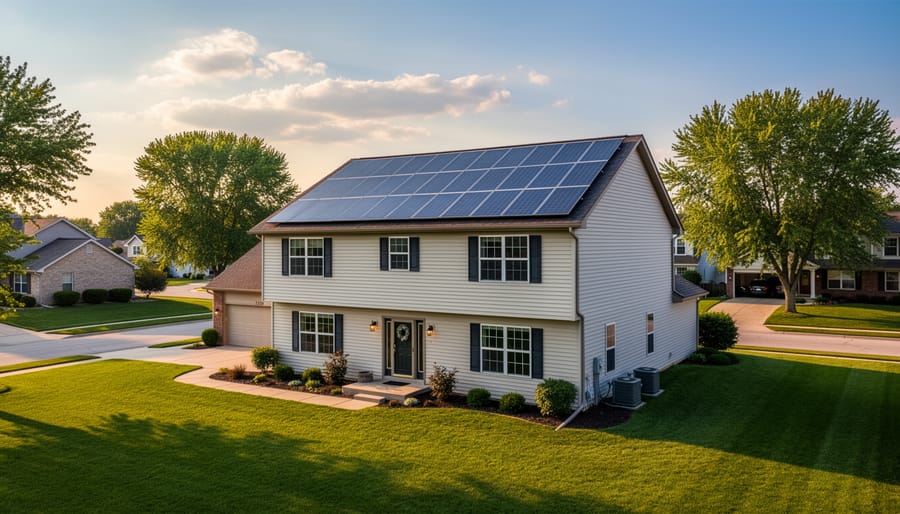
Solar energy, by contrast, offers exceptional accessibility for individual property owners. Rooftop solar panels integrate seamlessly with existing structures without requiring additional land or towering installations. The initial investment for residential solar systems has decreased dramatically over recent years, and Illinois homeowners can take advantage of federal tax credits and state incentives that significantly reduce out-of-pocket costs.
The wind belt characteristics that benefit large-scale wind farms don’t translate equally to small property installations. Wind turbines need consistent speeds of at least 10 miles per hour to generate meaningful electricity, and residential areas often face wind disruption from buildings and trees. Solar panels, however, perform reliably across Illinois, capturing sunlight even on partly cloudy days.
For property owners seeking clean energy independence, solar represents the more practical choice. Installation timelines are shorter, maintenance requirements are minimal, and modern solar technology delivers consistent performance throughout Illinois’s varied seasons. While our state’s position in the global wind belt supports commercial renewable energy development, solar energy remains the smart, accessible option for homeowners and businesses looking to reduce energy costs and environmental impact.
Understanding Seasonal Energy Production Patterns
Wind belt positioning significantly influences when and how much wind energy is available throughout the year, creating distinct seasonal patterns that affect renewable energy planning. These global wind patterns shift with the seasons as the sun’s position changes, causing the wind belts to move north during summer months and south during winter months.
For Illinois property owners and businesses, understanding these seasonal fluctuations is essential for year-round energy planning. During winter, the polar front (where polar easterlies meet the westerlies) typically shifts southward, bringing stronger and more consistent winds to the Midwest. This increased wind activity during colder months can complement heating needs when energy demand peaks. Conversely, summer months often see calmer wind conditions as the wind belts shift northward.
This seasonal variability in wind energy creates an important consideration for businesses and homeowners looking to meet consistent energy needs throughout the year. While wind patterns provide valuable renewable energy during certain seasons, they can’t always guarantee reliable power when you need it most.
This is where solar energy becomes particularly valuable for Illinois property owners. Solar installations provide predictable energy production during peak daylight hours and can be paired with battery storage systems to ensure consistent power availability. Unlike wind patterns that fluctuate with seasonal belt positioning, solar energy offers more stable and controllable renewable power generation. For those seeking dependable renewable energy solutions, locally owned solar providers can design systems tailored to your specific year-round energy requirements, accounting for both seasonal variations and your property’s unique characteristics.
How Local Wind Patterns Differ from Global Belts
Understanding the six global wind belts provides valuable context, but when it comes to making energy decisions for your Illinois property, local conditions matter just as much. While these planetary-scale wind patterns set the baseline for our region’s climate, your specific location experiences wind quite differently than what global models might suggest.
Local geography transforms global wind patterns in significant ways. Hills, valleys, and bodies of water create their own wind corridors and calm zones. In Illinois, Lake Michigan dramatically influences wind patterns along the northeastern corridor, while the relatively flat central and southern regions experience different characteristics altogether. Urban areas face additional complexity as buildings create turbulence, channeling effects, and wind shadows that can reduce or redirect airflow in unexpected ways.
Even neighboring properties can experience vastly different wind conditions. A homeowner on one side of a tree line might see consistent breezes, while someone just a quarter-mile away in a sheltered valley experiences minimal wind activity. Industrial facilities near river valleys encounter different patterns than those on open prairie land.
This variability explains why site-specific assessment is essential before committing to any renewable energy project. For Illinois property owners, this reality often points toward solar energy as the more reliable and predictable option. Unlike wind resources that require extensive on-site measurement and analysis, solar potential can be accurately assessed through established data and straightforward evaluation processes. Our locally owned team brings expertise in solar energy to help you determine the best renewable solution for your specific location.
Choosing the Right Renewable Energy Solution for Your Property
Understanding global wind patterns provides valuable context for energy planning, but your property’s specific characteristics matter most when selecting a renewable energy solution. While Illinois sits outside the major wind belts that drive large-scale wind farms in other regions, this doesn’t limit your clean energy potential.
Solar energy offers an excellent alternative for Illinois property owners. Unlike wind power, which requires consistent high-speed winds, solar panels perform effectively throughout our state’s varied climate. Modern photovoltaic systems generate electricity even on cloudy days, making them reliable for homes and businesses across Illinois.
Before making any investment, consider scheduling a professional energy assessment. A qualified local expert can evaluate your property’s solar potential by examining roof orientation, shading patterns, and your current energy consumption. They’ll also explain how solar systems integrate with the existing power distribution grid, potentially allowing you to benefit from net metering programs.
Working with locally owned renewable energy specialists ensures you receive guidance tailored to Illinois-specific conditions, including state incentives, weather patterns, and local regulations. These experts understand both the broader scientific principles governing energy systems and the practical realities of Illinois properties.
When exploring renewable energy options, remember that the best solution depends on your unique situation. A thorough assessment from experienced professionals helps you make informed decisions that maximize your return on investment while contributing to a cleaner energy future.
