

How Earth’s Core Heat Powers Your Home’s Geothermal System
Harness the Earth’s limitless thermal energy lurking right beneath your feet – a powerful, sustainable heat source that’s revolutionizing how Illinois homes and businesses approach energy independence. Unlike intermittent renewable energy sources, geothermal power taps into our planet’s core heat, providing consistent, clean energy 24/7/365. At depths of just 300-500 feet beneath Illinois properties, underground temperatures maintain a steady 50-60°F year-round, offering an ideal foundation for highly efficient heating and cooling systems that can slash utility bills by up to 65% while eliminating dependence on fossil fuels.
This sustainable technology works by circulating fluid through underground loops to extract heat in winter and discharge it in summer, creating a perpetual energy cycle that’s as reliable as the Earth’s core itself. Whether you’re a homeowner seeking energy independence or a business leader focused on sustainability and cost reduction, geothermal energy represents a proven, practical solution that transforms Illinois’s geological advantages into tangible economic and environmental benefits.
The Science Behind Earth’s Natural Heat Factory
How Deep Do We Need to Go?
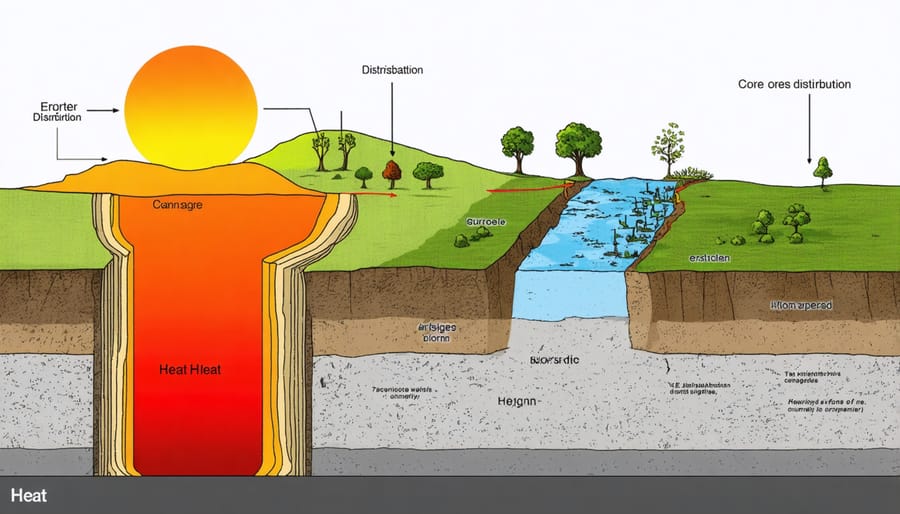
In Illinois’s climate, the depth required for geothermal systems varies depending on your specific needs and application. For residential installations, horizontal loops typically need to be placed 6 to 8 feet below the surface, where ground temperatures remain relatively stable at around 55°F year-round. This depth ensures the system operates efficiently regardless of seasonal temperature fluctuations above ground.
Vertical installations, often preferred when space is limited, generally extend between 150 to 400 feet deep. These deeper systems are particularly effective in Illinois’s climate as they can access more consistent ground temperatures and provide reliable heating and cooling throughout our extreme seasonal changes.
Commercial applications might require deeper installations, sometimes reaching 500 feet or more, depending on the building’s size and energy demands. The good news for Illinois property owners is that our soil conditions are generally favorable for both horizontal and vertical installations, making either option viable for most projects. The final depth decision typically depends on available land space, budget considerations, and specific heating and cooling requirements of your property.
Geothermal Systems for Illinois Properties
Closed-Loop vs. Open-Loop Systems
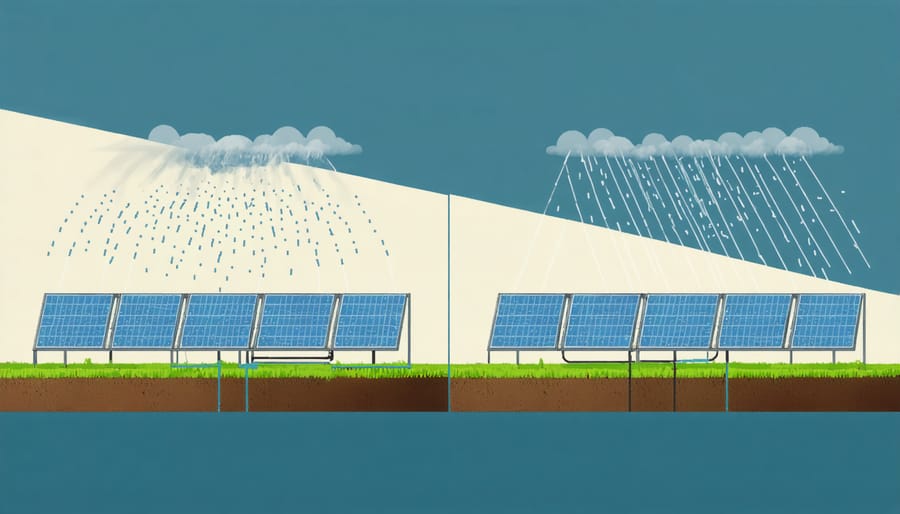
When considering geothermal systems for Illinois properties, homeowners have two main options: closed-loop and open-loop systems. Each type has distinct characteristics that make them suitable for different situations.
Closed-loop systems circulate a mixture of water and environmentally friendly antifreeze through sealed underground pipes. These systems are highly reliable and can be installed virtually anywhere in Illinois, making them the more popular choice. They require less maintenance and are protected from groundwater contamination. The main configurations include horizontal loops (ideal for properties with ample land), vertical loops (perfect for smaller lots), and pond loops (if a water body is available).
Open-loop systems, on the other hand, use groundwater directly from a well. While potentially more efficient in areas with abundant groundwater, they require suitable water quality and quantity. Many parts of Illinois have excellent groundwater resources, making open-loop systems viable. However, these systems may need more maintenance and permits due to environmental regulations.
For Illinois property owners, closed-loop systems often prove more practical due to their versatility and lower maintenance requirements. While initial installation costs might be higher, they typically offer more consistent performance across seasons. Open-loop systems can be more cost-effective to install but may face restrictions in some Illinois municipalities due to groundwater usage regulations.
Your choice should consider factors like available space, soil conditions, local regulations, and groundwater availability. Consulting with a local geothermal expert can help determine the best system for your specific property.
Cost vs. Long-Term Benefits
Available Incentives and Tax Credits
Illinois property owners can access numerous financial incentives when installing geothermal systems, making these alternative energy solutions more affordable. The Federal Residential Renewable Energy Tax Credit allows homeowners to claim up to 30% of installation costs through 2032. Illinois residents can also benefit from the state’s Energy Efficient Building Act, which provides property tax incentives for buildings incorporating geothermal systems.
Local utility companies offer additional rebates and incentives, with some providing up to $2,000 for qualifying installations. ComEd and Ameren Illinois both maintain energy efficiency programs that can help offset initial costs. Commercial property owners can take advantage of the Modified Accelerated Cost Recovery System (MACRS), allowing them to depreciate their geothermal investment over five years.
Many Illinois municipalities offer their own incentives, including expedited permit processing and reduced permit fees for geothermal installations. Property owners should consult local energy offices and qualified contractors to identify all available incentives, as programs and offerings may vary by location and change periodically.
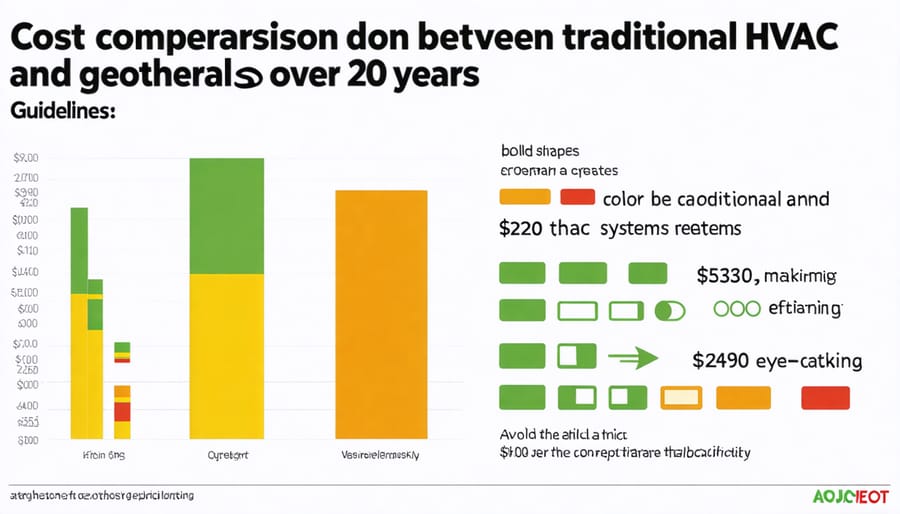
Geothermal energy stands as a powerful, sustainable solution for Illinois property owners looking to reduce their energy costs and environmental impact. By tapping into Earth’s constant underground temperatures, geothermal systems provide reliable heating and cooling while significantly lowering utility bills. Property owners can expect 30-60% savings on their energy costs, with systems typically paying for themselves within 5-10 years through reduced operating expenses. For those interested in exploring geothermal options, the first step is to schedule a site assessment with a qualified contractor who can evaluate your property’s potential. They’ll help determine system requirements, available incentives, and estimated installation costs. With federal tax credits and local rebates available, there’s never been a better time to invest in this clean, efficient energy source that will benefit both your property and the planet for decades to come.
