

How the 1970s Oil Crisis Changed America’s Energy Future Forever
In October 1973, American drivers experienced something unprecedented: miles-long lines at gas stations, fuel rationing, and prices that quadrupled almost overnight. The Arab oil embargo exposed a stark reality—the United States, despite its industrial might, had become dangerously dependent on foreign energy sources. What began as a geopolitical response to Middle Eastern conflicts transformed into a decade-long crisis that reshaped how nations, businesses, and families thought about energy security.
The 1970s oil crisis wasn’t just about expensive gasoline. It triggered recession, unemployment, and inflation that touched every corner of the American economy. Factories reduced production, heating costs soared during brutal winters, and households faced difficult choices between filling their tanks and paying other bills. The crisis demonstrated how vulnerable modern society had become to energy supply disruptions—a lesson that remains relevant today.
For Illinois residents and businesses, this historical moment offers crucial insights. Just as the 1970s revealed the risks of oil dependency, today’s energy landscape presents an opportunity to pursue independence through renewable solutions. The families who suffered through gas lines couldn’t control OPEC’s decisions, but modern homeowners and business owners can take charge of their energy future. Understanding how energy crises reshape economies helps us recognize why diversifying our energy sources matters—not just for environmental reasons, but for economic stability and long-term security.
When America’s Energy Security Collapsed Overnight
On October 17, 1973, the Organization of Arab Petroleum Exporting Countries (OAPEC) made a decision that would shake America’s economy to its core. In response to U.S. support for Israel during the Yom Kippur War, OAPEC announced an oil embargo targeting the United States and several other Western nations. What followed was a rapid transformation from energy abundance to energy crisis, exposing just how dependent America had become on foreign oil imports.
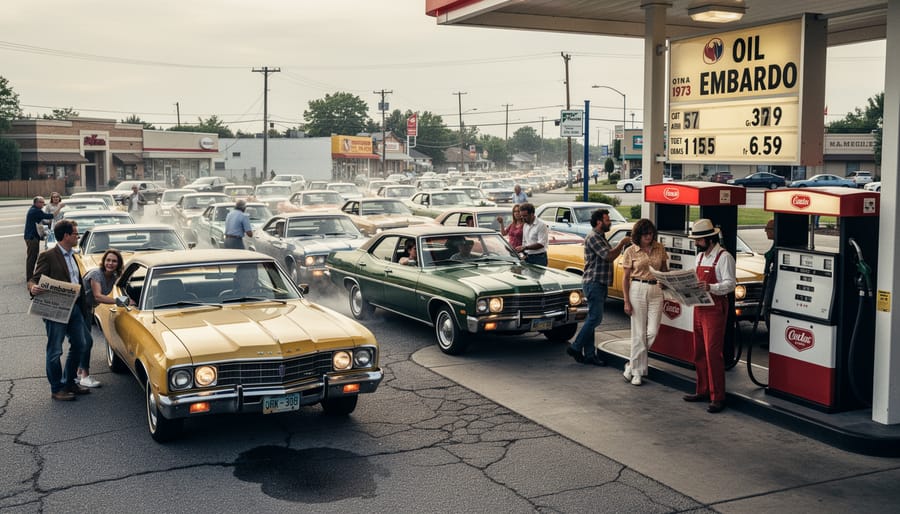
The impact on American consumers was immediate and severe. Within weeks, gas stations across the country displayed “No Gas” signs. Lines of cars stretched for blocks as drivers waited hours to fill their tanks, often arriving to find pumps already empty. The federal government implemented rationing programs, with some states using odd-even license plate systems to determine which days drivers could purchase fuel. Prices at the pump quadrupled almost overnight, jumping from roughly 38 cents per gallon to over $1.20 by 1974.
The oil age energy revolution that had powered American prosperity for decades suddenly became a vulnerability. By 1973, the United States was importing approximately 35 percent of its oil, with much of it coming from Middle Eastern nations. This dependence, which had developed gradually over the post-World War II period, became a glaring weakness when geopolitical tensions disrupted supply chains.
The broader economic consequences rippled through every sector. Businesses faced skyrocketing operational costs. Manufacturing slowed as energy-intensive industries struggled with limited fuel supplies and higher prices. Inflation surged, unemployment rose, and the nation entered a period of economic stagnation that economists would later term “stagflation.”
For Illinois residents and businesses, the crisis hit particularly hard during the brutal winter months when heating oil supplies dwindled. The embargo lasted until March 1974, but its effects persisted for years, fundamentally changing how Americans viewed energy security. This historical moment demonstrated that relying heavily on any single, vulnerable energy source creates substantial economic and national security risks—a lesson that remains relevant for homeowners and businesses considering their energy choices today.
The Real Cost: Beyond the Gas Pump
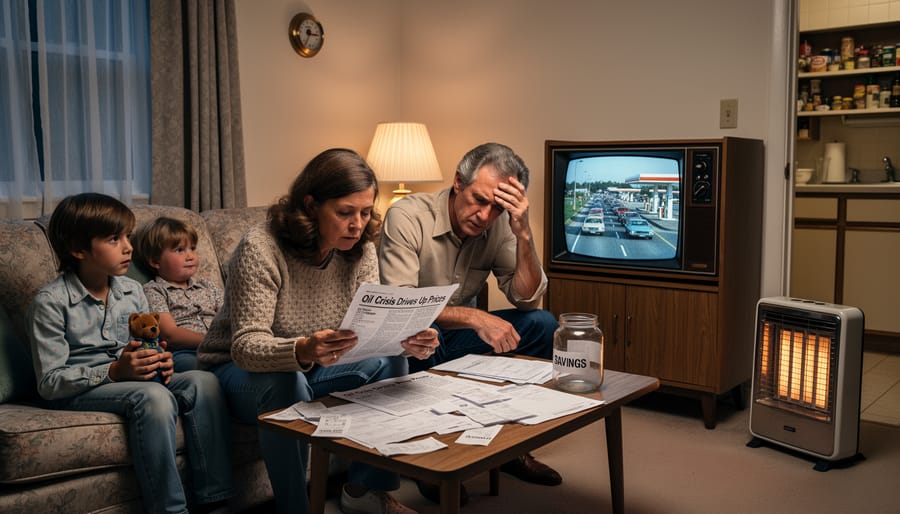
The 1970s oil crisis didn’t just affect what people paid at the pump—it rippled through every corner of American life, fundamentally changing the economy and how citizens thought about energy. The immediate financial pain was severe. Gas prices quadrupled between 1973 and 1974, but that was just the beginning. This energy price volatility triggered double-digit inflation that persisted throughout the decade, eroding purchasing power and savings for working families.
The economic consequences extended far beyond fuel costs. Industries dependent on petroleum products faced soaring production expenses, forcing many to raise prices, cut workforce, or close entirely. The United States entered a period economists termed stagflation—a troubling combination of stagnant economic growth and rising prices. Unemployment climbed to nearly 9 percent by 1975, leaving millions of Americans without work. Manufacturing centers across Illinois and the Midwest felt particularly acute pain as factories struggled with higher energy costs.
Perhaps most significantly, the crisis shattered America’s sense of energy security. For the first time, citizens recognized their vulnerability to foreign energy suppliers. Long lines at gas stations became powerful symbols of dependence on unstable regions halfway around the world. This psychological shift was profound—energy was no longer something Americans could take for granted.
The crisis sparked serious conversations about energy independence and alternative sources. Families began considering home insulation, fuel-efficient vehicles, and reducing unnecessary consumption. Businesses evaluated their energy strategies with fresh urgency. This period planted the seeds for today’s renewable energy movement, as Americans realized that diversifying energy sources wasn’t just environmentally responsible—it was economically essential.
For Illinois homeowners and businesses today, these lessons remain relevant. The oil crisis demonstrated how reliance on single energy sources creates vulnerability to price shocks and supply disruptions. Investing in solar energy provides protection against future crises while building true energy independence right here at home.
What the 1970s Taught Us About Energy Dependence
The Birth of Energy Conservation
The 1970s oil crisis forced Americans to rethink their relationship with energy in ways that had never been seriously considered before. For the first time, the federal government launched major initiatives focused on reducing energy consumption rather than simply increasing supply. This shift represented a fundamental change in how the nation approached energy policy.
In response to the crisis, President Nixon initiated Project Independence in 1973, aiming to achieve energy self-sufficiency by 1980. While that goal proved overly ambitious, it sparked important conversations about conservation. The federal government established the Department of Energy in 1977, creating a centralized agency to coordinate energy policy and research.
Practical conservation measures quickly became part of everyday life. The national speed limit was reduced to 55 miles per hour to save fuel. Daylight Saving Time was extended year-round for a period. Homeowners began installing insulation, weather stripping, and programmable thermostats to reduce heating costs. Businesses turned down thermostats and reduced lighting to cut expenses.
These measures proved that Americans could significantly reduce energy consumption without sacrificing quality of life. The crisis demonstrated that energy efficiency wasn’t just about using less, it was about using smarter. This lesson remains relevant today for Illinois homeowners and businesses. Just as conservation efforts helped address the 1970s crisis, modern energy solutions like solar power offer practical ways to reduce dependence on external energy sources while lowering costs and increasing resilience against future energy disruptions.
Early Steps Toward Alternative Energy
The 1970s oil crisis became a turning point that sparked America’s first serious commitment to energy alternatives. Facing long gas lines and economic uncertainty, the federal government launched initiatives to reduce dependence on foreign oil. President Carter installed solar panels on the White House roof in 1979, symbolizing a national shift toward clean energy. Federal funding for solar research increased dramatically, leading to advances in photovoltaic cell efficiency and manufacturing processes.
This period marked the beginning of what would become the complete energy evolution we see today. Universities and private companies received grants to develop renewable energy technologies, establishing the foundation for modern solar systems. Illinois participated in these early efforts, with research institutions exploring ways to harness renewable power for Midwest climates.
While momentum slowed when oil prices stabilized in the 1980s, the groundwork laid during the crisis years proved invaluable. The technical knowledge, manufacturing infrastructure, and policy frameworks developed then directly contributed to today’s efficient, affordable solar solutions available to Illinois homeowners and businesses seeking energy independence.
From Crisis to Opportunity: The Path to Energy Independence
Why Illinois Homeowners and Businesses Are Taking Control
The lessons from the 1970s oil crisis remain remarkably relevant for Illinois residents and businesses today. Just as that era demonstrated the risks of depending on volatile foreign energy sources, modern utility customers face their own version of energy uncertainty through steadily climbing electricity rates and unpredictable market conditions.
Illinois homeowners have watched their utility bills rise consistently over the past decade, often with little warning or control. This pattern mirrors the economic shock families experienced during the oil embargo, when energy costs suddenly became a major household expense. The difference today is that Illinoisans have options their 1970s counterparts didn’t have access to—particularly solar energy systems that generate power right at their property.
Business owners throughout the state are especially motivated to take control of their energy costs. Manufacturing facilities, agricultural operations, and commercial properties all face substantial electricity expenses that directly impact their bottom line. By investing in solar installations, these businesses effectively lock in their energy costs for 25 years or more, protecting themselves from the rate increases that have become almost inevitable with traditional utility service.
The Illinois energy transformation happening today reflects a broader understanding that energy independence isn’t just about national security—it’s about personal financial security. Solar technology allows property owners to produce their own electricity, reducing dependence on external energy suppliers and creating predictable monthly expenses.
This locally owned approach to energy generation represents a fundamental shift in how communities think about power. Rather than remaining passive consumers subject to market forces and policy decisions made elsewhere, Illinois residents are becoming energy producers, taking practical steps to insulate themselves from the price volatility that characterized past energy crises.
Solar Energy: The 21st Century Answer to 1970s Problems
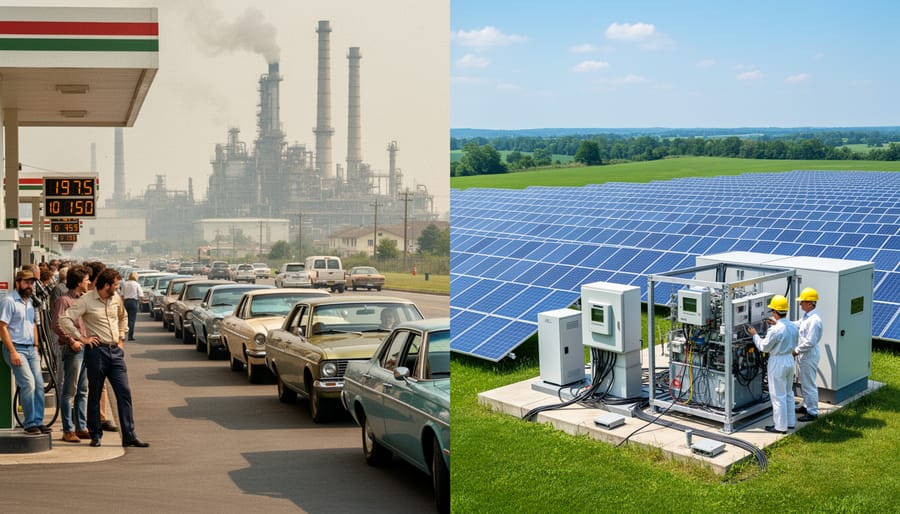
The energy independence that eluded Americans during the 1970s oil crisis is now within reach, thanks to remarkable advances in solar technology. During the crisis decades, solar power remained an expensive, inefficient novelty available only to well-funded research projects. Today, solar energy offers practical, affordable solutions for Illinois homeowners and businesses seeking control over their energy future.
Modern solar panels have transformed dramatically since the 1970s. While early photovoltaic cells converted less than 10 percent of sunlight into electricity, today’s commercial panels routinely achieve 20 to 22 percent efficiency, with some premium models exceeding 23 percent. This improvement means smaller installations can generate more power, making solar viable even for properties with limited roof space.
Cost reductions have been equally impressive. Solar panel prices have dropped more than 90 percent since 2010, making installations accessible to average households and small businesses rather than just wealthy early adopters or government-funded projects. Combined with federal tax incentives and Illinois-specific programs, the return on investment for solar systems has never been more attractive.
Unlike the 1970s, when Americans faced shortages beyond their control, today’s solar technology puts energy production directly in your hands. Solar installations generate electricity on-site, reducing dependence on external suppliers and protecting against price volatility. For Illinois businesses, this means predictable energy costs and protection from market disruptions. For homeowners, it represents genuine energy security.
The storage technology that barely existed during the oil crisis era has matured as well. Modern battery systems allow excess solar energy to be stored for nighttime use or grid outages, providing the complete energy independence that seemed like science fiction fifty years ago. Working with locally owned solar experts who understand Illinois-specific challenges ensures installations are optimized for our climate and energy needs.
Building Resilience: What You Can Do Today
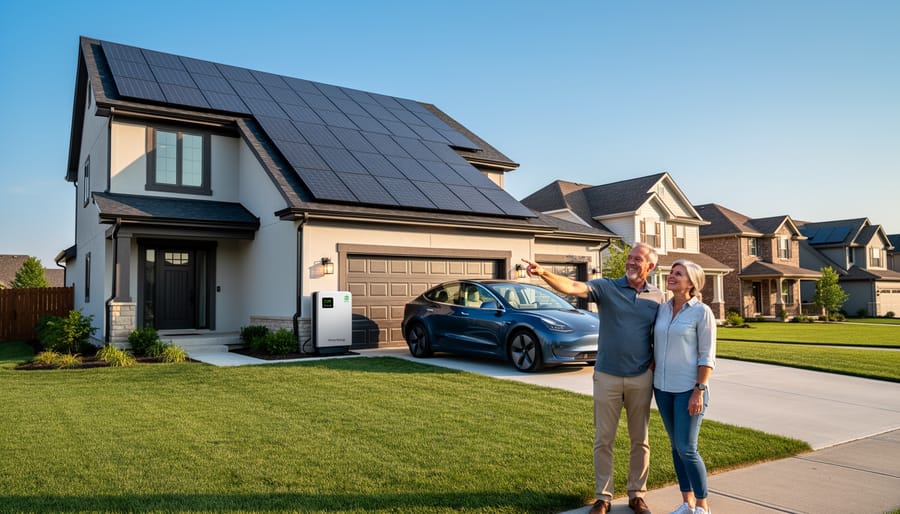
The energy disruptions of the 1970s taught us a valuable lesson: relying on distant, uncertain energy sources leaves us vulnerable to forces beyond our control. Today, Illinois property owners have an opportunity their 1970s counterparts didn’t have—the ability to generate clean, reliable power right where they use it.
Installing solar panels on your property is one of the most effective steps you can take toward energy independence. Unlike the fossil fuels that caused such hardship during the oil crisis, sunlight is abundant, predictable, and free once your system is in place. When you generate your own electricity, you shield yourself from the price volatility that continues to affect traditional energy markets. While electricity rates have steadily climbed over the past decades, solar panel owners lock in their energy costs for 25 years or more.
Starting your solar journey doesn’t have to be overwhelming. Begin by evaluating your property’s solar potential. Most Illinois homes and businesses receive sufficient sunlight to make solar a worthwhile investment, even during our cloudy winter months. Modern solar technology works efficiently in various weather conditions, capturing both direct and diffuse sunlight.
Next, connect with a locally owned solar provider who understands Illinois-specific incentives and regulations. Local expertise matters because solar installations must account for regional factors like snow loads, local building codes, and utility interconnection requirements. Working with professionals who specialize in Illinois installations ensures your system is designed to perform optimally in our climate.
Consider your financing options carefully. Federal tax credits currently cover a significant portion of installation costs, and Illinois offers additional state incentives that make solar more accessible than ever. Many property owners find that their monthly solar loan payments are comparable to or lower than their previous electricity bills, meaning they start saving from day one.
Remember that energy resilience extends beyond individual properties. When communities embrace distributed solar generation, they create a more stable, localized energy grid that’s less susceptible to supply chain disruptions, geopolitical tensions, and price shocks. By taking action today, you’re not just protecting your own energy future—you’re contributing to a more resilient Illinois energy landscape for everyone.
The oil crisis of the 1970s taught us a powerful lesson: dependence on distant energy sources creates vulnerability. When foreign oil supplies were disrupted, American families and businesses faced shortages, soaring prices, and economic uncertainty. Nearly fifty years later, we have the opportunity to apply those hard-learned lessons by embracing energy independence through solar power.
For Illinois homeowners and businesses, solar energy offers a practical path forward. Unlike oil imported from halfway around the world, sunshine is a local resource that arrives reliably every day. By installing solar panels, you take control of your energy costs and reduce dependence on fluctuating utility rates and distant fuel markets. The technology has advanced dramatically since the 1970s, making solar systems more efficient and affordable than ever before.
Working with locally owned solar experts who understand Illinois-specific conditions makes this transition smoother. From navigating state incentive programs to designing systems that maximize production during our seasonal weather patterns, local expertise matters. Illinois residents can benefit from federal tax credits, state rebates, and net metering programs that allow you to sell excess energy back to the grid.
The 1970s crisis showed us what happens when we rely on energy sources beyond our control. Today, solar power represents not just an environmental choice, but a strategic decision for long-term stability. By investing in renewable energy now, Illinois families and businesses can build resilience against future energy disruptions while supporting local economic growth.
