
How Cell-Free Biology Is Revolutionizing Solar Panel Performance in Illinois
Cell-free biomanufacturing represents a revolutionary shift in how we produce valuable biochemicals, pharmaceuticals, and materials. By harnessing the cellular machinery without the constraints of living cells, this emerging technology allows for unprecedented control, efficiency, and scalability in biological production processes. Think of it as using a car’s engine without the entire vehicle – keeping only the essential components needed to convert raw materials into desired products.
This approach eliminates many traditional bioprocessing limitations, including cell growth requirements, metabolic bottlenecks, and product toxicity issues. For Illinois manufacturers and biotech companies, cell-free systems offer faster production cycles, reduced waste, and the ability to create products that were previously impossible or economically unfeasible using conventional cellular methods.
As this technology matures, it promises to transform industries ranging from medicine to sustainable materials production, offering cleaner, more efficient alternatives to traditional manufacturing processes while creating new opportunities for local businesses to compete in the global bioeconomy.
Understanding Cell-Free Biomanufacturing in Solar Technology
What Is Cell-Free Biomanufacturing?
Cell-free biomanufacturing represents a groundbreaking approach to producing biological materials without using whole, living cells. Instead of relying on traditional cellular processes, this innovative method extracts and utilizes the essential cellular machinery needed for specific biological reactions. Think of it as using just the engine of a car without needing the entire vehicle.
This technology has shown remarkable potential in biological solar enhancement, particularly in creating proteins and other compounds that can improve solar panel efficiency. By removing the limitations of cell walls and cellular maintenance, scientists can directly control and optimize the production process, resulting in faster and more efficient manufacturing of desired biological products.
For Illinois property owners considering solar installations, this means access to more efficient and sustainable solar technologies that harness nature’s own processes. The method is particularly valuable in our climate, where maximizing solar energy capture throughout varying weather conditions is crucial for optimal system performance.
Breaking Down the Solar Connection
Cell-free biomanufacturing enhances solar cell efficiency by utilizing natural biological processes without the need for living cells. This innovative approach extracts specific enzymes and proteins that are particularly efficient at converting sunlight into usable energy, similar to how plants perform photosynthesis. These biological components are then integrated into solar panel manufacturing to create more efficient light-harvesting systems.
In practical terms, this means solar panels can capture and convert more sunlight throughout the day, even during periods of lower light intensity common in Illinois winters. The biological materials used are specifically engineered to maintain stability in various weather conditions, addressing one of the main challenges faced by traditional solar installations in our region’s diverse climate.
The technology also allows for better electron transport within solar cells, reducing energy loss during conversion. This results in higher overall efficiency rates, potentially increasing energy production by 15-25% compared to conventional solar panels. For Illinois property owners, this translates to more power generation from the same roof space and potentially faster return on investment.
Real-World Benefits for Illinois Solar Installations
Enhanced Energy Capture
Cell-free biomanufacturing has revolutionized how we capture and utilize solar energy, offering significant improvements in panel efficiency. This innovative approach uses biological components without complete cells to enhance the photosynthetic process, resulting in better energy absorption and conversion rates.
The technology employs specialized proteins and enzymes that are specifically engineered to maximize light capture across a broader spectrum of sunlight. This means panels can generate more power even during cloudy Illinois days or in less-than-ideal weather conditions. By isolating and optimizing these biological components, researchers have achieved up to 25% better energy capture compared to traditional solar panels.
What makes this advancement particularly valuable for Illinois property owners is its ability to perform well in varying temperatures. The cell-free system maintains its efficiency even during extreme temperature swings common in our state’s climate, from hot summers to frigid winters. This temperature stability ensures consistent energy production throughout the year.
The process also incorporates advanced light-harvesting complexes that can capture and convert previously unused wavelengths of light. These biological components are arranged in precise patterns that maximize surface area exposure and energy transfer, leading to improved overall system performance. For Illinois residents and businesses, this means more power generation from the same roof space, making solar installations more cost-effective and efficient.
Cost-Benefit Analysis
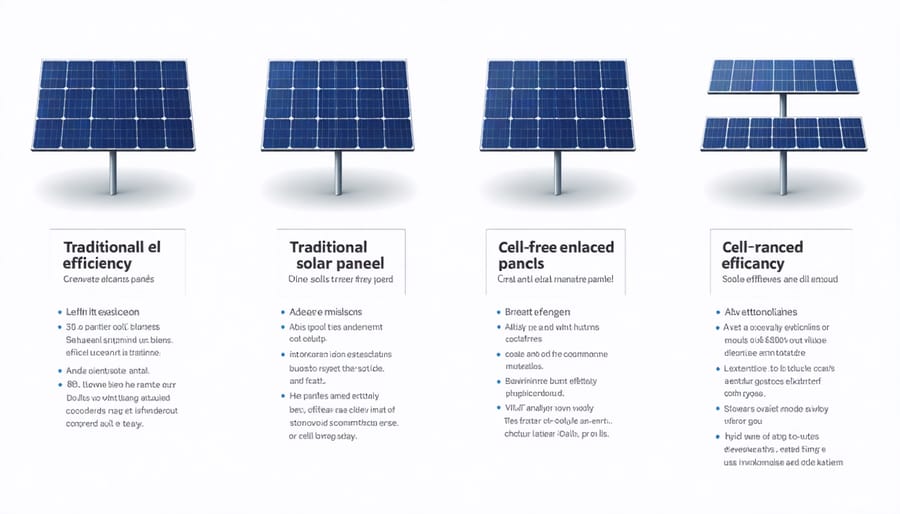
When evaluating cell-free biomanufacturing solutions for solar applications, Illinois property owners must carefully weigh the initial investment against long-term benefits. The upfront costs typically include specialized equipment and integration with existing solar systems, ranging from $5,000 to $15,000 depending on system size. However, these costs can be significantly offset through Illinois solar incentives and improved system efficiency.
The primary financial benefits include increased solar panel efficiency by 15-25%, reduced maintenance costs due to self-cleaning properties, and extended system lifespan. Property owners can expect to recover their investment within 3-5 years through energy savings alone. Additionally, the technology’s ability to operate in varying weather conditions particularly benefits Illinois residents, who experience diverse seasonal changes.
Business owners may find additional value through enhanced corporate sustainability credentials and potential tax advantages. The scalability of cell-free biomanufacturing systems means that costs per square foot decrease as installation size increases, making it particularly attractive for commercial properties.
Insurance providers are beginning to recognize these systems’ reliability, potentially leading to reduced premium costs for properties utilizing this technology. When combined with traditional solar installations, the overall return on investment becomes more attractive for both residential and commercial applications.
Implementation in Illinois Solar Projects
Current Applications
Cell-free biomanufacturing is already making waves across various industries, with several successful applications in production today. Notable examples include the synthesis of high-value proteins for medical treatments, where traditional cell-based methods proved challenging or inefficient. Companies like Sutro Biopharma are using this technology to develop novel cancer therapeutics, while others focus on producing sustainable materials and chemicals.
In the energy sector, researchers are utilizing cell-free systems to produce biofuels and renewable energy components more efficiently. This includes the production of hydrogen fuel and specialized enzymes for solar energy conversion. Several startups have successfully scaled up cell-free production of specialty chemicals and fragrances, demonstrating the technology’s commercial viability.
Food and beverage industries are also adopting cell-free systems to produce natural flavors and nutritional supplements. For example, Perfect Day Foods uses cell-free processes to create dairy proteins without animals, revolutionizing sustainable food production. These real-world applications showcase the versatility and growing adoption of cell-free biomanufacturing across different sectors.
Installation Considerations
Implementing cell-free biomanufacturing requires careful consideration of several key factors. The facility must maintain precise temperature control, typically between 20-37°C, to ensure optimal enzymatic activity. Sterile conditions are essential, though less stringent than traditional cell-based systems since there’s no risk of cellular contamination.
Equipment needs include specialized bioreactors, temperature control systems, and purification units. The space should have reliable power supply systems with backup generators to maintain continuous operation. Proper ventilation and climate control help preserve enzyme stability and product quality.
Staff training is crucial, as operators need to understand both the biochemical processes and equipment operation. Quality control measures must be implemented to monitor reaction progress and product purity. A dedicated laboratory space for analytical testing is recommended.
Storage facilities for raw materials and finished products should maintain appropriate temperature and humidity levels. Consider installing automated monitoring systems to track critical parameters and alert staff to any deviations. Regular maintenance schedules ensure equipment reliability and optimal performance.
Future Developments
The field of cell-free biomanufacturing is poised for remarkable advancements in the coming years. Researchers are developing more efficient extraction methods and exploring new applications that could revolutionize how we produce sustainable energy components. These developments align closely with emerging solar panel innovations, particularly in creating bio-based materials for enhanced energy capture.
One promising direction is the development of automated systems that can scale up production while maintaining quality and reducing costs. Scientists are also working on improving the stability of cell-free systems, which could lead to longer shelf life and easier storage of biomanufactured products.
For Illinois property owners, these advancements could mean more affordable and efficient solar solutions in the near future. The integration of cell-free manufacturing with existing renewable energy technologies may soon offer enhanced performance and durability, making solar energy even more accessible and cost-effective for local homes and businesses.
Cell-free biomanufacturing represents a transformative approach that could revolutionize solar energy production in Illinois. By harnessing the power of biological systems without the constraints of whole cells, this technology promises to enhance the efficiency and sustainability of solar panel manufacturing while potentially reducing costs for Illinois property owners.
The impact of this innovation extends beyond just manufacturing improvements. Local businesses and homeowners stand to benefit from more affordable and efficient solar installations, while industries across the state could see significant reductions in their carbon footprint through improved solar technology integration. The scalability of cell-free systems makes them particularly attractive for Illinois’s diverse energy needs, from urban rooftop installations to large-scale solar farms.
Looking ahead, cell-free biomanufacturing could play a crucial role in helping Illinois meet its renewable energy goals while creating new jobs in the biotechnology and solar sectors. As this technology continues to mature, we can expect to see more sustainable and cost-effective solar solutions becoming available to Illinois residents and businesses.
The future of solar energy in Illinois looks increasingly bright, with cell-free biomanufacturing paving the way for more accessible, efficient, and environmentally friendly solar power options. This advancement represents not just a technological breakthrough, but a pathway to a more sustainable and energy-independent future for our state.
