
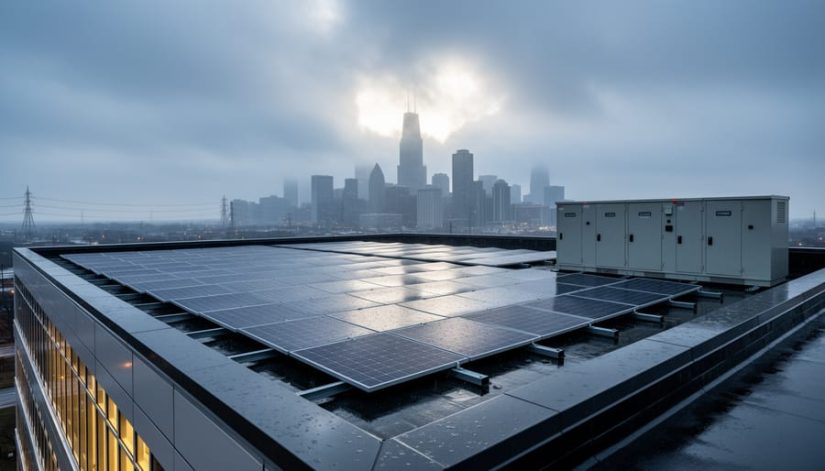
How Climate-Resilient Energy Infrastructure Protects Your Illinois Property Investment
Urban climate resilience isn’t just a planning concept—it’s the difference between businesses that survive extreme weather events and those that face costly shutdowns, damaged equipment, and lost revenue. For Illinois property and business owners, climate resilience means building energy infrastructure that keeps operations running when traditional power grids fail during severe storms, polar vortexes, and heat waves that are becoming increasingly common across our state.
The stakes are tangible and immediate. When the 2021 winter storm knocked out power across the Midwest, businesses without backup systems lost thousands of dollars per hour. When summer heat waves strain the electrical grid, facilities dependent solely on utility power face unexpected outages at peak operational times. Climate resilience transforms these vulnerabilities into competitive advantages through strategic energy infrastructure decisions.
At its core, urban climate resilience in energy means diversifying your power sources and reducing dependence on centralized grids vulnerable to weather-related failures. This approach combines on-site renewable energy generation, battery storage systems, and smart energy management to create microgrids that function independently when needed. For Illinois businesses and property owners, this translates to uninterrupted operations, protected assets, and predictable energy costs regardless of external climate conditions.
The solution isn’t theoretical—it’s happening now across Illinois. Solar energy systems paired with battery storage provide reliable power during grid outages while reducing long-term energy costs. Distributed energy resources allow facilities to island from the main grid during emergencies, maintaining critical operations when neighboring properties go dark. These systems pay dividends beyond emergency preparedness, delivering year-round energy savings and demonstrating environmental leadership to customers and stakeholders.
Building climate resilience starts with understanding your facility’s specific vulnerabilities and energy needs, then implementing solutions that address both immediate risks and long-term sustainability goals.
What Urban Climate Resilience Actually Means for Illinois Communities
The Climate Challenges Facing Illinois Urban Areas
Illinois cities face increasingly severe climate challenges that threaten both infrastructure and daily life. Understanding these risks is the first step toward effective climate resilience planning.
Extreme heat events have become more frequent and intense across Illinois. Chicago experienced dangerous heat waves in recent summers, with temperatures exceeding 100 degrees and prompting cooling center openings across the city. These conditions strain electrical grids as air conditioning demand surges, leading to brownouts and increased energy costs for residents and businesses alike.
Flooding presents another critical concern. Chicago’s aging stormwater infrastructure struggles with heavier rainfall events, causing basement flooding and overwhelming sewage systems. Springfield has similarly dealt with flash flooding that disrupts business operations and damages property. Climate projections indicate these intense rainfall events will only increase in frequency.
Winter ice storms create dangerous conditions and power disruptions throughout the state. Recent storms have left thousands without electricity for days, highlighting the vulnerability of centralized power systems. When ice accumulates on power lines and transformers fail, homes and businesses lose heating during the coldest periods.
Grid strain during peak demand periods affects reliability year-round. Summer cooling and winter heating needs push Illinois electrical systems to their limits, creating vulnerability during the times when power is most essential. These recurring challenges demonstrate why property owners and facility managers are increasingly seeking resilient energy alternatives that can maintain operations during extreme weather events.
Why Traditional Energy Infrastructure Falls Short
Traditional energy infrastructure was designed for a different climate era, and while it continues to serve essential functions, its centralized structure creates vulnerabilities that become more apparent during extreme weather events. Understanding these limitations helps property owners and facility managers make informed decisions about strengthening their energy resilience.
Most communities in Illinois rely on centralized power grids that transmit electricity from distant generation facilities through extensive networks of transmission lines and substations. When severe storms, flooding, or extreme temperatures strike, damage to any critical component can disrupt power for thousands of customers simultaneously. A single downed transmission line or flooded substation can cascade into widespread outages affecting entire neighborhoods or business districts.
The interconnected nature of centralized grids means that problems rarely stay isolated. During summer heat waves, when air conditioning demand peaks, the stress on transformers and transmission equipment intensifies. Similarly, ice storms and high winds can damage power lines across wide areas, requiring extensive repair work before service restoration.
These vulnerabilities don’t reflect poor engineering or maintenance practices. Rather, they highlight the inherent challenges of relying solely on centralized infrastructure during increasingly frequent and intense weather events. The distance between generation sources and end users creates more opportunities for disruption, and the time required to identify and repair damage in extensive networks can leave properties without power for extended periods, impacting operations, safety, and comfort.
Climate-Adaptive Energy Systems: Building Resilience Into Your Property
Solar Energy as a Climate-Resilient Solution
Solar energy paired with battery storage represents one of the most practical approaches to climate resilience for Illinois properties. When severe weather disrupts the electrical grid, solar systems with battery backup continue supplying power to critical operations, providing genuine solar power security when it matters most. This independence becomes increasingly valuable as climate change brings more frequent extreme weather events to our region.
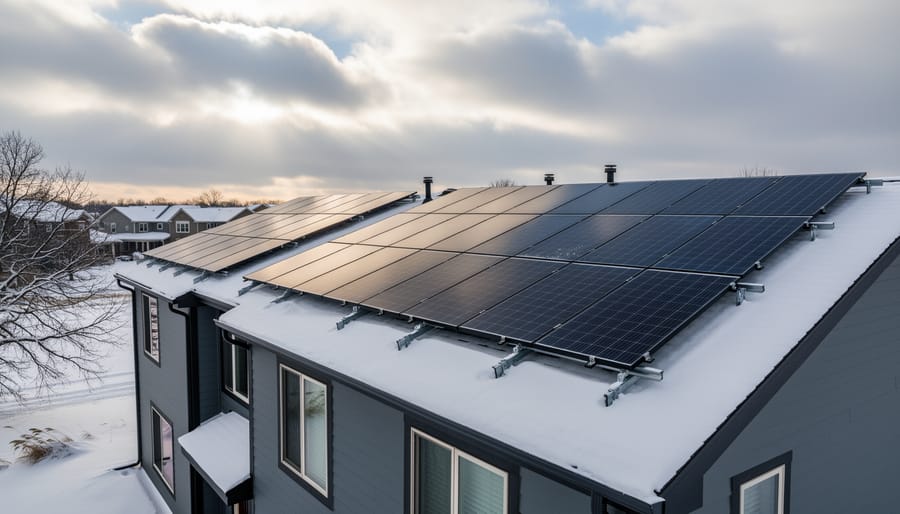
One common misconception concerns solar performance during Illinois winters. Modern solar panels actually operate more efficiently in cold temperatures. While shorter daylight hours and occasional snow cover do reduce production compared to summer months, well-designed systems account for seasonal variation. Snow typically slides off angled panels quickly, and any temporary coverage melts faster on solar panels than surrounding surfaces due to their dark color and slight warmth from operation.
Battery storage addresses the intermittency challenge by capturing excess energy produced during sunny periods for use during nighttime, cloudy days, or grid outages. This creates a reliable power supply regardless of immediate weather conditions. The combination reduces vulnerability to both climate-related disruptions and supply chain issues that affect conventional energy markets.
Illinois properties equipped with solar and storage systems gain protection against rising energy costs, grid instability from extreme temperatures, and the economic losses associated with power interruptions. For businesses, this translates to maintained operations during outages that shut down competitors. For homeowners, it means preserved comfort and food security during extended disruptions.
As a locally owned company with deep expertise in solar energy, we design systems specifically for Illinois climate conditions, ensuring optimal performance year-round while building genuine resilience into your property’s energy infrastructure.
Battery Storage: Your Property’s Energy Insurance Policy
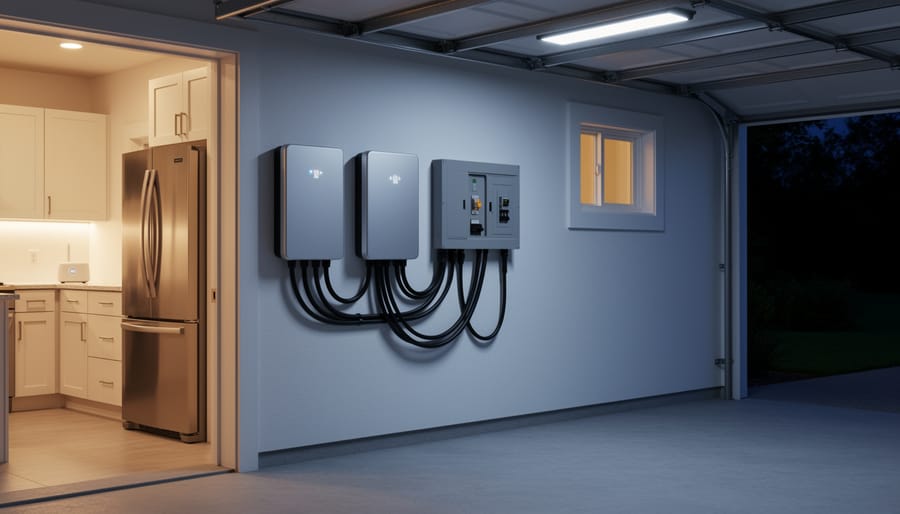
Think of battery backup as a savings account for electricity. When your solar panels produce more energy than you’re using, battery storage systems store that excess power for later use, rather than sending it all back to the grid. When severe weather knocks out power lines or extreme demand strains the electrical grid, your stored energy keeps essential systems running.
Here’s how it works in practice: During normal conditions, your battery charges from solar panels during the day. When an outage occurs, the system automatically switches to battery power within milliseconds, so quickly you might not even notice your lights flickered. Critical systems like refrigeration, heating and cooling, medical equipment, and security systems continue operating seamlessly.
For Illinois property owners, this resilience matters increasingly as we experience more frequent severe thunderstorms, winter storms, and heat waves that stress our electrical infrastructure. A properly sized battery system can provide 8 to 12 hours of backup power for essential loads, or even several days when paired with adequate solar generation.
Beyond outage protection, batteries help reduce electricity costs by letting you use stored solar energy during expensive peak-rate hours. This dual benefit makes battery storage both a resilience investment and a long-term financial strategy, protecting your property’s operations while lowering energy expenses year-round.
Microgrids and Distributed Energy: Keeping Power Local
When extreme weather knocks out power lines, entire neighborhoods can go dark for days. This is where microgrids and distributed energy systems offer a practical solution by generating and managing electricity closer to where it’s used.
Think of distributed energy as moving away from the traditional model where power travels hundreds of miles from distant power plants through vulnerable transmission lines. Instead, energy is produced on-site or within a localized network using solar panels, battery storage, and smart control systems. This approach keeps power local and reduces your dependence on infrastructure that can be damaged by storms, flooding, or extreme temperatures.
A microgrid functions as a self-contained energy system that can operate independently from the main grid. During normal conditions, it works alongside traditional utility service. When the grid fails, it disconnects and continues supplying power to connected buildings using its own generation and storage resources.
Illinois businesses and industries are already seeing the benefits. Manufacturing facilities use rooftop solar arrays paired with battery systems to maintain operations during outages, protecting against production losses and spoiled inventory. Commercial properties like shopping centers and office parks deploy microgrids to keep essential systems running, from refrigeration to security systems. Schools and healthcare facilities prioritize this technology to ensure continuity of critical services when severe weather strikes.
For property owners, these systems provide not just backup power, but also long-term cost savings through reduced electricity bills and protection against volatile energy prices. The initial investment in locally owned solar and storage infrastructure pays dividends through enhanced reliability and energy independence, making your property more resilient in an increasingly unpredictable climate.
Designing Climate-Ready Energy Infrastructure for Your Illinois Property
Residential Applications: Protecting Your Home Investment
Illinois homeowners face increasing challenges from extreme weather events, from intense summer heat waves to winter storms that strain the electrical grid. Integrating solar panels with battery storage creates a resilient home energy system that protects your investment while reducing long-term costs.
Solar energy systems paired with battery storage provide backup power during grid outages, ensuring your home maintains essential functions when neighbors lose electricity. This protection becomes particularly valuable during Illinois’s severe weather seasons when utility disruptions occur most frequently. Smart energy management systems automatically optimize when to use solar power, draw from batteries, or pull from the grid, maximizing your savings without requiring constant monitoring.
The financial benefits extend beyond utility bill reduction. Homeowners who install solar systems typically see property values increase by 3-4% on average, while simultaneously protecting themselves against rising electricity rates that have historically increased faster than inflation. With federal tax credits covering 30% of installation costs and Illinois offering additional state incentives, many homeowners achieve return on investment within 7-10 years.
Battery storage adds another layer of financial protection. During peak demand periods when utility rates spike, your system can draw from stored solar energy instead of expensive grid power. This time-of-use optimization becomes increasingly valuable as more Illinois utilities adopt variable pricing structures.
For homeowners committed to climate resilience, these integrated systems represent practical protection for both your property and your household budget against an uncertain energy future.
Commercial and Industrial Resilience Strategies
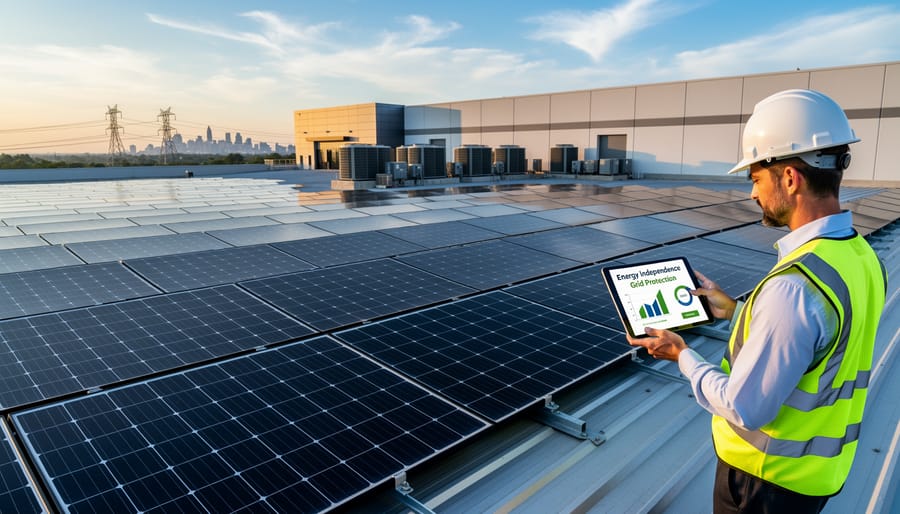
For commercial and industrial operations in Illinois, climate resilience requires planning beyond residential backup solutions. Businesses face unique challenges during extreme weather events, from protecting sensitive equipment to maintaining essential operations and ensuring employee safety.
Critical load backup systems represent the foundation of commercial energy resilience. Rather than powering entire facilities during outages, these systems identify and support mission-critical functions like refrigeration, data servers, security systems, and manufacturing processes. Solar arrays paired with commercial-scale battery storage can provide reliable backup power for hours or even days, protecting against both short-term grid disruptions and extended outages caused by severe storms.
Demand management strategies help businesses reduce energy consumption during peak usage periods, lowering costs while decreasing strain on the electrical grid. Decentralized energy systems enable facilities to generate and store their own electricity, providing greater control over energy use during heat waves or cold snaps when grid reliability becomes strained.
Business continuity planning should incorporate energy resilience as a core component. This includes conducting energy audits to identify vulnerable systems, establishing protocols for transitioning to backup power, and ensuring employees understand emergency procedures. For Illinois businesses, this planning becomes especially important during tornado season and winter storms.
Many commercial solar installations in Illinois qualify for federal tax incentives and accelerated depreciation schedules, making these resilience investments financially attractive. Local expertise ensures systems are designed to withstand regional weather patterns while maximizing operational reliability.
Working with Local Experts for Optimal Design
Partnering with Illinois-based solar professionals ensures your climate resilience solutions are tailored to our state’s unique weather patterns and regulatory landscape. Local experts understand how Chicago’s lake-effect snow, central Illinois’ severe thunderstorms, and southern regions’ heat waves impact system performance. They design installations that withstand these conditions while maximizing energy production year-round.
Locally owned solar companies bring intimate knowledge of Illinois building codes, municipal permitting processes, and available state incentives like the Illinois Shines program. This expertise streamlines installation timelines and helps you capture maximum financial benefits. Additionally, local professionals provide responsive maintenance and support when you need it most, particularly during extreme weather events when grid reliability becomes critical. Their community investment means they’re committed to your long-term success, offering ongoing guidance as climate conditions evolve and new resilience technologies emerge. Working with nearby experts creates partnerships built on accessibility, accountability, and deep understanding of Illinois’ specific climate resilience challenges.
Financial Benefits and Incentives for Climate-Resilient Energy in Illinois
Investing in climate-resilient energy infrastructure in Illinois offers substantial financial benefits that extend well beyond environmental considerations. Understanding these advantages helps property owners and businesses make informed decisions about protecting their energy investments.
The federal Investment Tax Credit currently provides a 30% tax credit for solar energy systems, significantly reducing upfront costs. Illinois residents and businesses can also access state-level incentives through the Illinois Shines program, which offers additional rebates for solar installations. These combined incentives can cover a substantial portion of initial investment costs, making resilient energy solutions more accessible than ever.
Long-term cost savings represent another compelling advantage. Climate-resilient distributed energy systems, particularly solar installations with battery storage, reduce dependence on grid electricity and protect against utility rate increases. During extreme weather events that strain the electrical grid, these systems maintain operation, avoiding costly downtime that can impact businesses and homeowners alike. Studies show that commercial facilities with backup power systems avoid losses averaging thousands of dollars per hour during outages.
Property values also benefit from resilient energy infrastructure. Homes and commercial buildings with solar installations typically sell for 4% more than comparable properties, and this premium increases when systems include battery storage and resilience features. Insurance companies increasingly recognize this value, with some providers offering reduced premiums for properties equipped with resilient energy systems that can withstand severe weather.
Perhaps most importantly, resilient energy infrastructure protects against rising costs associated with climate change impacts. As extreme weather becomes more frequent in Illinois, grid-dependent properties face increasing risks of outages, surges, and damage. Investing in resilient systems today shields property owners from these escalating future costs while providing immediate returns through incentives and energy savings.
Climate-adaptive energy infrastructure represents more than just a forward-thinking upgrade for Illinois property owners—it’s a practical investment that delivers immediate value while safeguarding your property against an increasingly unpredictable climate. As we’ve explored, the extreme weather events affecting our state aren’t distant threats but present realities that already impact energy costs, grid reliability, and property values.
The dual benefits of transitioning to resilient energy solutions are clear. Solar installations and distributed energy systems reduce your monthly operating costs while simultaneously protecting you from the financial disruptions caused by grid outages and extreme weather events. These aren’t competing priorities but complementary advantages that strengthen your long-term financial position and operational stability.
Now is the time to honestly assess your current vulnerability. Consider how recent heat waves, winter storms, or severe weather events have affected your property. Have you experienced power outages? Unexpected spikes in energy costs? Disruptions to your business operations or household routines? These experiences signal where climate-adaptive infrastructure could make the most significant difference.
Taking the first step doesn’t require an immediate full-scale commitment. Begin by consulting with local solar experts who understand Illinois-specific climate challenges and energy regulations. Locally owned providers bring expertise tailored to our region’s unique conditions, helping you identify solutions that match your property’s needs and budget. By evaluating your options today, you position yourself to weather tomorrow’s challenges while capturing ongoing savings that benefit your bottom line for decades to come.
