

Energy Storage Breakthroughs That Keep Illinois Businesses Running Through Anything
Energy storage technologies are revolutionizing how Illinois businesses and homeowners manage their power needs, offering unprecedented control over electricity costs and system reliability. As renewable energy adoption accelerates across the Prairie State, advanced storage solutions have emerged as the critical link between intermittent power generation and consistent, reliable energy supply.
From utility-scale battery systems to innovative thermal storage solutions, these technologies are transforming how we think about energy independence and grid resilience. Modern storage systems can now achieve efficiency rates above 85%, store power for longer durations, and respond to demand fluctuations within milliseconds – capabilities that were unimaginable just a decade ago.
For Illinois business owners and facility managers, understanding these advanced storage options isn’t just about staying current with technology – it’s about securing a competitive advantage. Whether it’s reducing peak demand charges, ensuring business continuity during outages, or maximizing solar energy investments, today’s storage solutions offer practical answers to pressing energy challenges.
This comprehensive guide explores the latest energy storage technologies, their real-world applications, and how Illinois organizations can leverage them to enhance their energy infrastructure while reducing operational costs.
Modern Battery Technologies Revolutionizing Energy Storage
Lithium-Ion Innovations
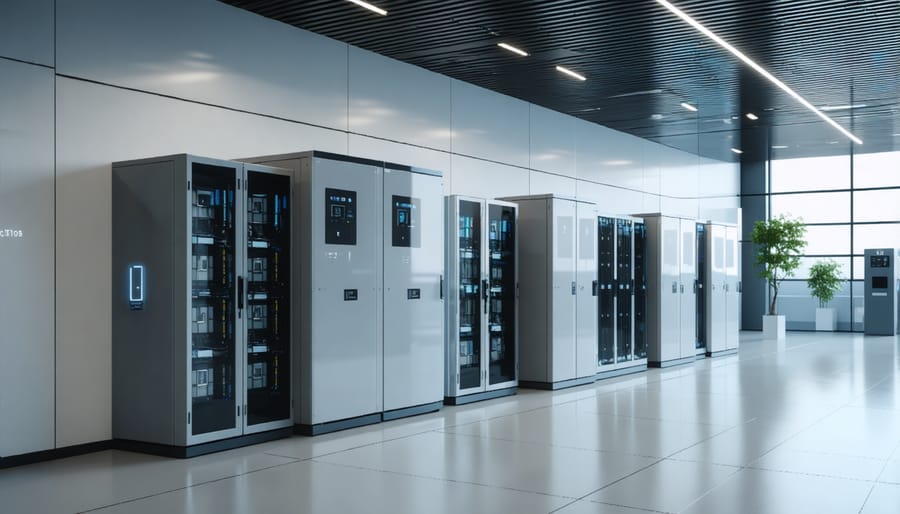
Recent advancements in lithium-ion battery technology have revolutionized solar energy storage, making it more efficient and cost-effective for Illinois property owners. The latest generation of lithium-ion batteries offers improved energy density, allowing them to store more power in a smaller space – perfect for homes and businesses with limited installation areas.
One significant innovation is the development of smart battery management systems, which optimize charging and discharging cycles to extend battery life and improve overall performance. These systems can automatically adjust to weather patterns and energy consumption habits, maximizing the benefits of your solar installation.
Manufacturers have also made substantial progress in thermal management, addressing previous concerns about battery temperature regulation. New cooling technologies help maintain optimal operating conditions, particularly important during Illinois’ hot summers and cold winters. This improved temperature control not only enhances safety but also extends battery lifespan by up to 25%.
The introduction of modular lithium-ion systems provides greater flexibility for both residential and commercial installations. Property owners can start with a smaller battery capacity and easily expand as their energy needs grow. This scalability, combined with declining costs and improved warranty terms, makes lithium-ion storage increasingly attractive for solar energy systems.
Recent developments have also focused on enhancing battery durability and cycle life, with some newer models capable of maintaining 80% of their original capacity after 10 years of regular use – a significant improvement over earlier generations.
Flow Batteries for Large-Scale Storage
Flow batteries represent a promising solution for large-scale energy storage, especially for businesses and industrial facilities in Illinois looking to maximize their renewable energy investments. Unlike traditional batteries, flow batteries store energy in liquid electrolytes kept in separate tanks, which are pumped through a central cell stack where the chemical reaction occurs.
What makes flow batteries particularly attractive for commercial applications is their ability to provide long-duration storage capacity. By simply increasing the size of the storage tanks, you can extend the amount of energy stored without significant additional complexity. This scalability makes them ideal for businesses with varying energy demands throughout the day.
These systems excel in applications where energy needs to be stored for several hours or even days. For Illinois businesses, this means better management of solar energy production, allowing excess power generated during sunny periods to be used during cloudy days or nighttime hours. Flow batteries also offer exceptional longevity, with lifespans often exceeding 20 years and minimal capacity degradation over time.
Another significant advantage is their safety profile. The liquid electrolytes are non-flammable, and the system operates at room temperature, making them well-suited for installation in various commercial settings. Maintenance is straightforward, as the liquid electrolytes can be easily replaced or recycled when needed, ensuring consistent performance throughout the system’s lifetime.
Smart Integration for Maximum Resilience
Intelligent Power Management Systems
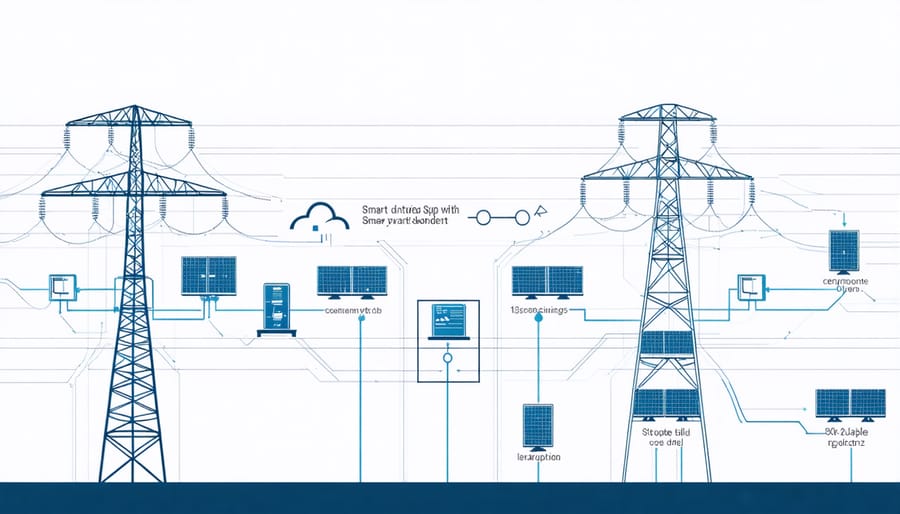
Modern power management systems are revolutionizing how businesses and homeowners in Illinois store and use energy. These intelligent systems combine advanced software algorithms with grid enhancing technologies to optimize energy storage performance and maximize cost savings.
At the heart of these systems are smart controllers that continuously monitor energy production, consumption, and storage levels. They analyze various factors including weather forecasts, time-of-use rates, and historical usage patterns to make real-time decisions about when to store or release energy. This intelligent approach ensures your stored energy is used when it provides the most value, whether during peak demand periods or when solar production is low.
For Illinois businesses, these systems can automatically switch between different power sources – solar, battery storage, and grid power – to maintain optimal operations while minimizing costs. During summer months, when cooling demands are high, the system can predict peak usage times and automatically draw from stored energy to avoid expensive demand charges.
The systems also provide detailed monitoring and reporting capabilities through user-friendly interfaces. Property owners can track their energy usage patterns, storage system performance, and cost savings through mobile apps or web dashboards. Many systems offer remote management capabilities, allowing users to adjust settings and respond to changing energy needs from anywhere.
Advanced features like predictive maintenance alerts help prevent system issues before they occur, while built-in safety protocols protect your investment by managing charging cycles and maintaining optimal battery conditions. These intelligent systems are key to maximizing the return on your energy storage investment while contributing to a more resilient and sustainable power grid in Illinois.
Grid-Tie and Backup Capabilities
Modern energy storage systems offer sophisticated grid-tie and backup capabilities that provide seamless power transition during outages. These systems automatically detect grid disruptions and switch to backup power in milliseconds, ensuring continuous operation of critical equipment and facilities. When integrated with solar installations, smart microgrid systems can maintain power supply even during extended utility outages.
For Illinois businesses and homeowners, this technology offers significant advantages during severe weather events or grid instability. The systems continuously monitor grid conditions and can be programmed to prioritize power distribution to essential loads. During normal operation, these systems can also participate in grid services, allowing owners to benefit from utility incentive programs and reduce peak demand charges.
Advanced storage solutions feature sophisticated power electronics that maintain stable voltage and frequency, regardless of grid conditions. This ensures sensitive equipment remains protected and operational. The systems can be scaled to meet varying backup power needs, from small residential installations to large commercial facilities.
Most modern storage systems also include remote monitoring capabilities, allowing users to track system performance, energy consumption, and backup power status through mobile apps or web interfaces. This real-time visibility helps optimize energy usage and ensures system readiness during critical moments. The technology continues to evolve, with newer systems offering enhanced integration with renewable energy sources and improved power management capabilities for greater energy independence and reliability.
Real-World Benefits for Illinois Businesses
Cost Savings and ROI
Advanced energy storage systems offer compelling financial benefits for Illinois businesses, with many organizations seeing a return on investment within 5-7 years. The initial investment in energy storage technology typically ranges from $800 to $1,500 per kilowatt-hour of capacity, but these costs continue to decrease as technology advances.
The most significant cost savings come from peak demand reduction, allowing businesses to avoid high-rate periods by drawing from stored energy instead of the grid. This practice alone can reduce monthly utility bills by 15-25%. Additionally, businesses can participate in demand response programs, earning revenue by providing grid support services during high-demand periods.
Energy storage systems also protect against costly power outages and voltage fluctuations that can damage equipment and halt operations. Studies show that power disruptions cost U.S. businesses an average of $150 billion annually. By maintaining continuous power supply, storage systems help prevent these losses while ensuring business continuity.
When paired with solar installations, storage systems maximize renewable energy usage by storing excess daytime production for nighttime use. This optimization can increase solar energy self-consumption by up to 80%, significantly reducing reliance on grid electricity and associated costs.
Tax incentives and utility rebates further enhance the financial appeal. Illinois businesses can combine federal investment tax credits with state-level incentives, potentially covering up to 40% of the initial system cost, accelerating the path to positive ROI.
Business Continuity Protection
Advanced energy storage systems play a crucial role in maintaining business operations by preventing costly interruptions and downtime. For businesses in Illinois, where weather conditions can be unpredictable, having a robust and reliable power infrastructure is essential for continued operations.
Modern storage solutions provide instantaneous backup power during grid outages, ensuring critical systems remain operational. This seamless transition helps businesses avoid the substantial costs associated with unexpected shutdowns, data loss, or production interruptions. For manufacturing facilities, even brief power interruptions can result in significant financial losses and compromised product quality.
Energy storage systems also help maintain stable power quality by smoothing out voltage fluctuations and frequency variations. This protection is particularly valuable for businesses with sensitive equipment or those requiring precise environmental controls, such as data centers, healthcare facilities, and specialized manufacturing operations.
Furthermore, these systems enable businesses to participate in demand response programs, providing additional revenue streams while supporting grid stability. By storing energy during off-peak hours and using it during peak demand periods, businesses can reduce their energy costs while ensuring continuous operations. This strategy is especially beneficial during Illinois’s extreme weather events when grid reliability might be compromised.
Future-Proofing Your Energy Infrastructure
Next-Generation Storage Technologies
The future of energy storage is rapidly evolving, with several promising technologies on the horizon. Solid-state batteries represent a significant leap forward, offering higher energy density and improved safety compared to traditional lithium-ion batteries. These batteries use solid electrolytes instead of liquid ones, making them more stable and longer-lasting – a crucial advantage for Illinois businesses investing in long-term energy solutions.
Flow batteries are another innovative technology gaining traction. Unlike conventional batteries, they store energy in liquid electrolytes, making them ideal for large-scale storage needs. This scalability is particularly valuable for industrial facilities and commercial properties looking to maximize their solar energy investment.
Hydrogen storage systems are emerging as a versatile solution, converting excess solar energy into hydrogen through electrolysis. This stored hydrogen can later be used in fuel cells or converted back to electricity, offering unprecedented flexibility for advanced grid integration.
Metal-air batteries show promise for their high energy density and use of abundant materials. While still in development, these technologies could revolutionize how Illinois businesses approach energy storage, offering more cost-effective and environmentally friendly solutions than current options.
These emerging technologies are being designed with smart capabilities, enabling better monitoring, predictive maintenance, and optimization of energy usage patterns, ensuring maximum efficiency for solar energy systems.
Scalability and System Growth
Planning for scalability is crucial when investing in energy storage systems, especially in Illinois where renewable energy adoption continues to grow. A well-designed storage system should accommodate both your current needs and future expansion possibilities without requiring a complete overhaul.
Start by assessing your expected energy consumption growth over the next 5-10 years. Consider factors like potential business expansion, additional electrical equipment, or the adoption of electric vehicles. For residential installations, factor in possible home additions or increased power demands from new appliances.
Modern energy storage systems are typically modular, allowing for straightforward capacity expansion. When selecting a system, verify that additional battery units can be easily integrated with your existing setup. This modularity also enables you to spread the investment over time, adding capacity as your needs grow.
Infrastructure considerations are equally important. Ensure your electrical panel and wiring can handle increased capacity, and that you have physical space for additional battery units. Many Illinois businesses find it cost-effective to install slightly oversized inverters initially, making future expansion more straightforward.
Regular system monitoring helps identify when expansion might be needed. Look for storage solutions that offer comprehensive monitoring software, allowing you to track usage patterns and system performance. This data-driven approach ensures timely and efficient system growth while maintaining optimal performance throughout the system’s lifecycle.
Advanced energy storage technologies are revolutionizing how Illinois businesses and homeowners manage their power needs. As we’ve explored, these solutions offer compelling benefits, from increased grid reliability to substantial cost savings and improved environmental performance. The key to successful implementation lies in careful planning, professional assessment of your specific needs, and choosing the right combination of storage technologies to complement your existing or planned solar energy system. Looking ahead, continued advancements in battery technology and decreasing costs will make energy storage even more accessible and beneficial. We encourage Illinois property owners to take the next step by consulting with local energy experts to develop a customized storage solution that maximizes their investment while contributing to a more sustainable future.
