
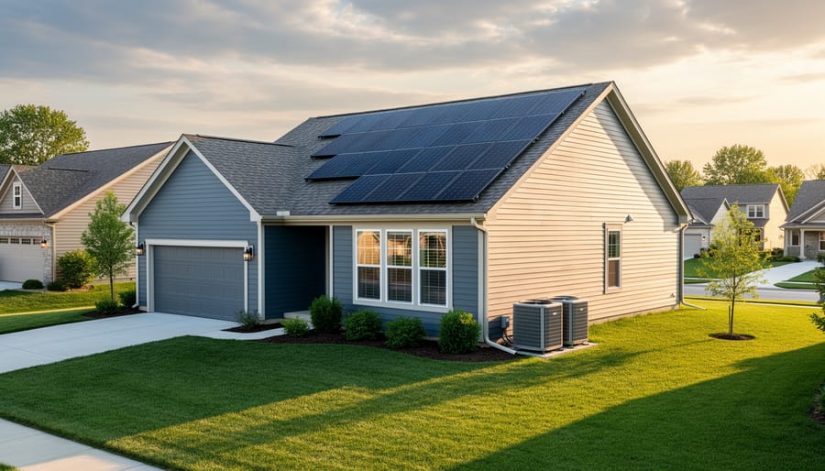
These Home Upgrades Actually Slash Your Energy Bills (And Qualify for Tax Credits)
Energy-efficient improvements are upgrades to your property that significantly reduce energy consumption while maintaining or enhancing comfort and functionality. These modifications range from simple lighting replacements to comprehensive deep energy retrofits that transform entire buildings into high-performance spaces.
For Illinois homeowners and business owners, understanding what qualifies as energy-efficient is essential for three reasons: lowering monthly utility bills, accessing valuable federal and state tax incentives, and meeting increasingly stringent building performance standards. The federal government currently offers tax credits up to 30% for qualifying improvements, while Illinois provides additional rebates and programs specifically designed to make upgrades more affordable.
Energy-efficient improvements fall into several categories, each targeting different aspects of your property’s energy use. Solar panel installations represent the most impactful upgrade, directly generating clean electricity and potentially eliminating your electric bill entirely. Insulation and air sealing prevent heat loss and gain, while high-efficiency HVAC systems use less energy to maintain comfortable temperatures. Energy-efficient windows reduce thermal transfer, modern water heaters minimize standby energy loss, and LED lighting cuts electricity use by up to 75% compared to traditional bulbs.
The key to maximizing your investment lies in understanding which improvements deliver the greatest return for your specific property and goals. This guide breaks down each category of energy-efficient upgrades, explains qualification standards, and highlights opportunities available to Illinois residents seeking to reduce energy costs while increasing property value.
Understanding Energy Efficiency Standards and Certifications
What Makes an Improvement ‘Energy Efficient’?
Energy-efficient improvements are upgrades that measurably reduce energy consumption compared to standard alternatives. The distinction lies in meeting specific performance benchmarks established by recognized standards and certification programs.
To qualify as energy efficient, an improvement must typically achieve performance levels certified by organizations like ENERGY STAR, the Department of Energy, or meet requirements outlined in the International Energy Conservation Code. These standards set minimum efficiency ratings that surpass conventional products. For example, an ENERGY STAR certified air conditioner uses at least 15% less energy than non-certified models, while high-efficiency windows must meet specific U-factor and Solar Heat Gain Coefficient ratings.
The key criteria include documented energy savings through independent testing, lifecycle cost-effectiveness, and measurable reduction in utility consumption. Many improvements also need to achieve certain efficiency ratios, such as SEER ratings for cooling systems or R-values for insulation materials.
For Illinois homeowners and businesses, understanding these thresholds is particularly important when pursuing federal tax credits or state incentives, which often require certified products and professional installation. Energy-efficient improvements deliver tangible benefits through lower utility bills while reducing environmental impact, making them smart investments that pay dividends over time through sustained performance and savings.
Illinois-Specific Energy Efficiency Requirements
In Illinois, energy efficiency improvements must align with state and local standards to qualify for various incentive programs and meet building code requirements. The state follows the International Energy Conservation Code (IECC), with many municipalities adopting the 2021 version or more recent updates. These codes establish minimum performance standards for insulation, air sealing, heating and cooling systems, and lighting in both residential and commercial buildings.
Illinois utilities operate under energy efficiency mandates set by the Future Energy Jobs Act (FEJA) and the Climate and Equitable Jobs Act (CEJEA). These regulations require utilities to help customers reduce energy consumption, which translates into rebate programs and incentives for qualifying improvements. To be eligible, upgrades typically need to meet or exceed specific efficiency ratings, such as ENERGY STAR certification for appliances and HVAC systems.
Local municipalities may have additional requirements beyond state codes. Chicago, for example, has implemented its own energy benchmarking ordinance for larger buildings, requiring annual reporting of energy usage. Before starting any efficiency project, homeowners and business owners should verify requirements with their local building department and utility provider to ensure improvements qualify for available incentives and meet compliance standards. Working with locally owned Illinois energy professionals can help navigate these regulations effectively.
Solar Panel Installation and Solar Energy Systems
Residential and Commercial Solar Solutions
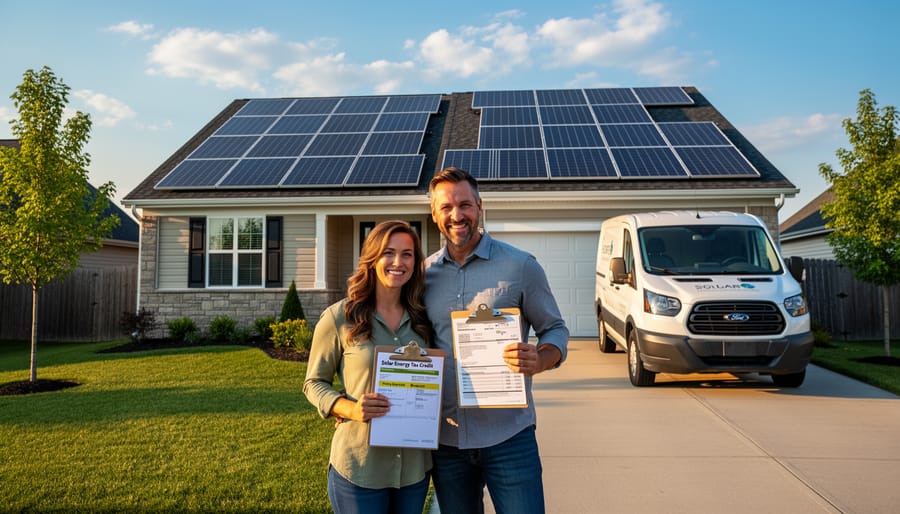
Solar panel systems represent one of the most impactful energy-efficient improvements available to property owners. When properly installed, photovoltaic (PV) systems qualify for significant tax credits and incentives while dramatically reducing electricity costs for decades.
For residential properties, most homeowners find that systems ranging from 5 to 10 kilowatts adequately offset their energy consumption. Commercial installations typically require larger arrays, often 25 kilowatts or more, depending on business operations and roof space availability. The key is sizing your system to match your actual energy usage patterns rather than simply maximizing available roof space.
Performance expectations vary based on several factors. In Illinois, well-positioned solar panels typically generate between 1,100 and 1,300 kilowatt-hours per installed kilowatt annually. This means a 7-kilowatt residential system could produce approximately 8,000 kilowatt-hours per year, offsetting a substantial portion of average household consumption.
Illinois property owners benefit from multiple incentive programs that make solar installations particularly attractive. The federal Investment Tax Credit currently offers 30 percent back on installation costs. Additionally, the Illinois Shines program provides renewable energy credits that further improve return on investment. Net metering policies allow you to receive credit for excess electricity your system sends back to the grid, essentially using the utility grid as a battery.
As a locally owned company with deep expertise in solar energy, we understand the unique considerations for Illinois installations, from snow load requirements to optimizing panel angles for our latitude.
Integration with Existing Systems
Modern energy efficiency improvements reach their full potential when seamlessly integrated with your existing utility infrastructure. For Illinois property owners, this integration primarily involves three key components that work together to maximize your energy savings.
Battery storage systems have become increasingly valuable additions to solar installations. These systems store excess electricity generated during peak sunlight hours, allowing you to use that power during evening hours or during utility outages. This stored energy reduces your reliance on grid electricity during expensive peak-demand periods, further lowering your utility costs. Battery technology has advanced significantly, making these systems more affordable and practical for both residential and commercial applications.
Net metering in Illinois provides a financial framework that makes solar energy integration particularly advantageous. Through net metering, when your solar panels produce more electricity than you consume, the excess energy flows back to the grid. Your utility company credits your account for this contribution, essentially allowing the grid to function as a virtual battery. These credits offset the electricity you draw from the grid when your panels aren’t producing power, such as at night or during cloudy weather.
The physical connection between your solar system and utility infrastructure involves smart inverters and bidirectional meters. These components ensure safe, efficient power flow in both directions while maintaining grid stability. Your locally owned solar provider handles all technical aspects of this integration, including utility coordination, permits, and ensuring your system meets Illinois interconnection standards. This professional integration ensures your energy efficiency improvements deliver maximum financial and environmental benefits.
Insulation and Air Sealing Upgrades
Attic, Wall, and Basement Insulation
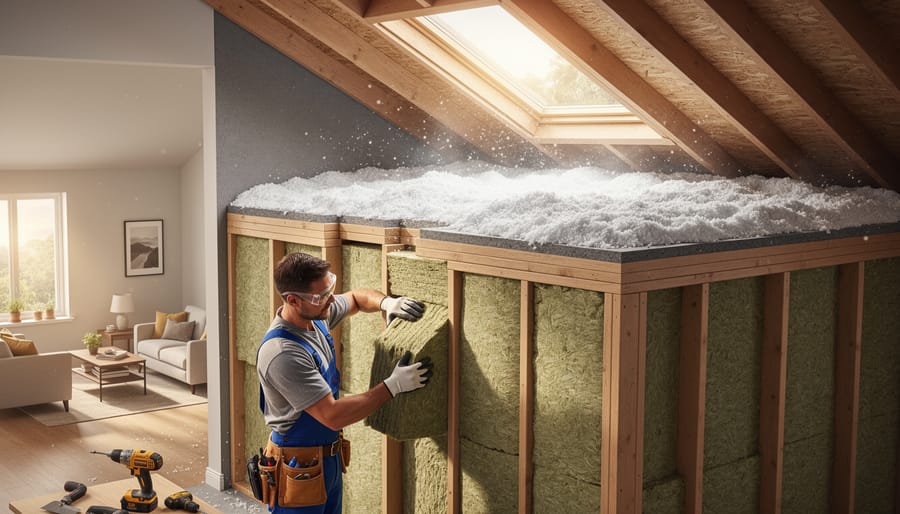
Proper insulation is one of the most cost-effective energy efficient improvements you can make to your home or business. The effectiveness of insulation is measured by R-value, which indicates its resistance to heat flow. Higher R-values mean better insulating performance.
For Illinois homes, the Department of Energy recommends R-values of R49-R60 for attics, R13-R21 for exterior walls, and R10-R25 for basement walls, depending on your specific location within the state. Meeting or exceeding these standards can significantly reduce heating and cooling costs while improving year-round comfort.
Common insulation materials include fiberglass batts, blown-in cellulose, spray foam, and rigid foam boards. Each option has distinct advantages. Fiberglass offers affordability and easy installation, while spray foam provides superior air sealing and moisture resistance. Blown-in cellulose works well for retrofitting existing walls and irregular spaces.
To qualify as energy efficient improvements for tax credits and incentives, insulation installations must meet specific performance standards. The material must be certified by manufacturers and installed according to building codes. Professional installation ensures proper coverage without gaps or compression, which can compromise effectiveness.
When combined with solar energy systems, quality insulation maximizes your energy savings by reducing overall consumption, allowing your solar panels to cover a larger percentage of your remaining energy needs.
Air Sealing and Ductwork Improvements
Air sealing and ductwork improvements are among the most cost-effective energy efficiency upgrades available to Illinois property owners. These improvements focus on preventing conditioned air from escaping your building and unconditioned air from entering, which can account for 25-40% of heating and cooling energy waste in typical homes and commercial buildings.
Air sealing involves identifying and closing gaps, cracks, and openings throughout your property’s envelope. Common problem areas include spaces around windows and doors, electrical outlets, plumbing penetrations, attic hatches, and where walls meet foundations. Professional energy auditors often use blower door tests to locate these leaks precisely. Sealing these gaps with weatherstripping, caulk, or spray foam creates a tighter building envelope that reduces the workload on your HVAC system.
Ductwork improvements are equally important, especially since leaky ducts can lose 20-30% of the air moving through them. Sealing duct joints with mastic sealant or metal-backed tape, insulating ducts in unconditioned spaces, and ensuring proper duct sizing all contribute to better efficiency. These improvements work hand-in-hand with other upgrades like modern HVAC systems and insulation to create a comprehensive energy-saving strategy.
When combined with renewable energy solutions like solar panels, air sealing and ductwork improvements help maximize your overall energy performance and reduce utility costs year-round.
High-Efficiency HVAC Systems
Heat Pumps and Modern Furnaces
Upgrading your heating and cooling system represents one of the most impactful energy efficiency improvements you can make. Understanding the key rating systems helps you identify which equipment qualifies as truly efficient.
For air conditioners and heat pumps, look at the SEER (Seasonal Energy Efficiency Ratio) rating. In Illinois, systems with a SEER rating of 15 or higher are considered efficient improvements, though ENERGY STAR certified models typically rate 16 SEER or above. The higher the number, the less energy your system uses to cool your home.
For furnaces, the AFUE (Annual Fuel Utilization Efficiency) percentage indicates how much fuel converts to usable heat. Modern high-efficiency furnaces should have an AFUE of at least 90 percent, with the best models reaching 98 percent. This means 98 cents of every energy dollar goes directly toward heating your home rather than being lost through exhaust.
Combining these upgrades with energy recovery ventilators maximizes efficiency by recapturing conditioned air. When paired with solar panels, high-efficiency HVAC systems dramatically reduce your carbon footprint while lowering monthly utility bills, making them eligible for federal tax credits and Illinois energy efficiency incentives.
Smart Thermostats and Climate Control
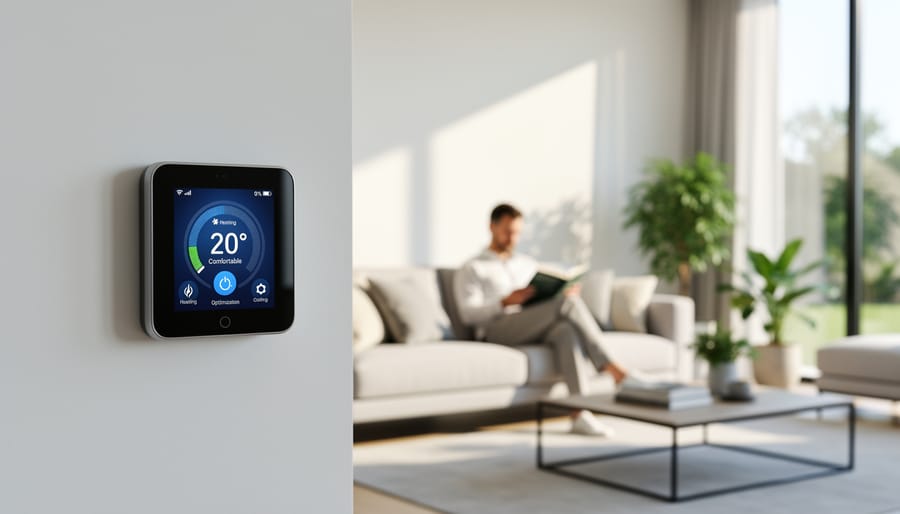
Smart thermostats represent one of the most cost-effective energy efficient improvements available to Illinois property owners. These devices automatically adjust heating and cooling based on your schedule, occupancy patterns, and even outdoor weather conditions, eliminating the energy waste that occurs when systems run unnecessarily.
Programmable thermostats allow you to set temperature schedules that align with when you’re home or away, potentially reducing heating and cooling costs by 10-30% annually. Learning thermostats take this further by using artificial intelligence to understand your preferences and automatically optimize settings over time. Many models integrate with smart IoT solutions, enabling remote control through smartphone apps and providing detailed energy usage reports.
For Illinois homeowners and businesses, smart climate control becomes especially valuable during our extreme seasonal temperature swings. These systems ensure your HVAC equipment operates only when needed and at optimal efficiency levels. When paired with solar energy systems, smart thermostats help maximize the value of your self-generated power by shifting energy use to peak solar production hours, creating a comprehensive approach to reducing both energy consumption and utility costs.
Window and Door Replacements
Energy-Rated Windows
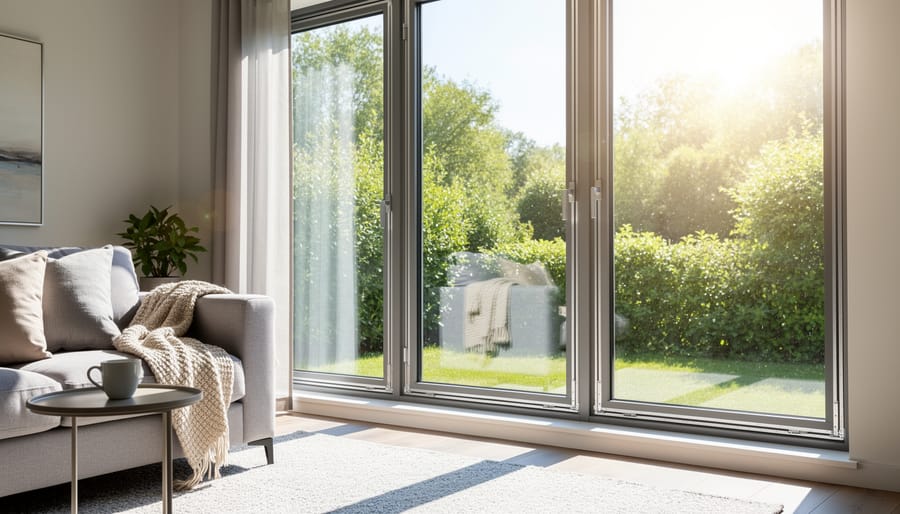
Upgrading to energy-rated windows significantly reduces heat transfer and lowers your heating and cooling costs. When evaluating window efficiency, two key metrics matter most. The U-factor measures how well a window prevents heat from escaping—lower numbers indicate better insulation, with efficient windows typically ranging from 0.20 to 0.35. The Solar Heat Gain Coefficient (SHGC) measures how much solar radiation passes through, rated from 0 to 1. In Illinois, where we experience both cold winters and warm summers, you’ll want windows with low U-factors to retain heat and moderate SHGC values to balance seasonal needs.
Look for windows displaying the ENERGY STAR certification label, which ensures they meet strict efficiency standards specific to our climate zone. These certified windows often feature double or triple-pane glass, low-emissivity coatings, and insulated frames that work together to minimize energy loss. Combined with solar panels and other improvements, energy-efficient windows create a comprehensive approach to reducing your home’s energy consumption while improving year-round comfort.
Insulated Doors and Entry Systems
Properly sealed and insulated doors significantly reduce energy loss in your home or business. When exterior doors aren’t adequately insulated or have gaps around the frames, conditioned air escapes while outdoor air infiltrates, forcing your heating and cooling systems to work harder. This results in higher utility bills and decreased comfort.
Energy-efficient entry systems feature insulated cores, often filled with polyurethane foam, which provides superior thermal resistance compared to traditional hollow doors. Quality weatherstripping around the door frame creates an airtight seal that prevents drafts and air leakage. Storm doors add an extra protective layer, creating an insulating air pocket between the main door and outdoor elements.
For Illinois homeowners, upgrading to insulated doors with proper sealing can qualify for energy efficiency tax credits and rebates. When combined with other improvements like solar panels, efficient doors contribute to overall energy savings by maintaining consistent indoor temperatures year-round. Look for doors with high R-values and ENERGY STAR certification to ensure maximum thermal performance and long-term energy cost reduction.
Water Heating Upgrades
Water heating typically accounts for 15-20% of your home’s energy consumption, making it a prime target for efficiency improvements. Several advanced technologies can significantly reduce this expense while maintaining reliable hot water delivery.
Tankless water heaters, also called on-demand systems, heat water only when you need it rather than maintaining a large tank of hot water around the clock. This eliminates standby heat loss and can reduce water heating costs by 24-34% for homes using 41 gallons or less of hot water daily. These compact units mount on walls and last considerably longer than traditional tank systems, typically 20 years compared to 10-15 years.
Heat pump water heaters represent another excellent option, using electricity to move heat from surrounding air into the water rather than generating heat directly. While they cost more upfront than conventional electric water heaters, they use 60-70% less energy and qualify for federal tax credits under current energy efficiency programs. These systems work best in spaces that remain between 40-90°F year-round, such as basements or utility rooms.
Solar water heating systems harness the sun’s energy to preheat water before it enters your conventional system. In Illinois, properly designed solar water heaters can meet 50-80% of your hot water needs during warmer months, with the backup system handling cloudy days and winter demand. When paired with rooftop solar panels, these systems create a comprehensive renewable energy solution that maximizes your energy independence while reducing utility costs throughout the year.
LED Lighting and Electrical Upgrades
Upgrading to LED lighting represents one of the most straightforward and cost-effective energy efficiency improvements available to Illinois property owners. LED bulbs use approximately 75% less energy than traditional incandescent lighting and last up to 25 times longer, significantly reducing both electricity costs and replacement expenses. In commercial settings, this translates to substantial savings on monthly utility bills while improving light quality and reducing maintenance needs.
Beyond simple bulb replacement, comprehensive electrical upgrades enhance energy efficiency throughout your property. Installing occupancy sensors and dimmer switches allows lights to operate only when needed and at appropriate brightness levels. Smart lighting systems enable remote control and automated scheduling, ensuring lights aren’t left on unnecessarily. These upgrades are particularly beneficial in commercial buildings with large floor areas or multiple rooms that may sit empty for extended periods.
Modern electrical panel upgrades also support energy efficiency by accommodating renewable energy systems like solar panels and enabling better load management. When combined with other improvements such as solar installation, LED lighting creates a comprehensive approach to reducing energy consumption. Property owners in Illinois can often qualify for utility rebates and federal tax credits when implementing these electrical improvements, making the initial investment even more attractive.
Roof Improvements for Energy Efficiency
Your roof plays a crucial role in your home’s overall energy performance, making roof improvements an essential consideration for energy efficiency. Modern roofing materials and techniques can significantly reduce heat transfer, lowering your heating and cooling costs while creating an ideal foundation for solar panel installation.
Cool roofing materials are designed to reflect more sunlight and absorb less heat than standard roofs. These specialized materials, available in various colors and styles, can reduce roof surface temperatures by up to 50 degrees Fahrenheit. This reduction means your air conditioning system works less hard during Illinois summers, translating to lower energy bills and extended HVAC equipment life.
Proper roof ventilation is another critical component of energy efficiency. Adequate attic ventilation prevents heat buildup in summer and moisture accumulation in winter, protecting your home’s structure while improving comfort and reducing energy consumption. Ridge vents, soffit vents, and powered attic fans work together to maintain optimal airflow.
For homeowners considering solar panels, roof condition becomes even more important. Since solar installations typically last 25-30 years, ensuring your roof is in excellent condition before installation saves money and hassle in the long run. Combining roof replacement with solar installation allows you to address both improvements simultaneously, maximizing efficiency and minimizing disruption.
Additional roofing improvements like reflective roof coatings and proper insulation underneath roofing materials further enhance energy performance. These upgrades work together to create a comprehensive energy-efficient barrier that protects your home while supporting sustainable energy goals.
Financial Incentives and Return on Investment
Making energy-efficient improvements becomes even more attractive when you consider the substantial financial incentives available to Illinois property owners. Understanding these programs helps you maximize your return on investment while reducing your carbon footprint.
The federal Investment Tax Credit (ITC) remains one of the most significant incentives for solar installations, currently offering a credit worth 30% of your total system cost through 2032. This applies to both residential and commercial solar projects. Additionally, the Energy Efficient Home Improvement Credit provides up to $3,200 annually for qualifying upgrades like heat pumps, insulation, windows, and doors.
Illinois residents benefit from several state-level programs as well. The Illinois Shines program offers Solar Renewable Energy Credits (SRECs) that provide ongoing payments for solar energy production. The state’s Home Energy Rebate Programs, funded through the Inflation Reduction Act, will soon offer point-of-sale discounts for electrification projects and whole-home energy retrofits, particularly benefiting low- to moderate-income households.
Your local utility company likely offers additional rebates for energy-efficient improvements. ComEd and Ameren Illinois provide incentives for HVAC upgrades, smart thermostats, insulation improvements, and LED lighting retrofits. These rebates can significantly reduce upfront costs.
Financing options make these improvements accessible regardless of your budget. Property Assessed Clean Energy (PACE) financing allows you to repay improvement costs through your property tax bill. Many solar providers, including locally owned Illinois companies, offer zero-down financing options that enable immediate savings on your energy bills.
The combined value of these incentives often means your energy-efficient improvements pay for themselves within a few years, delivering decades of ongoing savings while increasing your property value.
Energy-efficient improvements span a wide range of upgrades, from comprehensive solar installations to targeted enhancements like LED lighting and programmable thermostats. The most impactful improvements typically involve solar panel systems, advanced insulation, high-efficiency HVAC equipment, and ENERGY STAR-certified windows and appliances. However, the right combination of upgrades depends on your property’s current condition, your budget, and your long-term energy goals.
When prioritizing improvements, consider conducting a professional energy audit to identify where your property loses the most energy. This assessment helps you focus resources on upgrades that deliver the greatest return on investment. Combining major retrofits with smart energy habits creates a comprehensive approach to reducing consumption and costs.
Illinois homeowners and businesses have unique opportunities through state and federal incentive programs that make energy-efficient improvements more affordable. Solar installations, in particular, benefit from substantial tax credits and local rebates that significantly reduce upfront costs while providing decades of energy savings.
As a locally owned company with deep expertise in solar energy, Illinois Renewables understands the specific challenges and opportunities Illinois property owners face. Whether you’re ready for a complete solar installation or exploring complementary efficiency upgrades, we’re here to guide you through every step of your energy transformation. Our team provides comprehensive assessments, professional installations, and ongoing support to ensure your improvements deliver maximum performance and value for years to come.
