
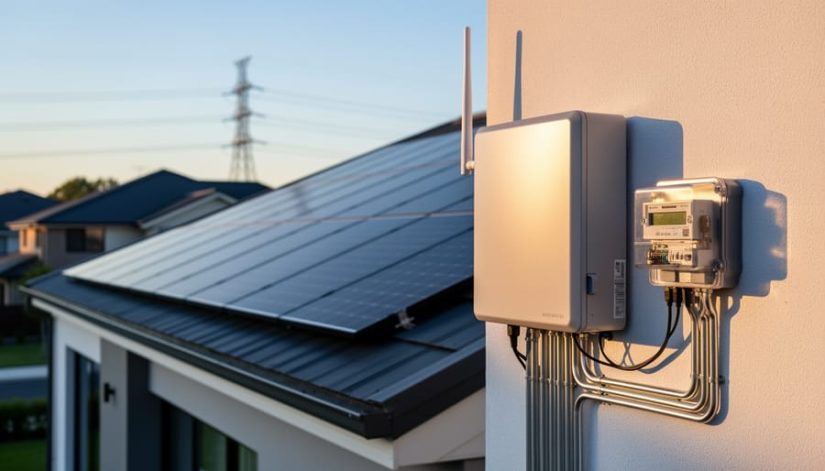
Why Your Solar System Needs Smart Communication to Talk to the Grid
Your solar panels generate clean electricity, but without the right communications infrastructure, they can’t safely and efficiently deliver that power to the grid. This invisible network of sensors, inverters, and monitoring systems serves as the nervous system of your solar installation, constantly managing energy flow, detecting issues, and ensuring your system operates at peak performance.
Communications infrastructure enables your solar array to do far more than simply produce electricity. It allows real-time monitoring of energy production, automatically adjusts output based on grid conditions, reports performance data to you and your utility company, and immediately identifies equipment malfunctions before they impact your energy savings. In Illinois, where net metering policies reward solar owners for excess energy sent back to the grid, these communication systems ensure every kilowatt-hour is accurately tracked and credited to your account.
Modern solar installations rely on sophisticated digital protocols that connect inverters, optimizers, and monitoring equipment into a cohesive network. These systems communicate bidirectionally with the utility grid, responding to voltage fluctuations, frequency changes, and grid emergencies in milliseconds. For Illinois property owners, understanding this critical infrastructure means recognizing that a successful solar investment depends not just on panel quality, but on the intelligent systems that manage how your installation interacts with the broader electrical network. This communication layer transforms individual solar arrays into reliable, grid-integrated assets that benefit both owners and the entire energy system.
What Communications Infrastructure Actually Means for Your Solar System
The Brain of Your System: Smart Inverters
Think of your solar inverter as the communication hub of your entire system. Modern smart inverters do much more than convert DC power from your panels into usable AC electricity—they’re constantly talking with the grid, monitoring performance, and responding to changing conditions.
These intelligent devices communicate through multiple channels. They send real-time data about your system’s energy production, voltage levels, and overall performance to monitoring platforms that you can access from your smartphone or computer. This means you’ll always know how much electricity your system is generating and can quickly identify any issues that need attention.
But the real innovation happens in how smart inverters interact with the electrical grid itself. They continuously monitor grid frequency and voltage, automatically adjusting their output to maintain stability. If the grid experiences a surge or drop in power, your inverter responds in milliseconds to help balance the load. This capability, called grid support, is increasingly important as more renewable energy comes online.
Smart inverters also enable critical safety features. During a power outage, they immediately disconnect your system from the grid to protect utility workers—a requirement known as anti-islanding protection. Meanwhile, they’re collecting diagnostic data that can alert you or your installer to potential problems before they become serious.
For Illinois property owners, this sophisticated communication infrastructure means you’re not just installing solar panels—you’re integrating an intelligent system that actively contributes to a more reliable, resilient electrical grid while maximizing your energy savings.
The Connection Points That Keep Everything Talking
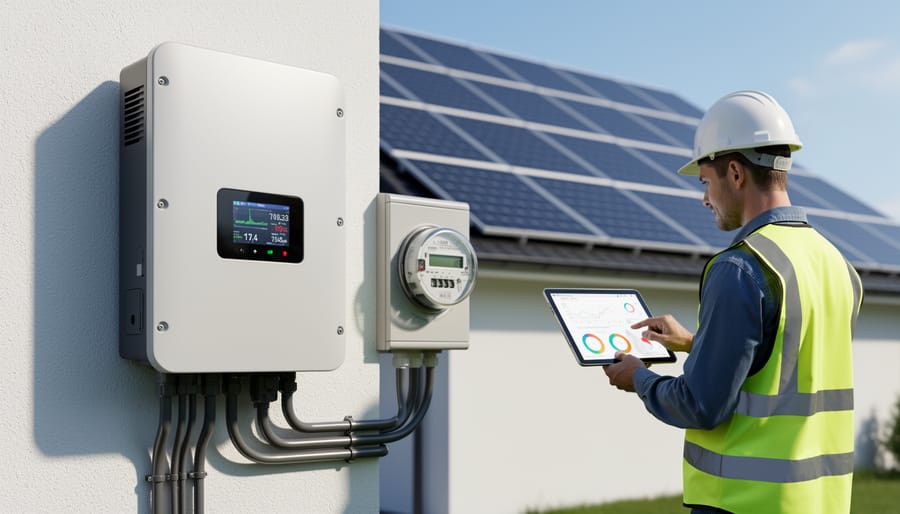
Modern solar systems rely on sophisticated connection points that enable seamless communication between your panels, inverters, and the electrical grid. At the heart of this network are smart meters, which replace traditional electric meters and provide real-time, two-way data exchange about energy production and consumption. These meters track when your solar panels generate excess electricity that flows back to the grid and when you’re drawing power from it.
Communication protocols serve as the common language that allows different system components to work together. Think of them as translators ensuring your inverter, monitoring equipment, and utility systems can exchange information effectively. These interoperability standards guarantee that equipment from different manufacturers functions harmoniously within Illinois’s grid infrastructure.
Data pathways complete the communication chain, transmitting information through either wired connections or wireless networks. This infrastructure enables you to monitor your system’s performance through smartphone apps while simultaneously providing utilities with the grid management data they need. As a locally owned Illinois solar provider, we ensure these connection points are properly configured during installation, creating a reliable communication network that maximizes your system’s efficiency and simplifies monitoring.
How Illinois Utilities Use This Technology to Manage Solar Energy
Real-Time Grid Balancing
When thousands of solar systems simultaneously generate power and feed it back into the electrical grid, utilities face a complex challenge: keeping electricity supply and demand perfectly balanced at all times. This is where advanced communications infrastructure becomes essential for grid stability.
Modern smart grid technology enables your solar system to communicate with the utility in real-time, sharing information about how much power you’re generating, consuming, and sending back to the grid. These communication systems transmit data every few seconds, allowing grid operators to see the complete picture of energy flow across their service territory.
Think of it like a traffic management system for electricity. Just as traffic lights adjust timing based on real-time vehicle counts, utilities use this constant stream of data to make split-second decisions about power distribution. When solar production suddenly drops due to passing clouds, the communication system alerts the utility immediately so they can compensate by adjusting other power sources or drawing from battery storage.
This two-way communication also allows utilities to send signals back to solar systems when needed. During periods of excess generation or grid congestion, your system can receive instructions to temporarily reduce output or store energy in batteries if available. For Illinois homeowners and businesses, this seamless coordination happens automatically behind the scenes, ensuring grid reliability while maximizing the value of your solar investment.
What Illinois Regulations Require
In Illinois, solar installations must comply with both state-level regulations and local utility requirements to ensure safe and efficient grid integration. The Illinois Commerce Commission (ICC) oversees utility interconnection standards, which dictate how your solar system communicates with the broader electrical grid. These regulations exist to protect both your investment and grid reliability.
When you install a grid-connected solar system in Illinois, your installer must follow the state’s interconnection procedures. For most residential and commercial systems under 2 megawatts, this involves submitting an interconnection application to your local utility company. The application process requires detailed information about your system’s communications equipment, including inverters and any monitoring devices that will exchange data with the grid.
Illinois regulations require that all grid-connected systems include automatic disconnect features and anti-islanding protection. These safety mechanisms rely on constant communication between your solar equipment and the utility grid. When grid power goes out, your system must recognize this within two seconds and automatically shut down to prevent dangerous backfeeding that could harm utility workers.
Your utility company may also require specific communication protocols for real-time monitoring. Many Illinois utilities now mandate smart inverters that can receive signals from grid operators, allowing them to adjust power output during peak demand periods or grid emergencies. This two-way communication capability helps maintain grid stability as more renewable energy comes online.
Working with experienced local solar installers ensures your system meets all Illinois-specific requirements from the start, avoiding costly delays or modifications during the approval process.
The Benefits You Actually Experience as a Solar Customer
Track Your System Performance From Anywhere
Modern communications infrastructure puts you in complete control of your solar investment through advanced remote monitoring capabilities. Your system continuously tracks production, energy consumption, and grid interaction, sending all this information to secure cloud-based platforms that you can access from anywhere.
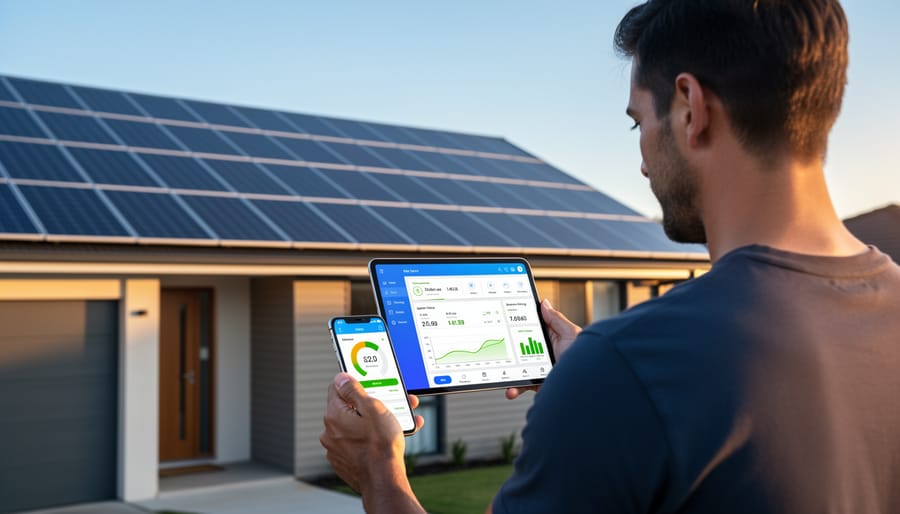
Most solar installations include mobile apps that display real-time data on your smartphone or tablet. You’ll see exactly how much energy your panels are generating at any moment, how much you’re consuming, and how much excess power you’re sending back to the grid. This transparency helps you understand your energy patterns and maximize your savings throughout the day.
The monitoring system also tracks your environmental impact, showing your carbon offset and equivalent trees planted. For business owners, this data proves valuable for sustainability reporting and demonstrating your commitment to renewable energy.
Perhaps most importantly, remote monitoring enables predictive maintenance. As a locally owned company with deep expertise in solar energy, we receive automatic alerts if your system’s performance drops, often identifying and resolving issues before you even notice them. This proactive approach ensures your investment continues delivering maximum returns year after year, giving you peace of mind that your system is always performing optimally.
Faster Problem Detection and Resolution
Modern communications infrastructure acts as an early warning system for your solar energy investment. Advanced monitoring technology continuously tracks your system’s performance, identifying potential issues in real time before they impact your energy production. When a component begins underperforming or a connection weakens, the system immediately alerts your installer, often before you notice any change in your electricity bills.
This proactive approach significantly reduces downtime and maintenance costs. Instead of waiting for a complete failure that could leave your system offline for days, installers can schedule preventive maintenance during convenient times. For Illinois homeowners and businesses, this means fewer interruptions to your renewable energy generation, especially during peak production months when every kilowatt-hour counts.
The financial benefits extend beyond avoiding emergency service calls. By catching small issues early, you prevent them from escalating into larger, more expensive repairs. Communication systems also provide detailed diagnostic information, allowing technicians to arrive with the right parts and knowledge to fix problems quickly. For business owners managing operational budgets, this predictability in maintenance costs makes solar energy an even more attractive investment.
Maximizing Your Return on Investment
Modern communications infrastructure does more than just monitor your solar system—it creates a detailed record of performance that directly impacts your bottom line. The data collected by your system’s monitoring equipment provides the documentation needed to claim valuable financial incentives available to Illinois solar customers.
Your system continuously tracks energy production, consumption patterns, and grid interactions, generating reports that verify your renewable energy credits and quantify environmental benefits. This documentation is essential when applying for federal tax credits, state incentives, and renewable energy certificate programs. Many Illinois business owners have successfully used this data to support accelerated depreciation claims and other tax advantages.
Beyond incentives, these insights help identify optimization opportunities. By analyzing performance data, you can spot underperforming components, adjust consumption patterns to maximize self-use of solar energy, and reduce grid dependency during peak rate periods. Our locally owned team helps Illinois customers interpret this data to make informed decisions that enhance system returns. We’ve seen clients reduce their energy costs by 20-30% simply by using monitoring data to shift high-consumption activities to peak production hours.
What Happens During Installation: The Communication Setup Process
The Testing and Commissioning Phase
Before your solar system can officially go live, installers perform comprehensive testing to ensure all communication components function correctly. This critical phase verifies that your system can properly exchange data with the utility grid and monitoring platforms.
During testing, technicians check that your smart meter accurately records both energy consumption and solar production. They verify that your inverter communicates properly with grid management systems, ensuring it can respond to utility signals if needed. Your monitoring system gets tested to confirm you’ll receive real-time data about your system’s performance.
Installers also simulate various scenarios, like grid outages or system errors, to ensure your communication infrastructure responds appropriately. This includes verifying that your system will automatically disconnect during power outages to protect utility workers, a critical safety requirement in Illinois.
Once testing confirms everything works as designed, your installer submits documentation to your utility company for final approval. This typically includes communication protocol verification and safety compliance records. After utility approval, your system receives permission to operate, and your solar installation officially begins generating clean energy while staying seamlessly connected to Illinois’s electrical grid.
Your Role in Maintaining Communication
As a solar system owner, your role in maintaining communication infrastructure is straightforward but important. Start by ensuring your internet router stays connected and operational, as most monitoring systems rely on steady WiFi to transmit performance data. If you notice your system’s monitoring app isn’t updating or shows connectivity issues, check your home internet connection first before calling your installer.
Keep your monitoring software current by accepting update prompts when they appear. These updates often include important cybersecurity measures and performance improvements. However, don’t attempt to modify system settings or communication protocols yourself, as this can interfere with grid integration requirements.
Contact your installer if you experience persistent connectivity problems lasting more than 24 hours, notice unusual system behavior, or receive alerts about communication failures. Your installer can remotely diagnose most issues and determine whether a site visit is necessary. Regular monitoring through your system’s app helps you stay informed about performance and catch potential problems early, ensuring your solar investment continues generating both energy and savings efficiently.
Future-Proofing Your Investment with Advanced Communication Features
Modern communications infrastructure does more than connect your solar system to today’s grid—it positions you to take advantage of tomorrow’s energy innovations. As Illinois continues expanding its renewable energy programs, the right communications setup ensures your investment remains valuable and relevant for decades to come.
One of the most significant emerging opportunities is battery storage integration. Advanced communications systems allow solar installations to seamlessly coordinate with battery systems, automatically managing when to store excess energy, when to use stored power, and when to sell electricity back to the grid at premium rates. This capability becomes increasingly valuable as utilities implement time-of-use pricing and offer higher compensation during peak demand periods.
Vehicle-to-grid technology represents another frontier where communications infrastructure plays a crucial role. As electric vehicles become more common in Illinois, bidirectional charging systems will allow your EV to function as mobile energy storage, communicating with your solar array and the utility grid to optimize charging times and even provide power back to your home or the grid during high-demand periods. The communications protocols being installed today are designed to support these future capabilities.
Demand response programs offer Illinois customers financial incentives for reducing electricity consumption during peak times. Modern communications infrastructure automatically enrolls compatible systems in these programs, allowing utilities to send signals that temporarily reduce non-essential loads or switch to battery power. These automated responses happen without disrupting your operations and can generate additional revenue streams.
The same infrastructure enables participation in microgrids and community solar initiatives, which are expanding throughout Illinois. As these programs evolve, properties with proper communications capabilities will have immediate access to new opportunities, while those without adequate infrastructure may face costly upgrades or miss out entirely on valuable programs.
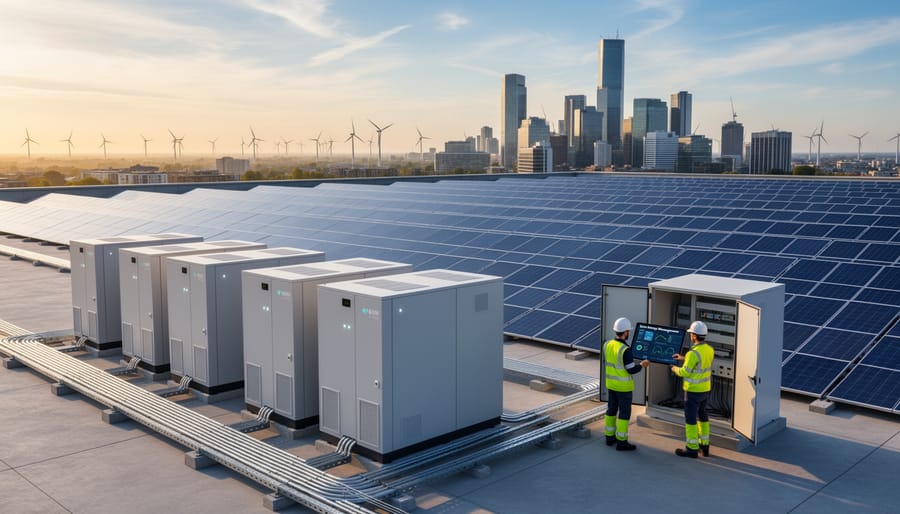
A well-designed communications infrastructure isn’t just a technical detail—it’s the backbone of a reliable, high-performing solar energy system. From real-time monitoring to grid coordination and remote troubleshooting, these communication systems ensure your investment delivers consistent value for decades to come. Whether you’re a homeowner looking to reduce energy costs or a business planning a large-scale installation, understanding how your solar system communicates with the grid and your monitoring devices is essential for peace of mind.
As a locally owned company with deep expertise in solar energy, Illinois Renewables takes a comprehensive approach to every project. We design communication infrastructures tailored to your specific needs, ensuring seamless integration with existing electrical systems and utility requirements. Our team handles everything from initial system setup to ongoing support, so you can focus on enjoying clean, renewable energy without worrying about the technical complexities.
Ready to explore solar for your property? Contact Illinois Renewables today to discuss how we can design a solar system with proper communication infrastructure that maximizes performance and reliability.
