
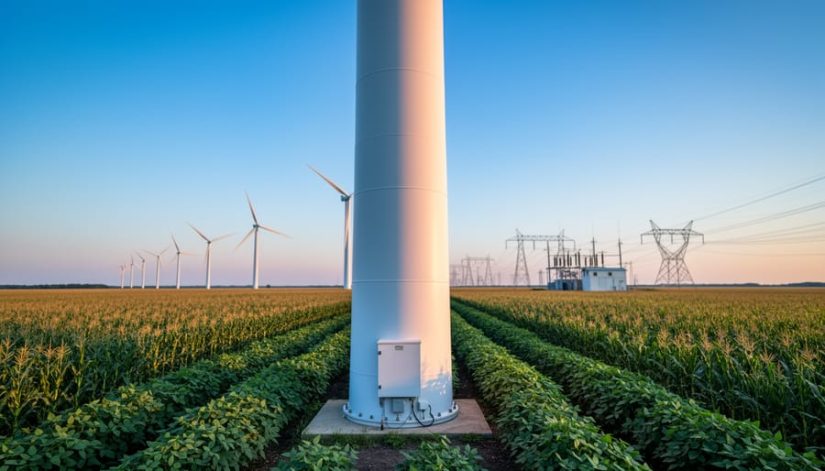
Why Smart Investors Are Banking on Utility-Scale Wind Energy in Illinois
Utility-scale wind energy represents large commercial wind farms that generate electricity directly for the power grid, typically producing 100 megawatts or more—enough to power tens of thousands of homes. Unlike residential solar panels or small wind turbines, these massive installations require significant land, substantial capital investment, and power purchase agreements with utilities or corporations seeking renewable energy credits.
For Illinois investors and landowners, utility-scale wind presents a compelling opportunity alongside solar development. The Prairie State’s consistent wind resources, particularly in the northern and western regions, combined with favorable state renewable energy standards, create conditions where wind projects can deliver 20-25 year revenue streams through land leases or direct ownership models. Illinois ranks among the top ten states for installed wind capacity, with projects generating stable income for rural communities while meeting corporate sustainability goals.
The financial mechanics differ substantially from rooftop solar investments. Utility-scale wind typically requires $1.3-$2.2 million per megawatt in upfront costs, making direct ownership accessible primarily through syndicated partnerships, infrastructure funds, or community solar-style arrangements. However, landowners can participate through lease agreements that provide $3,000-$8,000 per turbine annually without capital outlay, creating passive income while maintaining agricultural operations on 95-98% of the land.
Understanding where wind energy fits within a diversified renewable portfolio matters for businesses pursuing carbon reduction targets. Wind generation peaks during different hours than solar—often strongest at night and during winter months—creating complementary production patterns. This seasonal and daily variance means combining wind power purchase agreements with solar installations delivers more consistent renewable energy coverage throughout the year, reducing reliance on grid power and maximizing sustainability outcomes while hedging against electricity price volatility.
What Makes Utility-Scale Wind Energy Different
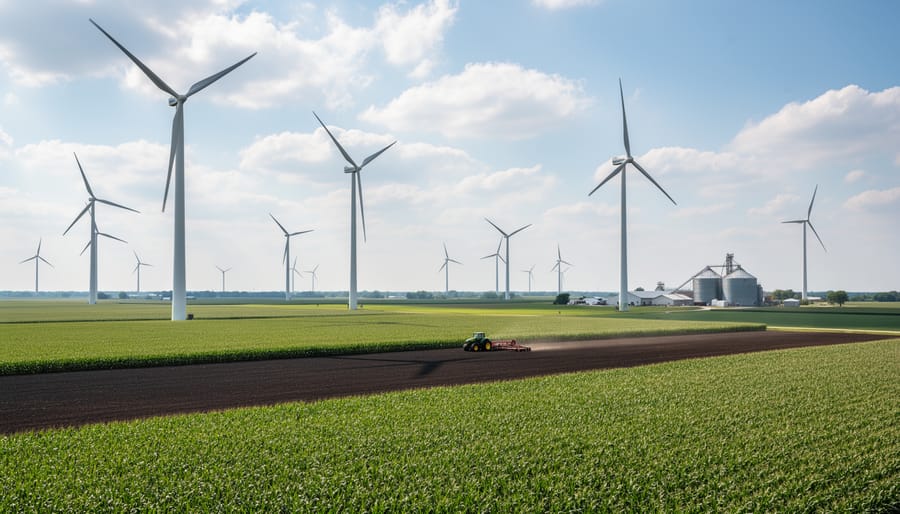
Understanding the Scale: From Community Wind to Utility-Scale
Wind energy projects come in several distinct categories based on their size and power generation capacity. Understanding these differences helps clarify where utility-scale wind fits within the broader renewable energy landscape.
At the smallest end of the spectrum, residential or small-scale wind turbines typically generate between 5 and 100 kilowatts of power. These installations serve individual homes or farms, much like rooftop solar panels provide electricity for a single property.
Community wind projects represent the middle ground, ranging from 100 kilowatts to several megawatts in capacity. These projects often involve local ownership structures where community members invest together to develop and benefit from a shared wind resource. They’re large enough to supply multiple properties or small businesses but remain locally controlled.
Utility-scale wind projects operate at an entirely different magnitude. These installations typically feature multiple turbines with individual capacities of 2 to 3 megawatts or more, with total project capacities reaching 100 megawatts or beyond. A single utility-scale wind farm can generate enough electricity to power tens of thousands of homes. These projects connect directly to the electrical grid and sell power through wholesale markets or long-term agreements with utilities and large commercial buyers.
In Illinois, our wind resources combined with favorable terrain in many regions make utility-scale development particularly viable. While our expertise centers on solar energy, understanding how utility-scale wind complements solar in a diversified renewable portfolio helps investors and landowners make informed decisions about maximizing their renewable energy opportunities.
How Wind Energy Complements Solar in a Renewable Portfolio
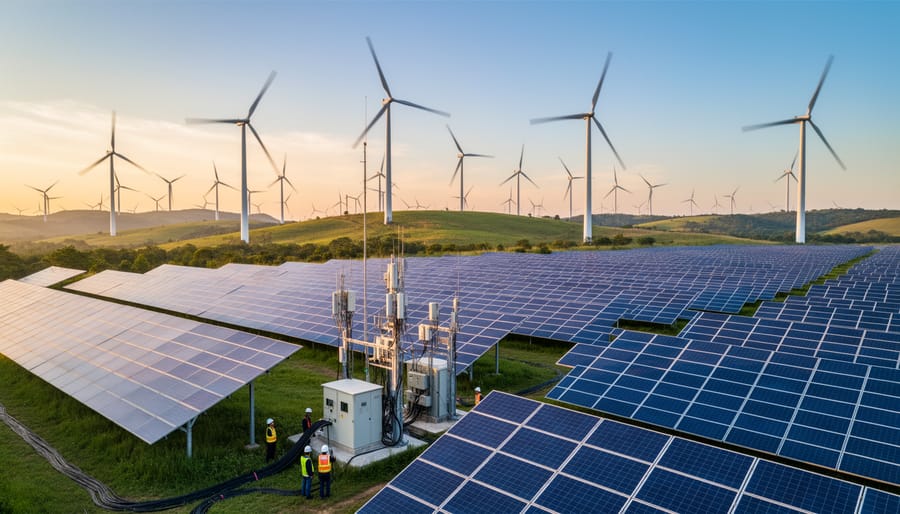
Wind and solar energy work together like natural partners, each filling in when the other takes a break. This complementary relationship makes them ideal components of a diversified renewable energy portfolio, especially for Illinois investors looking to maximize clean energy production year-round.
The key lies in their generation patterns. Solar panels produce maximum energy during sunny midday hours, typically peaking between 10 a.m. and 3 p.m. Wind turbines, however, often generate more electricity during evening and nighttime hours when temperature differences create stronger air currents. In Illinois, wind speeds frequently increase after sunset, providing power precisely when solar production drops off.
Seasonal variations further enhance this partnership. Solar systems perform best during summer months when days are long and sun angles are high. Wind energy, conversely, tends to peak during spring and fall in Illinois when weather fronts move more actively across the state. Winter months also bring stronger, more consistent winds, compensating for reduced solar output during shorter, cloudier days.
For Illinois investors, this natural balance offers significant advantages. A portfolio combining both resources reduces reliance on any single energy source and provides more consistent revenue streams throughout the year. When solar production dips due to weather or seasonal changes, wind generation often picks up the slack, and vice versa.
This diversification strategy also helps manage risk. While weather patterns affect both technologies, they rarely impact them simultaneously in the same way. A cloudy week might reduce solar output but could bring wind-favorable conditions. This stability makes combined wind-solar portfolios attractive to utilities, corporate buyers, and investors seeking reliable renewable energy performance across all seasons and times of day.
The Investment Appeal of Utility-Scale Wind Projects
Revenue Streams and Power Purchase Agreements
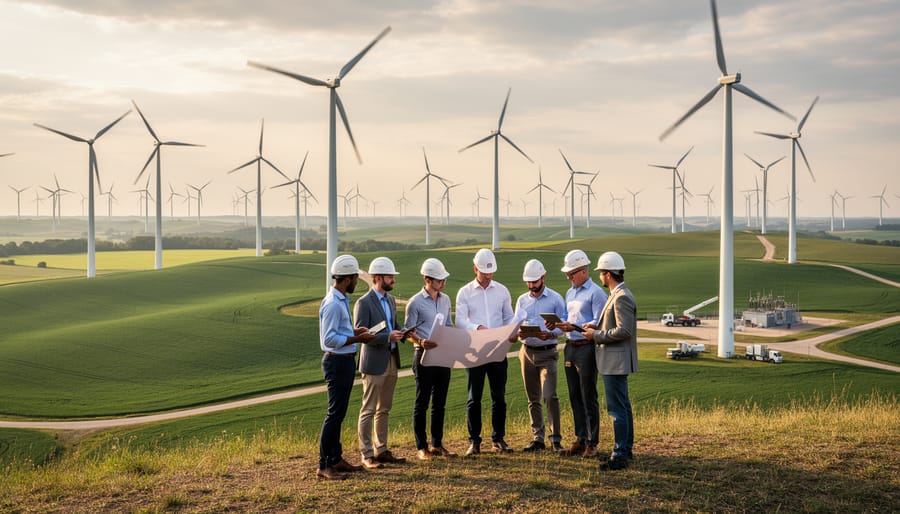
Utility-scale wind farms generate revenue through several straightforward mechanisms that make them financially viable for investors and beneficial for energy consumers.
The primary revenue source comes from power purchase agreements, or PPAs. These are long-term contracts, typically spanning 10 to 25 years, where a utility company or large business agrees to buy electricity from the wind farm at a predetermined price. This arrangement provides stable, predictable income for wind farm operators while giving buyers price certainty against fluctuating energy costs. For Illinois businesses considering renewable energy, PPAs offer a way to lock in competitive electricity rates while meeting sustainability goals.
Wind farms also sell electricity directly into wholesale markets managed by regional grid operators like PJM Interconnection, which serves Illinois. Here, electricity prices fluctuate based on supply and demand, with wind farms earning revenue for every megawatt-hour they produce and deliver to the grid.
A third revenue stream comes from Renewable Energy Credits, or RECs. When a wind farm generates one megawatt-hour of clean electricity, it earns one REC, which can be sold separately from the electricity itself. Companies and utilities purchase these credits to meet renewable energy requirements and demonstrate environmental commitments. Illinois has specific renewable energy standards that create demand for these credits within the state.
Many wind projects combine these revenue streams to maximize financial returns. While solar energy remains our primary expertise at Illinois Renewables, understanding wind revenue models helps us guide clients toward comprehensive renewable energy strategies that might include both technologies, depending on their specific needs and Illinois location advantages.
Tax Incentives and Investment Tax Credits
Federal incentives make utility-scale wind energy financially attractive for Illinois investors and landowners. The Production Tax Credit (PTC) provides a per-kilowatt-hour tax credit for electricity generated by qualifying wind facilities during their first ten years of operation. Currently valued at approximately 2.75 cents per kilowatt-hour, the PTC significantly improves project cash flow and return on investment. This credit directly rewards electricity production, making it particularly valuable for wind projects in areas with strong, consistent wind resources.
Alternatively, wind project developers can elect the Investment Tax Credit (ITC), which provides a one-time credit based on a percentage of the project’s total capital costs. While the ITC percentage has varied with policy changes, it offers immediate value recognition rather than the extended benefit period of the PTC. Project developers typically analyze site-specific conditions to determine which credit maximizes financial returns.
Illinois offers additional tax incentives for renewable projects that complement federal programs. The Illinois Renewable Portfolio Standard creates long-term demand for wind energy through Renewable Energy Credits (RECs), providing revenue streams beyond electricity sales. Illinois property owners hosting wind turbines may also benefit from favorable property tax treatments in certain counties.
Together, these federal and state incentives can cover substantial portions of project costs, transforming wind energy from a long-term investment into a near-term financial opportunity. Understanding how to layer these benefits is essential for maximizing returns on utility-scale wind projects.
Long-Term Returns: What the Data Shows
Understanding the long-term financial performance of utility-scale wind projects helps investors set realistic expectations. Modern wind turbines typically operate for 20 to 25 years, with some facilities extending their lifespan through repowering programs that replace older turbines with newer, more efficient models.
The return on investment timeline for utility-scale wind generally ranges from 7 to 12 years, depending on project size, location, and financing structure. Illinois wind farms benefit from the state’s strong wind resources, particularly in the northern and central regions, which can accelerate payback periods compared to less favorable locations.
Capacity factor, which measures how much energy a wind farm produces compared to its maximum potential, serves as a key performance indicator. In Illinois, well-sited utility-scale wind projects typically achieve capacity factors between 35 and 45 percent. This means a wind farm operates at full capacity about one-third to nearly half the time throughout the year. While this might seem low compared to traditional power plants, it’s considered strong performance for wind energy and translates into competitive electricity costs.
Modern turbines also require less maintenance than earlier generations, with operational costs typically representing 20 to 25 percent of total lifetime expenses. These predictable long-term costs, combined with no fuel expenses, make wind energy financially stable once operational. For investors familiar with solar energy, wind presents complementary benefits since wind resources often peak during different seasons and times of day than solar production.
Illinois Wind Energy: Location-Specific Opportunities
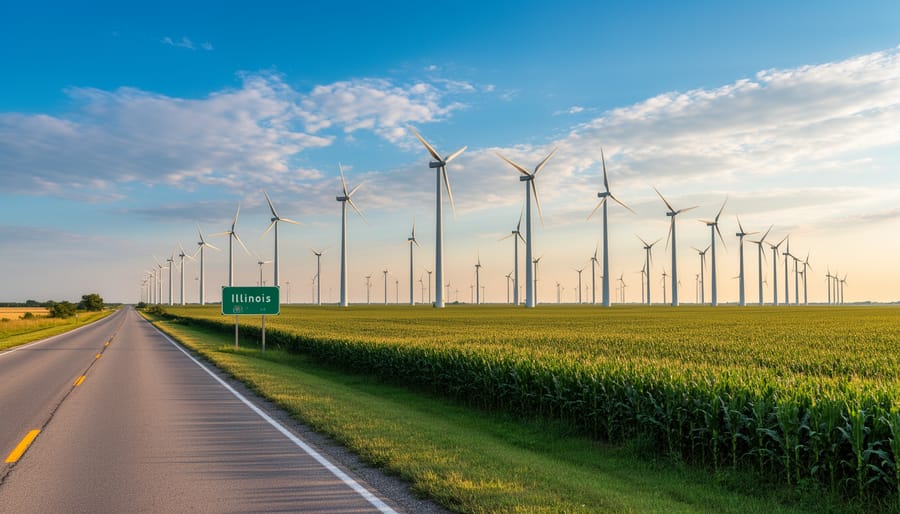
Where Illinois Wind Resources Are Strongest
Illinois wind resources are strongest in the northern and western regions of the state, where consistent wind patterns create ideal conditions for utility-scale wind energy development. These areas benefit from what meteorologists call the Great Plains wind corridor, which brings steady winds across the flat, open landscapes of rural Illinois.
The top wind-producing counties include Lee, Bureau, McLean, and Logan counties in central Illinois, along with Carroll, Whiteside, and Henry counties in the northwestern region. These locations consistently experience average wind speeds of 14 to 17 miles per hour at turbine hub height (around 260 to 330 feet), which is the threshold needed to make wind energy projects economically viable.
Several factors make these regions particularly suitable for wind development. The relatively flat terrain allows wind to flow unobstructed across vast agricultural lands, while the lower population density reduces concerns about noise and visual impact. Additionally, these areas have existing electrical transmission infrastructure originally built to support agricultural and industrial operations, making it easier to connect wind farms to the power grid.
Wind speeds naturally increase with altitude, which is why modern utility-scale wind turbines are designed with tall towers that can capture stronger, more consistent winds at higher elevations. The open prairies of central and northern Illinois provide the perfect environment for these installations.
For investors and landowners considering renewable energy opportunities, understanding these regional variations is essential. While Illinois Renewables specializes in solar energy solutions, we recognize that some properties may be better suited for wind development, and we can help you evaluate which renewable resource makes the most financial sense for your specific location.
Illinois Renewable Energy Policy Landscape
Illinois has established itself as a leader in renewable energy through progressive policy frameworks that directly benefit wind energy investments. The state’s Renewable Portfolio Standard (RPS) requires utilities to procure an increasing percentage of their electricity from renewable sources, creating sustained demand for utility-scale wind projects.
The Future Energy Jobs Act (FEJA), passed in 2016, marked a significant turning point by establishing long-term renewable energy goals and creating financial incentives through Renewable Energy Credits (RECs). This legislation provided the stability investors needed to commit to large-scale wind developments across Illinois.
Building on this foundation, the Climate and Equitable Jobs Act (CEJA) of 2021 set even more ambitious targets, requiring Illinois to achieve 50% renewable energy by 2040 and 100% clean energy by 2050. CEJA expanded funding mechanisms and streamlined approval processes for utility-scale projects, making wind investments more attractive and financially viable.
These policies create a predictable regulatory environment that reduces investment risk. For landowners and business owners considering wind energy partnerships, this legislative support translates to reliable revenue streams through power purchase agreements and land lease arrangements. The same policy frameworks that support wind development also benefit solar installations, demonstrating Illinois’s comprehensive commitment to renewable energy. Understanding these policies helps investors and stakeholders make informed decisions about participating in the state’s clean energy transition while capitalizing on available incentives and market opportunities.
Investment Strategies for Different Stakeholders
Direct Ownership and Joint Ventures
For larger businesses and industrial facilities in Illinois with significant energy needs, direct ownership of wind projects or joint venture partnerships offer compelling alternatives to traditional power purchase agreements. Direct ownership means your business actually owns a portion or all of a utility-scale wind facility, giving you complete control over the energy produced and potential revenue from excess generation sold back to the grid.
Joint ventures allow you to partner with experienced wind developers, sharing both investment costs and returns. This arrangement works particularly well for manufacturing facilities, data centers, or agricultural operations with substantial land holdings and high electricity consumption. By partnering with a developer, you contribute resources like capital or land access while the developer manages technical aspects like turbine installation, grid connection, and ongoing maintenance.
These ownership models provide maximum financial benefits, including federal tax credits, accelerated depreciation, and long-term energy cost stability. However, they require significant upfront capital and long-term commitment. Many Illinois businesses find that combining direct wind ownership with locally owned solar installations creates a balanced renewable portfolio that maximizes both energy independence and financial returns while supporting clean energy development across the state.
Community Solar Wind Hybrid Projects
For Illinois businesses and organizations interested in renewable energy but uncertain about taking on full project development, community solar-wind hybrid projects offer an accessible entry point. These emerging models combine the predictable daytime generation of solar panels with wind turbines that often produce more energy during evening and winter months, creating a more balanced renewable energy portfolio.
Rather than purchasing land and managing construction, local businesses can invest in shares of these hybrid facilities. You receive credits on your electricity bill proportional to your investment, reducing energy costs without the complexity of on-site installation. This arrangement works particularly well for Illinois businesses with limited roof space or properties unsuitable for solar panels.
These hybrid projects are increasingly viable in Illinois, where wind resources in the northern and central regions complement solar generation patterns. Local ownership structures allow multiple stakeholders to pool resources, sharing both the upfront costs and long-term benefits. For businesses already familiar with community solar programs, adding a wind component diversifies your renewable investment and can provide more consistent year-round returns. While expertise in solar energy remains our primary focus, we recognize that understanding these combined approaches helps Illinois businesses make informed renewable investment decisions that align with their sustainability goals and financial objectives.
Land Lease Opportunities for Property Owners
For Illinois property owners with suitable land, wind energy development presents a valuable opportunity to generate steady, long-term income without giving up ownership of your property. Wind developers typically seek rural parcels with strong, consistent wind resources and minimal obstructions, making agricultural land particularly attractive for turbine placement.
Wind lease agreements generally span 20 to 40 years, with most landowners receiving annual payments ranging from $3,000 to $8,000 per turbine, depending on location and wind quality. Some agreements offer tiered payment structures that increase over time or revenue-sharing arrangements based on electricity production. Importantly, turbines occupy minimal ground space—typically less than half an acre per turbine—allowing farming or ranching activities to continue around the installations.
Before entering a lease agreement, landowners should carefully evaluate several factors. Consider how turbine placement might affect your property’s future use, access roads required for construction and maintenance, and potential impacts on neighbors. It’s advisable to consult with an attorney experienced in wind energy contracts to review terms related to decommissioning responsibilities, liability coverage, and easement rights.
Illinois landowners also benefit from property tax incentives for renewable energy projects, which can make wind development more attractive to developers and potentially increase lease values. The state’s strong wind resources, particularly in central and northern regions, combined with growing renewable energy demand, make land lease opportunities increasingly competitive. Working with established developers ensures proper site assessment, transparent negotiations, and professional project management throughout the lease term.
Key Considerations Before Investing
Site Assessment and Wind Resource Analysis
Before any utility-scale wind project breaks ground, developers must conduct thorough site assessments to determine whether a location can support a profitable wind farm. This process shares similarities with solar site evaluation, though it focuses on different environmental factors.
The assessment begins with wind resource analysis, which involves installing meteorological towers or remote sensing equipment to measure wind speeds, direction, and consistency at various heights over at least one year. Developers look for sites with average wind speeds of at least 6.5 meters per second at hub height, as these conditions typically support economically viable projects. Illinois benefits from strong, consistent winds across much of the state, particularly in northern and central regions.
Terrain analysis examines how land features affect wind flow. Hills, valleys, buildings, and vegetation can create turbulence or wind shadows that reduce energy production. Advanced computer modeling helps predict how wind will behave across the proposed site under different conditions.
Feasibility studies then evaluate practical considerations including proximity to transmission infrastructure, land availability and cost, environmental impact assessments, and local zoning regulations. In Illinois, developers must also consider community acceptance and compatibility with existing land uses like agriculture.
Grid connection studies assess whether the local electrical infrastructure can handle the power output without costly upgrades. Distance to substations and transmission lines significantly impacts project economics. These comprehensive evaluations help investors understand potential returns and risks before committing capital to development, ensuring projects are both technically sound and financially viable for long-term energy generation.
Grid Interconnection and Infrastructure Requirements
Connecting a utility-scale wind farm to the electrical grid is a complex but essential step that significantly impacts project costs and timelines. The interconnection process typically begins with submitting an application to your regional transmission organization, which in Illinois is PJM Interconnection or MISO (Midcontinent Independent System Operator). This application triggers a series of technical studies to evaluate how the wind farm will affect grid stability and capacity.
The interconnection study process can take 18 to 36 months and costs between $50,000 to $500,000 depending on project size and complexity. These studies assess whether existing transmission infrastructure can handle the additional power or if upgrades are necessary. Infrastructure upgrades represent one of the largest expenses, potentially ranging from $500,000 for minor improvements to over $50 million for new transmission lines spanning long distances.
Transmission capacity is particularly important in rural Illinois areas where wind resources are strongest but existing power lines may be limited. Wind developers must often construct new substations and high-voltage transmission lines to carry electricity from remote wind farms to population centers. These costs are sometimes shared between the developer and utility companies through negotiated agreements.
The distance from a wind farm to adequate transmission infrastructure directly affects project economics. Sites located within five miles of existing high-capacity lines enjoy significant cost advantages. While these infrastructure requirements add complexity compared to distributed solar installations, understanding these costs upfront helps investors make informed decisions about utility-scale wind opportunities in Illinois.
Permitting, Zoning, and Community Relations
Developing a utility-scale wind project in Illinois requires navigating a complex landscape of permits, zoning regulations, and community engagement. Understanding these requirements upfront is essential for anyone considering wind energy investments.
At the county level, wind projects typically require special use permits or conditional use permits. Each Illinois county has its own zoning ordinances that govern wind turbine placement, setback distances from property lines and residences, noise limits, and height restrictions. Some counties have embraced wind development with streamlined processes, while others have implemented more restrictive regulations or even moratoriums.
State-level permits focus primarily on environmental reviews and grid interconnection. The Illinois Environmental Protection Agency evaluates potential impacts on wildlife, particularly bird and bat populations. Developers must also secure interconnection agreements with regional transmission organizations to connect their projects to the electrical grid.
Community relations often determine a project’s success or failure. Local residents may have concerns about property values, visual impacts, noise, and shadow flicker effects. Successful developers prioritize early and transparent communication with nearby landowners and the broader community. Public meetings, one-on-one conversations, and clear information about project benefits—including tax revenue for local schools and infrastructure—help build support.
Some developers offer good neighbor agreements that provide financial benefits to non-participating landowners within a certain distance of turbines. Property tax payments from wind farms can significantly boost rural county budgets, funding essential services and reducing tax burdens on other property owners. These community benefits, combined with respectful engagement throughout the development process, create the foundation for projects that serve both investors and Illinois communities.
How Wind Fits Into a Broader Renewable Energy Strategy
Balancing Solar and Wind for Consistent Energy Production
When planning renewable energy investments in Illinois, combining utility-scale wind and solar creates a more reliable energy production system than either technology alone. These resources naturally complement each other, generating power at different times and under different conditions to provide consistent output throughout the year.
Wind energy typically produces most actively during winter months and overnight hours when cooler temperatures and stronger weather systems create ideal conditions. Solar panels, conversely, reach peak production during summer days when the sun is strongest. This seasonal balance means a portfolio containing both technologies reduces the risk of prolonged low-production periods.
Daily patterns also align favorably. Wind turbines often generate significant electricity during evening and nighttime hours when solar panels are inactive. Solar installations then take over during daylight, particularly during midday peak demand periods. This complementary relationship smooths out the intermittency challenge that affects individual renewable technologies.
For Illinois investors and landowners, this balance matters financially. A diversified renewable portfolio with both wind and solar assets can provide more predictable revenue streams and improved capacity factors compared to single-technology investments. The combined approach also helps meet corporate sustainability goals more consistently, as buyers purchasing renewable energy credits prefer reliable, year-round generation.
While our expertise centers on solar energy solutions for Illinois homeowners, businesses, and industries, we recognize that understanding how wind and solar work together helps our clients make informed decisions about their role in the broader renewable energy landscape.
Storage Solutions That Maximize Wind Investment Returns
Wind energy production doesn’t always align with peak electricity demand, which can limit the financial returns of utility-scale projects. This is where battery storage integration becomes a game-changer for wind investors. By pairing large-scale battery systems with wind farms, operators can capture excess energy generated during high-wind periods or overnight hours when demand is low, then dispatch that stored power when prices are highest.
This storage capability significantly increases project value by providing grid stability services and creating additional revenue streams beyond standard electricity sales. In Illinois, where wind resources are abundant but variable, storage systems help maximize the commercial potential of wind investments while supporting grid reliability. For business owners and landowners considering wind energy partnerships, understanding how storage enhances project economics is essential. The same principles that make storage valuable for solar projects apply equally to wind, making combined renewable energy and storage systems an increasingly attractive investment opportunity in Illinois’s evolving energy landscape.
Utility-scale wind energy represents a compelling investment opportunity for Illinois businesses, landowners, and industries looking to diversify their renewable energy portfolios. As we’ve explored, wind complements solar energy beautifully, generating power during different times and seasons to create a more reliable, year-round renewable energy supply. Illinois’ strong wind resources, particularly in the northern and central regions, combined with favorable policies and incentive programs, make this an ideal time to consider wind energy investments.
The financial benefits are substantial, from predictable long-term revenue streams through power purchase agreements to valuable tax incentives and accelerated depreciation. Whether you’re a landowner considering lease agreements, a business exploring community wind participation, or an industrial facility seeking direct project ownership, utility-scale wind offers flexible pathways to participate in the clean energy transition while strengthening your bottom line.
However, navigating the complexities of wind energy investments requires local expertise and a comprehensive understanding of renewable energy technologies. The most successful projects combine strategic planning, thorough site assessment, and knowledge of both wind and solar opportunities to maximize returns and environmental benefits.
At Illinois Renewables, while our core expertise lies in solar energy solutions, we understand how wind fits into a complete renewable energy strategy. We’re committed to helping Illinois property owners and businesses explore all renewable options that align with their goals. Contact us today to discuss how renewable energy investments can power your future while contributing to a cleaner, more sustainable Illinois.
