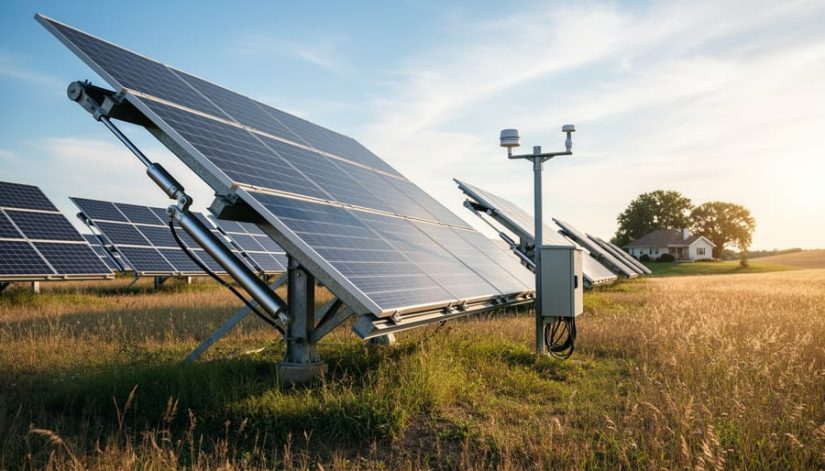
Split-screen aerial photograph showing an Illinois solar farm during sunny and cloudy conditions, illustrating the impact of weather variability on solar energy production.

Protect Your Illinois Solar Farm Investment: Smart Risk Management Strategies That Work

Illinois’s solar farm landscape is transforming the Prairie State into a renewable energy powerhouse, with over 2,000 megawatts of solar capacity either operational or under development. As farmland transitions into solar arrays, property owners and investors are discovering unprecedented opportunities to generate sustainable income while contributing to the state’s ambitious goal of 100% clean energy by 2050. These utility-scale installations, ranging from 100 acres to several thousand, are strategically positioned across central and southern Illinois, leveraging the region’s abundant sunlight and flat terrain.

The financial implications of solar farming in Illinois extend beyond simple energy production. With the state’s robust incentive programs, including the Adjustable Block Program and Agricultural Impact Mitigation Agreements (AIMA), landowners can secure long-term revenue streams while maintaining agricultural heritage through dual-use farming practices. Recent policy changes, including the Climate and Equitable Jobs Act (CEJA), have further strengthened Illinois’s position as a leading solar market in the Midwest, offering enhanced financial protection and community benefits for solar farm participants.

As the solar landscape evolves, understanding the intersection of energy policy, agricultural preservation, and financial opportunity becomes crucial for stakeholders looking to participate in Illinois’s clean energy future.

Key Financial Risks in Illinois Solar Farm Projects

Weather-Related Revenue Fluctuations

Illinois solar farms experience notable revenue fluctuations due to the state’s distinct seasonal weather patterns. During summer months, longer daylight hours and typically clear skies maximize energy production, leading to peak revenue periods. However, winter brings shorter days and increased cloud cover, resulting in reduced output and lower earnings.

Snow accumulation presents a unique challenge for Illinois solar installations, potentially reducing energy generation by 20-30% during winter months. While modern solar panels are designed to shed snow, heavy accumulation can temporarily impact performance until natural melting occurs or maintenance crews clear the panels.

Severe weather events, including thunderstorms and hail, can also affect solar farm productivity. The good news is that Illinois experiences an average of 198 sunny days annually, providing reliable solar generation potential throughout much of the year. Smart investors and operators account for these seasonal variations in their financial planning, often incorporating weather prediction tools and sophisticated monitoring systems to optimize performance year-round.

To maximize revenue stability, many Illinois solar farms implement seasonal maintenance schedules and advanced snow removal protocols, ensuring consistent energy production despite weather challenges.

Split-screen aerial photograph showing an Illinois solar farm during sunny and cloudy conditions
Aerial view of a large-scale solar farm in Illinois during different weather conditions split-screen

Regulatory and Policy Changes

Recent Illinois renewable energy policies have created a favorable environment for solar farm development. The Climate and Equitable Jobs Act (CEJA), enacted in 2021, has set ambitious goals for renewable energy adoption, mandating 40% renewable energy by 2030 and 50% by 2040. This legislation has introduced significant incentives for solar development, including enhanced Solar Renewable Energy Credits (SRECs) and property tax relief for qualifying projects.

The state’s Agricultural Impact Mitigation Agreement (AIMA) requirements ensure responsible development of solar farms on agricultural land, balancing clean energy needs with farmland preservation. Local governments have also gained more authority in solar farm zoning and permitting processes, leading to standardized approval procedures across counties.

Looking ahead, proposed policy changes focus on grid interconnection improvements and energy storage integration. The Illinois Power Agency regularly updates its Long-Term Renewable Resources Procurement Plan, adjusting incentive programs and requirements to meet evolving market conditions and technological advances.

Market Price Volatility

The Illinois energy market experiences notable price fluctuations that can impact solar farm investments. Recent years have shown electricity prices varying by as much as 20-30% seasonally, with summer peaks driving costs higher. These variations affect both the revenue potential and operational costs of solar installations. However, solar farms provide a stabilizing effect against these market swings, as their operating costs remain relatively constant once installed. Local utilities often offer fixed-rate power purchase agreements (PPAs) that help shield solar farm owners from extreme price volatility. Additionally, the Illinois Power Agency’s long-term renewable energy credit program provides another layer of price stability, helping to ensure consistent returns despite market fluctuations. Understanding these market dynamics is crucial for solar farm investors and operators in maximizing their investment potential while managing risk exposure.

Risk Mitigation Strategies for Solar Farm Owners

Visual diagram illustrating different insurance and protection layers for solar farm investments
Infographic showing multiple layers of risk protection for solar farms

Insurance Solutions

Protecting your solar farm investment in Illinois requires comprehensive insurance coverage tailored to the unique challenges of renewable energy installations. While solar panel warranty coverage provides essential protection for equipment defects, additional insurance solutions are crucial for long-term security.

Most solar installations in Illinois benefit from property insurance that covers damage from severe weather events, including hail, tornadoes, and winter storms. Business interruption coverage helps protect against income loss during system downtime, while general liability insurance safeguards against third-party claims.

For larger commercial installations, we recommend environmental liability coverage to address potential soil contamination or habitat disruption claims. Equipment breakdown insurance provides protection beyond standard warranties, covering sudden mechanical failures and electrical arcing.

Illinois solar farm owners should also consider cyber liability insurance, as modern solar installations rely heavily on smart monitoring systems and grid integration technology. Performance shortfall insurance can protect against lower-than-expected energy production, particularly important given Illinois’s variable weather conditions.

Working with insurance providers familiar with Illinois’s renewable energy landscape ensures appropriate coverage levels and compliance with state regulations. Regular policy reviews and updates help maintain adequate protection as your solar installation ages and technology evolves.

Performance Guarantees and Contracts

Performance guarantees and contracts are essential components of solar farm development in Illinois, providing crucial protection for investors and stakeholders. These agreements typically include production guarantees, which ensure the solar installation meets specified energy generation targets. When combined with available Illinois solar incentives, well-structured contracts can significantly reduce financial risks.

Key elements of solar farm contracts include performance ratio guarantees, availability warranties, and degradation provisions. Performance ratio guarantees ensure the system operates at optimal efficiency, typically promising 80-85% of projected output. Availability warranties commit operators to maintain system uptime, usually targeting 98% or higher annual availability. Degradation provisions address natural performance decline, typically guaranteeing panel output won’t decrease more than 0.5-0.7% annually.

Contract enforcement mechanisms should include clear remedies for underperformance, such as liquidated damages or make-whole payments. Regular performance monitoring and reporting requirements help track compliance with guaranteed metrics. Many Illinois solar developers also include operations and maintenance agreements that specify preventive maintenance schedules and response times for equipment failures.

Insurance requirements should be clearly outlined, covering both physical damage and performance shortfalls. Including force majeure clauses specific to Illinois weather conditions helps protect both parties from extraordinary events while maintaining reasonable performance expectations.

Diversification Strategies

Illinois solar farm developers employ various diversification strategies to minimize risks and maximize returns on their investments. One key approach involves geographic diversification within the state, with projects strategically placed across different regions to account for varying solar irradiance levels and local grid conditions.

Project developers often diversify their revenue streams by participating in multiple incentive programs, including the Illinois Shines program, federal tax credits, and various utility rebates. This multi-faceted approach ensures stable income even if one program experiences changes or disruptions.

Technology diversification is another crucial strategy, with farms incorporating different types of solar panels and tracking systems. Some installations combine fixed-tilt and single-axis tracking systems, optimizing performance while spreading equipment-related risks.

Contract diversification involves maintaining a mix of power purchase agreements (PPAs) with different customers and terms. Many Illinois solar farms serve both utility-scale and commercial customers, creating a balanced portfolio of energy offtakers.

Financial diversification includes working with multiple funding sources, from traditional bank loans to green bonds and community solar investments. This approach helps secure stable funding while reducing dependency on any single financial institution.

Operational diversification involves partnering with various maintenance providers and using different equipment suppliers, ensuring continued performance even if one vendor faces challenges. This strategy has proven particularly effective in maintaining consistent energy production throughout Illinois’s diverse weather conditions.

Financial Planning and Monitoring

Performance Metrics and Benchmarks

Performance monitoring is crucial for ensuring optimal solar investment returns in Illinois solar farms. Key metrics include energy production efficiency, which typically ranges from 15-20% for modern solar installations in the state’s climate conditions. Successful Illinois solar farms maintain a capacity factor of 20-25%, producing approximately 1,300-1,400 kilowatt-hours annually per installed kilowatt.

Financial performance indicators focus on the levelized cost of electricity (LCOE), which currently averages $0.06-0.08 per kilowatt-hour for utility-scale installations in Illinois. Revenue generation is tracked through power purchase agreement (PPA) rates, which typically range from $0.05-0.07 per kilowatt-hour, and Renewable Energy Credit (REC) values specific to the Illinois market.

System availability, a critical operational metric, should maintain above 98% uptime throughout the year. Weather-adjusted performance ratio, accounting for Illinois’ seasonal variations, typically ranges between 80-85%. Regular monitoring includes panel degradation rates, which should not exceed 0.5-0.7% annually to ensure long-term project viability.

Operation and maintenance costs are benchmarked at $12-15 per kilowatt per year for utility-scale installations. Environmental impact metrics track carbon offset achievements, with typical Illinois solar farms offsetting approximately 1,500 metric tons of CO2 annually per megawatt of installed capacity. These benchmarks help stakeholders evaluate project health and make informed decisions about operational improvements and future investments.

Digital monitoring dashboard displaying key solar farm performance metrics and risk assessment tools
Dashboard interface showing solar farm performance metrics and risk indicators

Risk Assessment Tools

In Illinois’ growing solar farm industry, several sophisticated risk assessment tools help stakeholders make informed investment decisions. The Solar Energy Industries Association (SEIA) provides specialized software that analyzes local weather patterns, historical solar radiation data, and potential weather-related risks specific to Illinois’ climate zones.

Financial modeling tools like PVsyst and System Advisor Model (SAM) offer detailed projections of energy production and revenue streams, incorporating Illinois-specific factors such as seasonal variations and grid connection costs. These platforms enable investors to run multiple scenarios, accounting for variables like equipment degradation rates and maintenance costs over the project lifecycle.

Geographic Information System (GIS) mapping tools help evaluate site-specific risks by analyzing terrain, shading patterns, and proximity to transmission infrastructure. These tools are particularly valuable in Illinois, where farmland preservation and soil quality considerations play crucial roles in site selection.

Insurance companies serving the Illinois market have developed specialized risk scoring systems that assess factors like equipment quality, installation standards, and operational protocols. These tools help determine insurance premiums and coverage requirements while identifying potential vulnerabilities in project design.

Performance monitoring platforms provide real-time data analytics, allowing operators to track system efficiency and identify maintenance needs before they become costly problems. Many Illinois solar farms utilize smart sensors and IoT devices that feed into these platforms, creating comprehensive risk management systems.

For smaller-scale projects, simplified risk assessment calculators are available through the Illinois Power Agency, helping property owners evaluate potential returns while considering local incentives and regulations.

Building Long-Term Resilience

Building long-term resilience for Illinois solar farms requires a comprehensive approach to risk management that extends beyond initial planning. Successful solar projects integrate multiple layers of protection, including robust insurance coverage, preventive maintenance schedules, and adaptive management strategies tailored to the state’s unique climate conditions.

Key to sustainable risk management is the implementation of regular performance monitoring systems. These systems track energy output, identify potential equipment issues before they become critical, and help maintain optimal operation throughout the year. Illinois solar farm operators should establish partnerships with local maintenance providers who can respond quickly to issues, particularly during extreme weather events.

Financial resilience is equally important. Diversifying revenue streams through multiple power purchase agreements (PPAs) and participating in Illinois’ renewable energy credit (REC) programs can help buffer against market fluctuations. Setting aside adequate reserves for equipment replacement and maintaining strong relationships with financial institutions ensures resources are available when needed.

Community engagement plays a vital role in long-term sustainability. Solar farm operators who maintain open communication channels with local stakeholders and participate in community benefit programs often experience fewer conflicts and greater support for their operations. This social license to operate becomes particularly valuable when facing regulatory changes or expansion opportunities.

Regular review and updates of emergency response plans, incorporating lessons learned from operational experiences, help ensure that solar farms can quickly recover from unexpected challenges while minimizing downtime and financial losses.

Managing risk in Illinois solar farm investments requires a strategic and proactive approach. By conducting thorough site assessments, securing comprehensive insurance coverage, and maintaining strong relationships with local utilities, investors can significantly reduce their exposure to potential losses. Regular equipment maintenance, weather monitoring, and adherence to state regulations are essential practices that help ensure long-term project success.

Property owners and developers should work with experienced local contractors, maintain detailed documentation, and establish clear communication channels with all stakeholders. Creating an emergency response plan and setting aside adequate financial reserves for unexpected events will provide additional security. Remember that successful risk management is an ongoing process that requires regular review and updates to stay effective.

Consider partnering with local solar energy experts and financial advisors who understand Illinois-specific challenges and opportunities. Their expertise can help you navigate complex regulations while maximizing your investment’s potential return.

Leave a Reply

Your email address will not be published. Required fields are marked *