How Solar-Powered Resilience Hubs Keep Illinois Communities Running When the Grid Goes Down
When severe weather knocks out power across Illinois—whether from summer storms, winter ice, or grid failures—some buildings stay lit, warm, and operational while others go dark. These locations are resilience communities, also known as solar-powered community hubs, and they’re transforming how Illinois prepares for emergencies and extended outages.
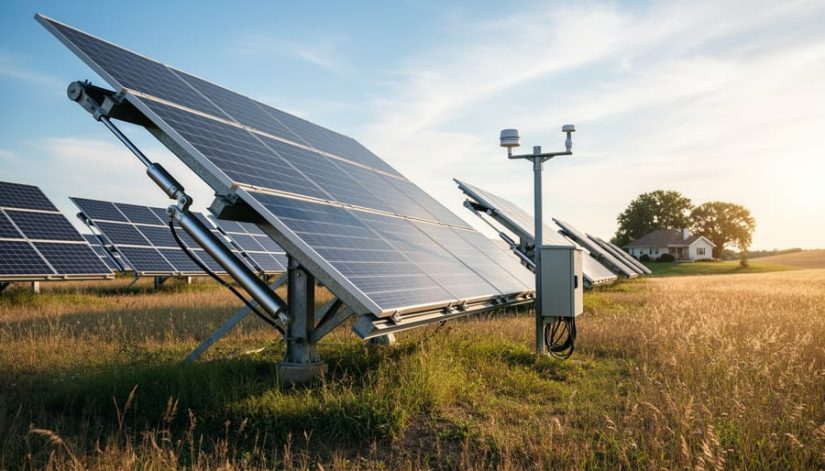
A resilience community combines solar panels with battery storage to create a dependable power source that functions independently when the main electrical grid fails. Unlike typical solar installations that shut down during outages for safety reasons, these systems keep essential services running—from heating and cooling to refrigeration, communication devices, and medical equipment. Schools, community centers, fire stations, and businesses across Illinois are becoming these critical safe havens where residents can charge phones, access information, store medications, and find shelter during prolonged power disruptions.
The need for resilience communities in Illinois has never been more apparent. Our state experiences increasing frequency of severe weather events, aging grid infrastructure, and growing electricity demand that strains existing systems. The 2011 groundhog day blizzard, the 2020 derecho storms, and recent polar vortex events demonstrated how vulnerable communities become when power disappears for days or weeks. Traditional backup generators require fuel deliveries that may not arrive during emergencies, while solar-plus-storage systems generate and store their own power continuously.
For Illinois homeowners, business owners, and community leaders, understanding and implementing resilience communities represents both a practical investment and a community service that protects your neighbors when they need it most.
What Makes a Community Resilience Hub Different from a Regular Building
A community resilience hub transforms an ordinary facility into a lifeline during emergencies. Unlike regular buildings that lose functionality when the power grid fails, resilience hubs are specifically designed and equipped to remain operational when communities need them most.
The key difference lies in independent power generation. Traditional buildings rely entirely on the electrical grid, leaving them dark and unusable during outages caused by severe weather, equipment failures, or other disruptions. Resilience hubs, powered primarily by solar energy and battery storage systems, continue providing essential services regardless of grid status. This solar power’s resilience advantage means these facilities can maintain lighting, heating, cooling, and critical communications when surrounding areas go dark.
Beyond backup power, resilience hubs serve multiple coordinated functions. They provide safe shelter for community members displaced by emergencies, distribute food and water, offer charging stations for phones and medical devices, and serve as information centers where residents can learn about recovery resources. Many hubs also stock emergency supplies and provide space for local emergency management teams to coordinate response efforts.
The solar-powered infrastructure makes these capabilities sustainable for extended periods. While diesel generators require constant refueling and create noise and emissions, solar arrays with battery backup can operate quietly and cleanly for days or weeks. In Illinois, where severe storms and winter weather can cause prolonged outages, this independence from fuel supply chains proves invaluable.
Physical design also sets resilience hubs apart. They typically include backup water systems, enhanced insulation for temperature stability without continuous HVAC operation, accessible layouts for people with disabilities, and reinforced structures that can withstand severe weather events. Some facilities incorporate community gathering spaces that serve dual purposes during normal operations and emergencies.
These strategic investments create gathering places that strengthen communities year-round while providing critical safety nets when disaster strikes.

Why Illinois Communities Need Resilience Hubs Now More Than Ever
The Real Cost of Power Outages to Illinois Businesses and Families
Power outages create significant disruptions across Illinois, affecting families and businesses in ways that extend far beyond temporary inconvenience. For families, losing electricity means more than darkness. Refrigerated medications like insulin become unusable within hours, creating genuine health risks for diabetic residents. During extreme weather events, lack of heating or cooling can be dangerous for elderly family members and young children.
Local businesses face immediate financial losses when the power goes out. Restaurants must discard perishable inventory, sometimes losing thousands of dollars in a single outage. Manufacturing facilities experience production delays that ripple through supply chains, affecting delivery commitments and customer relationships. Retail stores lose sales during outage periods and may experience additional losses from damaged point-of-sale systems.
Community safety also suffers during extended outages. Traffic signals go dark, increasing accident risks at busy intersections. Emergency services face communication challenges. Gas stations cannot pump fuel, limiting mobility for residents who may need to evacuate or reach medical facilities.
For Illinois businesses, the average cost of a single power outage ranges from $8,000 to over $74,000 depending on duration and industry, making resilience planning a critical investment rather than an optional upgrade.
Climate Patterns Affecting Illinois Grid Reliability
Illinois’ power grid faces mounting pressure from increasingly extreme weather events that test its reliability in new ways. Severe thunderstorms now produce more frequent high-wind events and lightning strikes that damage transmission lines and transformers, sometimes leaving thousands without power for days. These storms don’t just knock out power momentarily—they can create cascading failures across interconnected systems.
Winter polar vortexes present a different challenge. When Arctic air plunges into Illinois, electricity demand spikes as heating systems work overtime, while natural gas supplies—which fuel many power plants—can become constrained. The result is a strained grid operating at maximum capacity precisely when failures carry the highest risk. Recent polar events have forced grid operators to implement rolling blackouts to prevent total system collapse.
Summer heat waves create similar stress from the opposite direction. Air conditioning usage surges across millions of homes and businesses simultaneously, pushing the grid beyond its designed capacity. Extended heat events are particularly problematic because the grid gets no relief during cooler nighttime hours that used to provide recovery periods.
These climate patterns are becoming more frequent and intense, not occasional anomalies. Traditional grid infrastructure, built for different weather patterns, struggles to adapt quickly enough. This reality makes local energy resilience increasingly important for Illinois communities and businesses that cannot afford extended outages during critical weather events.
How Solar Power Makes Resilience Hubs Actually Work During Emergencies
The Battery Backup Component: Power When the Sun Isn’t Shining
Think of solar panels and battery storage as a team working together to keep your power on around the clock. While solar panels generate electricity during daylight hours, battery backup systems store that excess energy for use when the sun goes down or during cloudy days.
Here’s how it works: During peak sunlight hours, your solar panels typically produce more electricity than you need at that moment. Instead of sending all that extra power back to the grid, battery systems capture and store it for later use. When evening arrives or severe weather knocks out grid power, your stored energy kicks in automatically, keeping essential equipment running without interruption.
For Illinois communities facing extended outages from winter storms or summer severe weather, this combination becomes especially valuable. Modern battery systems can provide power for hours or even days, depending on their capacity and your energy needs. They’re designed to prioritize critical functions like refrigeration, heating, cooling, medical equipment, and communication devices.
The technology has become increasingly reliable and affordable in recent years. Lithium-ion batteries, similar to those in electric vehicles, now dominate the residential and commercial market due to their efficiency and longevity. As a locally owned company with expertise in solar energy, we’ve seen firsthand how battery backup transforms solar installations from daytime-only solutions into true resilience tools that protect Illinois families and businesses during our state’s most challenging weather events.

Island Mode: Staying Online When the Grid Goes Offline
Think of island mode as your home’s ability to become a self-contained energy island when the main power grid fails. Just like a boat that can disconnect from the dock and navigate independently, a solar-powered resilience hub equipped with battery storage can disconnect from the electrical grid and continue operating on its own power supply.
Here’s how it works in practice: When the grid experiences an outage due to severe weather, equipment failure, or other disruptions, specially designed equipment called inverters automatically sense the loss of grid power. Within milliseconds, the system safely disconnects from the grid to protect utility workers who may be repairing lines. The solar panels and battery storage then work together to power the building independently, creating a standalone electrical system.
During daylight hours, solar panels generate electricity to run essential equipment and charge the batteries. When the sun sets or on cloudy days, the stored battery power takes over, ensuring continuous operation. This seamless transition happens automatically without requiring manual intervention.
The “island” can remain operational for hours or even days, depending on the battery capacity and how efficiently energy is used. For Illinois communities that have experienced multi-day power outages during ice storms or severe thunderstorms, this capability means critical facilities like community centers, fire stations, or medical clinics can maintain operations when neighbors need them most. Once utility crews restore grid power, the system automatically reconnects, ending island mode and resuming normal operation.
What Illinois Communities Are Already Using Resilience Hubs
Illinois communities are already taking meaningful steps toward establishing resilience hubs, demonstrating that this concept is more than just theory. These projects provide valuable blueprints for other communities considering similar investments in energy security and emergency preparedness.
The City of Chicago has been a leader in this space, with several community centers identified as resilience hub candidates through the city’s climate action planning. These facilities are being evaluated for solar panel installations paired with battery storage systems, allowing them to serve as cooling centers during extreme heat events and warming centers during winter storms. The emphasis is on equipping buildings in historically underserved neighborhoods, where residents may have limited access to climate-controlled spaces during emergencies.
In suburban Cook County, several municipalities have begun integrating solar energy into their emergency management strategies. Local libraries and municipal buildings are being retrofitted with solar arrays and backup power systems, transforming them into reliable community gathering points during grid outages. These projects often connect with local solar programs that provide funding support and technical expertise.
Downstate communities are also participating in this movement. Champaign-Urbana has explored resilience hub concepts through community partnerships, focusing on facilities that already serve as natural gathering places. Their approach emphasizes the dual benefit of reducing everyday energy costs while building emergency preparedness capacity.
Several faith-based organizations across Illinois have also embraced this model, installing solar systems on their buildings to serve their congregations and surrounding neighborhoods during crises. These locally owned facilities often have existing community trust and infrastructure, making them ideal resilience hub candidates.
These early adopters demonstrate that resilience hubs are achievable across different community sizes and contexts. Their experiences provide valuable lessons about financing, technology selection, and community engagement that newer projects can build upon.
The Services and Resources Resilience Hubs Provide
Resilience hubs serve as multifunctional community anchors that operate year-round, not just during emergencies. During normal operations, these facilities function as community gathering spaces, offering programs like job training workshops, health screenings, cooling centers during summer heat waves, and warming stations in winter. Many hubs provide internet access, community education programs, and meeting spaces for local organizations, making them valuable neighborhood assets even when the power grid is stable.
When emergencies strike, resilience hubs shift into critical support mode. During power outages caused by severe storms or grid failures, these solar-powered facilities maintain electricity for essential services. They provide refrigeration for medications, charging stations for medical devices and communication equipment, and temperature-controlled spaces for vulnerable populations. The backup power systems keep lights on, heating and cooling operational, and communication systems running when surrounding areas go dark.
These hubs also serve as coordination centers during disasters. Emergency responders use them as staging areas, while residents access real-time information about road conditions, shelter locations, and recovery resources. The reliable solar energy systems ensure these functions continue without depending on fuel deliveries or grid restoration.
For Illinois communities, resilience hubs address specific regional challenges. They offer refuge during extreme cold snaps when heating becomes critical, provide air-conditioned spaces during dangerous heat waves, and maintain operations during the ice storms and severe weather events common throughout the state. By combining everyday community services with emergency preparedness, these locally owned and operated facilities create lasting value that extends far beyond their role as backup power sources, strengthening neighborhood connections while building genuine resilience against future challenges.

Building a Solar Resilience Hub: What Your Community Needs to Know
Ideal Facilities for Conversion to Resilience Hubs
Certain facilities naturally serve as excellent foundations for resilience hubs due to their existing infrastructure, community role, and accessibility. In Illinois, schools represent prime candidates because they already function as neighborhood gathering points with large spaces, kitchens, and backup power needs. Many schools with solar installations have demonstrated how these systems can reduce operating costs while providing emergency capacity.
Community centers and libraries offer similar advantages, with established trust among residents and year-round operations that justify the investment in solar-plus-storage systems. Fire stations and police facilities already maintain some emergency infrastructure, making them logical choices for enhanced resilience capabilities.
When evaluating Illinois facilities, consider buildings with southern exposure for optimal solar panel placement, adequate roof conditions to support installations, and locations accessible during severe weather events. Facilities serving multiple purposes in daily operations maximize return on investment while ensuring the hub remains familiar and welcoming to community members who may need it during emergencies. The best candidates combine strong existing community connections with physical characteristics that support efficient solar energy generation and storage.
Funding and Incentives Available in Illinois
Illinois communities have several funding opportunities to make resilience hub projects financially achievable. The state offers Illinois grid resilience grants specifically designed to support solar-powered emergency preparedness infrastructure. These programs help offset installation costs for battery storage systems and backup power capabilities.
At the federal level, FEMA’s Building Resilient Infrastructure and Communities (BRIC) program provides substantial funding for disaster preparedness projects, including resilience hubs. Additionally, federal tax credits for solar installations can reduce project costs by up to 30 percent, making renewable energy solutions more accessible for communities of all sizes.
Community organizations and nonprofits can explore dedicated nonprofit solar grants that specifically target mission-driven facilities serving vulnerable populations. Local municipalities may also qualify for state energy efficiency programs and infrastructure improvement funds.
Working with a locally owned solar expert familiar with Illinois funding landscapes ensures you maximize available incentives and navigate application processes effectively, transforming resilience hub concepts into operational community assets.
Working with Local Solar Experts to Design Your Hub
Designing an effective solar-powered resilience hub requires expertise that goes beyond standard solar installations. Partnering with experienced local solar professionals who understand Illinois-specific factors is essential for creating a system that truly serves your community’s needs during emergencies and everyday operations.
Local solar experts bring invaluable knowledge of Illinois regulations, including state incentives, interconnection requirements, and building codes that vary by municipality. They understand how our climate affects solar production, from managing snow loads on panels to optimizing system performance during our varied seasonal conditions. A locally owned solar company has direct experience working with Illinois utilities and knows how to navigate the approval processes efficiently.
These professionals can assess your community’s specific power needs during outages, helping you determine the right combination of solar panels, battery storage capacity, and backup systems. They’ll evaluate your building’s structural capacity, electrical infrastructure, and available space to create a customized design that maximizes reliability. Local installers also provide ongoing maintenance and support, ensuring your resilience hub remains operational when your community needs it most. Their proximity means faster response times and a genuine investment in your community’s long-term energy security.
Resilience hubs represent more than emergency preparedness—they’re a strategic investment in your community’s future. By combining solar energy with battery storage and community spaces, these facilities serve dual purposes: providing critical services during emergencies while enhancing everyday quality of life. For Illinois communities facing increasingly unpredictable weather patterns and grid challenges, solar-powered resilience hubs offer a practical solution that pays dividends year-round.
Whether you’re a business owner considering how to protect operations during outages, a community leader exploring ways to strengthen local infrastructure, or a concerned citizen wondering how your neighborhood can better prepare for emergencies, resilience hubs deserve your attention. These facilities demonstrate that sustainability and security aren’t competing priorities—they’re complementary goals that strengthen each other.
As a locally owned solar energy provider with deep expertise in Illinois installations, we’ve seen firsthand how communities benefit from proactive planning. The key is starting the conversation now, before the next storm or grid failure forces reactive decisions. Consider conducting a simple assessment: What critical needs would your community face during a multi-day power outage? Where could people gather safely? What resources already exist that could be enhanced with solar and battery backup?
The technology exists today to build resilient communities. The question isn’t whether solar-powered resilience hubs make sense for Illinois—it’s where and when they’ll be implemented. Your community could be next.