
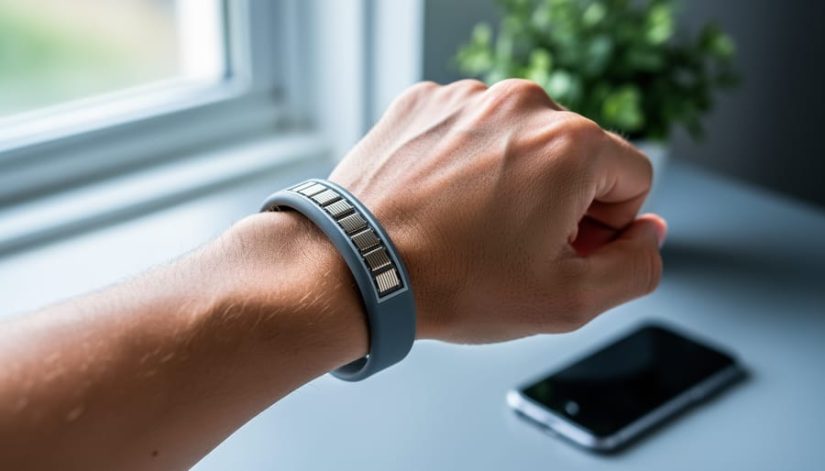
Your Body Heat Could Power Your Devices: How Wearable Thermoelectric Generators Work
Imagine charging your smartphone simply by wearing a bracelet, or powering medical sensors with nothing more than your body heat. Wearable thermoelectric generators make this possible by converting the temperature difference between your skin and the surrounding air into usable electricity. This emerging technology works on a principle called the Seebeck effect, where heat flowing through special semiconductor materials creates an electric current without any moving parts or batteries required.
Unlike wearable solar panels that depend on sunlight, thermoelectric generators work continuously, day and night, indoors and outdoors. They capture the constant thermal energy your body produces—approximately 100 watts at rest—and transform even a small fraction of it into electrical power. While current devices generate modest amounts of electricity, typically between 20 to 200 microwatts per square centimeter, that’s enough to run low-power sensors, fitness trackers, and certain medical devices.
For Illinois homeowners and businesses exploring renewable energy solutions, understanding wearable thermoelectrics reveals important trends in distributed power generation. These devices represent the smallest scale of energy independence, where individuals become their own power sources for specific applications. The technology connects directly to broader renewable energy goals: reducing battery waste, enabling self-powered electronics, and creating sustainable alternatives to traditional charging methods.
The question isn’t whether wearable thermoelectric generators will replace solar panels or grid power—they won’t. Instead, they fill a specific niche in our energy ecosystem, offering continuous, maintenance-free power for small devices while demonstrating how we can harvest energy from previously untapped sources. This article explains how the technology actually works, where it makes practical sense today, and what realistic expectations you should have about its capabilities.
What Is a Wearable Thermoelectric Generator?
A wearable thermoelectric generator is a small device that converts your body heat directly into usable electrical energy. Think of it as a miniature power plant that you wear on your skin, turning the natural temperature difference between your warm body and the cooler surrounding air into electricity to charge small electronics or power sensors.
The technology works through the Seebeck effect, a principle discovered in 1821 by physicist Thomas Johann Seebeck. When two different metal or semiconductor materials are joined together and exposed to a temperature difference, an electrical voltage naturally occurs. In wearable generators, one side of the device touches your skin (the warm side), while the other side is exposed to air (the cool side). This temperature gap creates the conditions needed for electricity generation.
The device itself typically consists of thin thermoelectric materials sandwiched between protective layers. These materials are arranged in pairs, with one type carrying positive charges and another carrying negative charges. When heat flows from your body through these materials to the cooler environment, it causes electrons to move, creating an electrical current.
For Illinois residents already familiar with solar energy concepts, you can think of thermoelectric generators as similar to solar panels but powered by heat instead of light. Both technologies convert one form of energy into electricity without moving parts, making them reliable and low-maintenance.
The amount of power generated is modest compared to traditional batteries. Most wearable thermoelectric generators produce milliwatts to a few watts of power, enough to run fitness trackers, medical sensors, or smartwatch features. However, the advantage is continuous charging whenever there’s a temperature difference between your body and the environment, eliminating the need for external charging or battery replacements in certain applications.
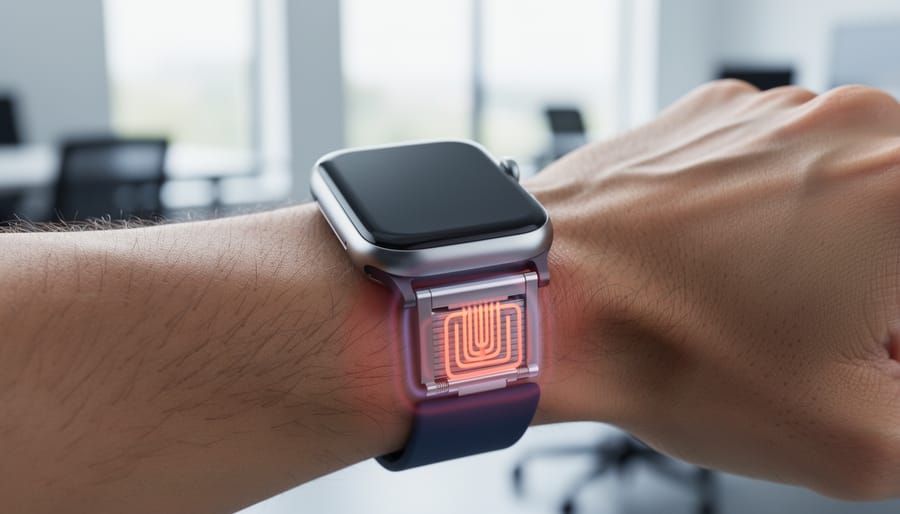
How These Devices Turn Your Body Heat Into Power
The science behind wearable thermoelectric generators is surprisingly straightforward, though the technology itself is quite sophisticated. These devices work on a principle that’s been understood for nearly two hundred years, but modern materials and design have made them practical for everyday use.
Think of your body as a constant heat source. Throughout the day and night, human body heat maintains a steady temperature around 98.6 degrees Fahrenheit. Meanwhile, the air around you is typically much cooler. This temperature difference is what makes thermoelectric generation possible.
Here’s how the conversion process unfolds:
- The device’s inner surface contacts your skin, absorbing your body heat through direct thermal contact.
- The outer surface remains exposed to ambient air, staying significantly cooler than the inner surface.
- This temperature differential causes electrons within the thermoelectric material to move from the hot side toward the cold side.
- As electrons flow through the specially designed semiconductor materials, they create an electrical current.
- A power management circuit captures this tiny electrical current and converts it into usable voltage.
- The stabilized electricity either powers small devices directly or charges a battery for later use.
The key component is the thermoelectric material itself, typically made from semiconductor compounds. These materials are arranged in modules containing many small couples, each consisting of positive and negative-type semiconductors. When one side heats up and the other stays cool, electrons naturally migrate, creating the electrical flow.
The amount of power generated depends on three main factors: the temperature difference between your skin and the environment, the efficiency of the thermoelectric materials, and the surface area of the device. A larger temperature gap produces more power, which explains why these devices work better in cooler environments.
Much like solar panels convert light energy into electricity, thermoelectric generators convert thermal energy. The principle is different, but the goal remains the same: harvesting renewable energy from natural sources. For those of us in Illinois, where temperature variations between body heat and ambient air can be significant during cooler months, these conditions actually favor thermoelectric efficiency.
The entire process happens continuously and silently, requiring no moving parts or maintenance, making it an elegant solution for powering small electronics.
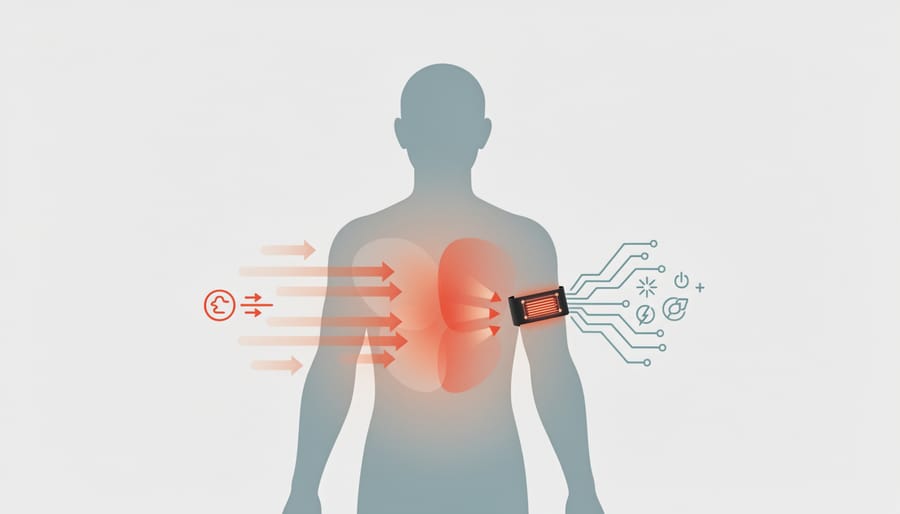
Real-World Applications for Everyday Life
Wearable thermoelectric generators are already making their way into everyday products, transforming how we power the devices we use regularly. These innovative wearable energy solutions convert your body heat into usable electricity, offering practical benefits for various applications.
Smartwatches represent one of the most promising applications for this technology. Several manufacturers are testing thermoelectric generators that supplement traditional batteries, extending the time between charges. By capturing the temperature difference between your wrist and the surrounding air, these devices can generate enough power to extend battery life by hours or even days, reducing the frequency of charging.
Fitness trackers and health monitors also benefit from thermoelectric integration. These devices require constant operation to track heart rate, steps, and sleep patterns. By incorporating small thermoelectric generators, fitness trackers can operate longer without interruption, providing more reliable health data. This proves particularly valuable for users who engage in extended outdoor activities where charging opportunities are limited.
Medical devices present perhaps the most critical application. Continuous glucose monitors for diabetes patients, heart rate monitors, and other medical wearables need reliable, uninterrupted power. Thermoelectric generators offer a solution by providing steady supplemental energy, reducing battery replacement frequency and improving patient safety. For Illinois residents managing chronic conditions, this technology means fewer battery changes and more consistent health monitoring.
Remote workers and outdoor professionals in Illinois can also benefit from thermoelectric-powered wearables. Construction workers, agricultural professionals, and field technicians often work in locations without easy access to charging facilities. Wearable thermoelectric generators ensure their communication devices and safety equipment remain operational throughout long workdays.
While these applications are still emerging, the technology demonstrates real potential for reducing our dependence on traditional charging methods, aligning with broader renewable energy goals that Illinois homeowners and businesses increasingly value.
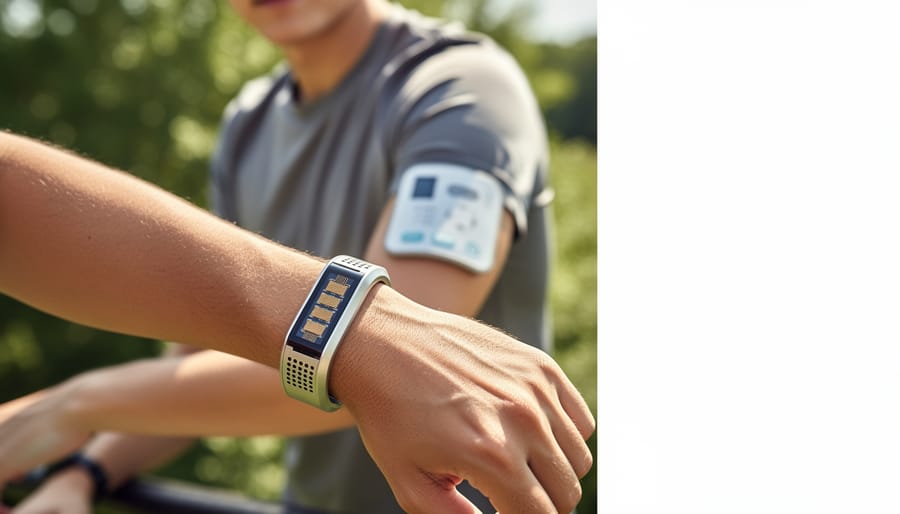
The Benefits and Limitations You Should Know
Wearable thermoelectric generators represent an exciting frontier in personal energy harvesting, but understanding their current capabilities helps set realistic expectations. These devices convert your body heat into electricity, offering a renewable power source that’s always with you. However, the technology is still developing, and knowing what it can and cannot do today will help you make informed decisions about its potential role in your energy future.
The primary appeal of wearable thermoelectric generators lies in their ability to create power from temperature differences between your body and the surrounding environment. In practical terms, current devices typically generate between 1 to 100 milliwatts of power under normal conditions. This is enough to trickle-charge small electronics like fitness trackers, smartwatches, or wireless earbuds, but not sufficient for power-hungry devices like smartphones or tablets without extended wear time.
- Generates clean, renewable energy continuously from body heat without requiring sunlight or wind.
- Eliminates the need for disposable batteries in low-power wearable devices.
- Works in any weather condition and functions 24/7 as long as temperature differential exists.
- Completely silent operation with no moving parts requiring maintenance.
- Power output remains relatively low, typically between 1-100 milliwatts under normal conditions.
- Effectiveness decreases significantly in warm environments where body-to-ambient temperature difference is minimal.
- Current models can be bulky or uncomfortable for extended daily wear.
- Higher initial costs compared to conventional charging solutions for small electronics.
These generators make the most sense for specific applications where their unique advantages shine. They’re ideal for health monitoring devices that require constant, low-level power and where battery replacement would be inconvenient or impractical. They also work well in colder climates where the temperature difference between your body and the environment maximizes power generation. For Illinois residents experiencing our distinct seasonal changes, wearable thermoelectric generators perform best during fall, winter, and spring months when outdoor temperatures create larger thermal gradients.
The technology complements rather than replaces other renewable energy solutions. Just as solar panels work best for larger-scale energy needs, wearable thermoelectric generators excel in their niche of personal, portable, low-power applications.
How This Fits Into the Larger Renewable Energy Picture
Wearable thermoelectric generators represent an exciting piece of the renewable energy puzzle, though they operate on a much smaller scale than the solar installations most Illinois property owners are familiar with. At Illinois Renewables, we’ve watched the clean energy landscape evolve to include diverse technologies that work together to reduce our dependence on fossil fuels.
These body-heat powered devices fit into what we call the “distributed energy” category—small-scale solutions that generate power where it’s needed. While a single wearable generator produces only milliwatts of electricity, this technology demonstrates an important principle: energy is all around us, waiting to be captured and converted into useful power.
The same innovation driving improvements in thermoelectric materials is also advancing solar panel efficiency and battery storage systems. As a locally owned company with deep expertise in solar energy, we see these parallel developments strengthening the entire renewable sector. Better materials science benefits both rooftop solar arrays and wearable generators alike.
Wearable thermoelectric generators complement larger renewable installations by addressing the gap in ultra-low-power applications. They work particularly well alongside smart home energy systems that monitor and optimize power usage, and they share design principles with portable solar solutions that provide on-the-go charging capabilities.
For Illinois residents considering renewable energy investments, understanding these emerging technologies helps paint a complete picture of our clean energy future. While your home or business will benefit most from proven solar installations, staying informed about innovations like thermoelectric generators shows where the industry is headed—toward capturing every available energy source, no matter how small.
What’s Coming Next for Wearable Power Generation
The future of wearable thermoelectric generators looks promising as researchers work to overcome current limitations in power output and efficiency. Scientists are developing advanced materials like nanostructured compounds and flexible organic semiconductors that could generate significantly more electricity from the same temperature differences. These innovations may soon make it practical to charge smartphones or power medical devices entirely from body heat.
Integration with other renewable technologies represents an exciting frontier. Imagine combining thermoelectric fabrics with solar panels in clothing or accessories, creating hybrid systems that generate power day and night. For homeowners and businesses already investing in comprehensive energy solutions, this technology could complement existing solar installations by providing supplementary power generation at the personal level.
The connection to energy monitoring technology will become increasingly important as these devices mature. Future wearables might communicate with home energy management systems, optimizing overall household power usage and storage. Illinois-based businesses could particularly benefit from this convergence, using employee-worn generators as part of broader sustainability initiatives while monitoring total energy production across multiple sources.
Commercial applications are expanding beyond individual use. Companies are exploring thermoelectric systems for industrial workers in temperature-controlled environments, where consistent heat differentials could provide reliable power for safety equipment and communication devices. While we’re still years away from mainstream adoption, the trajectory suggests these generators will eventually play a meaningful role in diversified renewable energy strategies for forward-thinking homeowners and businesses.
Wearable thermoelectric generators represent an exciting frontier in renewable energy innovation, demonstrating how energy harvesting can become increasingly personal and integrated into our daily lives. While this technology is still developing for widespread commercial use, it highlights the broader shift toward sustainable energy solutions that Illinois Renewables proudly supports. As a locally owned company with deep expertise in solar energy, we understand that the future of renewables extends beyond traditional installations to encompass emerging technologies that complement established systems. Whether you’re considering solar panels for your home or business, or simply exploring how renewable energy can work for you, these innovations show the remarkable potential of harvesting clean energy from sources all around us. We encourage you to reach out to our team to discuss practical renewable energy options available today that can reduce your energy costs and environmental impact.
