
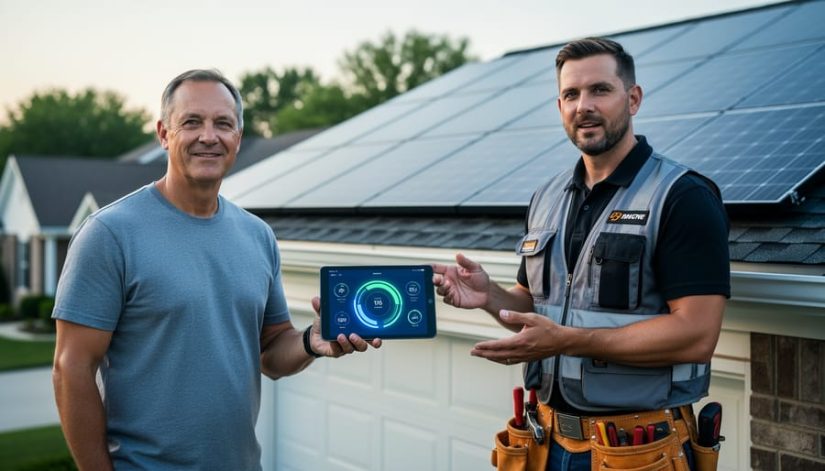
How Technology Transforms Your Solar Experience from Confusing to Confident
Technology customer experience in solar energy means using digital tools to simplify every interaction from initial quote to system monitoring, giving you transparency, control, and confidence throughout your solar journey. Instead of navigating confusing paperwork, unclear timelines, and limited communication that plagued the industry for years, modern solar providers now deploy software platforms, mobile apps, and automated systems that keep you informed at each stage while reducing the stress of what can feel like a complex decision.
The shift matters because going solar represents a significant investment for most Illinois homeowners and businesses. When you can’t track your project’s progress, don’t understand your system’s production data, or struggle to get answers from your installer, anxiety builds and satisfaction drops. Recent technology improvements address these pain points directly. Real-time project dashboards show exactly where your installation stands. Mobile monitoring apps reveal how much energy your panels generate each day. Automated scheduling systems eliminate the back-and-forth of booking site assessments or inspections.
At Illinois Renewables, we’ve integrated these technologies while maintaining the personal attention that comes from being locally owned and operated. Our team combines digital efficiency with hands-on expertise specific to Illinois solar incentives, weather patterns, and utility interconnection requirements. You get the convenience of modern tools without losing access to knowledgeable professionals who understand your region.
This approach transforms solar from an intimidating technical upgrade into a manageable process where you stay informed, empowered, and supported from consultation through decades of clean energy production.
The Solar Customer Journey: Where Technology Makes the Difference
The path from curiosity about solar to flipping the switch on your new system involves distinct stages, and each historically came with its own frustrations. You’d request a quote and wait days for a response. A salesperson would visit your property with limited tools, making rough estimates on a notepad. You’d sign a contract without truly visualizing what panels would look like on your roof or understanding exactly how much energy they’d produce. Then you’d wait weeks for installation, often in the dark about scheduling or progress.
Technology now addresses friction points at every stage. During initial research, advanced satellite mapping and energy analysis tools can assess your property’s solar potential before you even make contact, no more guessing whether your roof faces the right direction or has too much shade. When you’re ready for a consultation, digital design platforms generate accurate production estimates and realistic visual renderings within hours instead of days, showing you precisely what your system will look like and how it will perform across different seasons.
The installation phase, traditionally a black box of uncertainty, becomes transparent through project management software that sends real-time updates about permit status, equipment arrival, and installation schedules. You receive photos as work progresses and can communicate directly with project coordinators through secure messaging platforms rather than playing phone tag.
After installation, monitoring technology puts ongoing performance data in your pocket. You’re no longer wondering if your system works correctly or waiting for utility bills to confirm savings, your smartphone shows real-time production and consumption data.
This technological transformation doesn’t replace the value of experienced installers who understand Illinois weather patterns and local building codes. Instead, it enhances that expertise by eliminating guesswork and keeping you informed throughout a process that once felt overwhelming.
Digital Design Tools: Seeing Your Solar System Before Installation
Gone are the days of guessing what solar panels might look like on your roof or how much energy they’ll produce. Today’s design tools let you see exactly what you’re getting before a single panel arrives.
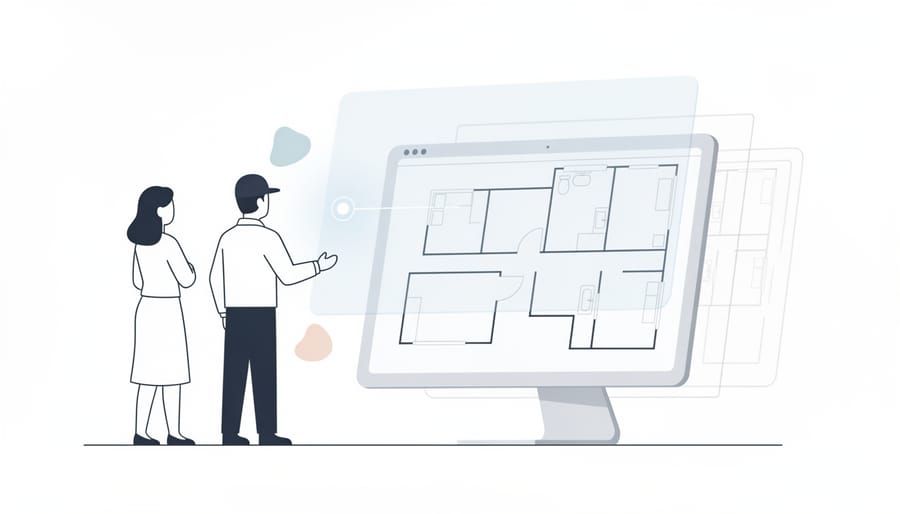
Satellite imagery and aerial mapping form the foundation of modern solar design. Providers capture precise measurements of your roof’s dimensions, angle, and orientation without requiring an initial site visit. This technology accounts for chimneys, vents, skylights, and other roof features that affect panel placement, creating accurate layouts on the first pass rather than through trial and error.
Three-dimensional modeling takes this further by showing your home or building with panels installed from multiple angles. You can see how the array looks from street level, understand which sections of your roof will be covered, and verify that the visual impact aligns with your expectations. For commercial properties, these models help stakeholders visualize installations on large roof areas or ground mounts before committing to the project.
Energy production forecasting transforms abstract numbers into concrete expectations. Advanced software analyzes your roof’s solar exposure throughout the year, accounting for seasonal sun angles, typical Illinois weather patterns, and shading from nearby trees or structures. You’ll see projected monthly output, understand how winter production differs from summer, and calculate expected returns with actual data rather than industry averages.
Shading analysis deserves special attention. Sophisticated tools map how shadows move across your roof throughout the day and across seasons, identifying areas where panels would underperform. This prevents the frustration of discovering after installation that tree cover or neighboring buildings reduce your system’s effectiveness more than anticipated.
These visualization and forecasting tools eliminate the biggest investment fear: uncertainty. You’re not buying a promise, you’re seeing a detailed preview of exactly what you’ll get.
Transparent Pricing and Financing Through Digital Platforms
Cost has always been the elephant in the room when shopping for solar. Traditional solar sales meant scheduling a home visit, enduring a lengthy presentation, and receiving a quote that felt more like a starting point for negotiation than a real price. Digital platforms have changed that dynamic entirely.
Modern pricing tools provide accurate estimates within minutes, not days. By entering your address and basic property information, you get a preliminary system cost based on actual utility rates, typical energy usage patterns in your area, and current equipment pricing. This isn’t a vague ballpark figure, it’s a working number that reflects real market conditions and local installation factors specific to Illinois.
Financing transparency has improved just as dramatically. Instead of waiting for credit checks or unclear loan terms presented during a sales pitch, digital platforms show you multiple financing options side-by-side. You can compare a cash purchase against different loan terms or lease structures, seeing monthly payments, total costs, and long-term savings for each scenario. This lets you make decisions on your timeline, without pressure.
The shift to digital transparency fundamentally changes the customer-installer relationship. You’re not relying on a salesperson to interpret numbers for you, the platform presents facts directly. This doesn’t mean eliminating human expertise; it means conversations focus on your specific needs and questions rather than explaining basics or justifying costs.
For Illinois property owners, transparent digital pricing also reveals state incentives and federal tax credits automatically calculated into your estimates. You see the full financial picture upfront, which builds confidence before making any commitment. The high-pressure sales experience becomes obsolete when customers already understand their investment before the first conversation.
Real-Time Project Management and Communication
The gap between signing a solar contract and flipping the switch on your new system creates natural anxiety. Will the crew show up on time? Are they handling my roof properly? Is everything progressing on schedule? Traditional solar installations left customers in the dark, waiting for occasional phone calls and wondering what was happening on their property. Digital project management platforms eliminate this uncertainty by giving you a window into every stage of your installation.
Modern project management tools send automated text or email updates as your installation moves through each milestone. When your equipment arrives at the warehouse, you get a notification. When the installation crew is dispatched, you receive a message with expected arrival time. Some systems even share live photos from the job site, so you can see panels being mounted and inverters being installed without hovering over the crew’s shoulders. This transparency turns an opaque process into something you can follow along with confidence.
Seeing photos of the crew working on my roof while I was at the office gave me peace of mind I didn’t expect, I could actually watch my investment taking shape.
This visibility matters because solar installation involves multiple parties beyond your installer. Coordination with utility companies, electrical inspectors, and sometimes structural engineers means plenty of opportunities for delays or miscommunication. Digital systems track these external dependencies and alert you immediately if something shifts, along with a revised timeline. Instead of calling your project manager repeatedly for updates, the platform pushes information to you proactively.
Direct communication channels built into these platforms create accountability. You can ask questions, request clarification, or flag concerns without playing phone tag. Messages get routed to the right person, whether that’s your project manager, the installation foreman, or the customer service team. Response times improve because everything lives in one trackable system rather than scattered across email threads and voicemails. This structure reduces the frustration that comes from feeling ignored or shuffled between departments, transforming installation from a stressful ordeal into a managed, predictable process.
Monitoring Technology: Ongoing Confidence in Your Investment
The moment your solar system goes live marks the beginning of a relationship that should last decades. Modern monitoring technology ensures you’re never in the dark about how that investment is performing.
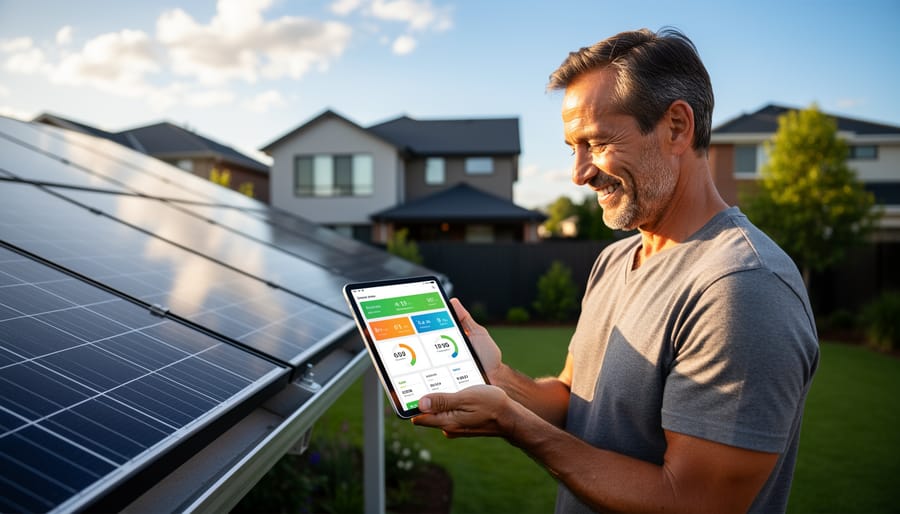
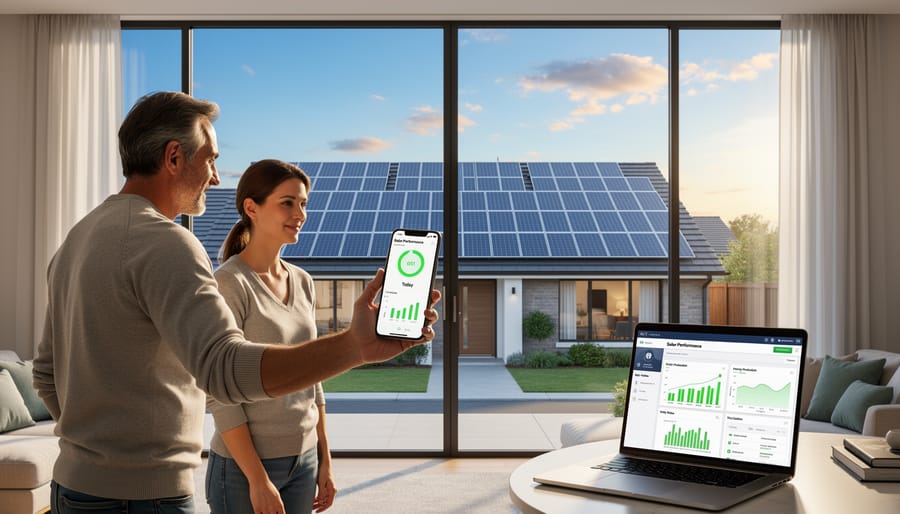
Today’s monitoring platforms turn complex system data into simple, intuitive dashboards accessible from your smartphone or computer. You can see exactly how much energy your panels generated today, this week, or this year. More importantly, you can see how that production translates to real dollars, both what you’re generating and what you’re saving on your utility bills.
These systems track performance panel-by-panel in many cases, meaning if one panel underperforms due to shading or a technical issue, you’ll know immediately rather than discovering it months later through higher-than-expected electricity bills. Most platforms send automated alerts when production drops below expected levels, often identifying problems before you notice any impact.
The psychological value of this visibility shouldn’t be underestimated. Solar is an invisible technology once installed, panels sit on your roof doing their work silently. Without monitoring, you might wonder if everything’s working correctly. With it, you have constant confirmation that your investment is delivering returns as promised.
Modern systems also provide historical comparisons, showing how production varies seasonally and helping you understand your energy patterns. This data proves invaluable when making other home efficiency decisions or if you’re considering adding battery storage or electric vehicle charging.
For Illinois property owners, monitoring technology means understanding exactly how our region’s seasonal sunlight variations affect production, setting realistic expectations rather than creating anxiety during cloudier winter months. You’re not just hoping your system works, you know it does, with proof updated every fifteen minutes.
Streamlined Permitting and Utility Coordination
For most solar customers, the behind-the-scenes paperwork, permits, inspections, utility interconnection agreements, represents one of the most opaque and anxiety-inducing parts of the process. Historically, these administrative steps caused unpredictable delays that left homeowners wondering when their system would finally produce power.
Technology has transformed this experience dramatically. Digital permitting platforms now allow installers to submit complete application packages electronically to local authorities, eliminating the delays of physical document delivery and lost paperwork. Automated systems check submissions for completeness before they reach inspectors, reducing rejections and resubmission cycles that previously added weeks to timelines.
Customers benefit most from the visibility these systems create. Rather than waiting in the dark for news, modern solar providers can offer real-time status tracking that shows exactly where applications sit in the approval queue. You see when the building department receives your permit, when the inspector schedules their visit, and when utility interconnection moves from pending to approved.
Electronic approval workflows have cut typical permitting timelines from six to eight weeks down to two or three in many Illinois municipalities. Utility interconnection, once a manual process requiring multiple phone calls and paper forms, now happens through standardized digital portals that automatically notify all parties when milestones complete.
This technological coordination means you’re not left guessing about delays or manually following up on missing signatures. The system works in the background while keeping you informed, turning what used to be the most frustrating phase into a transparent, predictable experience.
The Illinois Renewables Technology Advantage
Illinois Renewables brings together cutting-edge solar technology with deep local knowledge of Illinois energy markets, building codes, and utility requirements. Every customer interaction reflects this dual commitment: you get precise satellite-based system design tools calibrated for Illinois weather patterns and shading conditions, not generic national templates. The company’s design platform accounts for ComEd and Ameren territory-specific interconnection rules, local permit requirements across different Illinois municipalities, and state incentive programs like the Illinois Shines program that directly affect your project timeline and economics.
From your first conversation, you’ll work with consultants who use real-time pricing calculators that pull current equipment costs, available federal tax credits, and Illinois-specific incentives to generate accurate proposals within minutes rather than days. These aren’t ballpark estimates, the system integrates actual installation costs for your specific roof type, electrical setup, and local labor rates. You see exactly what you’re paying for and why, with financing options tailored to Illinois property owners displayed side-by-side for comparison.
Throughout installation, the project management portal shows your permit status with actual county or city offices, utility coordination steps specific to your provider, and inspection schedules. Photos appear the same day work happens on your property. After activation, your monitoring app doesn’t just track production, it compares performance against Illinois-specific expectations for your system size and location, flagging any deviations that warrant attention.
This combination matters because technology alone can feel impersonal, while local expertise without modern tools creates delays and uncertainty. Illinois Renewables uses each platform as a foundation for better human interaction, not a replacement for it. You get answers from people who know Illinois solar inside out, backed by systems that keep information flowing automatically.
Technology hasn’t just made solar installations faster or cheaper, it’s fundamentally changed what customers should expect from their solar partner. The tools we’ve explored throughout this article represent a shift from behind-the-scenes operations to direct customer empowerment. You shouldn’t need to guess what your system will look like, wonder about hidden costs, or feel disconnected during installation. These are no longer acceptable gaps in service.
As you evaluate solar providers, the technology they offer reveals their priorities. Companies investing in customer-facing digital tools demonstrate their commitment to your experience, not just the transaction. The most advanced design software and monitoring systems mean little if your provider can’t translate them into clear value for you.
For Illinois property owners ready to explore solar, this technology-enabled approach isn’t a luxury, it’s the standard you deserve. At Illinois Renewables, we combine these modern tools with local expertise and genuine partnership. We’re not just installing panels; we’re guiding you through a confident, transparent journey backed by both cutting-edge technology and the personal service of a locally owned company. Contact us to experience what solar customer service should look like in 2026.
