

Smart Energy Storage Solutions That Actually Save You Money
Energy storage technologies are revolutionizing how we capture, maintain, and utilize power across Illinois and beyond. From supporting next-generation solar panels to enabling grid stability, modern storage solutions offer unprecedented flexibility in managing energy resources. As electricity demands continue to surge and renewable adoption accelerates, understanding the diverse array of storage options becomes crucial for homeowners and businesses alike. Whether you’re looking to reduce utility bills, ensure backup power, or contribute to a more sustainable grid, today’s energy storage technologies provide scalable solutions for every need. This guide explores the most effective storage methods available in Illinois, from tried-and-tested battery systems to emerging technologies that are reshaping our energy landscape.
Battery Storage Systems: The Foundation of Modern Energy Storage
Lithium-Ion Batteries
Lithium-ion batteries have revolutionized energy storage for both residential and commercial applications. These versatile batteries are the most common storage solution for modern solar power systems, offering an excellent balance of performance, lifespan, and cost-effectiveness.
The technology works by moving lithium ions between two electrodes – a positive cathode and a negative anode – through an electrolyte solution. This chemical process stores and releases electrical energy efficiently, with minimal energy loss during the cycle. Modern lithium-ion batteries can achieve round-trip efficiencies of up to 95%, meaning very little energy is wasted during charging and discharging.
For Illinois homeowners and businesses, lithium-ion batteries offer several key advantages. They’re compact and lightweight, making them ideal for installation in basements or utility rooms. These batteries typically last 10-15 years with proper maintenance and can operate effectively in our state’s varying temperatures. They require minimal maintenance and come with sophisticated battery management systems that protect against overcharging and extreme temperatures.
Common applications include backup power during outages, storing excess solar energy for evening use, and helping reduce electricity costs by avoiding peak utility rates. Many Illinois residents pair these batteries with solar installations to maximize their energy independence and reduce their carbon footprint.

Flow Batteries
Flow batteries represent an innovative energy storage solution that’s gaining traction for larger-scale applications in Illinois. Unlike traditional batteries, flow batteries store energy in liquid electrolytes housed in separate tanks, which are pumped through a central system to generate electricity.
What makes flow batteries particularly attractive is their ability to scale up easily – simply increase the size of the storage tanks to boost capacity. This flexibility makes them ideal for commercial and industrial facilities, especially those with significant renewable energy installations.
The technology offers several distinct advantages. Flow batteries can operate for thousands of cycles with minimal degradation, potentially lasting 20 years or more. They’re also safer than many other battery types, as the liquid electrolytes are generally non-flammable. For businesses operating in Illinois’s variable climate, flow batteries maintain consistent performance across a wide temperature range.
Another benefit is the ability to store energy for extended periods without significant loss, making them excellent for long-duration backup power. While the initial investment may be higher than traditional battery systems, the long lifespan and low maintenance requirements often result in better long-term economics for larger installations.
For Illinois businesses considering renewable energy integration, flow batteries can provide the reliable, scalable storage needed to maximize solar or wind power utilization, especially during peak demand periods or grid outages.
Thermal Energy Storage: Heating and Cooling Solutions
Hot Water Storage Systems
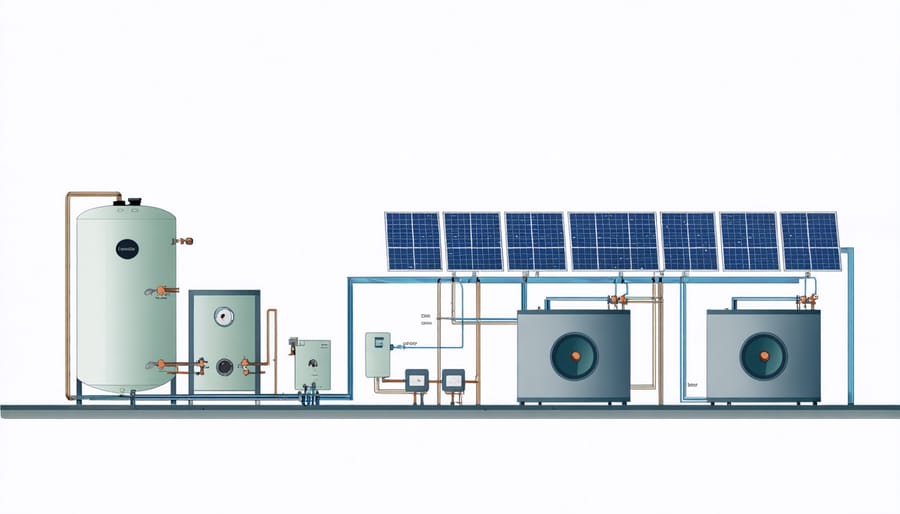
Hot water storage systems offer an efficient and cost-effective solution for storing thermal energy in residential settings. These systems typically consist of insulated tanks that store heated water generated by solar thermal collectors or other heating sources. During peak sunlight hours, water is heated and stored for later use, making it particularly valuable for Illinois homeowners looking to reduce their energy costs.
The technology works by maintaining water temperature through superior insulation, often keeping water hot for 24-48 hours with minimal heat loss. Modern storage tanks can range from 40 to 120 gallons for residential applications, with larger capacities available for commercial use. These systems are especially effective when integrated with home heating and domestic hot water needs.
For Illinois residents, hot water storage systems provide particular benefits during the winter months when heating demands are high. By storing excess heat generated during warmer daytime hours, homeowners can reduce their reliance on conventional heating methods during evening and early morning periods. This storage method is both environmentally friendly and helps stabilize energy costs throughout the year.
Phase Change Materials
Phase change materials (PCMs) represent an innovative approach to thermal energy storage that’s gaining traction in Illinois buildings. These specialized materials can absorb and release large amounts of energy during phase transitions – typically between solid and liquid states – while maintaining a nearly constant temperature.
Common PCMs include paraffin waxes, salt hydrates, and specialized bio-based materials. When integrated into building materials or dedicated storage systems, they can help regulate indoor temperatures and reduce heating and cooling costs. For example, PCM-enhanced drywall can absorb excess heat during warm days and release it when temperatures drop at night.
In commercial applications, PCM systems can be particularly effective for cold storage facilities and data centers, where temperature control is critical. Some Illinois businesses are now incorporating PCM storage tanks into their HVAC systems to shift cooling loads to off-peak hours, resulting in significant energy savings.
The technology’s effectiveness in our climate makes it especially valuable, as PCMs can help manage both summer cooling and winter heating needs. While installation costs are higher than traditional insulation, the long-term energy savings and improved temperature control make PCMs an increasingly attractive option for both new construction and retrofits.
Mechanical Energy Storage: Beyond Batteries
Flywheel Systems
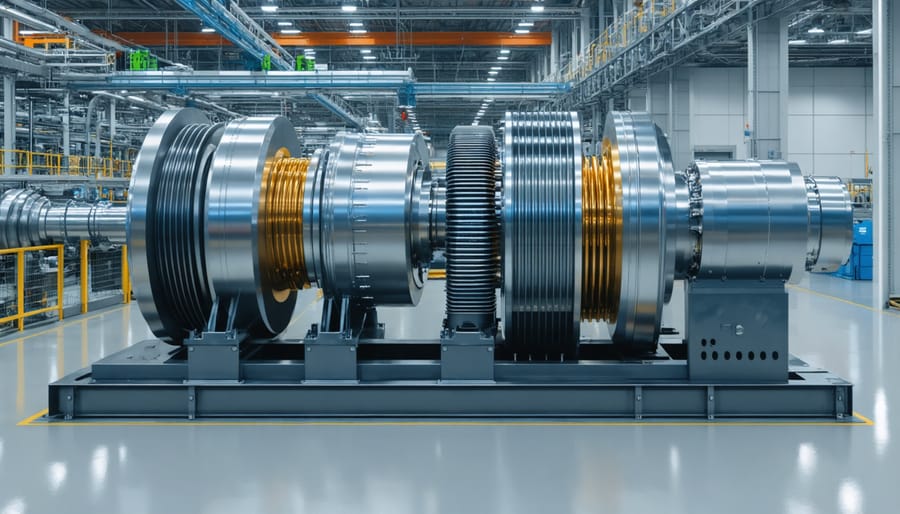
Flywheel systems represent an innovative mechanical approach to energy storage, using the principle of rotational motion to store and release energy. These systems work by accelerating a rotor (flywheel) to very high speeds, maintaining energy in the form of rotational momentum. When power is needed, the flywheel’s spinning motion is converted back into electrical energy through a generator.
Modern flywheel systems feature advanced materials like carbon fiber composites and magnetic bearings, allowing them to spin at speeds up to 60,000 RPM while minimizing energy losses. These systems excel in applications requiring rapid power delivery and frequent charge-discharge cycles, making them particularly valuable for grid stabilization and power quality improvement.
For Illinois businesses, especially those in manufacturing or data centers, flywheel systems offer unique advantages. They provide instant power backup during voltage sags and can bridge the gap until backup generators come online. While the initial cost is higher than some alternatives, flywheels require minimal maintenance and can last up to 20 years with proper care, making them a reliable long-term investment for critical power applications.
Compressed Air Storage
Compressed air energy storage (CAES) is a proven technology that harnesses the power of pressurized air to store and release energy when needed. This system works by using excess electricity to compress air and store it in sealed underground caverns or specialized tanks. When power is required, the compressed air is released and heated, driving turbines to generate electricity.
In Illinois, where geological formations provide potential underground storage sites, CAES offers a viable large-scale energy storage solution. The technology is particularly valuable for industrial applications and utility-scale operations, complementing renewable energy sources by storing excess power during peak production periods.
While traditional CAES systems require natural gas for the heating process, newer adiabatic designs capture and store the heat produced during compression, making the system more efficient and environmentally friendly. These advanced systems can achieve efficiency rates of up to 70%, making them an attractive option for businesses looking to optimize their energy usage.
The main advantages of CAES include its long service life, ability to provide large-scale storage, and relatively low maintenance requirements. However, the technology typically requires significant initial investment and suitable geological conditions for implementation.
Choosing the Right Storage Solution for Your Needs
Selecting the right energy storage solution requires careful consideration of your specific needs, budget, and physical constraints. For Illinois residents and businesses exploring renewable energy solutions, several key factors should guide your decision-making process.
First, assess your daily energy consumption patterns and peak usage times. This information helps determine the necessary storage capacity and discharge capabilities. For example, if you primarily need backup power for essential appliances during outages, a smaller lithium-ion battery system might suffice. However, if you’re looking to maximize solar energy self-consumption or participate in demand response programs, a larger storage system would be more appropriate.
Consider your available space and installation location. While lithium-ion batteries are compact and suitable for most residential applications, flow batteries require more space but offer longer operational lifespans. For commercial properties with ample space, thermal storage systems might be worth exploring, especially if heating and cooling constitute significant energy costs.
Weather conditions in Illinois should also influence your choice. Extreme temperature variations can affect battery performance, so ensure your chosen solution includes appropriate thermal management systems. Some battery technologies perform better than others in our climate, with lithium iron phosphate (LiFePO4) batteries showing excellent stability across various temperatures.
Budget considerations should extend beyond initial costs to include maintenance, replacement intervals, and potential utility incentives. While lithium-ion systems have higher upfront costs, their efficiency and minimal maintenance requirements often result in better long-term value. For businesses, industrial-scale solutions like compressed air or pumped hydro storage might be viable if space and infrastructure permit.
Don’t forget to evaluate system scalability. Your energy needs may grow over time, so choosing a modular solution that allows for future expansion can be advantageous. Many modern battery systems offer this flexibility, enabling you to start with a basic setup and expand as needed.
Finally, work with certified installers familiar with local regulations and utility requirements. They can help ensure your chosen storage solution complies with Illinois building codes and maximizes available incentives while meeting your specific energy goals.
As we’ve explored, energy storage technologies play a vital role in maximizing the benefits of renewable energy systems, particularly in Illinois’ diverse climate. From traditional battery systems to emerging technologies like thermal storage and compressed air, each solution offers unique advantages for different applications and needs.
For homeowners and businesses in Illinois considering energy storage options, it’s essential to evaluate factors such as initial costs, maintenance requirements, system efficiency, and space constraints. Battery storage systems, particularly lithium-ion batteries, remain the most practical choice for most residential and commercial applications, offering reliability and proven performance.
However, larger commercial and industrial operations might benefit from exploring alternative storage methods like thermal storage or flywheel systems, especially when dealing with specific energy management challenges or peak demand reduction requirements.
The future of energy storage in Illinois looks promising, with advancing technology continuing to drive down costs while improving efficiency and reliability. Whether you’re a homeowner looking to maximize your solar investment or a business owner seeking to reduce energy costs, there’s likely an energy storage solution that fits your needs.
We encourage you to consult with local energy professionals who can assess your specific requirements and recommend the most suitable storage solution for your situation. By investing in energy storage today, you’re not just securing energy independence but also contributing to a more sustainable future for Illinois.
