

Next-Gen Solar Panels Are Changing Illinois Homes (Here’s How)
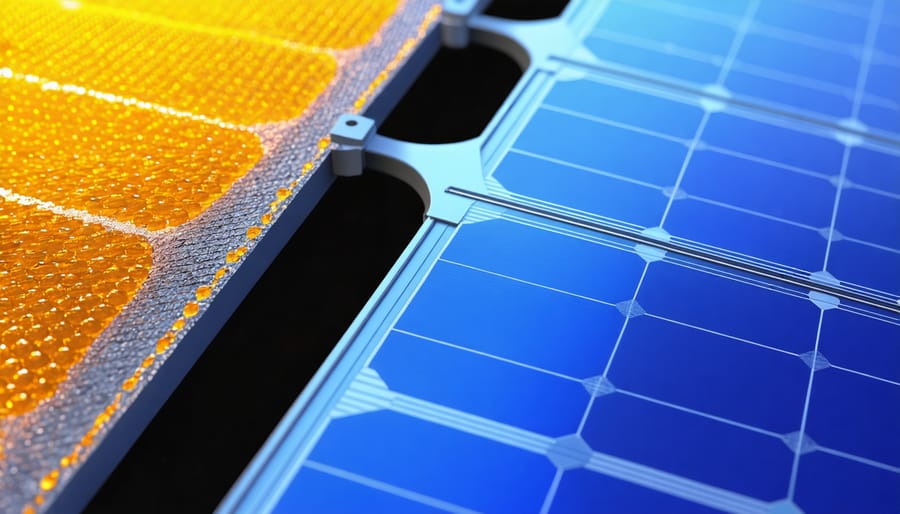
Revolutionary advances in solar technology for homes are transforming the energy landscape in 2024, with new panels achieving unprecedented efficiency rates above 25% while requiring less roof space than ever before. Perovskite-silicon tandem cells, the latest breakthrough in solar innovation, capture a broader spectrum of sunlight and maintain peak performance even during Illinois’ overcast winter days. These next-generation panels integrate seamlessly with smart home systems, featuring built-in microinverters and real-time monitoring capabilities that optimize energy production throughout the day.
For Illinois property owners, these technological improvements translate into tangible benefits: faster installation times, enhanced durability against severe Midwest weather conditions, and significantly lower electricity bills. Modern panels now incorporate bifacial technology, capturing reflected light from both sides, while advanced anti-soiling coatings minimize maintenance requirements and ensure consistent performance year-round. As manufacturing processes continue to evolve, these cutting-edge solutions become increasingly accessible to homeowners and businesses looking to embrace sustainable energy solutions.
Perovskite Solar Technology: The Game-Changer
Higher Efficiency at Lower Costs
The latest generation of solar panels represents a significant leap forward in both efficiency and affordability. Today’s panels can convert up to 23% of sunlight into electricity, compared to the 15% efficiency rate of panels from just a decade ago. This increased efficiency means fewer panels are needed to power your home or business, reducing initial installation costs and maximizing available roof space.
Manufacturing improvements and technological advances have driven down production costs by nearly 70% over the past five years. Illinois residents can now expect to pay between $2.50 and $3.00 per watt for solar installation, compared to $4.50 per watt in 2018. These cost reductions, combined with federal tax incentives and Illinois state rebates, make solar energy more accessible than ever.
Modern panels also perform better in varying weather conditions, including cloudy days and extreme temperatures common in Illinois. Enhanced durability means these panels require less maintenance and come with warranties extending up to 25 years, significantly lowering long-term ownership costs.
The return on investment has improved dramatically, with most Illinois homeowners now seeing complete system payback within 7-9 years. This shorter payback period, coupled with increased property values and reduced electricity bills, makes newer solar panels an economically sound investment for both residential and commercial properties.
Weather-Resistant Performance
The latest generation of solar panels showcases remarkable resilience against Illinois’ diverse and often challenging weather conditions. These advanced panels are engineered to withstand everything from intense summer heat to heavy winter snowfall, maintaining optimal performance year-round.
New solar panels feature enhanced temperature coefficients, allowing them to operate efficiently even during Chicago’s sweltering summer days when temperatures can exceed 90°F. Unlike older models that experienced significant efficiency drops in high heat, current panels maintain up to 85% of their rated output even in extreme temperatures.
Winter performance has also seen dramatic improvements. Modern panels incorporate anti-reflective glass coatings and specialized surface treatments that help snow slide off more easily, reducing accumulation and maintenance needs. Their reinforced frames can handle snow loads up to 5,400 Pascal, easily managing Illinois’ heaviest winter snowfall.
These panels also demonstrate superior wind resistance, certified to withstand gusts up to 140 mph – well beyond typical Illinois storm conditions. Advanced water-sealing technology provides better protection against rain and humidity, while improved hail resistance (tested with 1-inch hailstones at 50+ mph) ensures durability during severe storms.
Most importantly, these weather-resistant features come with warranties typically ranging from 25 to 30 years, giving Illinois property owners confidence in their long-term investment regardless of weather challenges.
Bifacial Solar Panels
Enhanced Energy Production
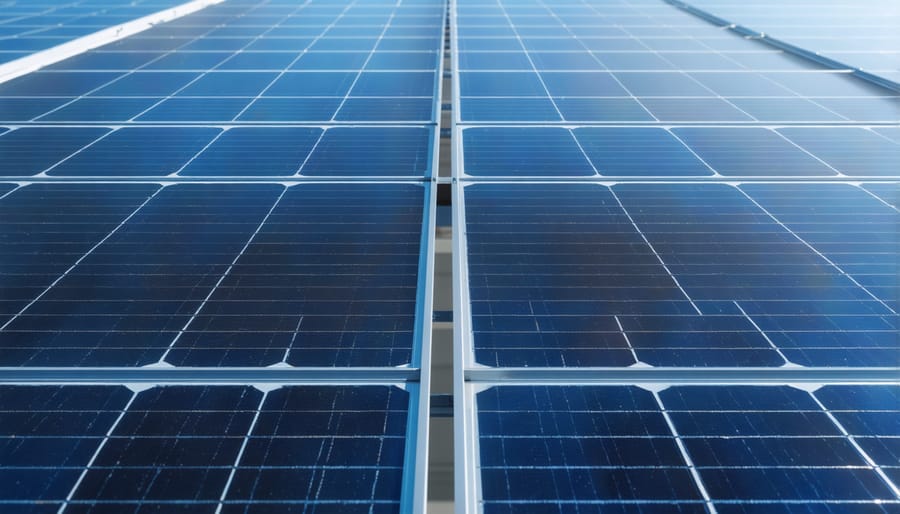
Recent field tests and real-world installations demonstrate remarkable improvements in energy production from the latest solar panel technologies. Modern panels now consistently achieve efficiency rates of 20-23% in typical Illinois conditions, compared to the 15-17% efficiency of panels manufactured just five years ago. This translates to approximately 30% more power generation from the same roof space.
In practical terms, a typical 2,000-square-foot Illinois home that previously required 24 panels to meet its energy needs can now achieve the same output with just 16-18 panels. During peak summer months, these advanced panels can generate up to 400 watts per panel, compared to the previous generation’s 250-300 watts.
Real-world data from Illinois installations shows that newer panels maintain higher performance levels during cloudy days and perform better in extreme temperatures. Testing reveals only a 2% efficiency drop in temperatures above 95°F, compared to the 10-15% reduction seen in older models.
These improvements are particularly notable during winter months, where bifacial panels can capture up to 30% additional energy from snow reflection, helping maintain consistent energy production throughout Illinois’ varying seasons.
Installation Considerations
Proper installation is crucial for maximizing the performance of your new solar panels. In Illinois, where weather conditions can vary significantly throughout the year, optimal placement requires careful consideration. South-facing installations typically yield the best results, with a roof pitch between 30-45 degrees providing ideal sun exposure. However, east and west-facing orientations can also be effective, especially with the latest bifacial panels that capture reflected light.
During the solar panel installation process, professional installers will assess your roof’s structural integrity and ensure proper weight distribution. Modern mounting systems include advanced rail-free options that not only look sleeker but also reduce installation time and potential roof penetration points.
Shading analysis is particularly important, as even partial shade from trees, chimneys, or nearby buildings can significantly impact panel efficiency. Today’s microinverter and power optimizer technologies help minimize these effects, but optimal placement remains essential.
Consider future landscaping growth and seasonal sun patterns when determining panel placement. Additionally, leave adequate space between panels for maintenance access and proper airflow, which helps maintain optimal operating temperatures and efficiency.
Smart Integration Features
AI-Powered Performance Optimization
Artificial intelligence is revolutionizing how modern solar panels operate, delivering unprecedented levels of efficiency and performance for Illinois homes and businesses. Smart algorithms continuously monitor and adjust panel settings in real-time, responding to changing weather conditions, shadows, and electricity demand patterns throughout the day.
These AI systems analyze data from multiple sensors to optimize each panel’s positioning and power output. When clouds pass overhead or nearby trees cast shadows, the system automatically adjusts individual panels to minimize power losses. This dynamic response capability can increase overall energy production by 5-15% compared to traditional static systems.
Machine learning algorithms also predict maintenance needs before problems arise, helping system owners avoid unexpected downtime. By analyzing performance patterns, these systems can detect when panels need cleaning, identify potential equipment issues, and recommend optimal maintenance schedules based on local Illinois weather patterns.
For Illinois property owners, AI optimization means better returns on their solar investment. The technology particularly shines during our state’s variable weather conditions, from sunny summer days to cloudy winters. Advanced monitoring systems provide real-time performance data through user-friendly apps, allowing owners to track their system’s output and savings with unprecedented clarity.
The integration of AI with solar technology represents a significant leap forward in renewable energy efficiency, making solar power an increasingly attractive option for Illinois properties.
Mobile Monitoring Solutions
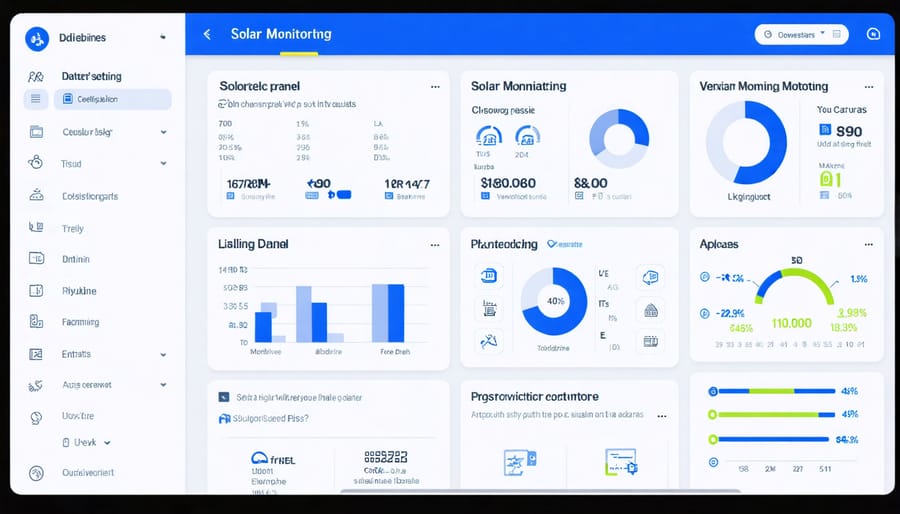
Today’s newest solar panels come equipped with sophisticated mobile monitoring capabilities that put system control right at your fingertips. Through user-friendly smartphone apps and web portals, homeowners can track their solar energy production in real-time, receiving instant updates on system performance and energy generation.
These smart monitoring solutions allow you to view detailed analytics, including daily, weekly, and monthly energy production statistics. You can easily monitor how weather conditions affect your system’s output and identify peak production hours. The apps also send automatic notifications about system health, alerting you to any maintenance needs or potential issues before they become serious problems.
Many modern monitoring platforms integrate with home automation systems, enabling you to optimize energy usage by coordinating solar production with your household activities. For example, you can schedule energy-intensive tasks like running the dishwasher or charging an electric vehicle during peak solar production hours.
What makes these monitoring solutions particularly valuable for Illinois residents is their ability to track seasonal performance variations. You can analyze how your system performs during hot summers and snowy winters, helping you make informed decisions about energy consumption throughout the year. Some platforms even provide comparative data showing how your system performs against similar installations in your area, helping you ensure optimal efficiency for your investment.
Making the Switch: Practical Considerations
Cost Analysis and ROI
For Illinois homeowners, investing in the latest solar panel technology presents a compelling financial opportunity. Current market analysis shows that the average 6kW solar system installation costs between $15,000 and $18,000 after federal tax incentives. Illinois residents can benefit from additional state incentives, including the Illinois Shines program, which can further reduce initial costs by up to 30%.
Calculate your potential solar investment returns based on your specific energy usage and property characteristics. Most Illinois homeowners see complete system payback within 5-7 years, depending on their location and energy consumption patterns. With newer, more efficient panels, this payback period can be even shorter due to increased energy production capabilities.
Monthly energy savings typically range from $90 to $120 for average-sized homes, translating to annual savings of $1,080 to $1,440. When factoring in the current electricity rates in Illinois (averaging 14.8 cents per kWh) and projected increases over time, the long-term savings become even more substantial.
Modern solar panels also come with 25-30 year warranties and maintain about 85% of their efficiency even after 25 years of use. This longevity, combined with minimal maintenance costs (typically $150-200 per year), results in significant long-term financial benefits. Property value increases average 4.1% with solar installation in Illinois markets, offering an additional return on investment beyond energy savings.
Consider that newer panels’ enhanced efficiency ratings of 20-23% mean fewer panels needed for the same energy output, potentially reducing initial installation costs while maximizing roof space utilization.
Local Incentives and Support
Illinois residents looking to invest in the newest solar panel technology have access to numerous financial incentives and support programs. The state offers generous Illinois solar tax credits that can significantly reduce the initial installation costs by up to 30% of the total system price.
The Illinois Shines program (also known as Adjustable Block Program) provides Solar Renewable Energy Credits (SRECs) to homeowners and businesses, offering additional financial benefits for generating clean energy. Participants can earn credits for every megawatt-hour of electricity their solar system produces.
Local utility companies offer net metering programs, allowing solar panel owners to receive credits on their electricity bills for excess power generated and sent back to the grid. ComEd and Ameren Illinois customers can take advantage of these programs to maximize their solar investment returns.
Several Illinois municipalities provide property tax exemptions for solar installations, ensuring that your property taxes won’t increase despite the added value to your home. Additionally, many local banks and credit unions offer special solar financing options with competitive interest rates and flexible terms specifically designed for renewable energy projects.
Free consultation services are available through the Illinois Solar Energy Association, helping residents understand their options and navigate the various incentive programs available to them.
The latest advancements in solar panel technology represent an exciting leap forward in renewable energy solutions. With improved efficiency ratings reaching beyond 23%, enhanced durability, and sleeker designs, today’s solar panels offer Illinois residents and businesses more value than ever before. These innovations translate into tangible benefits: lower electricity bills, reduced carbon footprint, and increased property values.
The integration of smart monitoring systems and improved energy storage solutions means that modern solar installations can effectively power homes and businesses throughout Illinois’ varied weather conditions. Bifacial panels and enhanced low-light performance ensure optimal energy generation even during cloudy days, while advanced materials provide better resistance against our state’s challenging weather patterns.
As solar technology continues to evolve and prices become increasingly competitive, there’s never been a better time to invest in solar energy. The combination of federal tax incentives, state rebates, and long-term energy savings makes modern solar panels an attractive investment for Illinois property owners.
Take the first step toward energy independence by exploring these cutting-edge solar solutions. Whether you’re a homeowner looking to reduce utility costs or a business owner aiming to enhance sustainability, today’s solar technology offers the perfect blend of innovation, efficiency, and reliability. Contact local solar experts to learn how these newest advances can benefit your specific situation and help you join Illinois’s growing renewable energy community.
