

Where Does Solar Energy Go When You’re Done With It?
Energy itself doesn’t recycle in the traditional sense—it transforms from one form to another according to the laws of thermodynamics, eventually dissipating as heat. When sunlight hits a solar panel, it converts to electricity, which powers your Illinois home or business before ultimately becoming thermal energy that disperses into the environment. This is a one-way journey, not a cycle.
However, the materials that capture and convert energy—solar panels, inverters, batteries, and mounting systems—absolutely can and should be recycled. This distinction matters for Illinois residents considering solar energy because it addresses both the scientific reality of energy conversion and the environmental responsibility of equipment disposal.
Understanding this difference helps clarify why solar energy remains one of the most sustainable power sources available. While the energy itself flows through your system once, the physical infrastructure that generates clean electricity for 25-30 years contains valuable materials like silicon, aluminum, copper, and glass. These components can be recovered and repurposed at end-of-life, significantly reducing the environmental footprint of solar installations.
For homeowners and businesses in Illinois weighing solar investments, this knowledge provides confidence that choosing renewable energy means embracing both efficient energy conversion and responsible material stewardship. The combination of unlimited solar energy input and recyclable system components creates a truly sustainable energy solution tailored to our region’s environmental and economic goals.
Understanding Energy: Why It Doesn’t Actually Recycle
When people ask “does energy recycle?” they’re often thinking of energy the way we think about aluminum cans or plastic bottles. It’s a natural comparison, but energy works differently. Let’s clear up this common misconception.
In physics, energy follows the Law of Conservation of Energy, which states that energy cannot be created or destroyed. However, this doesn’t mean energy recycles in the way materials do. Instead, energy transforms from one form to another and gradually dissipates as heat.
Think about your solar panels. They capture sunlight and convert it into electricity. That electricity powers your home’s appliances, lights, and devices. But at each stage of this process, some energy transforms into heat that disperses into the environment. Your refrigerator uses electricity but also releases heat from its back coils. Your light bulbs illuminate your rooms but also warm the air around them.
This heat dissipation represents energy that’s still present in the universe but is no longer useful for doing work. It spreads out and becomes increasingly difficult to harness. Scientists call this increasing disorder “entropy,” and it’s a fundamental principle of thermodynamics.
Material recycling works differently. When you recycle an aluminum can, manufacturers melt it down and form new products from the same aluminum atoms. The material itself continues in a cycle. Energy, by contrast, moves in one direction through various transformations until it becomes diffuse heat.
For Illinois homeowners and businesses investing in solar energy, understanding this distinction matters. While the energy itself doesn’t recycle, the materials used to capture and convert that energy can and should be recycled responsibly. That’s where the solar industry’s commitment to equipment recycling becomes important for environmental sustainability.
What Actually Gets Recycled: The Materials Behind Solar Energy
Solar Panel Components Worth Recovering
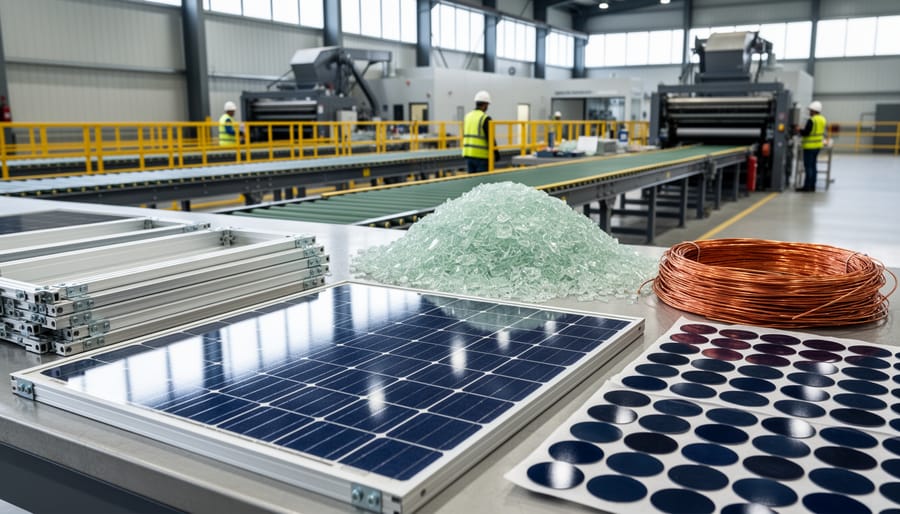
Solar panels contain several valuable materials that can be recovered and reused, making them an excellent candidate for recycling when they reach the end of their 25-30 year lifespan. Understanding what’s inside these panels helps explain why recycling programs are both environmentally and economically worthwhile.
Silicon makes up the core of most solar cells and represents the primary semiconductor material. While the recovery process requires specialized equipment, recycled silicon can be reused in new panels or other electronics. Current recycling methods can recover up to 85% of the silicon content.
Silver serves as the conductive material in solar cells, creating the pathways for electricity to flow. Though present in small amounts, silver is highly valuable and nearly 100% recoverable through proper recycling processes.
Copper wiring connects the solar cells and conducts electricity throughout the system. This metal maintains its properties through multiple recycling cycles, with recovery rates exceeding 95%.
Aluminum frames provide structural support and protection for solar panels. This lightweight metal is one of the most recyclable materials available, with an impressive 90-95% recovery rate and significantly lower energy requirements for reprocessing compared to producing new aluminum.
Glass covers comprise about 75% of a solar panel’s weight. The tempered glass used in panels is highly recyclable, though it requires separation from other components first. Recovery rates for solar glass typically reach 95%.
For Illinois residents and businesses investing in solar energy, knowing these materials return to productive use reinforces the long-term environmental benefits of choosing solar power for your property.
Battery Storage Systems and Critical Materials
As renewable energy adoption grows across Illinois, battery storage systems have become essential for capturing solar power when the sun isn’t shining. These batteries contain valuable materials like lithium, cobalt, nickel, and manganese that don’t disappear after use. The good news is that these critical materials can be recovered and reused through specialized recycling processes.
Battery recycling typically follows two main approaches. Pyrometallurgical recycling uses high-temperature furnaces to melt batteries and separate metals, though this process can lose some lithium content. Hydrometallurgical recycling uses chemical solutions to dissolve and extract individual materials with higher recovery rates, making it increasingly popular for lithium-ion batteries.
Currently, the recycling industry recovers approximately 95 percent of cobalt and nickel from used batteries, though lithium recovery rates vary between 50 and 90 percent depending on the method used. As battery production expands to support Illinois’s clean energy goals, developing efficient recycling infrastructure becomes more important.
For homeowners and businesses investing in solar plus storage systems, understanding that these materials cycle back into new products reduces the environmental footprint of your energy investment. Many battery manufacturers now design products with recycling in mind, making disassembly easier and improving material recovery rates. As a locally owned solar provider, we stay informed about battery lifecycle management to help Illinois property owners make environmentally responsible choices.
Supporting Equipment and Infrastructure
Solar panels aren’t the only components with recyclable value in your system. The supporting equipment and infrastructure that makes your solar installation functional contains substantial amounts of recoverable materials that benefit the environment when properly processed.
Inverters, which convert the direct current from your panels into usable alternating current for your home or business, house circuit boards with precious metals, aluminum heat sinks, and copper wiring. These components can be extracted and reused in new electronics and electrical equipment.
The wiring throughout your system contains high-grade copper, one of the most valuable and infinitely recyclable metals in the electrical industry. The aluminum and galvanized steel in racking systems that mount panels to your roof or ground also maintain their properties through multiple recycling cycles.
Balance-of-system components like junction boxes, combiners, and disconnect switches contain additional copper, steel, and plastics that recycling facilities can process. Even the mounting hardware and fasteners contribute recyclable steel and aluminum.
As locally owned solar experts serving Illinois communities, we ensure our installations use quality components designed for longevity and eventual recyclability. This commitment to responsible equipment selection means your solar investment supports environmental sustainability from installation through end-of-life material recovery.
The Solar Panel Recycling Process: From Rooftop to Raw Materials
Understanding how solar panels are recycled helps Illinois homeowners and businesses make informed decisions about their long-term solar investment. The recycling process transforms aging panels into valuable raw materials, closing the loop on sustainable energy production.
The journey begins with collection. When your solar panels reach the end of their 25-30 year lifespan or require replacement, specialized recyclers receive the panels through take-back programs or direct drop-off. Many manufacturers and installers now offer collection services, making the process straightforward for system owners.
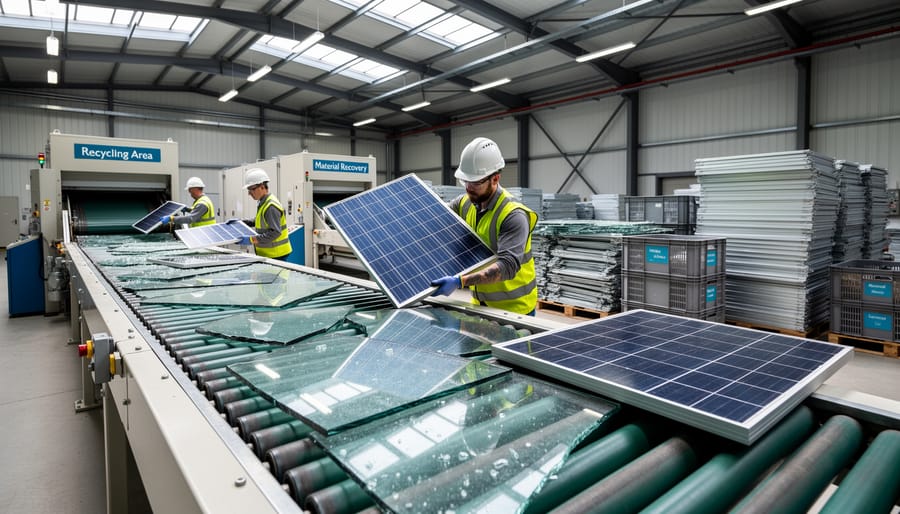
Once collected, panels move to recycling facilities where the first step involves removing the aluminum frames and junction boxes. These components are easily separated and sent to standard metal recycling streams. The aluminum alone represents significant value and can be recycled indefinitely without losing quality.
Next comes the more complex task of separating the laminated materials. Recyclers use either thermal or chemical processes to break down the protective layers. Thermal processing heats the panels to separate the glass from the silicon cells, while chemical processing uses solvents to dissolve the binding materials. Each method has advantages depending on the panel type and recycling facility capabilities.
The glass, which makes up about 75% of a standard panel’s weight, is crushed and cleaned for reuse in new products, including new solar panels, fiberglass, or construction materials. The silicon cells undergo further refinement to extract pure silicon, which can be reprocessed for electronics or new photovoltaic cells.
Finally, smaller quantities of precious metals like silver and copper are recovered through chemical extraction methods. Though these materials represent a small percentage by weight, they hold substantial value and justify the recycling investment.
Current technology can recover up to 95% of a solar panel’s materials, demonstrating that solar energy systems truly support circular economy principles from installation through end-of-life management.
Recycling Challenges and Solutions in Renewable Energy Supply Chains
While renewable energy systems offer tremendous environmental benefits during operation, the solar industry faces real challenges when it comes to recycling equipment at the end of its lifespan. Understanding these obstacles helps homeowners and businesses in Illinois make informed decisions about their solar investments.
One of the primary challenges involves collection logistics. Solar panels typically last 25-30 years, meaning the first wave of widespread panel retirements is just beginning. Many communities lack convenient drop-off locations or pickup services for decommissioned equipment, making proper disposal difficult for property owners. Transportation costs can be significant, especially for businesses replacing large commercial installations.
Processing costs present another hurdle. Separating valuable materials like silicon, silver, and aluminum from solar panels requires specialized equipment and techniques. The current recovery value of materials often doesn’t cover processing expenses, making recycling economically challenging without supportive policies or subsidies.
Technology gaps also exist in efficiently recovering certain materials. While aluminum frames and junction boxes are relatively straightforward to recycle, extracting high-purity silicon and precious metals from photovoltaic cells requires advanced processes that not all facilities can perform.
However, promising solutions are emerging. The federal government and several states are developing extended producer responsibility programs, requiring manufacturers to fund recycling initiatives. Illinois businesses can benefit from tracking these solar recycling innovations, which include improved material separation technologies and partnerships between solar companies and recycling specialists.
Forward-thinking solar providers are already building take-back programs into their service offerings, ensuring responsible end-of-life management. As recycling infrastructure develops and economies of scale improve, the costs will decrease, making comprehensive solar recycling increasingly viable for Illinois property owners committed to complete environmental stewardship.

What This Means for Illinois Solar Customers
If you’re considering solar energy in Illinois or already have a system installed, understanding what happens to your equipment at the end of its useful life is an important part of making an environmentally responsible choice.
The good news is that solar panels typically last 25-30 years, so end-of-life considerations won’t be immediate. However, planning ahead matters. In Illinois, several options exist for responsible solar equipment disposal and recycling. Many reputable solar panel manufacturers now offer take-back programs where they reclaim and recycle their products when they reach the end of their service life. When choosing solar equipment, ask your installer about manufacturer recycling commitments and warranties that include end-of-life management.
Illinois has also seen growth in specialized solar recycling facilities and programs. These operations can recover up to 95% of materials from solar panels, including valuable silicon, glass, aluminum, and copper. Some inverter and battery manufacturers similarly offer recycling or refurbishment programs for their equipment.
At Illinois Renewables, we prioritize working with manufacturers and suppliers committed to supply chain transparency and responsible environmental practices throughout the entire product lifecycle. We stay informed about available recycling options and can guide our customers toward manufacturers with robust take-back programs.
For Illinois homeowners and businesses, this means your solar investment doesn’t just generate clean energy during its operational life but can also contribute to a circular economy when properly recycled. As a locally owned company, we’re committed to supporting our community’s long-term environmental goals, which includes ensuring solar equipment is managed responsibly from installation through eventual recycling.
While energy itself doesn’t recycle in the traditional sense—it transforms according to the laws of physics—the renewable energy industry has made remarkable strides in creating systems where materials do cycle back into production. Solar panels, inverters, and mounting equipment are increasingly designed with end-of-life recovery in mind, transforming what was once a linear process into a circular supply chain.
When you choose solar energy for your Illinois home or business, you’re investing in technology backed by growing recycling infrastructure. Manufacturers are reclaiming silicon, glass, aluminum, and precious metals from decommissioned panels, reducing the need for virgin materials and minimizing environmental impact.
At Illinois Renewables, we’re committed to sustainable practices throughout your solar journey—from initial consultation and installation through system monitoring and eventual end-of-life management. Our locally owned team stays current with recycling programs and disposal requirements, ensuring your investment supports both energy independence and environmental responsibility. Solar isn’t just about clean energy generation; it’s about participating in an increasingly responsible, circular approach to technology.
