
How Ancient Wood Fires Led to Your Solar Panels: The Complete Energy Evolution Story
Understanding how energy has traveled from its source to power our homes and businesses reveals why modern solar technology represents such a logical advancement for Illinois residents. The 3.5 tracing energy worksheet concept helps students and curious learners follow energy’s path through various transformations—from ancient sunlight trapped in fossil fuels to the electricity flowing through our outlets today.
Trace energy backwards from any electrical device in your home, and you’ll discover a fascinating chain: electricity came from a power plant, which burned fuel or harnessed natural forces, which originally captured solar energy millions of years ago or harnesses it currently through wind and water cycles. This exercise demonstrates that nearly all energy on Earth originates from the sun, whether stored over geological time in coal and oil or captured instantly through photovoltaic panels.
Map the inefficiencies in traditional energy conversion by calculating losses at each transformation stage—mining operations, transportation, combustion, and transmission across power grids typically waste 60-70% of the original energy content before reaching your property. Compare this to solar panels that convert sunlight directly into electricity at your location, eliminating most intermediary steps.
Recognize that Illinois receives sufficient solar radiation to make direct energy capture practical year-round, even during our cloudier months. This locally-sourced approach shortens the energy journey from millions of years and thousands of miles to mere seconds and feet, transforming how we think about powering our homes and businesses.
Understanding the 3.5 Tracing Energy Worksheet Concept
What Energy Tracing Really Means
Energy tracing is simply following the path that energy takes from its original source to its final use in your home or business. Think of it like tracing water from a river to your kitchen faucet. Every time you flip a light switch or charge your phone, that electricity came from somewhere, and understanding that journey helps us make smarter energy choices.
When you trace energy, you’re asking three basic questions: Where did it start? How did it change along the way? Where did it end up? For example, the electricity powering your reading lamp might have started as sunlight, been converted by solar panels, traveled through power lines, and finally became the light you’re using right now.
This concept matters because different energy sources have different impacts on your utility bills, the environment, and your community’s energy independence. In Illinois, where we have abundant sunshine and growing solar infrastructure, tracing energy helps homeowners and business owners see the direct connection between energy sources and their daily operations. Understanding this flow makes it easier to evaluate alternatives like solar power and recognize how energy choices affect both your budget and our local economy.
Why This History Matters for Your Energy Choices Today
Understanding energy’s evolution helps Illinois residents and businesses make smarter choices today. Just as communities transitioned from wood to coal to electricity based on efficiency and availability, the shift toward solar energy reflects similar practical considerations. Illinois receives ample sunlight for solar generation, and state incentives make renewable energy increasingly cost-effective. By recognizing that energy sources have always evolved to meet changing needs and technologies, you can approach solar adoption not as a radical departure, but as the logical next step in energy progression. Historical transitions took decades, but today’s locally owned solar experts can help you navigate this shift efficiently, understanding both the technical aspects and Illinois-specific opportunities that make solar a practical choice for homes, businesses, and industries seeking reliable, sustainable energy solutions.
Stage 1: Wood and Biomass – Humanity’s First Energy Source

How Wood Powered Early Civilization
For thousands of years, wood powered early civilization as humanity’s primary energy source. Before coal, oil, or natural gas, our ancestors relied on burning wood for essential daily activities. Families heated their homes during harsh winters, cooked meals over open fires, and preserved food through smoke curing. Beyond household use, wood fueled early industries like blacksmithing, pottery making, and metal working.
Communities developed near forests to ensure steady access to this vital resource. As populations grew, the demand for wood increased dramatically. Early manufacturers used wood-fired furnaces to produce glass, bricks, and iron tools. Even transportation relied on wood, as steam engines in early trains and ships burned it for fuel.
This dependence on wood shaped settlement patterns and economic development for centuries. However, as forests became depleted in populated areas, communities faced energy shortages. This challenge eventually pushed society to seek alternative energy sources, beginning the transition toward fossil fuels and setting the stage for today’s shift to renewable options like solar energy, which offers Illinois residents sustainable solutions without resource depletion concerns.
The Limitations That Sparked Change
As human populations grew and societies became more complex, the limitations of wood as a primary energy source became increasingly apparent. Deforestation emerged as a serious concern, particularly in rapidly industrializing regions where forests couldn’t regenerate fast enough to meet growing energy demands. Communities had to transport wood from increasingly distant locations, making energy access both expensive and inefficient.
Wood’s relatively low energy density meant large quantities were needed to power homes and early industries. A cord of wood produces significantly less usable energy than equivalent volumes of coal or oil, requiring more storage space and more frequent refueling. This inefficiency created bottlenecks in manufacturing and limited what communities could accomplish.
These challenges drove innovators to seek more concentrated, reliable energy sources. Coal emerged as the next major fuel, offering roughly twice the energy density of wood. This transition wasn’t just about convenience—it was necessary for progress. Understanding this pattern of energy evolution helps us recognize why today’s shift toward renewable sources like solar represents a similar response to limitations in fossil fuels, including finite supplies, price volatility, and environmental impacts that affect communities throughout Illinois and beyond.
Stage 2: Coal – The Industrial Revolution’s Power Source
Why Coal Changed Everything
The shift to coal marked a pivotal transformation in human energy use. Unlike wood or animal power, coal offered remarkable energy density—meaning more power could be generated from less fuel. A single ton of coal could produce the same work as several acres of forest, making it incredibly efficient for growing industrial needs.
This superior energy concentration is how coal changed everything about manufacturing and transportation. Factories no longer needed to locate near forests or rivers. Steam engines powered by coal revolutionized textile mills, ironworks, and machinery production. Railways expanded rapidly, connecting markets and raw materials across vast distances.
The transportation sector experienced equally dramatic changes. Coal-powered steamships crossed oceans reliably, while locomotives moved goods and people faster than ever imagined. This abundant energy source fueled unprecedented economic growth and urbanization throughout the 1800s and into the 1900s.
Understanding this historical progression helps us appreciate today’s energy transitions. Just as coal’s superior characteristics made it preferable to wood, modern solar technology now offers advantages that align with our current needs—clean, abundant, and increasingly cost-effective energy for Illinois homes and businesses.
The Hidden Costs We Discovered
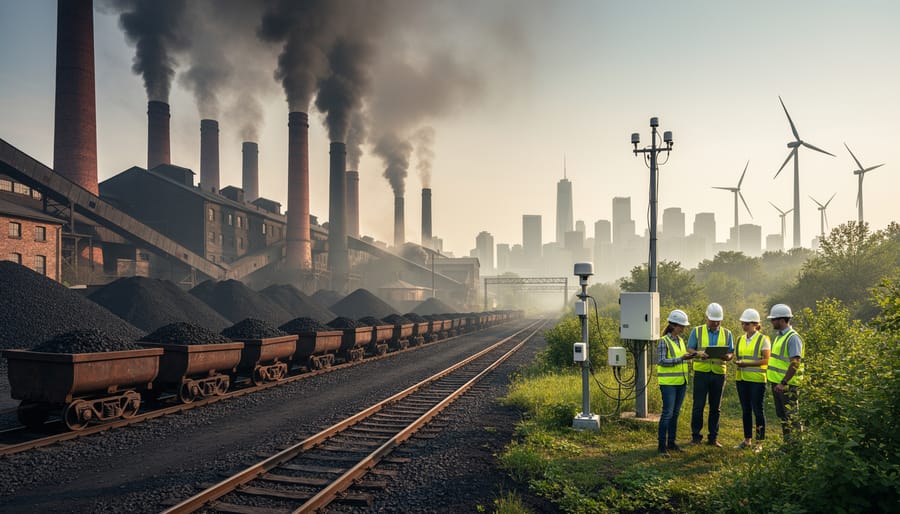
As we trace energy’s evolution from wood to coal to oil, we uncover costs that weren’t immediately visible to early adopters. When factories began burning coal in the 1800s, few understood the long-term consequences. Air quality deteriorated in industrial cities, leading to respiratory problems among workers and nearby residents. These health impacts created economic burdens that communities still address today.
Environmental degradation became another hidden expense. Coal mining scarred landscapes, while oil extraction contaminated water sources. These energy sources released carbon emissions that accumulated in our atmosphere over decades. In Illinois, we’ve witnessed these effects firsthand, from air quality alerts in urban areas to changing weather patterns affecting agriculture.
Understanding these hidden costs helps us make smarter energy choices today. Each energy transition throughout history taught us valuable lessons about considering the full impact of our power sources. This perspective becomes particularly important when evaluating modern energy options for your home or business, where upfront costs tell only part of the story.
Stage 3: Oil and Natural Gas – The Modern Era Begins
The Flexibility of Liquid Fuels
The discovery of oil and natural gas transformed energy consumption by offering unprecedented versatility. Unlike coal, which required stationary infrastructure, liquid fuels could be easily transported and stored, making them ideal for multiple applications.
In transportation, gasoline and diesel powered automobiles, trucks, ships, and aircraft, enabling mobility on a scale previously unimaginable. This flexibility revolutionized commerce and daily life, connecting communities across Illinois and beyond.
For heating purposes, oil furnaces became common in homes and businesses, offering cleaner combustion and easier maintenance compared to coal-burning systems. Natural gas pipelines eventually brought even more convenient heating solutions to residential and commercial buildings throughout the state.
Petroleum products also proved valuable for electricity generation. Gas-fired power plants could start quickly and adjust output to meet changing demand, providing the grid flexibility that coal plants couldn’t match. This adaptability made fossil fuels the dominant energy source for decades.
Understanding this historical flexibility helps illustrate why diverse energy portfolios matter today, as Illinois continues evolving toward cleaner, renewable solutions that offer similar versatility without environmental drawbacks.
What Illinois Learned About Fossil Fuel Dependence
Illinois has experienced firsthand the challenges of fossil fuel dependence, particularly during extreme weather events when energy demand spikes and costs soar. The state’s historic reliance on coal and natural gas has left residents vulnerable to price volatility and supply chain disruptions. During the polar vortex of 2019, natural gas prices in Illinois briefly skyrocketed to nearly 100 times their normal rates, dramatically impacting heating costs for homeowners and businesses alike.
Beyond economic concerns, Illinois energy production from fossil fuels has contributed to air quality issues, particularly in urban areas. The state has worked to reduce emissions, but the environmental impact of traditional energy sources remains a concern for many residents.
These challenges have prompted Illinois to reconsider its energy strategy. The state now recognizes that diversifying energy sources, particularly through renewable options like solar, can provide more stable pricing, reduce environmental impact, and offer greater energy independence. This shift reflects lessons learned from decades of fossil fuel dependence and positions Illinois for a more sustainable energy future.
Stage 3.5: Wind, Solar, and the Renewable Revolution
How Wind Energy Matured From Concept to Reality
The twentieth century marked a pivotal turning point as wind energy matured from basic mechanical applications to sophisticated electricity generation. Early windmills that ground grain evolved into aerodynamic turbines capable of powering entire communities. The 1970s energy crisis accelerated research and development, leading to modern three-blade horizontal-axis turbines that now dominate wind farms across the Midwest.
In Illinois, wind energy has become increasingly significant to the state’s power grid. The flat prairie landscapes and consistent wind patterns make Illinois ideal for wind farm development, particularly in the northern and central regions. Large-scale wind installations now contribute substantially to meeting renewable energy standards while creating local jobs and economic opportunities.
Modern wind turbines feature advanced materials, computerized controls, and precise blade designs that maximize energy capture even at lower wind speeds. This technological maturation has reduced costs dramatically, making wind power competitive with traditional energy sources. For Illinois residents and businesses exploring renewable options, understanding wind energy’s successful evolution provides valuable context for evaluating all clean energy technologies, including solar installations suited to their specific properties.
Solar Power: From Satellites to Your Rooftop
Solar power’s journey from science fiction to everyday reality spans several decades of technological breakthroughs. In 1954, Bell Labs created the first practical silicon solar cell, achieving 6% efficiency. NASA quickly recognized solar’s potential, powering satellites starting in the 1960s. These early applications, while groundbreaking, remained prohibitively expensive for consumer use.
The real transformation began in the 2000s when manufacturing improvements and increased production dramatically reduced costs. Between 2010 and 2020, solar panel prices dropped by nearly 90%, making residential and commercial installations financially viable. Modern panels now convert 20-25% of sunlight into electricity, more than quadrupling the efficiency of those first Bell Labs cells.
Today, Illinois homeowners and businesses can harness the same technology that powers spacecraft. Federal tax credits, state incentives, and net metering programs have removed financial barriers that once made solar seem out of reach. What once required a NASA-sized budget now represents a practical investment for everyday Illinoisans. This accessibility marks a pivotal moment in energy history, where clean power generation moves from specialized applications to mainstream adoption across communities throughout Illinois.
Why Illinois Is Perfect for Solar Adoption
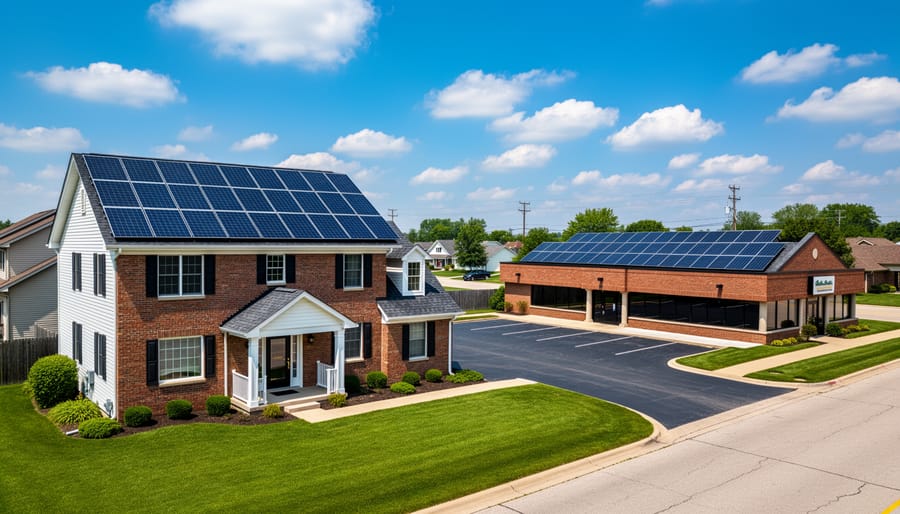
Illinois offers exceptional conditions for solar energy adoption, making it an ideal location for property owners considering renewable energy. The state receives adequate sunlight year-round, with solar panels performing efficiently even during cloudy conditions. Illinois has established strong financial incentives through programs like Illinois Shines, which provides rebates for solar installations, and net metering policies that credit excess energy production back to your utility bill. Additionally, federal tax credits can offset up to 30% of installation costs. Property owners benefit from reduced electricity expenses, increased property values, and protection against rising energy costs. As a locally owned solar provider with deep expertise in solar energy, we understand the specific requirements and opportunities available to Illinois residents and businesses, helping you navigate the transition from traditional energy sources to sustainable solar power seamlessly.
Completing Your Personal Energy Tracing Worksheet

Evaluating Your Current Energy Sources
Understanding your current energy sources is the foundation of making informed decisions about your energy future. Start by reviewing your utility bills from the past year to identify patterns in your electricity usage and costs. Look for information about your cost per kilowatt-hour and how rates fluctuate seasonally, which is particularly important in Illinois where summer air conditioning and winter heating can significantly impact energy expenses.
Consider where your electricity currently comes from. Most Illinois residents receive power from a mix of sources including coal, natural gas, nuclear, and renewable energy. Your utility provider’s website typically offers a breakdown of their energy portfolio, giving you insight into the environmental impact of your current energy consumption.
Track your monthly usage in kilowatt-hours to establish a baseline. This information becomes invaluable when evaluating alternative energy options. Notice which months show the highest consumption and what might be driving those spikes. Understanding these patterns helps you appreciate how different energy sources, including solar, could meet your specific needs more efficiently and economically. By documenting this information on your energy worksheet, you create a clear picture of your starting point and can better measure potential improvements.
Calculating the Benefits of Making the Switch
Understanding the benefits of switching to solar energy doesn’t require complex calculations or advanced mathematics. Just like the energy tracing worksheets help students visualize how energy transforms from one source to another, calculating solar benefits involves straightforward comparisons.
From a financial perspective, Illinois homeowners and businesses can significantly reduce monthly electricity bills, sometimes by 50-75% depending on system size and energy usage. State incentives, including Illinois Shines and federal tax credits, can cover up to 30% of installation costs. Most solar systems pay for themselves within 7-12 years, while continuing to generate savings for 25-30 years or more.
Environmental benefits are equally compelling. An average residential solar installation offsets approximately 3-4 tons of carbon dioxide annually, equivalent to planting about 100 trees each year. Over a system’s lifetime, this reduction equals removing a car from the road for decades.
Practical advantages include increased property values, with studies showing homes with solar panels sell for 4% more on average. Energy independence provides protection against rising utility rates and power outages when paired with battery storage. For Illinois businesses, solar installations demonstrate environmental commitment while reducing operational costs.
As locally owned solar experts, we help Illinois residents and business owners analyze their specific situations to calculate personalized benefit projections. The transition to solar represents not just following historical energy evolution, but making a financially sound decision that benefits both your budget and the environment.
What This Evolution Means for Your Property
Residential Solar: Learning From Energy History
Understanding how energy sources have evolved throughout history provides valuable insights for homeowners considering solar installation today. Just as coal replaced wood and electricity replaced candles, solar energy represents the next logical step in our energy evolution. When you examine historical energy transitions, patterns emerge: societies consistently moved toward cleaner, more efficient, and increasingly decentralized power sources. For Illinois homeowners, this historical perspective helps explain why residential solar makes practical sense now. The shift mirrors past transitions where early adopters recognized advantages before widespread adoption occurred. Today’s solar technology offers reliability and cost-effectiveness that previous generations could only imagine. By understanding these historical patterns, you can make informed decisions about embracing solar energy for your home, recognizing it as part of a natural progression rather than an experimental leap.
Commercial and Industrial Applications
Understanding energy transitions helps Illinois businesses make smarter investment decisions. Just as companies once shifted from coal to electricity for efficiency and cost savings, today’s businesses are discovering how solar energy reduces operational expenses while supporting sustainability goals. Commercial properties with large roof spaces or unused land can significantly lower utility bills through solar installations. Manufacturing facilities benefit from predictable energy costs, protecting against rate fluctuations that impact profit margins. Industrial operations requiring consistent power supply find solar systems with battery storage provide energy security and independence. By tracing how energy sources evolved to meet business needs throughout history, companies recognize that adopting solar represents the logical next step in this progression, combining economic advantages with environmental responsibility.
Working With Local Solar Experts
Understanding the evolution from fossil fuels to renewable energy is one thing, but making the actual transition requires practical expertise and local knowledge. Illinois homeowners and businesses benefit significantly from working with locally owned solar companies who understand the state’s specific incentives, weather patterns, and regulatory environment. Local experts can assess your property’s solar potential, navigate Illinois-specific programs like Solar for All and Adjustable Block Program credits, and ensure proper system design for our climate. They’re familiar with local permitting processes, utility interconnection requirements, and can provide ongoing support long after installation. Just as the energy worksheet traces how communities adapted energy sources to their unique needs throughout history, today’s solar adoption works best when guided by professionals who understand your local context and can tailor solutions to Illinois conditions.
Looking back at humanity’s energy journey, a clear pattern emerges. We’ve consistently moved toward energy sources that are cleaner, more abundant, and better aligned with our long-term needs. From wood to coal, coal to oil and natural gas, and now to wind and solar, each transition wasn’t random. It represented our species learning, adapting, and making smarter choices about powering our lives.
Solar energy isn’t a trendy alternative or a niche experiment. It’s the logical next chapter in a story that’s been unfolding for thousands of years. The sun provides more energy to Earth in one hour than humanity uses in an entire year. Harnessing that power isn’t radical thinking; it’s the natural progression of our energy evolution.
For Illinois homeowners and businesses, this historical perspective matters. When you consider solar energy for your property, you’re not jumping on a bandwagon. You’re participating in humanity’s ongoing journey toward better energy solutions. You’re positioning yourself on the right side of history, joining the countless generations before us who recognized when it was time to evolve.
The transition to solar has never been more accessible or practical. Modern technology, financial incentives, and proven performance make this the ideal moment to explore your options. As a locally owned company with deep expertise in solar energy, we understand Illinois-specific considerations and can guide you through this natural next step in your energy journey. The question isn’t whether solar represents our energy future, but when you’ll become part of it.
