
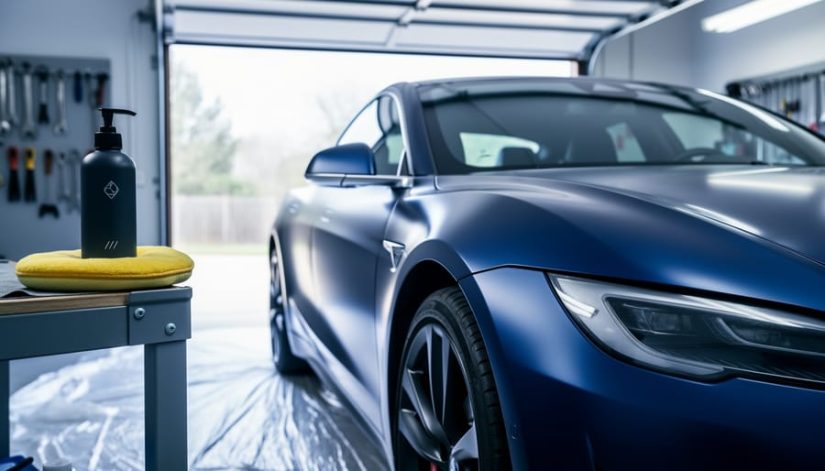
How to Apply GYEON Ceramic Coating to Your Electric Car Paint in 5 Steps
Applying GYEON ceramic coating to your electric vehicle protects the paint for up to five years while reducing wash frequency by 40 percent. This process takes four to six hours from start to finish and requires proper paint preparation, controlled application in a dust-free environment, and a 24-hour curing period. For EV owners who prioritize sustainability and long-term vehicle care, ceramic coating extends the value of your investment while minimizing the environmental impact of frequent washing and detailing.
Key Takeaway: GYEON ceramic coatings provide superior UV and chemical protection for EV paint, dramatically reduce maintenance time, and preserve your vehicle’s finish for years without reapplication, making them ideal for Illinois residents committed to electric vehicle adoption.
The rapid growth of electric vehicles in Illinois brings new considerations for vehicle maintenance. Unlike traditional cars that accumulate engine grime and exhaust residue, EVs face different environmental challenges. Road salt during harsh Illinois winters, UV degradation during summer months, and acid rain exposure create unique paint care demands. GYEON ceramic coating products address these specific needs with a chemically bonded protective layer that becomes part of your vehicle’s clear coat.
This guide walks you through the complete application process, from surface preparation through final inspection. You’ll learn which specific GYEON products work best for electric vehicle paint, how to identify proper surface readiness, and what application techniques prevent common mistakes like high spots and streaking. Whether you’re protecting a new Tesla Model Y or maintaining a Rivian R1T, the methods outlined here ensure professional-grade results that safeguard your vehicle’s appearance and resale value for years to come.
What You’ll Need: Tools and Materials for GYEON Application
Before you start coating your electric vehicle, gather everything you need for a smooth, uninterrupted application. Missing a single item halfway through can ruin your results, so check this list twice.
The centerpiece is your GYEON ceramic coating product. GYEON Q² MOHS EVO is an excellent choice for electric vehicles, offering strong chemical resistance and durability up to 36 months. You’ll need approximately 30ml to cover a mid-size EV. GYEON Q² SYNCRO is another option that combines a base coat and top coat system for enhanced protection. Purchase directly from authorized GYEON dealers or reputable detailing suppliers to ensure you’re getting genuine product, not counterfeit formulations that won’t perform as promised.
Your application tools matter as much as the coating itself. You need suede applicator blocks or foam applicators specifically designed for ceramic coatings. Standard applicator pads won’t distribute the product evenly. Stock up on at least 20 high-quality microfiber towels: some for buffing during application, others for panel prep. Look for edgeless, plush towels with 350 GSM or higher to avoid scratching.
For surface preparation, you’ll need isopropyl alcohol at 70% concentration or a dedicated panel prep solution like GYEON Q²M Prep. A clay bar or clay mitt removes embedded contaminants that washing misses. If your EV’s paint has swirl marks or light scratches, add a dual-action polisher with appropriate pads and compound to your list.
Here’s your complete materials checklist:
- GYEON ceramic coating product (Q² MOHS EVO or Q² SYNCRO system)
- Suede or foam applicator blocks (2-3 blocks minimum)
- Microfiber towels, 350+ GSM, edgeless (20 minimum)
- Isopropyl alcohol 70% or GYEON Q²M Prep solution
- Clay bar or clay mitt with lubricant
- pH-neutral car wash soap
- Two buckets with grit guards for washing
- Spray bottles for panel prep solution
- LED work light or headlamp for inspecting coverage
- Masking tape for protecting trim and rubber seals
- Nitrile gloves to protect your hands
- Dual-action polisher with pads and compound (if paint correction needed)
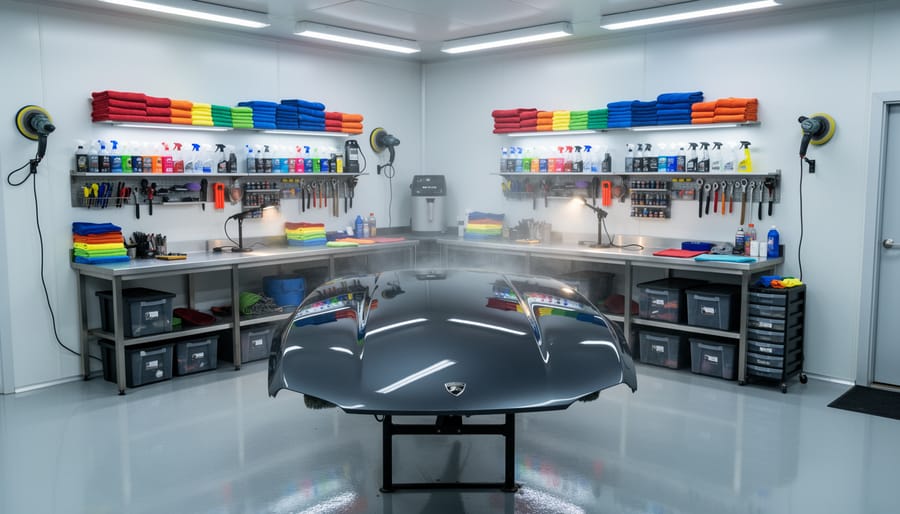
Your workspace needs matter too. Work indoors or in a covered garage where temperature stays between 60-75°F and humidity remains below 70%. Direct sunlight, wind, and dust are your enemies during application. If your garage lacks adequate lighting, an LED work light lets you see the coating as you level it across each panel. Many detailers miss thin spots simply because they couldn’t see well enough during application.
Budget around 150-300 dollars for quality materials if you’re starting from scratch. Cutting corners on applicators or towels creates more problems than the money saved is worth.
Safety Precautions and Pre-Application Warnings
Before you open that bottle of GYEON ceramic coating, understand that this isn’t household car wax. These coatings cure through chemical reactions that demand specific conditions and proper safety measures. Skipping precautions can damage your EV’s paint, harm your health, or waste expensive product.
Work in a clean, well-ventilated garage or covered area with constant airflow. GYEON coatings release volatile organic compounds during application and curing. Open garage doors, run fans, and wear a respirator rated for organic vapors if you’re sensitive to chemical fumes. Never apply coating in an enclosed space without ventilation.
Wear nitrile gloves throughout the entire process. GYEON coatings contain silica compounds that bond to skin as readily as they bond to paint. If coating contacts your skin, wipe it off immediately with isopropyl alcohol, then wash with soap and water. Safety glasses protect against accidental splashes, particularly when working overhead on the hood or roof.
Do not apply ceramic coating if your EV’s paint shows deep scratches, rust spots, or failing clear coat. The coating magnifies existing defects rather than hiding them. Stop immediately if you see paint peeling during prep work.
Environmental conditions matter beyond temperature and humidity. Avoid coating application in direct sunlight, which accelerates flash time and prevents proper leveling. Don’t coat if rain is forecast within 24 hours or if pollen counts are high, as airborne particles will embed in the uncured coating.
Dispose of used applicators and towels in sealed plastic bags. The coating residue on these materials can cure rock-hard and pose a fire hazard if bunched together while still wet. If you apply coating incorrectly to a panel, you have roughly 60 seconds to remove it with fresh coating or a dedicated polish before it becomes permanent.
5-Step Process: Applying GYEON Ceramic Coating to Electric Vehicle Paint
Step 1: Thorough Washing and Decontamination
Start with a pre-rinse to remove loose dirt and debris from your electric vehicle’s paint. Use a pressure washer or hose to spray the entire car from top to bottom, preventing scratches during the wash process.
Next, apply a pH-neutral car shampoo using the two-bucket method. One bucket holds soapy water, the other clean rinse water. Wash panel by panel with a microfiber wash mitt, rinsing the mitt frequently in the clean water bucket. This prevents dirt from being dragged across the paint surface.
After washing, you’ll need to clay bar the entire vehicle. Spray a clay lubricant onto a small section, then gently glide a clay bar across the surface using light pressure and overlapping passes. The clay will pick up embedded contaminants like iron particles, tar, and industrial fallout that washing alone can’t remove. You’ll feel the paint become glass-smooth as you work.
Rinse the vehicle again and dry thoroughly with clean microfiber towels. Any water spots or remaining contaminants will interfere with coating adhesion, so take your time with this step.
Step 2: Paint Correction and Polishing
Paint correction removes minor imperfections that will be magnified once ceramic coating locks in the surface. Inspect your electric vehicle’s paint under bright LED or sunlight. If you see swirl marks, light scratches, or dull oxidation, you’ll need a dual-action polisher and a fine or medium compound designed to polish for coating adhesion.
Work one panel at a time with moderate speed settings (4-5 on most machines). Apply three to four pea-sized drops of compound to a foam pad, spread it across the section without power, then activate the polisher and overlap your passes by 50 percent. Two to three passes typically clear swirls on clear coat without cutting too deep.
Newer EVs with factory-fresh paint often skip this step entirely. If your vehicle has fewer than 500 miles and no visible defects, move straight to panel wipe. Polishing unnecessarily removes clear coat you don’t need to sacrifice. For older EVs or those with evident imperfections, correction creates the mirror finish that makes ceramic coating worthwhile.
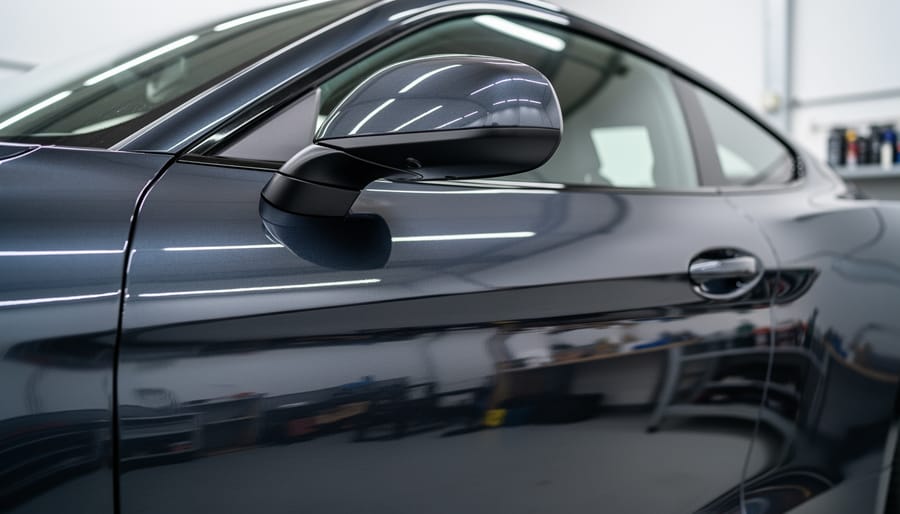
Step 3: Panel Wipe and Final Surface Preparation
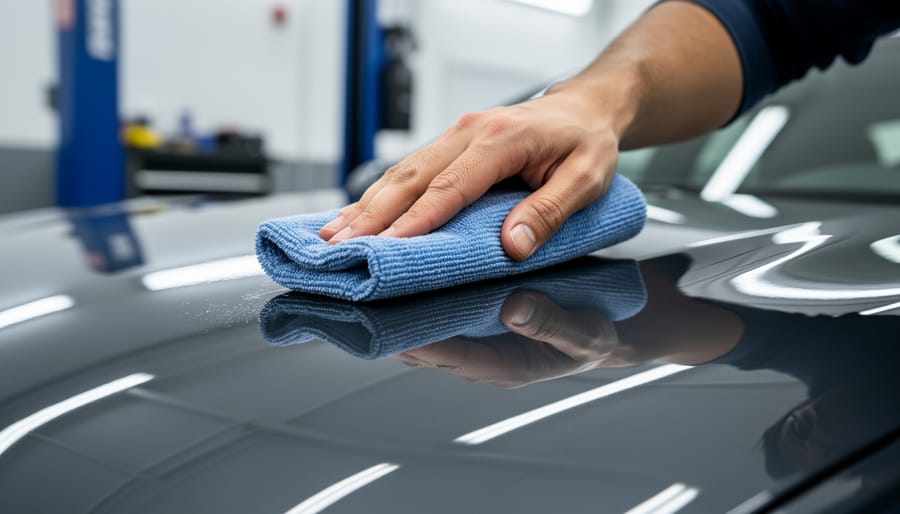
Grab a clean microfiber towel and your panel prep solution, either 70% isopropyl alcohol mixed with distilled water or a dedicated GYEON Prep product. Work in sections, spraying the solution onto one panel at a time and immediately wiping it down with a folding motion. Flip to a fresh section of the towel frequently to avoid redistributing oils.
This step removes polishing oils, fingerprints, and any remaining contaminants that will prevent the ceramic coating from bonding properly. Your paint should feel completely squeaky-clean when you run your hand across it. Don’t skip panels or rush through this, residue left behind creates weak spots where the coating won’t adhere.
Time this carefully: apply the coating within 15-20 minutes of panel wiping. If you wait longer, airborne contaminants settle back onto the surface. Work methodically through your electric vehicle, prepping only as much area as you can coat before that window closes.
Step 4: Applying GYEON Coating Section by Section
Work one panel at a time, starting with smaller sections like the side mirrors before moving to larger areas. Shake the GYEON coating bottle gently (don’t create bubbles), then apply 3-5 drops onto your fresh microfiber applicator pad. This is enough for a door panel; you’ll use less product than you think.
Apply the coating in straight, overlapping lines rather than circles. Use light to moderate pressure, you’re laying down a thin film, not scrubbing. Work in a crosshatch pattern: vertical passes, then horizontal passes to ensure complete coverage. The coating will appear as a rainbow-like residue on the paint surface.
You have 1-3 minutes of working time per panel before the coating begins to flash (turn hazy). EV paint surfaces can flash faster in warm conditions, so watch closely. Once you see the coating turn slightly hazy, usually 30-60 seconds after application, immediately level it with a clean, dry microfiber towel using light, straight wipes. Don’t press hard or you’ll remove too much product.
Flip to a fresh section of your leveling towel for each panel. If the coating becomes difficult to remove or streaks appear, you’ve waited too long. Reapply a small amount of fresh coating to that spot and wipe immediately. Complete one full panel before moving to the next, never leave coating sitting while you work elsewhere.
Step 5: Curing and Initial Protection Period
Once you’ve applied the GYEON coating to all panels, the curing process begins immediately. Don’t touch the paint for at least one hour. GYEON coatings typically require 12-24 hours for initial curing, but full hardness develops over 7-14 days depending on the specific product line.
During the first 24 hours, keep your electric vehicle in a climate-controlled garage or covered area. Avoid rain, dew, sprinklers, and direct sunlight. Temperature swings can disrupt the chemical bonding process, so maintain stable conditions between 60-80°F if possible.
For the next 7-14 days, treat your EV paint gently. Don’t wash the vehicle during this period. Water contact before full curing can leave water spots that become permanently embedded in the coating. Skip automatic car washes entirely for at least two weeks.
Avoid parking under trees where sap or bird droppings might land on fresh coating. If contamination occurs, gently blot it with a clean microfiber towel but don’t wipe or scrub.
After the initial cure period, you can resume normal washing with pH-neutral soap and soft microfiber mitts. The coating will continue hardening for up to 30 days, reaching maximum durability and hydrophobic performance. Your patience during curing determines how well the coating performs for years to come.
Verifying Your Results and Next Steps
After the coating has cured for at least 24 hours, verify proper application by examining the surface under good lighting. Rotate around the vehicle to check for high spots, streaking, or uneven coverage that appears as darker patches or hazy areas. Run your palm gently across each panel, a properly applied GYEON coating feels incredibly smooth, almost slippery, with no rough patches or sticky spots.
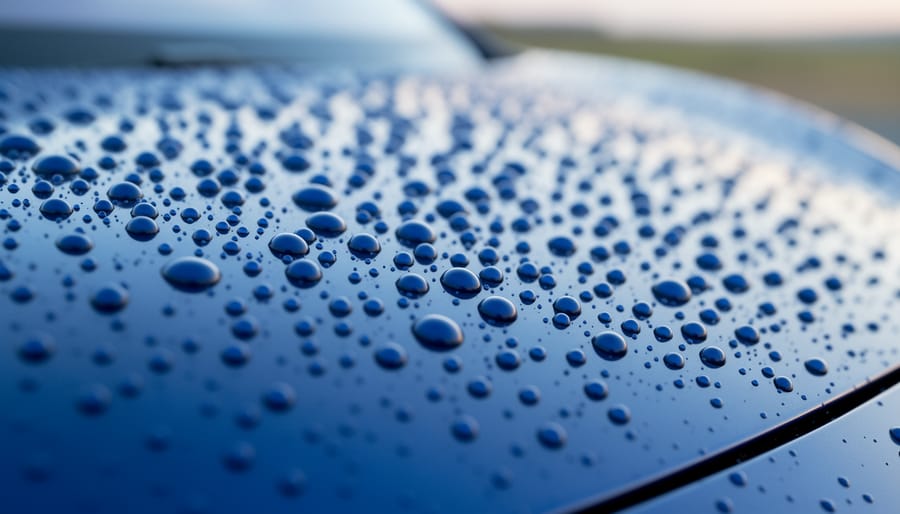
Test the hydrophobic properties by spraying water on different sections of the paint. You should see tight, round beads that roll off easily when the surface is tilted. Poor beading or water that sheets instead of beading indicates incomplete coverage in those areas. Check panel edges, curves, and intricate body lines where product can pool or be missed entirely.
Look for these quality indicators across the entire vehicle:
- Water forms tight, round beads that roll off at a slight angle
- Surface feels glass-smooth with no drag or resistance
- Uniform, deep gloss across all panels without hazy spots
- Complete coverage with no missed areas around badges, trim, or seams
If you find problem areas, address them within 48 hours of initial application. Lightly polish high spots with a microfiber towel and reapply coating to missed sections using the same technique from Step 4.
For the first week, keep your electric vehicle dry and avoid washing, parking under trees, or exposing it to rain. After seven days, you can wash using pH-neutral soap and the two-bucket method. During the first month, wash every two weeks to monitor the coating’s performance and establish a care routine.
Long-term maintenance requires gentler techniques than you might be accustomed to, similar to following proper maintenance tips for other valuable investments. Wash monthly, use dedicated ceramic coating spray boosters every three months, and inspect quarterly for any areas needing touch-up. This schedule maximizes your GYEON coating’s lifespan, typically extending protection for two to five years depending on environmental exposure and care consistency.
How to Check Your Work
After allowing the coating to cure, perform these verification checks to ensure professional-quality results. First, conduct the water test: spray clean water on different panels and observe the beading pattern. Properly applied GYEON coating creates tight, uniform beads that roll off at angles as shallow as 15-20 degrees. If water sheets instead of beading, or if beading is inconsistent across panels, the coating may be too thin or unevenly applied in those areas.
Inspect the surface under direct sunlight or bright LED light. A successful application shows deep gloss with no high spots, streaks, or hazy patches. Run your hand across the paint, it should feel glass-smooth with consistent slickness across all coated surfaces. Check panel edges and trim areas for residue buildup that wasn’t properly buffed away.
Look for rainbow patterns or oily-looking spots, which indicate excess product that needs immediate removal with polish and reapplication. Test hydrophobic properties weekly for the first month; beading should remain strong and consistent.
If you notice diminished water behavior, streaking that won’t buff out, or coating failure on multiple panels, contact a certified detailer. Professional correction becomes necessary when DIY fixes risk further paint damage. Like comparing solar panel maintenance costs to replacement, addressing coating issues early prevents expensive paint correction later.
Common Questions About GYEON Ceramic Coating for Electric Vehicles
How long does GYEON coating last on electric vehicles?
GYEON ceramic coatings typically last 2-5 years on electric vehicles depending on the product line and maintenance routine. The coating’s durability matches or exceeds its performance on conventional vehicles because EVs often experience less thermal stress on paint from engine heat.
Can I wash my electric car immediately after applying GYEON coating?
No, you should wait at least 7 days before the first wash to allow complete curing. During this period, keep your EV garaged or covered, and avoid water contact, which can disrupt the chemical bonding process and compromise the coating’s protective properties.
Does ceramic coating protect against charging station scratches?
Ceramic coating provides resistance to light scratches and swirl marks from brushing against charging cables or station equipment. However, it won’t prevent deep scratches from hard impacts, the coating adds hardness but isn’t armor plating for your EV’s paint.
Is professional application worth the cost compared to DIY?
Professional application costs $500-2000 but guarantees proper surface preparation and even coverage. DIY saves money but requires several hours of careful work and carries the risk of application errors that waste product and potentially damage paint.
Beyond these common concerns, EV owners frequently ask about maintenance schedules specific to their vehicles. GYEON-coated electric cars need washing every two weeks using pH-neutral soap and soft microfiber towels. Skip automatic car washes with harsh brushes, which can degrade the coating prematurely. The same attention you bring to choosing sustainable transportation helps protect your investment through proper paint care.
Compatibility concerns rarely arise since GYEON products work with all modern automotive paints, including the water-based finishes many EV manufacturers use. If your electric vehicle has a matte or satin finish, however, verify you’re using a coating formulated for non-gloss surfaces, standard GYEON products enhance shine, which would alter your paint’s intended appearance.
Protecting your electric vehicle with GYEON ceramic coating represents more than routine maintenance, it’s an investment in preserving the quality and longevity of your sustainable transportation choice. Just as solar energy systems require proper installation and care to deliver decades of reliable performance, your EV deserves the same level of attention and protection.
The five-step process outlined here might seem detailed, but each phase serves a specific purpose in creating a durable, long-lasting protective barrier. When you take the time to properly prepare, apply, and cure a ceramic coating, you’re ensuring your electric vehicle maintains its appearance and resale value for years to come. This careful approach mirrors the precision Illinois Renewables brings to every solar installation, doing the job right the first time to maximize your investment.
Your commitment to driving an electric vehicle already demonstrates your dedication to sustainable choices. Extending that same thoughtfulness to protecting your EV’s finish completes the picture. Whether you tackle this project yourself or work with a professional, a properly applied GYEON coating means less frequent washing, reduced environmental impact from cleaning chemicals, and a vehicle that continues to look showroom-fresh while you drive toward a cleaner future.
