
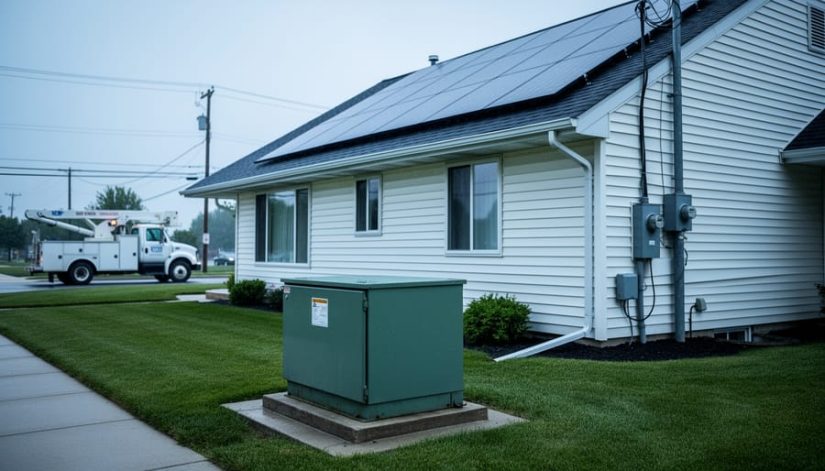
What Illinois Solar Owners Pay When the Grid Isn’t Ready for Your System
Understanding your interconnection agreement before signing saves thousands in unexpected upgrade costs. This legally binding contract between you and your utility company establishes the terms for connecting your solar system to the electrical grid, but hidden within its technical language are provisions that can significantly impact your project economics.
Illinois solar customers often discover upgrade requirements only after their utility conducts a detailed system impact study. These upgrades—ranging from simple meter replacements costing a few hundred dollars to transformer installations exceeding $50,000—become your financial responsibility under most interconnection agreements. The difference between a profitable solar investment and a financial burden often hinges on identifying these potential costs early.
The interconnection process follows standardized procedures established by the Illinois Commerce Commission, yet each utility interprets and applies these rules differently. ComEd, Ameren Illinois, and municipal utilities maintain distinct timelines, fee structures, and upgrade thresholds that directly affect your out-of-pocket expenses. Small commercial systems frequently trigger more extensive review processes than residential installations, while industrial-scale projects face comprehensive engineering studies that can delay projects by months.
Navigating this complex landscape requires understanding four critical elements: what triggers upgrade requirements, who determines their necessity, how costs are calculated and allocated, and which contractual provisions protect your interests. Armed with this knowledge, you can make informed decisions about system sizing, utility coordination, and budget planning that align with your energy goals and financial expectations.
What Is an Interconnection Agreement?
The Basic Purpose Behind Grid Connection Contracts
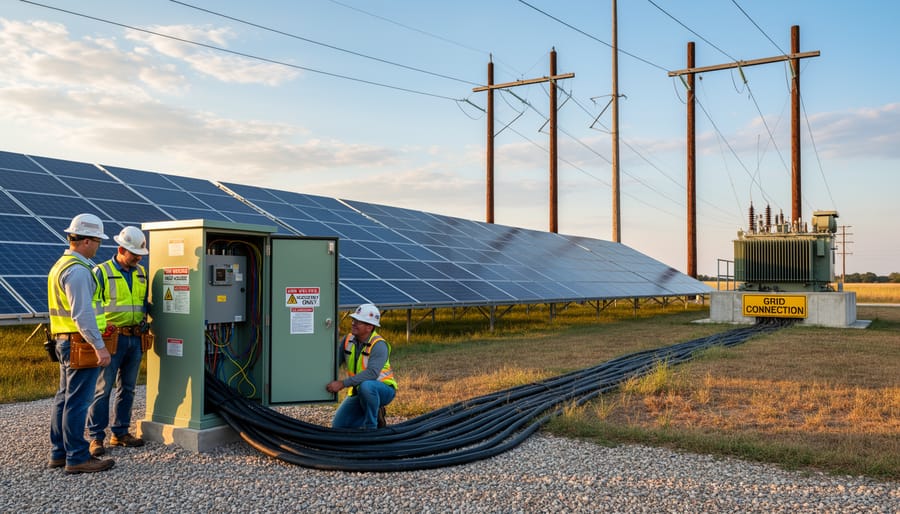
An interconnection agreement serves as the foundational contract between you and your utility company when connecting a solar energy system to the electrical grid. This essential document protects both parties by establishing clear technical standards and operational guidelines that ensure your system connects safely and reliably to the broader electrical network.
For homeowners and business owners in Illinois, the interconnection agreement guarantees that your solar installation meets specific safety requirements, preventing potential hazards like electrical fires or grid instability. It also outlines how excess energy your system produces will be handled through net metering in Illinois, allowing you to receive credits for power sent back to the grid.
From the utility’s perspective, these agreements maintain grid reliability and protect other customers from potential disruptions. The contract specifies technical requirements like voltage limits, frequency standards, and disconnect mechanisms that automatically shut down your system during grid outages to protect utility workers.
Understanding this mutual protection framework helps you appreciate why interconnection agreements exist and why utilities carefully review each application before approval.
Key Components Every Agreement Includes
Every interconnection agreement contains several essential elements designed to protect both you and the utility. The technical specifications section outlines the details of your solar system, including its size, inverter type, and expected energy production. These specs ensure your system meets grid compatibility standards and operates safely alongside the existing electrical infrastructure.
Safety requirements form another critical component, detailing protective equipment like disconnect switches and anti-islanding features that prevent your system from feeding electricity into the grid during outages. These safeguards protect utility workers performing maintenance on power lines.
Liability terms clarify responsibility if equipment malfunctions or causes grid issues. Typically, you’re responsible for maintaining your system in good working order, while the utility manages grid infrastructure. Insurance requirements may also be specified for larger commercial installations.
Operational guidelines explain how your system interacts with the grid, including meter readings, net metering credits, and protocols for inspections or maintenance. The agreement also addresses upgrade costs if your system requires modifications to neighborhood transformers or distribution lines, which can significantly impact your project budget in Illinois.
When Your Solar System Requires Grid Upgrades
Understanding System Size Thresholds
The size of your solar installation plays a significant role in determining whether your interconnection will require costly grid upgrades. In Illinois, residential solar systems typically range from 5 to 15 kilowatts, and these smaller installations rarely trigger upgrade requirements. Local distribution infrastructure can usually accommodate this additional power without modifications.
However, commercial and industrial solar projects present a different scenario. Systems exceeding 25 kilowatts often face increased scrutiny during the interconnection study process. Large installations producing 100 kilowatts or more have a substantially higher likelihood of requiring transformer upgrades, line reinforcements, or other infrastructure improvements. This happens because the local grid segment may not have been designed to handle the bidirectional power flow from substantial solar generation.
The threshold varies by location and existing infrastructure condition. A 50-kilowatt commercial system in a newer development with robust electrical infrastructure might interconnect smoothly, while the same system in an older neighborhood with aging equipment could trigger significant upgrade costs. Business owners planning larger installations should budget for potential upgrade expenses and factor these costs into their project feasibility analysis from the outset. Understanding these size-related considerations helps set realistic expectations as you navigate the interconnection process.
Local Grid Capacity and Age Factors
Not all solar installations face the same interconnection challenges. The age and capacity of your local electrical grid play significant roles in determining whether upgrades are necessary and how much they’ll cost.
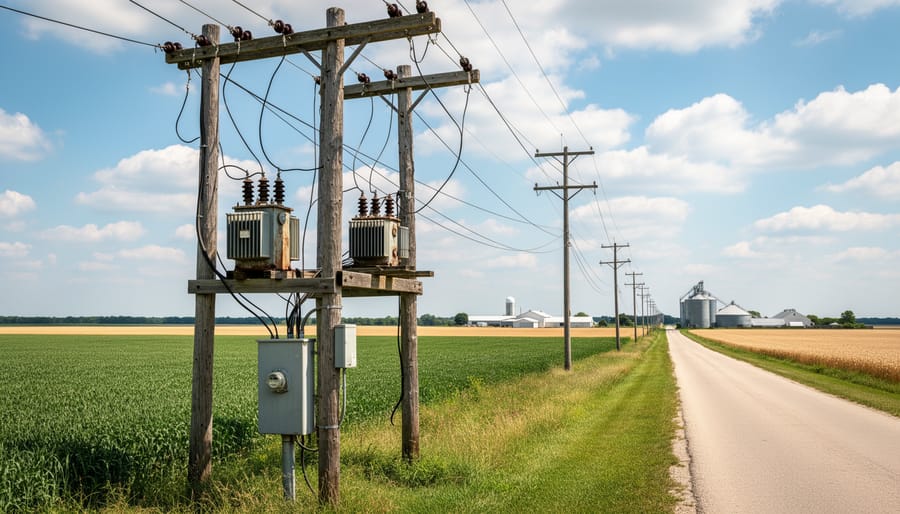
In many parts of Illinois, particularly in older urban neighborhoods and rural communities, electrical infrastructure dates back decades. These systems were designed long before solar energy became a consideration, and they may struggle to accommodate the two-way flow of electricity that solar installations create. Even a relatively small residential solar system might trigger upgrade requirements if it connects to aging transformers, outdated service lines, or substations operating near their maximum capacity.
Rural areas face unique challenges due to limited grid capacity. While these regions often have excellent solar potential with plenty of open space and sunshine, the electrical infrastructure serving them may be minimal. Utility companies serving rural Illinois communities typically maintain fewer substations and longer distribution lines, meaning your solar system could push the local grid beyond its designed limits even at modest sizes.
In contrast, newer developments or recently upgraded grid sections generally handle solar installations more easily. If your neighborhood has undergone electrical infrastructure improvements in recent years, you’re less likely to encounter costly upgrade requirements.
Understanding your local grid’s condition before moving forward helps set realistic expectations. Your locally owned solar provider can research the infrastructure serving your property and provide insights about potential challenges. Utilities sometimes share grid capacity information during preliminary interconnection reviews, giving you an early indication of whether upgrades might be necessary for your specific location.
Who Pays for Interconnection Upgrades in Illinois?
Standard Cost Allocation Rules
When you connect your solar system to the electrical grid in Illinois, understanding who pays for what upgrades is essential to budgeting your project accurately. The cost allocation framework typically follows a shared responsibility model, though the specifics depend on your utility company and the nature of the required improvements.
Generally, utilities cover costs for certain distribution-level upgrades that benefit the broader grid infrastructure. These might include improvements to substations, transformers serving multiple customers, or line enhancements that increase capacity for an entire neighborhood. Since these upgrades serve public benefit beyond your individual installation, utilities often absorb these expenses as part of their standard infrastructure investment.
However, system-specific equipment and upgrades directly related to your solar installation typically fall to you as the system owner. This includes the installation of a new meter capable of measuring bidirectional power flow, dedicated disconnects, and any service panel upgrades needed to accommodate your solar system safely. If your installation requires a service line extension or upgraded transformer solely to handle your system’s capacity, these costs generally become your responsibility.
Illinois utilities follow guidelines established by the Illinois Commerce Commission, which provides some consistency across providers. The specific threshold where utility responsibility ends and yours begins varies by company. Some utilities may cover initial study costs, while others charge application fees upfront. Understanding these distinctions before signing your interconnection agreement helps prevent unexpected expenses and allows you to negotiate equipment specifications with your solar installer from an informed position.
Illinois Utility-Specific Policies
Illinois solar customers work with several major utilities, each with distinct approaches to interconnection and upgrade costs. Understanding these differences helps you anticipate expenses and timeline variations depending on your service territory.
ComEd, serving northern Illinois including the Chicago metropolitan area, operates under the state’s interconnection standards but maintains specific procedures for upgrade cost allocation. Generally, ComEd requires customers to pay for upgrades directly related to their solar installation, though costs for distribution system improvements may be shared among multiple customers when upgrades serve broader grid needs. ComEd typically provides detailed cost estimates within their impact study results, giving customers clear visibility into potential expenses before moving forward.
Ameren Illinois, covering central and southern regions, follows similar state guidelines but applies different thresholds for when upgrades become necessary. Their service territory includes more rural areas where grid infrastructure may require reinforcement for larger solar installations. Ameren has established processes for cost-sharing when upgrades benefit multiple ratepayers, though project-specific equipment like transformers or meters remains the customer’s responsibility.
Smaller municipal utilities and electric cooperatives throughout Illinois each maintain their own interconnection procedures within the state’s regulatory framework. These locally owned entities often provide more personalized service but may have less experience with solar projects, potentially extending review timelines. Some rural cooperatives face older infrastructure requiring more frequent upgrades, while others have proactively modernized systems to accommodate distributed generation.
Working with a solar installer experienced in your specific utility territory proves invaluable for navigating these differences and accurately projecting interconnection costs.
What Interconnection Upgrades Actually Cost
Minor Upgrades: Meters and Protection Equipment
Not all interconnection agreements require expensive infrastructure changes. In many cases, your local utility may only require minor upgrades that are relatively affordable and straightforward. These typically involve replacing or upgrading your existing electric meter and adding protective equipment to ensure safe operation when your solar system connects to the grid.
The most common minor upgrade is installing a bidirectional meter, which measures both the electricity you draw from the grid and the excess solar energy you send back. This replacement usually costs between $200 and $800, depending on your utility company and specific equipment requirements. Many Illinois utilities include this meter upgrade as part of their standard interconnection process.
Another frequent requirement is adding or upgrading disconnect switches and protective relays. These safety devices allow utility workers to isolate your solar system during maintenance or emergencies. Installation costs typically range from $500 to $2,500, depending on system size and local electrical codes.
Some utilities may also require updated metering panels or communication equipment to monitor your system’s performance. While these additions increase your upfront costs, they’re generally one-time expenses that facilitate smoother integration with the grid and ensure compliance with Illinois interconnection standards. Your solar installer can typically handle these minor upgrades during the initial installation, minimizing disruption and additional service calls.
Major Upgrades: Transformers and Line Extensions
While simple meter swaps typically cost less than $2,000, more extensive infrastructure work can significantly increase your upfront investment. Major upgrades involving transformer replacements or line extensions generally range from $10,000 to $50,000 or more, depending on your system size and location.
These larger upgrades become necessary when your existing electrical infrastructure cannot safely handle the additional power flow from your solar system. If you’re installing a larger commercial system or live in a rural area with aging equipment, your utility may determine that the local transformer needs upgrading or that service lines require reinforcement. Distance from existing infrastructure plays a substantial role—if your property sits far from adequate utility equipment, line extension costs can climb quickly.
The good news is that Illinois utilities must provide detailed cost estimates before you commit to moving forward. Your interconnection agreement will outline exactly what upgrades are required and why. This transparency allows you to make informed decisions about system sizing or phasing your installation to minimize upgrade costs.
Planning ahead helps manage these expenses. During your initial site assessment, experienced solar installers can often identify potential upgrade scenarios. Some homeowners choose to install slightly smaller systems to avoid triggering expensive infrastructure improvements, while others factor upgrade costs into their overall solar investment, recognizing that the long-term energy savings still provide excellent returns. For commercial properties, these upgrades may even increase overall property value by modernizing electrical service capacity beyond just solar needs.
How Upgrade Costs Impact Your Solar Economics
Unexpected interconnection upgrade costs can significantly alter your solar project’s financial outlook. When your utility requires grid improvements before connecting your system, these expenses can range from a few thousand dollars to upfront costs exceeding $50,000 for larger commercial installations, depending on the scope of transformer replacements, line extensions, or substation upgrades needed.
These additional costs directly impact your return on investment and extend your payback period. For example, a residential system with an initial 8-year payback could stretch to 11 or 12 years with substantial upgrade requirements. This doesn’t necessarily mean your project becomes unfeasible, but it does require careful recalculation of your financial expectations.
To evaluate whether to proceed with a project requiring significant upgrades, start by requesting a detailed cost breakdown from your utility. Compare these expenses against your total project budget and recalculate your anticipated savings over the system’s 25-year lifespan. In many cases, the long-term benefits still outweigh the higher initial investment, particularly with Illinois incentive programs that can offset some costs.
Consider alternative solutions before abandoning your solar plans. Sometimes, reducing your system size slightly can eliminate upgrade requirements while still providing substantial energy savings. Other times, financing your solar project differently or exploring cost-sharing with neighboring properties facing similar upgrade needs can make the economics work.
Working with a locally owned solar installer experienced in Illinois interconnection requirements provides valuable perspective. They can help you understand whether the quoted upgrade costs are reasonable, identify potential cost-reduction strategies, and accurately model how these expenses affect your specific financial situation. Remember that while upgrade costs add complexity, many Illinois solar customers successfully navigate these challenges and achieve excellent long-term financial results.
Navigating the Interconnection Process in Illinois
The Application and Review Timeline
Understanding the interconnection timeline helps you plan your solar project more effectively and set realistic expectations. The process typically unfolds in several distinct stages, each with its own timeframe.
Your solar installer submits the initial interconnection application to your utility company, which includes detailed information about your proposed system size, equipment specifications, and electrical configuration. Illinois utilities generally have 15 to 25 business days to conduct their preliminary review, during which they assess whether your system can connect to the existing grid infrastructure without modifications.
If upgrades are necessary, the utility provides a cost estimate and technical study results. This study identifies specific equipment or capacity enhancements required at substations, transformers, or distribution lines. You’ll typically have 30 days to review these findings and decide whether to proceed.
Once you accept the terms and any required upgrade costs, the utility schedules the work. Simple projects without upgrades might receive approval within 4 to 8 weeks total. However, projects requiring significant upgrades can extend the timeline to several months, depending on equipment availability and construction schedules.
After all upgrades are complete and inspections pass, the utility installs the final meter and grants permission to operate. Working with experienced local solar professionals familiar with Illinois utility procedures can help navigate this process smoothly and avoid unnecessary delays.
Early Warning Signs Your Project May Need Upgrades
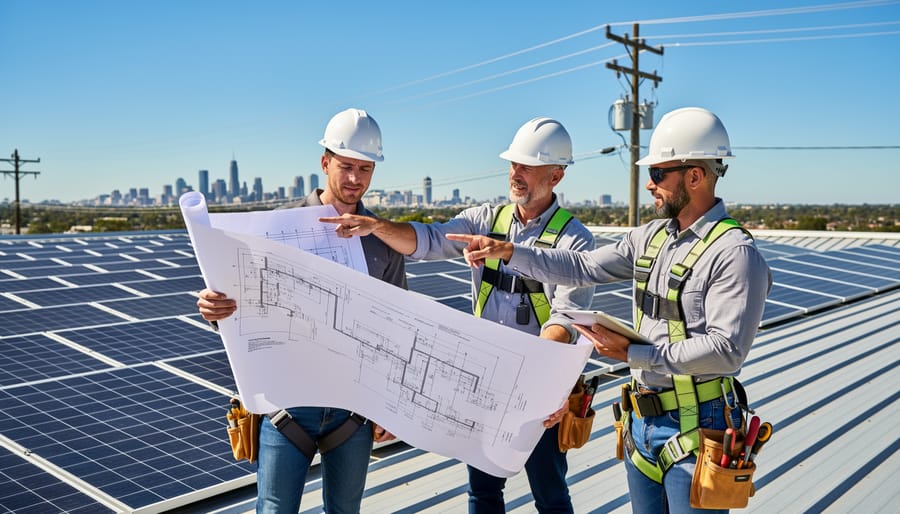
During your initial utility consultation, several indicators can signal potential upgrade costs ahead. If your utility mentions that your proposed solar system size approaches or exceeds the capacity of nearby distribution equipment, this often triggers a detailed interconnection study. Watch for comments about transformer capacity limitations or voltage regulation concerns in your neighborhood—these technical observations frequently precede upgrade requirements.
Another red flag emerges when your utility requests an impact study beyond the standard screening process. This additional analysis typically means your system could affect grid stability, necessitating equipment improvements. Properties located at the end of distribution lines or in areas with older infrastructure face higher upgrade likelihood.
Pay attention if your utility representative discusses extended timeline estimates exceeding 90 days for interconnection approval. Lengthy review periods often indicate complexity that may involve infrastructure assessments. Similarly, if comparable solar installations in your immediate area required upgrades, you should prepare for similar requirements.
Understanding these solar project risks early allows you to request preliminary cost estimates and adjust your project budget accordingly. Working with experienced Illinois solar installers familiar with local utility requirements helps identify potential issues before formal application submission, preventing unexpected financial surprises during the interconnection process.
Strategies to Minimize Interconnection Upgrade Costs
Minimizing interconnection upgrade costs starts with partnering with experienced solar installers who understand Illinois utility requirements and can design systems strategically. A locally owned solar company with expertise in your region will have established relationships with utilities and knowledge of which system sizes typically trigger upgrade requirements for different grid areas.
One of the most effective strategies is optimizing your system design to stay just below upgrade thresholds. Your installer can analyze your property’s electrical service and the local distribution system capacity to determine the maximum system size that avoids costly transformer or line upgrades. Sometimes, installing a slightly smaller system that meets most of your energy needs proves more economical than a larger system requiring significant grid modifications. This approach balances energy production goals with interconnection economics.
Working closely with your utility throughout the application process also creates opportunities to reduce costs. Some utilities offer flexibility in how upgrades are structured or phased. Don’t hesitate to ask questions about alternative solutions, such as whether operational changes or different connection points might eliminate upgrade needs. Utilities sometimes have planned infrastructure improvements that could absorb your project’s requirements at reduced or no cost to you.
Consider timing strategically. If your utility has scheduled grid maintenance or upgrades in your area, coordinating your solar installation with that timeline might reduce your financial responsibility. Your installer can help communicate with the utility to explore these possibilities.
Additionally, factor interconnection costs into your overall project economics when evaluating Illinois solar incentives and financing options. Some solar loans and financing programs can incorporate interconnection expenses, spreading costs over time rather than requiring large upfront payments. Your solar provider should provide transparent cost estimates early in the process, allowing you to make informed decisions about system sizing and project scope before committing to the interconnection agreement.
Understanding interconnection agreements and the potential economics of grid upgrades is essential before moving forward with your solar project in Illinois. While the process may seem complex at first, having this knowledge upfront helps you avoid unexpected costs and delays down the road. The reality is that not every solar installation requires costly upgrades, but when they do become necessary, knowing who pays and what to expect makes all the difference in your project planning and budget.
Working with experienced, locally owned solar professionals who understand Illinois utilities, regulatory requirements, and regional interconnection processes is invaluable. Knowledgeable experts can assess your specific situation early on, communicate directly with your utility provider, and provide accurate cost projections before you sign any contracts. They’ll help you navigate the application process, interpret technical requirements, and identify potential upgrade needs during the feasibility stage rather than after you’ve committed financially. This proactive approach ensures your solar investment delivers the returns you expect without surprise expenses derailing your project timeline or budget. Taking time to choose the right partner with proven expertise in solar energy will pay dividends throughout your entire solar journey.
