
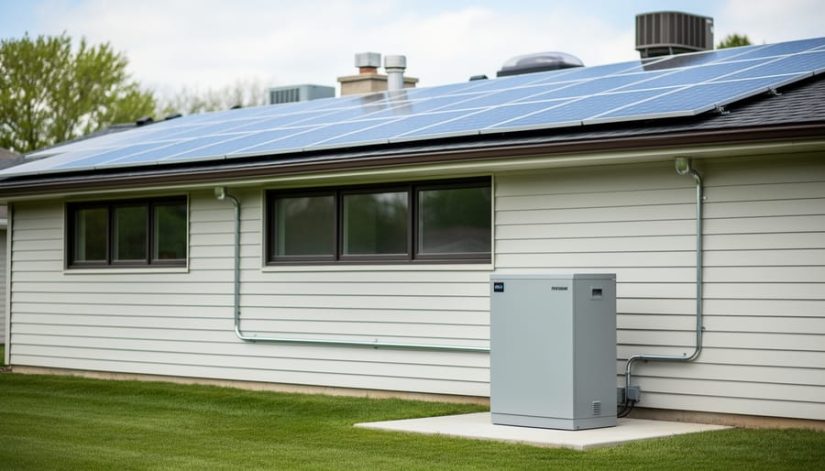
What Are Hybrid Building Solutions (and How Do They Work)?
A hybrid building solution combines two or more energy sources to power, heat, or cool a property, creating a flexible system that adapts to demand, weather conditions, and cost fluctuations. These integrated systems typically pair renewable technologies like solar panels with conventional energy sources or battery storage, allowing buildings to automatically switch between power sources based on availability and efficiency.
For property owners in Illinois, hybrid energy systems address a critical challenge: maximizing renewable energy use without sacrificing reliability. Solar production varies with cloud cover and seasonal daylight hours. Grid electricity prices shift throughout the day. A well-designed hybrid system manages these variables automatically, pulling from the most cost-effective or cleanest source at any given moment while maintaining uninterrupted service.
The concept matters now more than ever as energy costs continue rising and renewable technology becomes more affordable. Illinois property owners who install only solar panels still rely entirely on the grid when the sun isn’t shining. Those who add battery storage gain independence but face high upfront costs. Hybrid solutions split the difference, combining the strengths of multiple technologies to deliver better economics and performance than any single system alone.
This article explains how hybrid building solutions work in practice, from the core components that make switching possible to the control systems that optimize performance minute by minute. You’ll learn which combinations suit different property types, how these systems integrate with existing infrastructure, and what planning steps matter most for successful implementation. Whether you’re evaluating options for a home, commercial building, or industrial facility, understanding the mechanics and applications of hybrid energy helps you make informed decisions about your property’s long-term energy strategy.
What Hybrid Building Solutions Mean for Illinois Properties
A hybrid building solution is an integrated energy system that combines two or more power sources to meet a property’s electricity needs more efficiently and reliably than any single source could alone. For Illinois property owners, this typically means pairing solar panels with grid power and battery storage, though the mix can also include backup generators or other technologies depending on your specific requirements.
The key advantage lies in intelligent coordination. Rather than relying exclusively on the utility grid or generating all your power from solar, a hybrid system draws from the most cost-effective or reliable source at any given moment. During sunny afternoons, your solar array might power your building and charge batteries. When evening demand peaks and utility rates climb, those batteries discharge to avoid expensive grid power. If a storm knocks out grid service, your system seamlessly switches to battery reserves or a backup generator, keeping critical operations running.
- Hybrid energy system
- An electricity setup that integrates multiple generation and storage sources under unified control to optimize cost, reliability, and resilience.
- Grid integration
- The connection and coordination between a property’s energy system and the utility network, allowing power to flow in both directions when conditions permit.
- Peak shaving
- Using on-site battery storage or generation to reduce electricity consumption from the grid during high-demand periods when rates are highest.
- Load shifting
- Moving energy use to different times of day by storing excess solar power in batteries for later consumption, typically after sunset.
- Distributed energy resources
- Small-scale power generation and storage assets located at or near the point of use rather than at a central utility plant.
This contrasts sharply with traditional approaches. A grid-only property pays retail rates around the clock and loses power during outages. A standalone solar system without storage stops producing electricity when the sun sets and typically shuts down during grid failures for safety reasons. Hybrid configurations solve both problems by maintaining multiple pathways to power your building.
For Illinois commercial properties facing demand charges or manufacturing facilities requiring uninterrupted operations, hybrid systems deliver measurable financial returns alongside peace of mind. The battery component levels out your grid consumption profile, reducing the costly demand spikes that utilities penalize. The solar portion cuts overall energy purchases. Together, they create a flexible, future-ready infrastructure that adapts as your needs evolve or utility rate structures change.
How Hybrid Building Energy Systems Work
The Role of Energy Management Systems
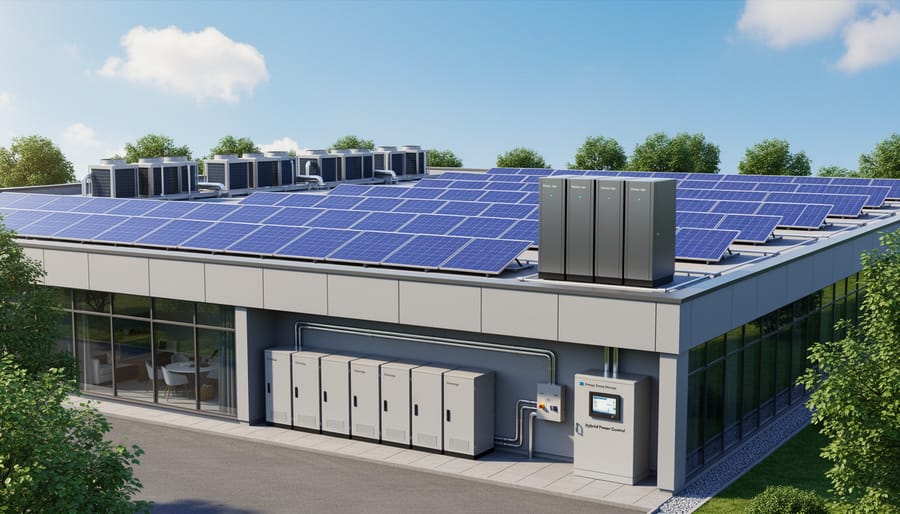
At the heart of every hybrid building solution sits an energy management system (EMS), the digital brain that decides which power source to use and when. Without this intelligent control layer, you’d just have separate energy components sitting side by side, unable to coordinate effectively.
The EMS continuously monitors real-time data from your solar panels, battery storage, grid connection, and backup generator. It tracks electricity production, consumption patterns, battery charge levels, grid pricing signals, and weather forecasts. Using this information, the system makes split-second decisions about where to route power for maximum efficiency and minimum cost.
When your solar panels are producing excess energy on a sunny afternoon, the EMS directs that surplus to charge your batteries rather than immediately exporting it to the grid. During evening peak hours when utility rates spike, it draws from those charged batteries instead of purchasing expensive grid power. If a storm knocks out grid service, the system seamlessly switches to battery power or activates your backup generator without interrupting your operations.
Modern EMS platforms provide web-based dashboards and mobile apps that let you see exactly how your hybrid system performs. You can track energy flows in real time, review historical usage patterns, receive maintenance alerts, and adjust operating parameters to match your priorities, whether that means maximizing cost savings, prioritizing renewable energy use, or ensuring the longest possible backup runtime during outages.
Grid Interaction and Net Metering
In Illinois, hybrid building systems maintain an active connection to the utility grid even when generating and storing their own power. This grid tie enables a two-way flow of electricity, drawing power when on-site generation can’t meet demand and exporting excess solar production when batteries are full and building loads are low.
Net metering governs the financial side of this exchange. Illinois law requires utilities to credit system owners at the retail rate for electricity sent back to the grid, effectively running your meter backward. These credits offset future consumption, appearing as kilowatt-hour reductions on your bill rather than cash payments. The energy management controller in your hybrid system tracks this flow, automatically deciding whether to store excess solar in batteries for later use or export it for net metering credits based on current conditions and your rate structure.
For commercial and industrial properties, hybrid systems offer particular value in managing demand charges, the fees utilities assess based on your highest 15-minute power draw during the billing period. Battery storage can shave these peaks by discharging stored energy precisely when building demand spikes, reducing your maximum draw from the grid. This peak-shaving capability often delivers faster payback than energy savings alone.
The grid also serves as backup capacity. When your solar panels and batteries both run low during extended cloudy periods or high usage, the system seamlessly pulls from utility power without interruption, giving you reliability that standalone off-grid systems can’t match.
Components That Make Up a Hybrid Energy System
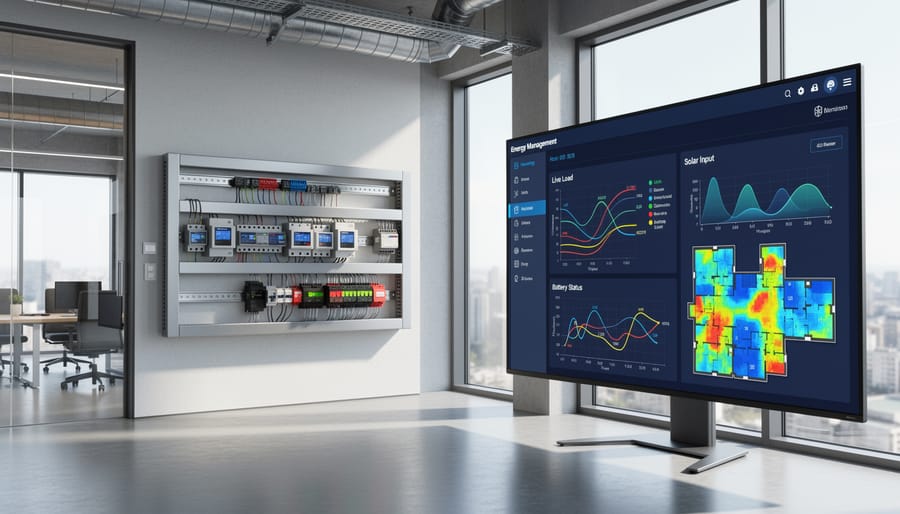
A hybrid energy system relies on several interconnected components working together to deliver reliable, efficient power. Understanding these building blocks helps property owners make informed decisions about system design and investment.
Solar Photovoltaic Arrays form the foundation of most hybrid systems in Illinois. These panels convert sunlight into direct current electricity, sized according to your property’s energy consumption patterns and available roof or ground space. The array’s output feeds into the system’s control infrastructure, providing clean power during daylight hours and reducing grid dependence.
Hybrid Inverters serve as the system’s command center. Unlike standard solar inverters that only convert DC power from panels to AC power for building use, hybrid inverters manage multiple energy flows simultaneously. They coordinate solar production, battery charging and discharging, grid interaction, and backup power switching. Advanced models feature built-in energy management capabilities that optimize which source powers your building at any given moment based on cost, availability, and demand.
Battery Storage Units store excess solar energy for use when the sun isn’t shining. Lithium-ion batteries dominate residential and commercial installations due to their efficiency, compact size, and declining costs. Commercial systems often employ larger battery banks to handle peak demand shaving or extended backup requirements. The battery capacity you need depends on how many hours of backup power you want and which loads you consider critical.
Backup Generators provide an additional layer of security for properties requiring absolute reliability. Natural gas or propane generators kick in when both solar production and battery reserves run low during extended outages. They’re particularly valuable for healthcare facilities, data centers, and businesses where downtime carries significant costs.
Automatic Transfer Switches enable seamless transitions between power sources without manual intervention. These devices detect grid outages, signal the system to switch to backup mode, and restore grid power when available. They protect sensitive equipment from power quality issues during transitions.
Monitoring and Control Systems tie everything together through software platforms accessible via smartphone or computer. These systems track energy production, consumption, battery state of charge, cost savings, and system health. They alert you to performance issues and provide the data needed to optimize your energy strategy over time.
Each component plays a specific role, but their real value emerges from how they work as an integrated system rather than isolated pieces.
Common Applications of Hybrid Building Solutions
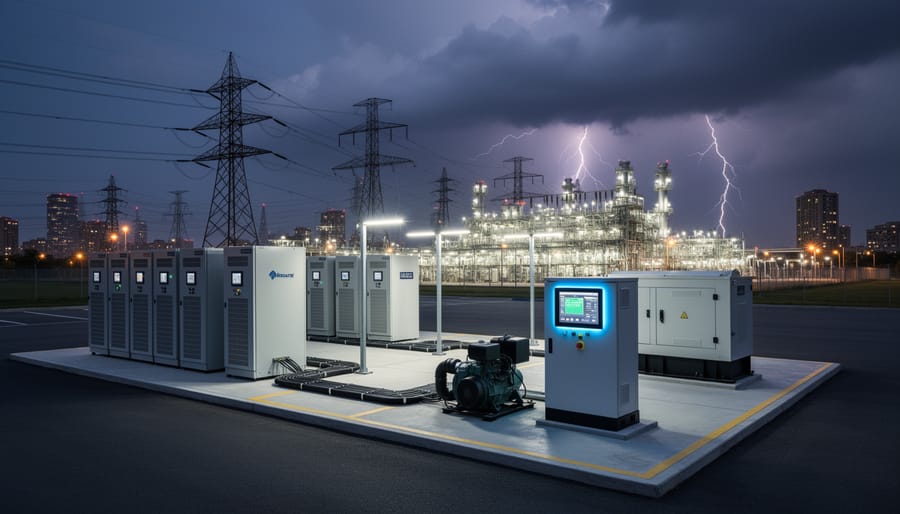
Hybrid Solutions for District Energy Systems
District energy systems serve multiple buildings from a centralized plant, and hybrid energy solutions amplify their efficiency and resilience. In Illinois, municipalities, university campuses, hospitals, and industrial parks increasingly pair district networks with solar arrays, battery storage, and natural gas backup to optimize performance across heating, cooling, and electrical loads.
Centralized hybrid models place the energy generation and storage at the district plant itself. A campus might install a solar field adjacent to its cogeneration facility, feeding power into the thermal loop during peak sun hours and storing excess in battery banks. When heating demand spikes on cold winter evenings, the system draws from batteries first, then supplements with combined heat and power units. This approach simplifies control, reduces redundant equipment across individual buildings, and allows economies of scale in purchasing and maintenance.
Distributed hybrid configurations scatter energy assets throughout the district. Rooftop solar panels on dormitories, office buildings, and parking garages feed a microgrid backbone, while localized battery units at critical facilities provide point-of-use backup. The district network acts as the connective tissue, balancing supply and demand building by building. This architecture offers greater redundancy, if one building’s solar system goes offline, others continue operating, and makes phased implementation feasible as budgets allow.
Illinois campuses and municipalities benefit from hybrid district models because they reduce peak demand charges from utilities, lower emissions to meet climate commitments, and maintain service during grid disruptions. A community college can keep classrooms heated and lit during an outage, while a municipal complex ensures water treatment plants never go dark. The coordination layer becomes more complex than single-building systems, requiring sophisticated controls and real-time monitoring, but the payoff in reliability and cost savings justifies the investment for larger, mission-critical installations.
Benefits of Adopting Hybrid Energy for Your Building
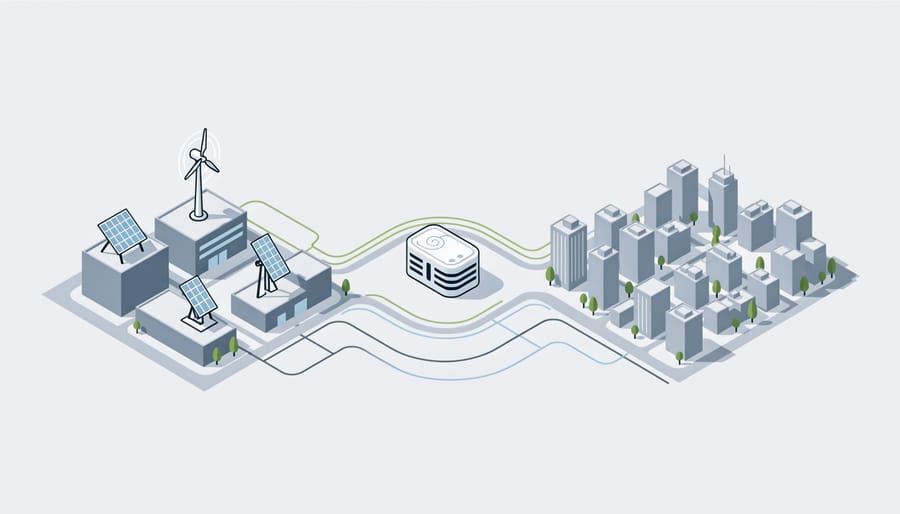
Switching to hybrid energy delivers multiple tangible advantages that go beyond simply adding battery storage to solar panels. These systems actively reduce your operating costs while making your property far less vulnerable to power disruptions. For Illinois businesses and homeowners, that combination translates to measurable financial returns and genuine peace of mind.
The most immediate benefit shows up in your utility bills. Hybrid systems pull from the cheapest available source at any moment, solar during peak production hours, batteries during high-rate periods, and grid power when rates drop at night. This intelligent switching can reduce monthly energy costs by 30-50% compared to grid-only setups, with the exact savings depending on your usage patterns and local rate structures.
Reliability improves dramatically. When storms knock out power across your neighborhood, a hybrid system keeps essential loads running without interruption. Unlike backup generators that require manual intervention and fuel purchases, battery storage kicks in automatically within milliseconds. For commercial facilities where downtime costs hundreds or thousands per hour, that seamless transition prevents revenue loss and protects sensitive equipment.
Environmental impact matters to many Illinois property owners. Hybrid configurations maximize clean energy utilization by storing excess solar production instead of exporting it to the grid at low compensation rates. You consume more of the renewable power you generate, displacing fossil fuel consumption and lowering your carbon footprint without sacrificing comfort or productivity.
The architecture also future-proofs your investment. As utility rates climb and grid instability becomes more common, hybrid systems let you add capacity incrementally, more panels, additional battery modules, or integration with electric vehicle charging, without rebuilding the entire infrastructure. You’re not locked into today’s energy landscape; the system adapts as technology advances and your requirements evolve.
What to Consider When Planning a Hybrid Energy System
Planning a hybrid energy system means looking beyond the immediate installation and thinking about how your property’s needs, budget, and site conditions align with the right mix of energy sources. A thoughtful upfront assessment saves money, avoids technical headaches, and ensures the system delivers value for years to come.
Start by evaluating your current and projected energy consumption. Review 12 to 24 months of utility bills to identify usage patterns, seasonal peaks, and how your demand charges stack up. If you anticipate growth, adding equipment, expanding operations, or electrifying heating and cooling, factor that into your sizing calculations. A system scaled only to today’s needs may leave you short in three years.
Budget and financing shape what’s feasible. Hybrid systems typically cost more upfront than grid-only or basic solar installations because they incorporate battery storage, backup generators, and intelligent controllers. However, financing options in Illinois include solar loans, commercial PACE programs, and leases that spread costs over time. Calculate your payback period by comparing current energy expenses against projected savings from lower utility bills, demand charge reductions, and incentive payments.
Speaking of incentives, Illinois offers substantial support. The Adjustable Block Program and Illinois Shines provide rebates for solar-plus-storage systems, while federal investment tax credits cover 30 percent of system costs through 2032. Some utilities offer time-of-use rates or demand response programs that reward load shifting with batteries. Work with a local installer who knows the current incentive landscape and can help you stack benefits.
Site characteristics matter. Your roof’s age, orientation, shading, and structural capacity determine solar array placement and size. If you’re considering ground-mounted panels or a backup generator, confirm you have adequate space and meet setback requirements. Soil conditions, flood zones, and local zoning ordinances can all affect equipment placement and permitting.
Before installation begins, prepare a planning checklist:
- Energy audit results showing usage patterns and efficiency opportunities
- Roof or land assessment confirming structural integrity and suitability
- Utility rate structure analysis identifying demand charges and time-of-use windows
- Backup power priorities (which loads must stay online during outages)
- Permitting timeline and local code requirements
- Contractor credentials, including licenses, insurance, and hybrid system experience
Permitting and utility interconnection add time to the project. Most hybrid systems require electrical permits, building permits if structural work is involved, and utility approval for grid connection. Net metering agreements and interconnection studies can take weeks to months, depending on your utility and system size. Plan accordingly and submit paperwork early.
Choosing the right partner makes the difference. Look for a contractor with proven hybrid system installations in Illinois, familiarity with local permitting processes, and transparent communication about timelines, costs, and performance expectations. A locally owned installer understands state incentives, utility quirks, and regional weather patterns that affect system design.
Frequently Asked Questions About Hybrid Building Solutions
How much do hybrid building solutions cost compared to standard solar installations?
A hybrid system typically costs 30-50% more than a solar-only setup due to battery storage and additional control equipment, but the added resilience and energy independence often justify the premium. Return on investment depends on your utility rates, backup power needs, and available incentives, with many Illinois property owners seeing payback within 8-12 years when factoring in federal tax credits and state programs.
Can I add battery storage to my existing solar array to create a hybrid system?
Yes, most modern solar installations can be retrofitted with battery storage, though you may need a compatible hybrid inverter or an AC-coupled battery system. An experienced installer will assess your current equipment, inverter capacity, and electrical panel to determine the best integration approach for your property.
How long do batteries last in a hybrid energy system?
Quality lithium-ion batteries for residential and commercial use typically carry 10-year warranties and are designed to retain 70-80% of their original capacity after a decade of daily cycling. Research from battery degradation modeling shows that actual performance depends on usage patterns, temperature control, and depth of discharge, with many systems operating effectively beyond their warranty period.
What incentives are available in Illinois for hybrid building solutions?
Illinois property owners can access the federal Investment Tax Credit (30% through 2032), state programs through the Illinois Solar for All initiative, and for agricultural and rural businesses, USDA REAP grants covering up to 50% of project costs. Some municipalities and utilities also offer additional rebates or performance incentives for energy storage and renewable integration.
Beyond these fundamentals, property owners often want to know about the practical side of implementation. The utility approval process in Illinois is generally straightforward for hybrid systems under 25 kW, requiring an interconnection application and electrical inspection before your system can export power to the grid. Larger commercial and industrial installations face more detailed technical review, but working with a qualified local installer familiar with ComEd or Ameren territory requirements streamlines the timeline considerably.
Maintenance needs for hybrid systems are minimal. Solar panels require occasional cleaning and annual inspections, batteries need monitoring through their management software (which happens automatically), and backup generators should be exercised monthly if included in your configuration. Most hybrid systems come with comprehensive monitoring platforms that alert you to any performance issues before they become problems, and many installers offer service contracts that bundle routine maintenance with priority support.
Getting started is simpler than most property owners expect. The first step is a site assessment where an installer evaluates your energy usage patterns, available roof or ground space, existing electrical infrastructure, and backup power priorities. From there, you’ll receive a customized system design with projected energy production, cost savings, and incentive calculations specific to your property. Illinois Renewables handles the entire process from initial consultation through permitting, installation, utility interconnection, and ongoing monitoring, ensuring your hybrid building solution delivers the reliability and efficiency you need.
Hybrid building solutions represent a practical path forward for Illinois property owners who want reliable, cost-effective energy without sacrificing resilience or sustainability. By combining solar power with battery storage, grid connectivity, and backup generation, these systems deliver the flexibility to manage energy costs, maintain power during outages, and reduce environmental impact simultaneously.
The systems work because they’re designed around your specific needs. A hybrid configuration adapts to your consumption patterns, leverages Illinois net metering policies, and scales as your energy requirements evolve. Whether you’re protecting critical operations at a commercial facility, reducing demand charges for an industrial site, or simply ensuring your home stays powered during grid disruptions, the multi-source approach addresses real challenges that single-source systems cannot.
Illinois Renewables brings local expertise to every hybrid energy project. We handle the complete process: system design tailored to your property and usage profile, professional installation by our experienced crews, financing options that fit your budget, and coordination with utilities for seamless interconnection and compliance with state regulations. We understand Illinois incentive programs, local permitting requirements, and the specific challenges our climate presents.
If you’re ready to explore how a customized hybrid energy system can improve reliability and lower costs for your property, reach out to our team. We’ll assess your situation, explain your options clearly, and build a solution that works for you.
