
Your Smart Meter Could Be Watching You—Here’s How to Take Control
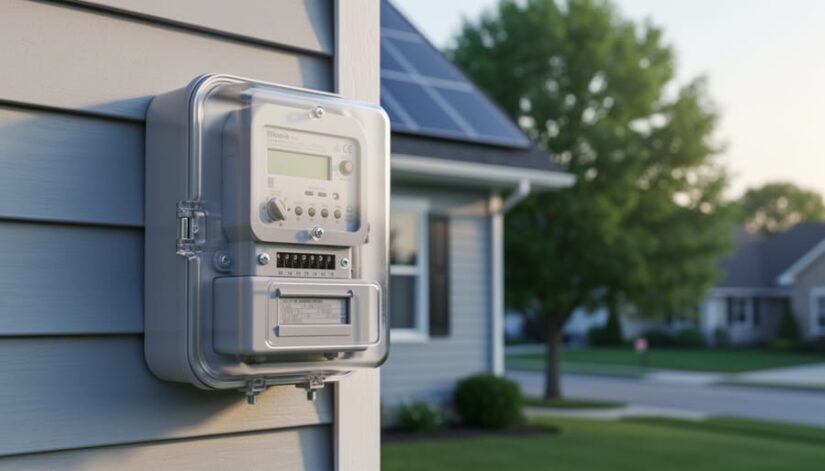
Understand how smart meters work before forming opinions about their installation. These digital devices measure your electricity usage in real-time and transmit data to your utility company, replacing traditional analog meters that required manual readings. For Illinois homeowners, particularly those with solar panels, smart meters enable net metering by accurately tracking both the energy you consume and the excess power you generate back to the grid.
Know your rights as an Illinois consumer regarding smart meter installation. State regulations require utility companies to provide advance notice before meter replacement, and you have specific options for managing data collection frequency. Illinois law mandates that utilities protect your usage data and limits who can access your consumption patterns without consent.
Request detailed privacy policies from your utility provider in writing. Ask specific questions about data storage duration, third-party sharing practices, and encryption methods. Most Illinois utilities must provide this information upon request, giving you concrete facts rather than speculation about privacy risks.
Create or join community education networks to share verified information about smart meter technology. Local groups help separate legitimate privacy concerns from misinformation while providing collective advocacy power. As a locally owned solar company serving Illinois, we’ve seen how informed communities make better decisions about energy technology. Smart meters, when properly understood, offer solar customers transparent tracking of their energy production and consumption, enabling accurate billing credits and helping optimize system performance. Education removes fear and empowers homeowners to leverage these tools effectively for both privacy protection and renewable energy benefits.
What Smart Meters Actually Track in Your Illinois Home
Real-Time Energy Usage Data
Smart meters record your energy consumption in intervals ranging from 15 minutes to real-time, creating a detailed profile of your household’s electrical activity. This granular data reveals patterns that traditional monthly billing cannot capture, such as when appliances cycle on, peak usage hours, and even which devices draw power during specific times of day.
For Illinois homeowners with solar installations, this minute-by-minute tracking becomes particularly valuable. You can see exactly when your solar panels generate electricity versus when you’re drawing from the grid, helping optimize energy storage decisions and identify consumption patterns that might benefit from timing adjustments. For example, running dishwashers or charging electric vehicles during peak solar production hours maximizes your renewable energy use.
However, this detailed information also raises legitimate privacy concerns. Researchers have demonstrated that consumption data can reveal daily routines, occupancy patterns, and even specific appliances in use. Understanding what smart meters track is the first step in making informed decisions about your energy data. Illinois residents have specific rights regarding this information, including options to limit data collection frequency and control third-party access to your usage patterns.
Two-Way Communication Capabilities
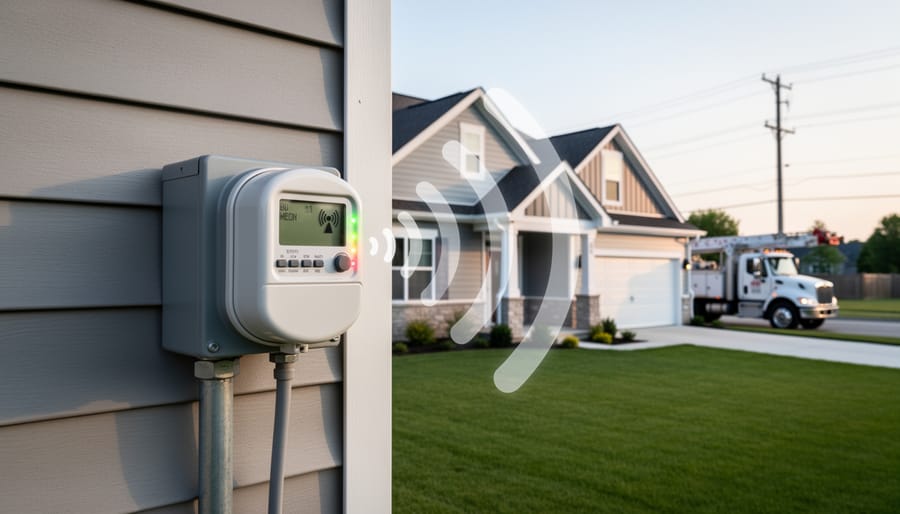
Smart meters represent a significant upgrade from traditional analog meters because they can both send and receive information through a wireless communication network. Unlike old meters that required manual reading, smart meters automatically transmit your energy usage data to your utility provider at regular intervals, typically every 15 to 60 minutes. This two-way connection means your utility company can monitor consumption patterns, detect outages instantly, and even implement time-of-use pricing programs.
The remote disconnect feature is one of the most discussed capabilities of smart meters. This function allows utility companies to turn your electricity on or off without sending a technician to your property. While this can streamline service connections for new residents or simplify the disconnection process for unpaid bills, it has raised privacy and consumer protection concerns among Illinois homeowners and business owners.
For solar energy customers, this two-way communication offers potential benefits. Smart meters can accurately measure both the electricity you draw from the grid and the excess solar power you send back, enabling proper net metering calculations. Understanding these capabilities helps you make informed decisions about your energy systems and privacy preferences while maximizing the value of your solar investment.
Privacy Concerns Every Illinois Consumer Should Know
Who Has Access to Your Energy Data
Understanding who can access your smart meter data is essential for protecting your privacy. In Illinois, your utility company has primary access to the energy consumption information collected by your smart meter. This data helps them manage the electrical grid, calculate your bills, and identify service issues.
State and federal regulatory agencies, including the Illinois Commerce Commission, may also access this information for oversight purposes and to ensure compliance with energy regulations. These agencies use aggregate data to develop energy policies and monitor grid performance across the state.
Third-party marketers represent a more complex category. Under Illinois law, utilities cannot share your personal energy data with marketing companies without your explicit consent. However, some consumers unknowingly grant permission through terms and conditions when signing up for energy comparison services or participating in special programs.
For homeowners with solar installations, smart meters track both the energy you consume from the grid and the excess solar power you send back. This bidirectional data flow is crucial for accurate net metering credits, but it also creates additional data points about your home’s energy patterns.
Illinois maintains stronger data privacy protections than many other states, requiring utilities to obtain clear consent before sharing individual customer information. You have the right to request details about who accesses your data and to limit sharing wherever legally permissible.
Data Security and Hacking Risks
Smart meter networks, while offering valuable energy management capabilities, do present cybersecurity vulnerabilities that Illinois consumers should understand. These digital devices collect and transmit detailed energy usage data through wireless networks, creating potential entry points for unauthorized access. Hackers could theoretically intercept data transmissions, gaining insights into when homes or businesses are occupied or vacant based on electricity patterns.
The interconnected nature of smart meter networks means a breach could potentially affect multiple properties simultaneously. However, utility companies employ encryption protocols and secure communication channels to minimize these risks. Illinois consumers should know that consumer advocates protect your privacy through ongoing monitoring of utility security practices.
For solar energy customers, smart meters are particularly important for tracking energy production and net metering credits. To stay protected, watch for unexpected changes in your energy billing, monitor your account regularly for unusual activity, and ensure your utility provider maintains current security certifications. Illinois utilities are required to report significant data breaches, so staying informed about your provider’s security track record helps you make educated decisions about your energy infrastructure. Understanding these risks empowers you to take appropriate precautions while still benefiting from smart meter technology.
Your Rights as an Illinois Energy Consumer
Illinois Smart Meter Regulations and Opt-Out Programs
In Illinois, smart meter deployment is governed by state legislation and individual utility company policies. Most major utilities, including ComEd and Ameren Illinois, have completed widespread smart meter installations as part of the state’s grid modernization efforts. However, Illinois law recognizes consumer concerns and provides opt-out options for residential and business customers who prefer traditional analog meters.
If you wish to opt out of smart meter installation, you’ll need to contact your utility provider directly. ComEd charges a one-time fee of $21.53 plus a monthly charge of $16.98 for customers who choose to retain analog meters. Ameren Illinois has similar fee structures, though amounts may vary. It’s important to submit your opt-out request before installation occurs, as removing an already-installed smart meter typically involves additional costs.
For solar energy customers, smart meters actually provide significant benefits by accurately measuring bi-directional energy flow. When your solar panels produce excess electricity, the smart meter tracks energy sent back to the grid, ensuring you receive proper credit through net metering programs. This precise measurement protects your investment and maximizes your solar savings.
Before opting out, consider consulting with energy professionals who understand both grid technology and renewable energy systems. As a locally owned company with expertise in solar energy, we can help you understand how smart meters integrate with your solar installation and address any privacy concerns you may have about the technology.
Data Access and Privacy Protections Under Illinois Law
Illinois provides important consumer protections regarding smart meter data collection and use. Under state law, utility companies must obtain customer consent before sharing detailed energy usage information with third parties. Your smart meter data is considered private, and you have the right to know how it’s collected, stored, and used.
The Illinois Commerce Commission requires utilities to implement strong security measures to protect your energy consumption data from unauthorized access. This is particularly important for solar customers, as smart meters track both electricity consumption and solar energy production. Illinois homeowners participating in energy efficiency programs should understand that while aggregate data may be used for grid management and program improvement, personally identifiable information remains protected.
You can request access to your own smart meter data at any time, and utilities must provide it in an accessible format. If you have privacy concerns, contact your utility provider to understand their specific data policies and opt-out options where available. Understanding these protections helps you make informed decisions about your energy usage and participation in renewable energy programs.
How Solar Energy Systems Work With Smart Meters
Net Metering and Accurate Credit Tracking
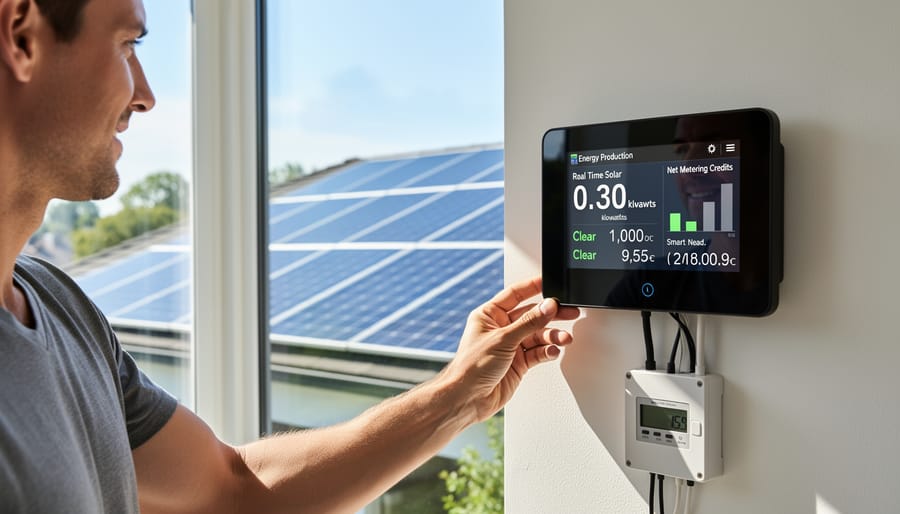
For Illinois homeowners and businesses with solar installations, smart meters provide a critical function: accurately tracking the electricity you send back to the grid. When your solar panels produce more energy than you’re using, that excess power flows to the grid, and your smart meter must precisely measure this bi-directional energy flow.
Unlike traditional meters that only measure incoming electricity, smart meters record both consumption and generation in real-time. This capability ensures you receive proper credits for your solar contribution through net metering programs. The meter distinguishes between the kilowatt-hours you draw from the grid and those you supply, maintaining separate tallies that affect your monthly billing.
Understanding how Illinois utility rates work with net metering helps you maximize your solar investment. Smart meters communicate this data to your utility provider automatically, eliminating manual readings and reducing billing errors. You can typically access detailed reports showing your energy production and consumption patterns, helping you optimize your solar system’s performance.
As a locally owned company with expertise in solar energy, we help Illinois customers understand these measurements and verify they’re receiving appropriate credits. This transparency empowers you to monitor your solar investment’s financial returns and ensures your renewable energy contributions are properly recognized and compensated.
Monitoring Your Solar System Performance
For Illinois homeowners and businesses with solar installations, smart meters provide valuable real-time data that helps maximize your investment. These advanced devices track your solar production minute-by-minute, allowing you to see exactly how much energy your panels generate throughout the day and how much you’re sending back to the grid.
Real-time monitoring helps you identify performance issues quickly. If your production suddenly drops on a sunny day, you’ll know immediately that something needs attention, whether it’s shading from tree growth, panel soiling, or a technical malfunction. Catching these problems early prevents significant energy losses and maintains your system’s efficiency.
Smart meters also simplify net metering calculations in Illinois, automatically tracking the energy credits you earn when your solar system produces more than you consume. This transparent data helps you understand your billing cycles and verify that you’re receiving proper credit for your solar contributions to the grid.
As a locally owned company with expertise in solar energy, we help Illinois customers interpret their smart meter data to optimize system performance. The combination of smart meter technology and solar panels gives you unprecedented control over your energy usage, costs, and environmental impact.
Practical Steps to Protect Your Smart Meter Privacy
Request Data Access Restrictions
Illinois homeowners and businesses have the right to control who accesses their smart meter data. Start by contacting your utility provider to request a detailed explanation of their data access policies. Ask specific questions about who can view your consumption information, how long they retain it, and whether they share or sell it to third parties.
Submit a written request to limit data access to only essential personnel within the utility company. Many Illinois utilities allow customers to opt out of data sharing programs with marketing firms or research organizations. Request confirmation in writing that your preferences have been documented in their system.
Under Illinois law, you have the right to transparency regarding your energy data. Request copies of your utility’s privacy policy and data retention schedule. If you have solar panels, understanding data access becomes even more important since your consumption patterns and generation data may be tracked separately. Consider asking your utility to provide monthly reports showing who accessed your account information.
Document all communications with your provider, including dates, representative names, and reference numbers. If your utility doesn’t respond adequately to access restriction requests within 30 days, you can file a complaint with the Illinois Commerce Commission. Taking these proactive steps helps protect your privacy while maintaining the benefits of smart meter technology for managing your energy consumption efficiently.
Use Home Energy Management Systems Strategically
Home energy management systems (HEMS) offer valuable monitoring capabilities while keeping your data private. When selecting these tools, prioritize devices that process information locally on your home network rather than transmitting it to third-party servers. Many modern systems allow you to track electricity usage patterns, including solar generation data, without cloud connectivity requirements.
For Illinois homeowners with solar installations, locally managed systems provide real-time insights into energy production and consumption without compromising privacy. Look for devices with encrypted local storage and dashboard access through your home Wi-Fi network only. These systems can help you optimize solar panel performance and identify energy-saving opportunities while maintaining control over your household data.
When reviewing HEMS options, ask vendors specific questions about data storage locations, transmission protocols, and whether information leaves your property. This approach empowers you to make informed energy decisions while protecting your family’s privacy.
Review Your Utility’s Privacy Policy Regularly
Your utility’s privacy policy is a living document that can change over time, so reviewing it regularly helps you stay informed about how your smart meter data is collected and used. Look for clear explanations of what data is gathered, how long it’s retained, and whether it’s shared with third parties. The policy should outline your rights to access your own data and explain the security measures protecting your information.
Check your utility’s website quarterly for policy updates, and sign up for email notifications if available. Illinois law requires utilities to provide notice before significant policy changes, but staying proactive ensures you won’t miss important updates. Pay special attention to sections about data resolution and sharing practices. If you have solar panels, review how your net metering data is handled separately from standard consumption information. When policies change, take time to understand what’s different and how it affects you. If unclear language makes it difficult to understand your privacy protections, don’t hesitate to contact your utility’s customer service for clarification or reach out to consumer advocacy groups for guidance.
Building a Smart Meter Education Network in Your Community
Resources for Illinois Consumer Advocates
Illinois residents have access to numerous resources to better understand smart meters and energy choices. The Citizens Utility Board (CUB) serves as Illinois’ primary residential utility watchdog, offering free advice on energy bills, smart meter concerns, and consumer rights. Their website provides educational materials and complaint assistance specifically for Illinois utility customers.
The Illinois Commerce Commission maintains a consumer services division that addresses smart meter questions and utility disputes. Their online portal allows residents to file complaints and access regulatory information about metering requirements.
For those interested in the intersection of smart meters and renewable energy, consumer advocacy groups like Illinois Renewables offer locally focused expertise. These organizations help homeowners and businesses understand how smart meters work with solar installations and net metering programs.
The Environmental Law and Policy Center provides resources on energy efficiency and consumer protection in Illinois. Additionally, local utility companies like ComEd and Ameren Illinois maintain educational portals explaining their smart meter programs, data privacy policies, and opt-out procedures. Community energy forums on platforms like Nextdoor and Facebook connect neighbors sharing experiences and practical advice about smart meter management in Illinois neighborhoods.
Organizing Educational Workshops
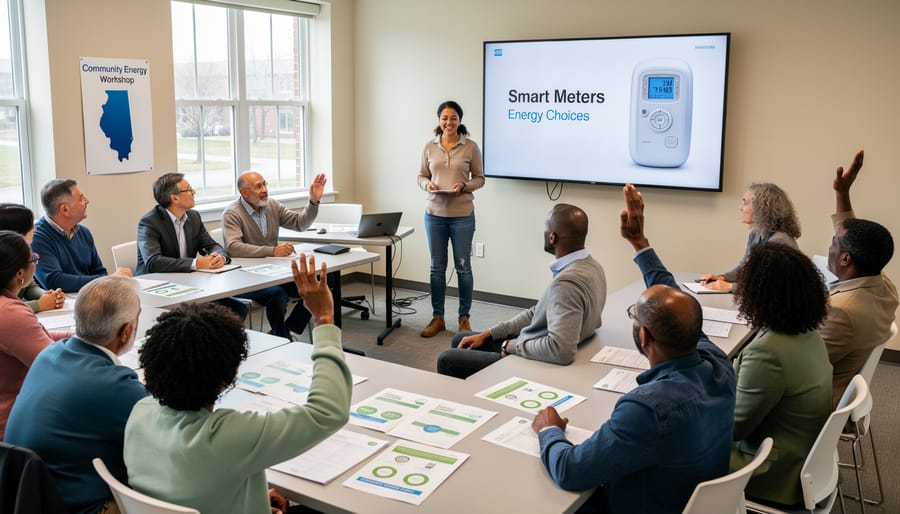
Hosting educational workshops creates valuable opportunities for community members to learn about smart meters in a supportive environment. Start by partnering with local libraries, community centers, or municipal buildings that offer free meeting spaces. Consider timing sessions during evenings or weekends to maximize attendance among working homeowners and business owners.
Structure your workshop to address three key areas: how smart meters work, legitimate privacy concerns, and practical protection strategies. Invite representatives from your utility company to explain their data collection and security practices, allowing attendees to ask questions directly. Balance this by including consumer advocacy perspectives to ensure all viewpoints receive fair consideration.
Create handouts summarizing Illinois-specific regulations regarding smart meter data access and consumer rights. For solar energy customers, explain how smart meters accurately track both energy consumption and production, helping homeowners maximize their investment returns while maintaining privacy controls.
Encourage open dialogue by using a question-and-answer format rather than lecture-style presentations. Document common concerns raised during workshops and share solutions across your education network. Follow up with attendees by providing additional resources and contact information for those wanting more personalized guidance about their specific situations.
Smart meters represent a significant advancement in energy management technology, offering real benefits particularly for Illinois homeowners and businesses who have invested in solar energy systems. These devices provide the detailed, real-time data needed to maximize solar production, track energy usage patterns, and ensure you’re receiving proper credit for excess power sent back to the grid. However, these benefits must be balanced with legitimate privacy considerations and your right to understand exactly how your energy data is collected, stored, and used.
Education is the foundation of informed decision-making. When you understand how smart meters work, what protections exist under Illinois law, and what steps you can take to safeguard your privacy, you can make choices that align with your personal values and energy goals. Community education networks play a vital role in this process, bringing together diverse perspectives and helping neighbors share knowledge and experiences.
At Illinois Renewables, our locally owned company is committed to helping customers understand every aspect of their energy systems. Whether you’re considering solar installation or already generating clean energy, we believe you deserve clear, honest information about how smart meters integrate with your solar panels and impact your privacy. We’re here to answer your questions, address your concerns, and ensure you have the knowledge needed to take full control of your energy future. Making informed choices about your home’s technology shouldn’t require a degree in engineering—just access to reliable, straightforward information from people who genuinely care about your success.
