

How Illinois Utility Rates Impact Your Solar Energy Savings
Understanding your utility rate structure holds the key to maximizing solar energy savings in Illinois. As electricity costs continue to rise, detailed rate analysis reveals hidden opportunities to reduce energy expenses through strategic solar adoption and participation in community solar in Illinois programs. Breaking down your utility bill’s components – from peak demand charges to time-of-use rates – empowers you to make data-driven decisions about solar investments that align with your consumption patterns.
Smart utility rate analysis identifies optimal solar system sizing, tracks seasonal rate variations, and quantifies potential savings across different rate plans. For Illinois residents and businesses, this critical evaluation process serves as the foundation for developing cost-effective solar strategies that maximize return on investment while reducing long-term energy costs. By understanding how utilities calculate charges and applying this knowledge to solar planning, property owners can secure the most advantageous rates while contributing to a more sustainable energy future.
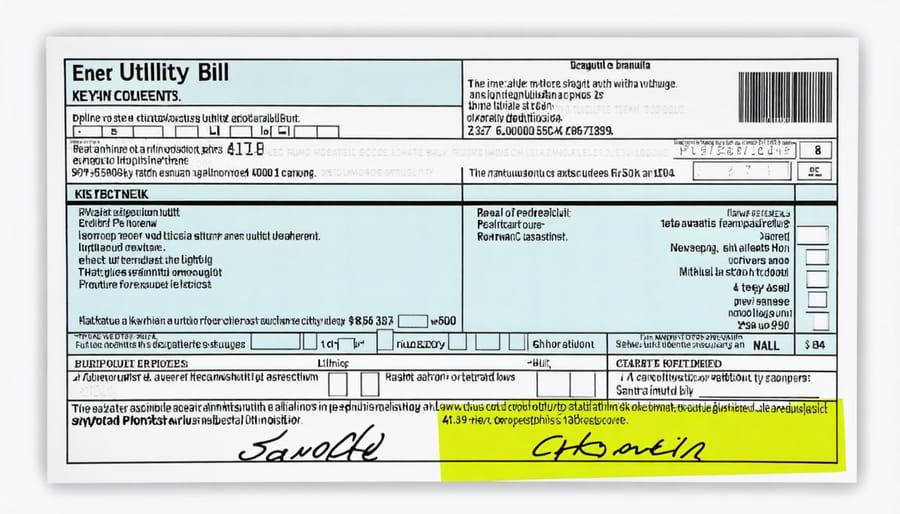
Understanding Your Illinois Utility Bill Structure
Peak vs. Off-Peak Rates
Understanding peak and off-peak electricity rates is crucial for maximizing your energy savings in Illinois. Most utility companies charge different rates based on the time of day electricity is used, with higher rates during peak demand periods and lower rates during off-peak hours.
Peak hours typically occur on weekdays between 2 PM and 7 PM when energy demand is highest. During these times, utilities charge premium rates to encourage reduced consumption and manage grid stress. Off-peak hours, usually late evening through early morning and weekends, offer significantly lower rates – sometimes up to 50% less than peak rates.
For solar energy users, this time-of-use pricing creates opportunities for strategic energy management. By shifting high-energy activities to off-peak hours and utilizing stored solar power during peak periods, you can substantially reduce your electricity costs. Many Illinois homeowners program their appliances, electric vehicle charging, and other energy-intensive tasks to run during off-peak hours, maximizing their solar investment while minimizing utility expenses.
Time-of-use rates also influence solar battery storage decisions, as storing excess solar energy for use during peak hours can lead to greater savings.

Demand Charges and Fixed Fees
When analyzing your utility bill, you’ll notice charges that don’t vary with your energy consumption. These fixed components play a crucial role in your overall energy costs and should be carefully considered when evaluating solar energy solutions.
Demand charges, common in commercial and industrial rate structures, are based on your highest power usage during a billing period. These charges can represent up to 50% of your total bill, making them particularly significant for businesses in Illinois. Understanding your demand patterns can help identify opportunities for peak load reduction through solar and energy storage systems.
Fixed fees include customer charges, meter fees, and delivery service charges. While these costs remain constant regardless of your energy usage, they impact the overall economics of solar adoption. Illinois utilities typically charge between $10 to $30 monthly for residential customers and higher amounts for commercial accounts.
Smart energy management strategies can help minimize demand charges, though fixed fees generally cannot be eliminated. When calculating potential solar savings, it’s essential to account for these non-variable charges as they will continue to appear on your utility bill even after solar installation.
Rate Analysis Tools and Resources
Online Rate Calculators
Several online calculators can help Illinois residents and businesses evaluate their utility rates and compare them with potential solar savings opportunities. The Illinois Commerce Commission’s Rate Calculator provides a baseline for understanding current utility costs, while specialized solar calculators from providers like ComEd and Ameren offer detailed comparisons specific to our region.
These tools typically require your recent utility bills and basic property information to generate accurate estimates. They factor in variables such as seasonal rate changes, time-of-use pricing, and available solar incentives. Many calculators also account for Illinois-specific factors like net metering policies and local utility rates.
For the most accurate analysis, consider using multiple calculators and comparing their results. Free tools from reputable solar providers can offer additional insights into potential savings, system sizing, and return on investment specific to your location and energy usage patterns.
Professional Rate Analysis Services
Professional rate analysis services provide invaluable insights for homeowners and businesses considering solar installation in Illinois. These experts analyze your current utility bills, consumption patterns, and rate structures to determine the most cost-effective solar solution for your needs.
By leveraging advanced software tools and industry expertise, analysts can forecast potential savings under different solar configurations while accounting for seasonal variations and time-of-use rates. They also evaluate demand charges, peak usage periods, and available utility incentives to optimize your solar investment.
These services help you understand complex rate structures and identify opportunities for maximum savings. Professional analysts can also assist with utility negotiations, rate schedule changes, and future rate impact predictions. Their detailed reports provide clear recommendations for system sizing and configuration, ensuring your solar installation aligns perfectly with your energy usage patterns and financial goals.
The insights gained from professional rate analysis often lead to more strategic solar investments and better long-term returns for Illinois property owners.
Maximizing Solar Savings Through Rate Analysis
System Sizing Considerations
Understanding your utility rate structure plays a crucial role in determining the optimal size for your solar energy system. In Illinois, the size of your solar installation shouldn’t just match your energy consumption – it should align with when and how you use electricity throughout the day.
For homes and businesses with time-of-use rates, sizing considerations should account for peak usage periods. A larger system might make sense if your highest energy consumption occurs during peak rate hours, as this maximizes your savings potential. Conversely, if your usage primarily falls during off-peak hours, a more modest system size might be more cost-effective.
Net metering policies in Illinois also influence system sizing decisions. Since excess energy can be credited to your account, you might benefit from a system that produces slightly more than your immediate needs during sunny periods. However, it’s important to balance this against your utility’s specific net metering terms and any applicable capacity limits.
Consider your future energy needs as well. If you’re planning to add electric vehicles or increase your electricity usage, factoring this into your initial system size can be more cost-effective than expanding later.
Net Metering and Rate Impacts
Net metering is a crucial policy that allows solar energy system owners to receive credits for excess electricity they send back to the grid. In Illinois, this arrangement significantly impacts the overall financial benefits of solar installations. When your solar panels produce more electricity than you’re using, the excess power flows back to the grid, and your utility meter runs backward, effectively reducing your monthly bill.
Understanding the rate structure is essential for maximizing solar savings. Current Illinois solar incentives and net metering policies typically credit excess generation at the retail rate, meaning you’ll receive the same rate for electricity you send to the grid as what you pay when consuming from it.
However, these rates can vary based on your utility provider and rate class. Some utilities implement time-of-use rates or demand charges, which can affect your net metering benefits. It’s important to analyze your current utility rate structure and consumption patterns to accurately forecast potential savings from solar installation. This analysis helps determine the optimal system size and expected return on investment while accounting for future rate changes and policy updates.

Understanding your utility rate structure is a crucial step in evaluating the potential benefits of solar energy for your Illinois property. A thorough rate analysis helps you make informed decisions about system size, timing of installation, and expected return on investment. By examining your current energy usage patterns and rates, you can better predict future savings and determine the most cost-effective solar solution for your needs. Consider working with a local solar expert who can help analyze your specific situation and guide you through the decision-making process. Remember that utility rates typically increase over time, making solar investments more valuable in the long run. Take the next step by gathering your recent utility bills and scheduling a consultation to explore how solar can benefit your home or business.
