

Why Consumer Advocacy Groups Are Your Best Ally for Understanding Solar Energy
Navigating solar energy decisions requires trustworthy guidance, and consumer advocacy groups exist specifically to protect your interests while educating you about renewable energy options. These organizations serve as independent resources that help Illinois residents and businesses cut through marketing claims, identify reputable solar installers, and understand the true costs and benefits of going solar.
Consumer advocacy groups provide three essential services for prospective solar customers. First, they offer unbiased educational materials that explain solar technology, financing options, and incentive programs without pushing specific products or installers. Second, they maintain databases of verified solar contractors and compile complaint records, helping you avoid unscrupulous companies that make exaggerated promises about energy savings or system performance. Third, they advocate for consumer-friendly policies at the state and local level, ensuring regulations protect homeowners and businesses from predatory contracts or installation practices.
For Illinois residents specifically, understanding your rights and accessing quality information becomes even more critical given the state’s evolving solar landscape and diverse incentive programs. Organizations like the Citizens Utility Board and Illinois PIRG provide localized resources addressing state-specific concerns, from understanding net metering policies to evaluating community solar options.
Working with locally owned solar experts who align with advocacy principles offers additional protection. These companies prioritize transparency in pricing, realistic performance projections, and long-term customer relationships over high-pressure sales tactics. By combining advocacy group resources with knowledgeable local partners, you gain the confidence needed to make informed solar investments that deliver genuine value for decades to come.
What Consumer Advocacy Groups Do for Energy Literacy
Breaking Down Complex Energy Concepts
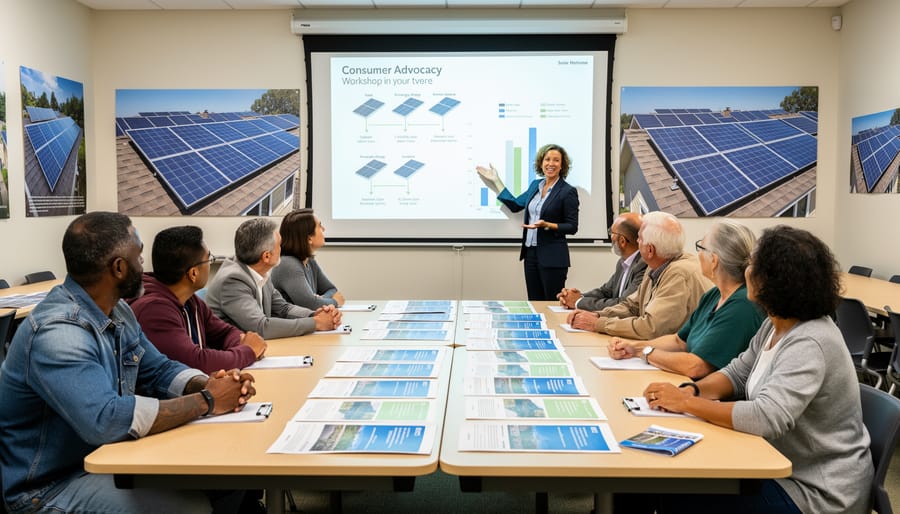
Consumer advocacy groups excel at translating complicated energy concepts into information that everyday consumers can actually use. When you’re considering solar energy, you’ll encounter terms like net metering, renewable energy credits, and time-of-use rates. These organizations break down these topics through workshops, online resources, and one-on-one consultations.
For example, advocacy groups explain how net metering allows your solar panels to send excess electricity back to the grid, essentially running your meter backward and crediting your account. They clarify which Illinois solar incentives you qualify for, including federal tax credits and state rebates, walking you through application processes step by step.
Understanding Illinois utility rates becomes manageable when advocates explain how different rate structures affect your solar savings. They compare fixed-rate plans versus time-of-use pricing, showing real examples of monthly bills before and after solar installation.
These groups also demystify contract language, helping you spot unfavorable lease terms or hidden fees in solar agreements. By providing educational materials in plain language rather than industry jargon, consumer advocacy organizations empower you to make confident decisions about your energy future.
Protecting Consumers from Misinformation
Consumer advocacy groups serve as essential watchdogs in the solar energy marketplace, protecting Illinois residents and businesses from misleading claims and predatory practices. These organizations carefully review marketing materials, verify installer credentials, and investigate complaints to ensure companies deliver on their promises. They fact-check performance claims about solar panel efficiency, energy savings projections, and warranty coverage, helping consumers distinguish between legitimate opportunities and exaggerated sales pitches.
One critical area where advocacy groups provide guidance is navigating energy efficiency incentive programs, where complex terms and conditions can sometimes obscure actual benefits. These groups identify common warning signs of problematic contracts, such as hidden fees, inflated pricing, or pressure tactics that rush homeowners into decisions. By publishing educational resources and complaint databases, they empower consumers to ask the right questions before signing agreements.
For Illinois residents considering solar installations, advocacy groups offer unbiased analysis of financing options, equipment quality, and installer reputation. This independent oversight ensures you can make confident, informed decisions based on accurate information rather than marketing hype, ultimately protecting your investment and supporting the growth of trustworthy solar energy providers in your community.
Key Consumer Advocacy Groups Supporting Energy Literacy in Illinois
Citizens Utility Board (CUB)
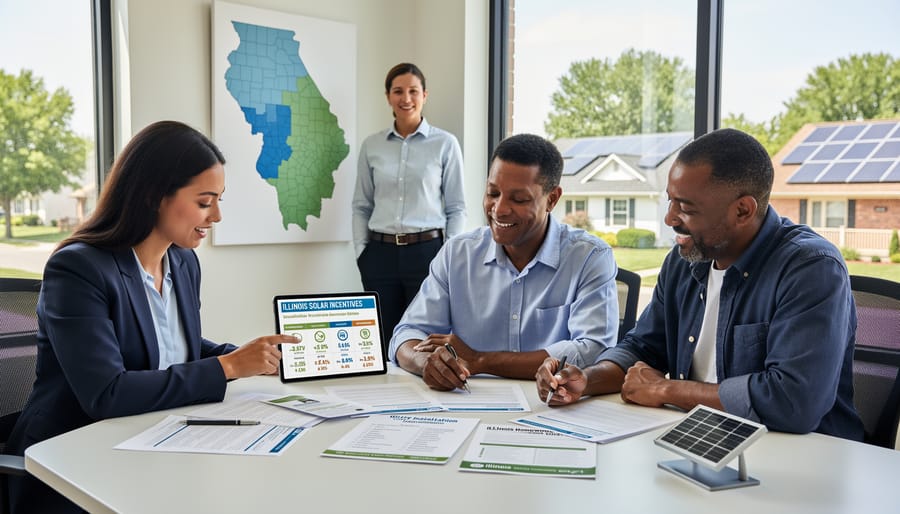
The Citizens Utility Board (CUB) stands as Illinois’ leading residential utility watchdog, serving as an independent voice for consumers since 1983. This nonprofit organization specializes in helping homeowners and businesses understand their utility bills, navigate energy choices, and make informed decisions about renewable energy investments like solar.
CUB offers free resources to Illinois residents who want to better understand their energy costs and options. Their team regularly analyzes utility rate cases, advocates for fair pricing at the Illinois Commerce Commission, and publishes easy-to-understand guides on topics ranging from electricity suppliers to solar panel investments. For those considering solar energy, CUB provides unbiased information about costs, financing options, and potential savings specific to Illinois regulations and incentive programs.
One of CUB’s most valuable services is their solar marketplace, which connects consumers with pre-screened solar installers while providing educational resources to help you evaluate proposals. They also offer bill analysis services and energy-saving tips tailored to Illinois’ unique utility landscape. By working with organizations like CUB, you can approach solar investments with confidence, armed with knowledge about what questions to ask installers and how to identify genuine value in solar proposals.
Environmental Law & Policy Center
The Environmental Law & Policy Center (ELPC) serves as a leading advocate for clean energy solutions across the Midwest, with a strong focus on consumer protection and education. Based in Chicago, ELPC works to advance policies that make renewable energy more accessible and affordable for homeowners and businesses throughout Illinois. The organization provides valuable resources to help consumers understand their clean energy options, including solar installations, and advocates for transparent pricing and fair utility practices.
ELPC plays a crucial role in shaping state policies that directly benefit Illinois residents considering solar energy. Their work includes promoting energy justice initiatives that ensure all communities can access the financial and environmental benefits of renewable energy. The center also offers educational materials that break down complex energy regulations into understandable information, helping consumers make informed decisions about their energy investments. For those researching solar options, ELPC provides independent guidance on navigating incentive programs and understanding your rights as an energy consumer in Illinois.
Illinois Solar Energy Association
The Illinois Solar Energy Association (ISEA) serves as the state’s primary resource hub for residents and businesses exploring solar energy options. This nonprofit organization provides unbiased educational programs that help consumers understand solar technology, evaluate installation proposals, and navigate available incentive programs specific to Illinois.
ISEA offers workshops throughout the year covering topics like system sizing, financing options, and understanding net metering policies under Illinois law. Their website features a contractor directory that lists qualified solar installers who meet professional standards, helping you avoid unvetted providers. The association also publishes consumer guides that break down complex concepts like interconnection agreements and renewable energy credits into straightforward language.
For business owners, ISEA provides case studies demonstrating how Illinois companies have successfully implemented solar projects, including return-on-investment timelines and practical insights. Their advocacy work keeps members informed about policy changes affecting solar adoption, ensuring you have current information when making energy decisions. By connecting with ISEA, you gain access to a community of knowledgeable professionals committed to supporting informed solar choices across Illinois.
How Energy Literacy Programs Empower Solar Decisions
Understanding Your Energy Consumption
Energy literacy programs offered by consumer advocacy groups start by helping you understand your current electricity usage patterns. These programs teach you how to read your utility bills effectively, identifying peak consumption periods and seasonal variations. By analyzing your monthly kilowatt-hour usage and average costs, you gain clarity about where your energy dollars actually go.
This baseline understanding is essential before considering solar energy. Advocacy groups provide simple assessment tools that help you evaluate factors like your roof’s sun exposure, shading from nearby trees or buildings, and your property’s orientation. They also guide you through calculating your potential return on investment based on Illinois-specific incentives and local utility rates.
Rather than pushing solar for everyone, these educational resources help you make an informed decision. You’ll learn whether energy efficiency improvements should come first, if your consumption patterns align with solar production, and what system size would meet your needs. This practical knowledge, often delivered through workshops or one-on-one consultations with locally owned organizations, empowers you to approach solar decisions with confidence and avoid unnecessary investments.
Navigating Incentives and Financing
Understanding the financial aspects of going solar can feel overwhelming, but consumer advocacy groups provide valuable educational resources to help Illinois residents make informed decisions. These organizations break down complex topics like state incentives, federal tax credits, and financing structures into accessible information.
Illinois offers several incentive programs through the Illinois Shines initiative, which provides renewable energy credits to solar system owners. The federal Investment Tax Credit (ITC) currently allows homeowners and businesses to deduct a significant percentage of solar installation costs from their federal taxes. Advocacy groups help consumers understand eligibility requirements, application processes, and how these incentives reduce overall project costs.
Beyond traditional rooftop installations, educational resources explain alternative pathways like community solar options, which allow residents without suitable roofs to benefit from solar energy through subscription models. These programs have specific financial structures that differ from direct ownership.
Consumer advocacy organizations also clarify financing options, including solar loans, power purchase agreements (PPAs), and leases. Each financing method has distinct advantages and considerations regarding ownership, maintenance responsibilities, and long-term savings. Reputable groups provide comparison tools and worksheets to help you evaluate which option aligns with your financial goals.
When reviewing financing offers, advocacy resources teach consumers to watch for hidden fees, understand contract terms, and compare multiple quotes. This knowledge empowers you to recognize fair pricing and avoid predatory lending practices. Locally owned Illinois solar providers often work transparently with these educational frameworks, ensuring customers receive honest guidance throughout their solar journey.
Real-World Benefits: What Informed Consumers Gain
Making Smarter Investment Decisions
Energy literacy programs from consumer advocacy groups help you make investment decisions based on accurate data rather than sales pressure. These organizations teach you how to calculate appropriate solar system sizes for your actual energy consumption, ensuring you don’t overpay for unnecessary capacity or purchase a system too small to meet your needs.
Understanding payback periods becomes straightforward when you learn to factor in Illinois-specific incentives, net metering policies, and realistic energy production estimates for our climate. Advocacy groups provide calculators and worksheets that account for installation costs, available rebates, and projected savings over time. This knowledge helps you compare proposals from different installers objectively.
Consumer education resources also explain how system orientation, shading, and roof condition affect long-term returns. You’ll learn which equipment specifications matter most and how to evaluate warranty terms that protect your investment. By understanding renewable energy economics, you can identify realistic savings projections versus inflated promises. Locally owned solar companies benefit from educated consumers who ask informed questions and make decisions aligned with their financial goals, creating partnerships built on transparency rather than confusion.
Identifying Quality Solar Partners
Consumer advocacy groups provide valuable tools to help you identify reputable solar installers and avoid common pitfalls. Start by checking installer credentials through advocacy resources that verify licensing, insurance, and industry certifications. Many groups maintain databases of installer complaint histories and customer satisfaction ratings, giving you insight into a company’s track record.
When evaluating potential partners, advocacy organizations recommend requesting detailed written estimates from multiple installers. Compare equipment specifications, warranty terms, and total project costs. Quality solar companies should offer comprehensive warranties covering panels (typically 25 years), inverters (10-15 years), and workmanship (at least 10 years). Be wary of installers who pressure you to sign contracts immediately or claim limited-time offers that expire within hours.
Red flags include vague pricing, reluctance to provide references, or promises of unrealistic energy savings. Advocacy groups stress the importance of verifying that installers pull proper permits and follow local building codes. Locally owned companies with established Illinois operations often demonstrate stronger accountability to their communities. Take time to read contracts thoroughly and ask questions about system performance guarantees, maintenance requirements, and what happens if the company goes out of business. Legitimate installers welcome informed customers and transparent conversations.
How to Tap Into Consumer Advocacy Resources
Free Educational Workshops and Webinars
Many Illinois consumer advocacy groups offer free workshops and webinars designed to help residents understand solar energy options and make informed decisions. Organizations like the Citizens Utility Board and the Environmental Law and Policy Center regularly host educational sessions covering topics such as solar system basics, financing options, utility rates, and consumer rights. These programs often include question-and-answer segments where participants can discuss their specific situations with energy experts.
To find upcoming workshops, visit advocacy group websites directly or sign up for their email newsletters. Many organizations also post event calendars on their social media channels. Some programs are held in person at community centers across Illinois, while others are conducted online, making them accessible regardless of your location. Webinars typically last 60 to 90 minutes and are recorded for later viewing if you cannot attend live.
These educational opportunities provide valuable insights into avoiding common pitfalls when considering solar installations and help you understand incentives available to Illinois residents, ensuring you make choices that align with your energy goals and budget.
One-on-One Consultation Services
Many consumer advocacy groups offer one-on-one consultations to help homeowners and business owners evaluate solar proposals. These personalized sessions provide an opportunity to review contracts, compare financing options, and understand technical specifications with an expert who has your best interests in mind. During a consultation, advocates can help you identify red flags in agreements, clarify warranty terms, and assess whether projected energy savings align with your actual usage patterns. Some organizations provide this service free of charge, while others may charge a nominal fee. When working with locally owned solar companies in Illinois, these consultations become even more valuable, as advocates familiar with state-specific incentives and regulations can ensure you’re maximizing available benefits. To schedule a consultation, contact advocacy groups directly through their websites or helplines, and prepare your solar quotes and utility bills for a thorough review.

Working With Local Solar Experts Who Value Transparency
Consumer advocacy groups emphasize the importance of working with solar providers who share their commitment to transparency and education. When you’re ready to move forward with solar, choosing a partner who values informed decision-making becomes essential to a successful experience.
Locally owned Illinois solar companies often align naturally with consumer advocacy principles. These businesses build their reputations within the communities they serve, creating a strong incentive to prioritize honest communication and customer satisfaction. Unlike national installers who may rely on high-pressure sales tactics, local experts typically invest time in educating customers about system design, realistic energy production estimates, and long-term performance expectations.
The transparency that consumer advocacy groups champion should extend throughout your solar journey. Quality solar partners will provide detailed proposals that break down costs, explain equipment choices, and offer realistic projections based on your specific property conditions. They’ll discuss financing options without pushing you toward arrangements that don’t serve your interests, and they’ll clearly outline warranty coverage and maintenance requirements.
Local solar experts who prioritize education will encourage you to ask questions, compare proposals, and take the time you need to make an informed decision. They understand that an educated customer becomes a satisfied customer and an advocate for solar energy within their community. This approach creates a partnership built on trust rather than a transactional relationship, ensuring you have ongoing support as you transition to renewable energy and maximize your solar investment over its 25-year lifespan.
Consumer advocacy groups and energy literacy programs work together to create a solar marketplace built on transparency, trust, and informed decision-making. When homeowners and business owners have access to unbiased educational resources and advocacy support, they can confidently evaluate solar proposals, understand their energy options, and make investments that truly benefit their properties and bottom lines. This collaborative ecosystem protects consumers from predatory practices while supporting legitimate solar providers who prioritize customer education and long-term satisfaction.
As you consider solar energy for your Illinois property, take advantage of the resources available through organizations like the Citizens Utility Board and the Illinois Solar Energy Association. Ask questions, compare multiple proposals, and work with locally owned companies that demonstrate commitment to transparency and education. Reputable solar partners welcome informed customers and view consumer advocacy as an ally in building a sustainable industry. By educating yourself and choosing providers who support your right to understand every aspect of your solar investment, you contribute to a fairer, more accountable marketplace that benefits all Illinois residents and businesses exploring renewable energy solutions.
