

Illinois Grid Interconnection Standards: What Solar System Owners Need to Know
Grid interconnection represents the critical bridge between your solar power system and Illinois’ electrical infrastructure, determining how safely and efficiently your renewable energy connects to the broader power grid. For property owners considering solar installation, understanding interconnection requirements isn’t just about compliance—it’s about ensuring your investment delivers optimal returns while maintaining grid stability.
Illinois’ interconnection standards follow a tiered approach based on system size and complexity, from simplified processes for residential solar arrays under 10kW to more comprehensive requirements for larger commercial installations. These standards, overseen by the Illinois Commerce Commission, establish the technical specifications, safety protocols, and application procedures necessary for connecting your solar system to the utility network.
As solar adoption continues to accelerate across Illinois, proper grid interconnection has become increasingly vital for maintaining power quality and reliability. Whether you’re a homeowner or business owner, navigating these requirements early in your solar journey helps ensure a smooth transition to clean energy while protecting both your investment and the electrical grid.
Understanding Grid Interconnection Basics
What is Grid Interconnection?
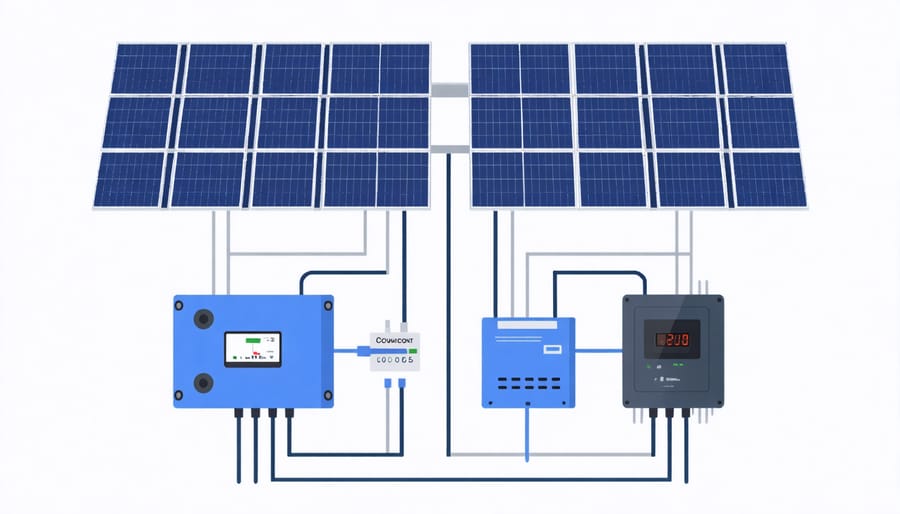
Grid interconnection is the vital process of connecting your solar energy system to the public utility power grid, allowing for a two-way flow of electricity. This connection enables your solar panels to send excess power back to the grid when you generate more than you need and draw power from the grid when your system isn’t producing enough. The process involves installing specialized equipment, including inverters and grid enhancing technologies, to ensure safe and efficient power exchange. A bi-directional meter tracks both the electricity you consume from the grid and the excess power your system exports, forming the basis for net metering credits on your utility bill. This interconnection is essential for maintaining reliable power supply while maximizing the benefits of your solar investment, as it provides seamless backup power when needed and helps reduce overall electricity costs.
Why Standards Matter
Grid interconnection standards serve as the foundation for safe and reliable integration of solar power systems into Illinois’ electrical grid. These standards ensure that decentralized energy systems work harmoniously with existing infrastructure while maintaining power quality and safety for everyone connected to the grid.
When solar installations meet these standards, they help prevent issues like voltage fluctuations, equipment damage, and power outages. For homeowners and businesses, this means protection for both your solar investment and your electrical devices. For utility workers, proper interconnection standards ensure their safety when maintaining or repairing power lines.
These requirements also establish clear performance metrics for solar equipment, ensuring consistent power delivery and system longevity. By following these standards, you’re not just meeting regulatory requirements – you’re contributing to a more stable and efficient power grid for our Illinois communities.
Illinois-Specific Requirements
Current State Requirements
In Illinois, grid interconnection requirements are regulated by the Illinois Commerce Commission (ICC) and local utility companies. For residential and small commercial solar installations under 10kW, the state follows a streamlined interconnection process designed to make solar adoption more accessible.
Property owners must submit an interconnection application to their utility provider, which includes technical specifications of their solar system and documentation showing compliance with IEEE 1547 standards. The application process typically takes 15-30 business days for approval, depending on system size and complexity.
All solar installations must include safety equipment such as automatic disconnect switches and anti-islanding protection. These features ensure the system automatically shuts down during power outages to protect utility workers and maintain grid stability.
For systems larger than 10kW, additional technical studies may be required, and the approval process can take up to 90 days. Commercial installations often need to meet more stringent requirements, including power quality standards and advanced monitoring systems.
Illinois utilities generally allow net metering for systems up to 2,000 kW, though specific capacity limits vary by provider. System owners must also maintain appropriate insurance coverage, with minimum liability requirements ranging from $100,000 for residential systems to $2 million for larger commercial installations.
Utility Company Standards
In Illinois, the two major utility companies, ComEd and Ameren Illinois, have established specific requirements for grid interconnection. ComEd, serving northern Illinois, requires all solar installations to meet IEEE 1547 standards and UL 1741 certification for inverters. They mandate a dedicated external disconnect switch accessible to utility personnel and clear labeling of all system components.
Ameren Illinois, covering central and southern regions, follows similar technical standards but has additional requirements for system size categories. Systems under 10kW follow a simplified process, while larger installations need more detailed technical reviews and may require additional protective equipment.
Both utilities require customers to carry liability insurance, though coverage amounts vary. ComEd typically requires $1 million in coverage for systems over 10kW, while Ameren Illinois scales insurance requirements based on system capacity.
Documentation requirements include site plans, single-line electrical diagrams, and equipment specifications. Both utilities mandate professional installation by licensed electricians and formal inspection before final approval. Processing times typically range from 15-40 business days, depending on system size and application completeness.
Utility companies may also require smart meters capable of measuring both imported and exported electricity, which they usually provide and install at no additional cost to customers.
The Interconnection Process

Application Steps
The grid interconnection application process in Illinois typically follows a structured path that ensures safety and compliance. Start by submitting an Interconnection Request Form to your local utility company, along with detailed technical specifications of your solar system. This initial submission should include your system’s size, equipment specifications, and single-line diagrams.
Your utility provider will review the application within 10 business days to ensure all required information is present. If your system is under 25kW, you’ll likely qualify for simplified procedures. Larger systems may require additional technical screening and detailed impact studies.
After the technical review, you’ll receive an interconnection agreement that outlines the terms and conditions. Review this document carefully and return it signed within 30 days. The utility will then schedule an inspection of your installed system to verify compliance with safety standards and technical requirements.
Once your system passes inspection, the utility will install a bi-directional meter and grant permission to operate. This final step allows you to begin generating and sending power to the grid. Keep in mind that timeline requirements may vary depending on your system size and utility company’s workload, but the entire process typically takes 4-8 weeks for residential systems.
Timeline and Costs
The grid interconnection process in Illinois typically takes between 2-3 months from initial application to final approval, though timelines can vary based on your system’s size and complexity. For residential solar installations under 25kW, the process usually moves more quickly, often completing within 4-6 weeks.
Initial application fees in Illinois range from $50 to $100 for residential systems under 10kW. Commercial installations and larger systems may incur fees between $100 and $500, depending on the utility provider and system capacity. Additional costs might include required equipment upgrades, such as smart meters or protection devices, which typically range from $200 to $1,000.
ComEd and Ameren Illinois customers should budget for engineering review fees, which can range from $300 to $1,500 for systems larger than 25kW. These utilities typically complete initial application reviews within 10 business days and technical reviews within 15-20 business days.
Remember that delays can occur if applications are incomplete or if system modifications are required. Working with an experienced local solar installer who understands Illinois utility requirements can help streamline the process and avoid costly setbacks.
Ensuring System Compliance
Equipment Requirements
The essential equipment for grid interconnection includes a solar inverter that meets IEEE 1547 standards, which converts DC power from your solar panels to AC power compatible with the grid. A bi-directional meter, typically provided by your utility company, tracks both energy consumption and excess power sent back to the grid. For enhanced solar energy system security, you’ll need disconnect switches that allow safe isolation of your system during maintenance or emergencies.
Additional required components include overcurrent protection devices, grounding equipment, and surge protectors. Your system must also have monitoring equipment to ensure proper operation and compliance with utility requirements. In Illinois, all equipment must be UL-listed and meet local utility specifications. For systems over 25kW, additional protective relaying equipment may be necessary to ensure grid stability and safety.

Maintenance and Inspections
Regular maintenance and inspections are crucial for maintaining your grid-interconnected solar system’s compliance and optimal performance. In Illinois, system owners must schedule annual inspections with certified professionals to verify that all components meet current safety standards and operate efficiently. These inspections typically include checking inverter performance, reviewing protective equipment functionality, and ensuring all electrical connections remain secure.
Your utility company may also conduct periodic inspections to confirm your system continues to meet interconnection requirements. Keep detailed maintenance records and inspection certificates, as these documents may be required during system reviews or when making modifications to your installation.
If inspectors identify any issues, address them promptly to maintain your interconnection agreement’s validity. Common maintenance tasks include cleaning solar panels, checking for wire damage, and updating inverter firmware. Working with local solar professionals familiar with Illinois regulations ensures your system remains compliant while maximizing energy production.
Grid interconnection is a crucial step in your solar journey that requires careful planning and attention to detail. By following Illinois’ interconnection standards and working with qualified professionals, you can ensure a smooth transition to solar power. Remember to start the process early, maintain open communication with your utility company, and keep detailed records of all documentation and inspections. Consider working with experienced local solar installers who understand Illinois-specific requirements and can guide you through the process. Taking these steps will help you achieve a properly interconnected solar system that safely and efficiently powers your property while complying with all necessary regulations. For additional support, don’t hesitate to reach out to your local utility provider or solar installation experts who can answer specific questions about your interconnection project.
