

How NEPA Federal Requirements Actually Speed Up Your Illinois Solar Project
Planning a solar project in Illinois means understanding whether the National Environmental Policy Act (NEPA) applies to your installation. NEPA is a federal law requiring environmental review for projects using federal funding, occurring on federal land, or needing federal permits. Most private solar installations on residential or commercial property bypass NEPA entirely because they involve no federal action, allowing you to move forward without this additional review layer.
The confusion around NEPA creates unnecessary concern for property owners considering solar energy. While large utility-scale projects crossing federal lands or receiving federal grants face NEPA requirements, typical rooftop and ground-mount systems remain outside its scope. When NEPA does apply, the process ranges from a simple Categorical Exclusion taking weeks to an Environmental Assessment requiring several months, or in rare cases, a full Environmental Impact Statement extending beyond a year.
Understanding your project’s NEPA status early prevents delays and budget surprises. If your solar installation connects only to local grid infrastructure, uses private financing, and sits on non-federal property, you can proceed through standard local permitting channels. For projects involving federal elements like Rural Energy for America Program grants or installations near protected federal areas, identifying the appropriate NEPA pathway becomes essential to accurate timeline planning.
Working with experienced solar professionals who understand both federal environmental requirements and Illinois-specific permitting streamlines your project development, ensuring compliance without unnecessary complications or delays in your transition to clean energy.
What NEPA Federal Regulations Mean for Your Solar Project
When Your Illinois Solar Installation Needs NEPA Review
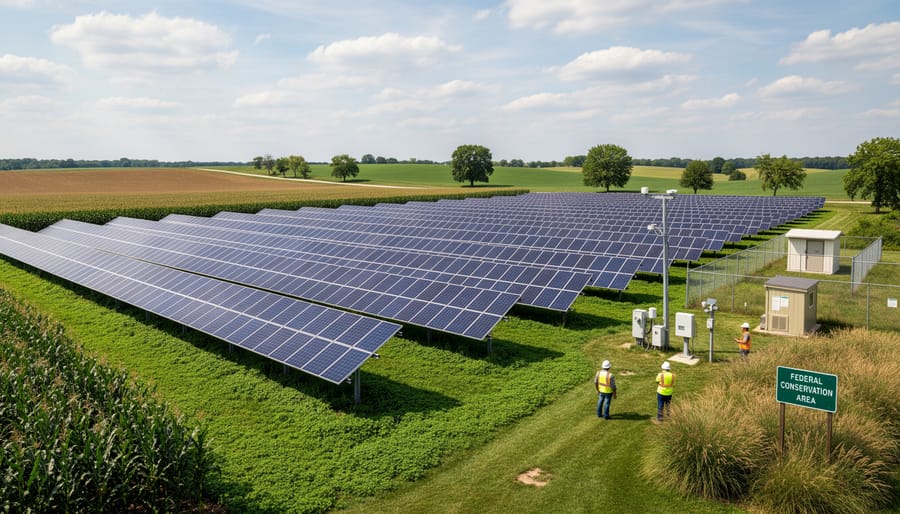
Most Illinois solar installations for homes and businesses don’t require federal NEPA review because they occur on private property using local permitting processes. However, certain situations do trigger federal environmental assessment requirements, and understanding these scenarios helps you plan accordingly.
If your solar project is located on federal lands, such as installations near federal facilities or on property managed by federal agencies, NEPA review becomes mandatory. This is relatively uncommon for residential and commercial projects but may apply to larger developments near military installations or federal parks.
Projects receiving direct federal funding beyond standard tax incentives may also require NEPA compliance. While the federal Investment Tax Credit alone typically doesn’t trigger review, specific grant programs from agencies like the Department of Energy or USDA rural development programs often do. If you’re applying for specialized federal grants, ask the funding agency about environmental review requirements upfront.
The most common NEPA scenario for Illinois solar installations involves wetlands permitting. If your property contains wetlands or water features requiring an Army Corps of Engineers permit under Section 404 of the Clean Water Act, federal environmental review follows. Illinois has significant wetland areas, particularly in the northern and central regions, making this relevant for many rural properties.
Projects may also need NEPA review if they intersect with other federal permitting processes, such as endangered species consultations or historic preservation reviews on federally registered properties. Understanding these triggers alongside standard zoning permit requirements ensures you’re prepared for all necessary approvals before beginning installation.
The NEPA Permitting Process Explained Simply
Categorical Exclusions: The Fast Track Most Solar Projects Qualify For
Good news for Illinois property owners considering solar energy: most residential and commercial solar installations qualify for what’s called a “categorical exclusion” under NEPA. This designation represents the fastest approval pathway available because these projects fall into a category that federal agencies have already determined typically don’t cause significant environmental impacts.
Categorical exclusions apply to routine solar projects that meet specific criteria. For example, rooftop solar installations on existing buildings almost always qualify, as do ground-mounted systems on previously disturbed land that don’t affect sensitive habitats or cultural resources. When your project qualifies for a categorical exclusion, the federal review process becomes largely administrative, often completed in days or weeks rather than months.
The Environmental Protection Agency and Department of Energy have refined these exclusion categories over time, recognizing that standard solar installations follow proven patterns with minimal environmental concerns. For Illinois homeowners and businesses, this means that unless your property contains wetlands, endangered species habitat, or historic structures, your solar project will likely proceed without extensive federal environmental review, keeping your timeline and costs predictable.
Environmental Assessments for Mid-Sized Projects
For commercial-scale solar installations, typically projects over 1 megawatt or those requiring significant federal involvement, NEPA requires a more thorough Environmental Assessment. This middle tier of review analyzes potential impacts on local ecosystems, wildlife habitats, water resources, and community concerns. The process involves gathering detailed site data, consulting with relevant agencies, and often holding public comment periods.
In Illinois, mid-sized solar projects commonly complete the EA process within 6 to 18 months, depending on project complexity and the efficiency of information gathering. Your solar provider’s experience with environmental documentation can significantly streamline this timeline. Projects sited on previously developed land or agricultural areas typically move faster than those in sensitive ecological zones.
The EA culminates in either a Finding of No Significant Impact, allowing the project to proceed, or a determination that a full Environmental Impact Statement is necessary. Most commercial solar installations in Illinois receive favorable findings, especially when developers proactively address site-specific concerns during project design. Working with locally owned solar companies familiar with Illinois environmental conditions helps identify potential issues early, reducing delays and ensuring smoother federal review processes.
Full Environmental Impact Statements: Rare but Important to Understand
While most residential and commercial solar projects in Illinois proceed with minimal federal environmental review, full Environmental Impact Statements represent the most comprehensive level of NEPA analysis. These extensive reviews are rare and typically reserved for major utility-scale projects on sensitive federal lands or projects requiring substantial federal funding. An EIS involves detailed studies of potential impacts on wildlife habitats, water resources, air quality, and cultural sites, along with public comment periods and analysis of project alternatives. The process can take 18 months to several years to complete. For Illinois property owners and businesses considering rooftop or ground-mounted solar installations, full EIS reviews are extremely unlikely. Even large commercial solar arrays on private land rarely trigger this level of scrutiny. Understanding that EIS requirements exist primarily for massive infrastructure projects can provide reassurance that your solar investment won’t face this level of regulatory complexity. Projects requiring an EIS typically involve thousands of acres of federal land or significant federal agency involvement beyond basic permitting.
Federal Lands and Renewable Energy Opportunities in Illinois
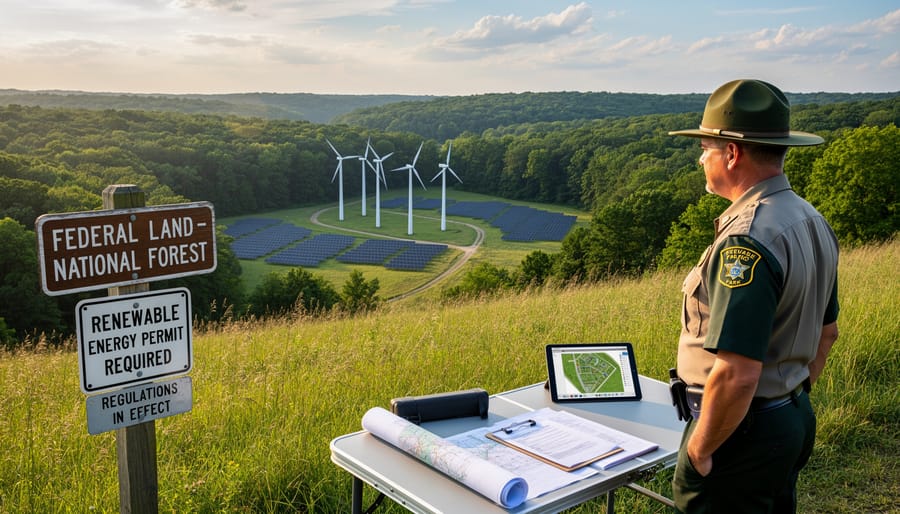
Illinois contains several categories of federal lands where renewable energy development may trigger NEPA review or present unique opportunities for solar projects. Understanding these holdings helps developers and property owners identify when federal environmental review applies.
The Shawnee National Forest in southern Illinois encompasses approximately 280,000 acres managed by the U.S. Forest Service. While much of this land prioritizes conservation and recreation, utility-scale solar projects on adjacent private lands that require federal permits or interconnection through federal infrastructure would need NEPA review. Similarly, projects proposed on forest service land through special use permits undergo environmental assessment.
The U.S. Army Corps of Engineers manages extensive properties throughout Illinois, primarily related to navigation, flood control, and recreation along major waterways like the Mississippi, Illinois, and Ohio Rivers. Corps lands total over 100,000 acres statewide. Solar developers frequently encounter Corps jurisdiction when projects affect wetlands or require permits for construction near navigable waters, triggering NEPA compliance even on private property.
Illinois hosts several national wildlife refuges, including Cypress Creek, Emiquon, and Middle Mississippi River refuges. These properties focus on habitat conservation but occasionally lease agricultural lands. While direct solar development on refuge lands remains uncommon, projects on adjacent properties requiring federal permits must address potential impacts to protected species and habitats during NEPA review.
Former military installations, including the Joliet Army Ammunition Plant, present opportunities for renewable energy redevelopment. These brownfield sites often have existing infrastructure and fewer land use conflicts, making them attractive for large-scale solar arrays. Federal involvement in remediation or land transfer means NEPA applies to energy development proposals.
Property owners near these federal holdings should consult with experienced solar developers early in project planning to identify potential NEPA requirements and streamline the approval process. Local expertise ensures compliance while minimizing delays and costs.
How Recent NEPA Reforms Benefit Illinois Solar Developers
Recent changes to federal environmental review processes have created meaningful opportunities for Illinois solar developers to move projects forward more efficiently. In 2023, the Council on Environmental Quality finalized updates to NEPA regulations that specifically prioritize renewable energy infrastructure, recognizing its role in addressing climate change and energy independence.
These reforms introduce several provisions that benefit solar installations in Illinois. First, projects meeting certain size thresholds and located on previously disturbed land—such as commercial rooftops, parking lots, or brownfield sites—now qualify for streamlined categorical exclusions. This means many community solar arrays and commercial installations can bypass lengthy environmental assessments entirely, reducing approval timelines from months to weeks.
Second, the updates establish firm deadlines for environmental reviews. Environmental assessments must now be completed within one year, while more comprehensive environmental impact statements face a two-year limit. For Illinois developers, this creates predictability in project planning and financing, addressing one of the most common concerns about federal permitting.
Importantly, these reforms maintain robust environmental protections. Projects still undergo appropriate scrutiny based on their actual environmental impact, ensuring responsible development that protects Illinois farmland, wildlife habitats, and water resources. The difference is that reviews are now proportionate to the project’s complexity and potential impacts.
The streamlined approach aligns well with Illinois renewable energy policies that encourage solar adoption. For property owners and businesses considering solar investments, these federal reforms complement state-level incentives, creating a more favorable regulatory environment. Working with locally owned solar experts who understand both federal requirements and Illinois-specific considerations helps ensure your project benefits from these streamlined processes while meeting all necessary environmental standards.
Working with NEPA Requirements: Practical Steps for Your Project
Why Choosing Local Expertise Matters
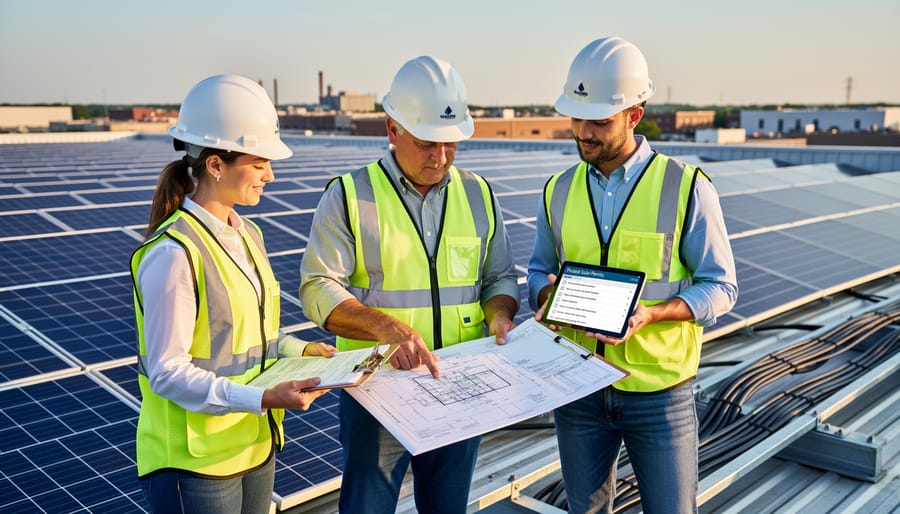
Working with a locally owned Illinois solar company provides distinct advantages when navigating federal environmental reviews like NEPA. Local providers understand the specific relationships between Illinois municipalities, state agencies, and federal offices, which can streamline coordination and communication throughout the permitting process. They’re familiar with which federal lands, waterways, or protected areas in your region might trigger additional review requirements, saving time by addressing potential concerns upfront.
Illinois-based solar experts also understand how federal requirements intersect with state and local regulations. They know how NEPA documentation aligns with Illinois solar zoning laws and can prepare comprehensive permit packages that satisfy multiple agencies simultaneously. This integrated approach reduces redundant paperwork and prevents delays caused by incomplete applications.
Furthermore, local companies maintain ongoing relationships with regional federal offices and understand their specific documentation preferences and review timelines. This familiarity allows them to anticipate questions, provide thorough responses quickly, and keep your project moving forward. Their established track record within Illinois means they’ve successfully guided similar projects through the same processes you’ll face, bringing practical experience that benefits your timeline and budget.
Understanding NEPA federal requirements doesn’t have to be overwhelming. While the environmental review process may initially seem complex, it’s designed to protect both our natural resources and your project’s long-term success. Most solar installations in Illinois don’t trigger extensive federal review, and when they do, the process is straightforward with the right support.
The key is working with experienced solar professionals who understand both environmental compliance and efficient project delivery. A locally owned Illinois solar company brings invaluable knowledge of regional permitting processes, federal requirements, and practical strategies to keep your project on schedule. They can quickly assess whether NEPA applies to your situation and guide you through any necessary steps.
Rather than viewing environmental compliance as a barrier, consider it an investment in your project’s durability and community acceptance. Proper environmental review identifies potential issues early, preventing costly delays down the road. With expert guidance, you’ll navigate federal requirements efficiently while ensuring your solar investment delivers clean energy benefits for decades to come. Consult with Illinois solar professionals who combine environmental expertise with proven project success to make your renewable energy goals a reality.
