
What Are Advanced Energy Solutions (and How Do They Improve Efficiency)?
Advanced energy solutions are technologies that store electricity generated by renewable sources like solar panels, making that power available when the sun isn’t shining or during grid outages. Instead of sending excess solar energy back to the grid or losing it entirely, these systems capture it in batteries or other storage devices, giving you control over when and how you use the power you’ve generated.
For Illinois property owners, this technology has become particularly relevant as utility rates continue to climb and severe weather events test grid reliability. A properly sized energy storage system can slash your reliance on grid electricity during peak pricing hours, provide backup power during outages, and make your solar investment harder working around the clock rather than only during daylight hours.
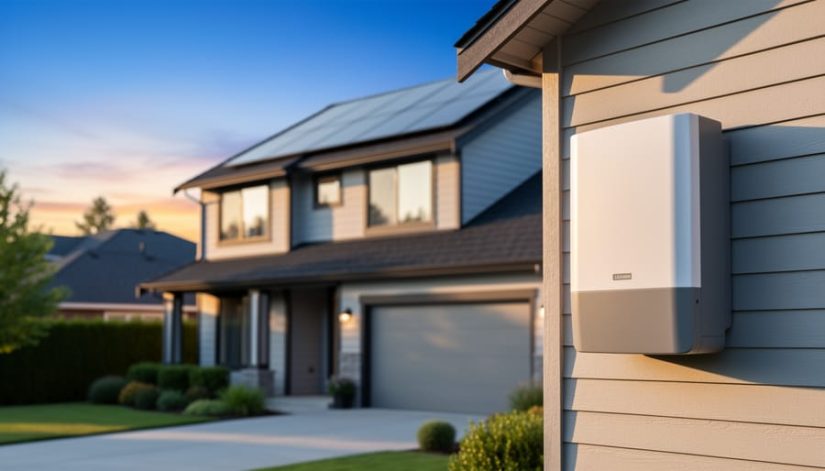
The landscape of energy storage has evolved rapidly. What once required room-sized installations and carried prohibitive costs now fits in a wall-mounted unit about the size of a water heater. Modern lithium-ion battery systems can power essential appliances for hours or even days, depending on your energy usage and the size of your installation.
This article breaks down what advanced energy solutions actually include, how the technology captures and releases stored power, the main types of systems available to Illinois customers, and the real-world applications that make the most sense for homes and businesses in our region. Whether you’re already generating solar power or considering your first renewable energy investment, understanding energy storage will help you make informed decisions about protecting your property from outages, reducing energy costs, and maximizing the value of clean energy generation.
Our locally owned team has installed storage systems across Illinois, and we’ll share what matters most based on actual performance data and customer results.
What Advanced Energy Storage Solutions Mean for Your Power System
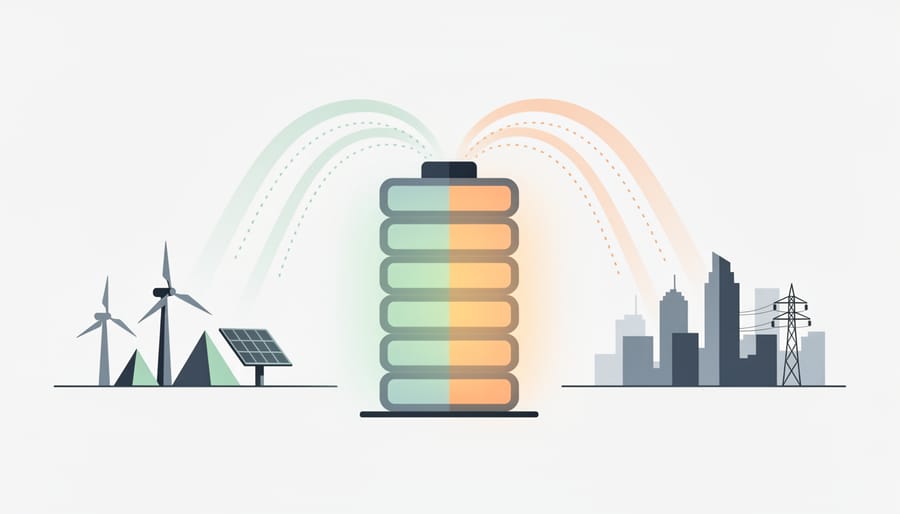
Advanced energy storage solutions are technologies that capture excess electricity when it’s being produced and hold it until you actually need it. Think of them as a bank account for your power: when your solar panels generate more electricity than you’re using on a sunny afternoon, storage systems save that energy instead of sending it back to the grid. Later, when the sun goes down and your panels stop producing, your stored energy powers your home or business.
This matters tremendously for Illinois solar users because of a basic timing mismatch. Your solar panels produce the most electricity during midday when the sun is strongest, but that’s often when you need power the least. Most homes use their highest amounts of electricity in the early morning and evening. Without storage, all that valuable midday solar power either goes to the utility grid at minimal credit, or it simply goes unused. You end up buying expensive electricity from the grid during peak hours while your panels sit idle at night.
Storage systems change this equation completely. Instead of your solar investment working only during sunshine hours, storage extends that value around the clock. The energy your panels generated at 2 PM can power your air conditioning at 8 PM, or run your business operations the next morning before sunrise. You’re using your own clean energy instead of pulling from the grid during expensive peak periods.
For Illinois specifically, this becomes even more valuable during our extreme weather. Storage provides backup power during the grid outages that winter storms and summer severe weather can bring. It also helps you navigate Illinois utility rate structures, many of which charge significantly more during peak demand hours. By storing cheap off-peak or solar-generated electricity and using it during expensive peak times, you cut costs while increasing your energy independence.
How Energy Storage Systems Work
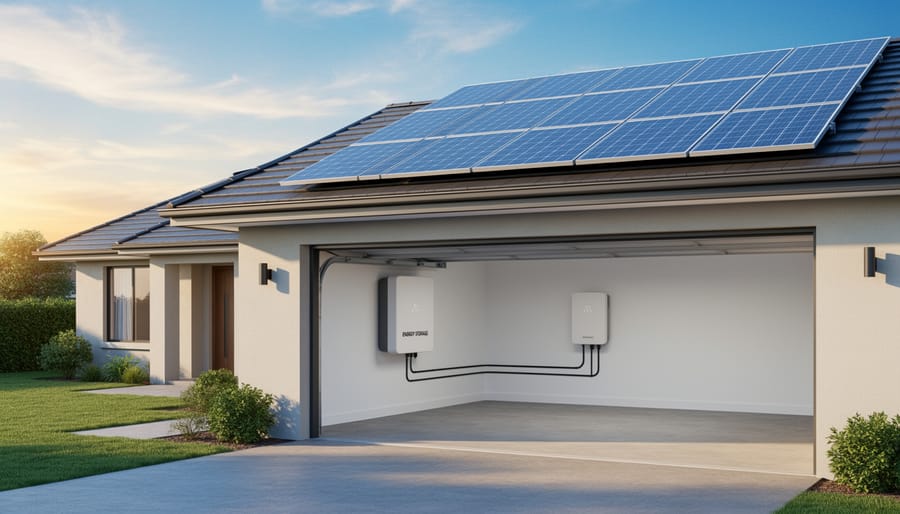
Energy storage systems operate through three core phases that work together to capture, hold, and deliver electricity when you need it most.
Charging: Capturing Excess Power
During sunny hours, your solar panels often generate more electricity than your home or business immediately needs. Instead of sending this excess power back to the grid for minimal credit, an energy storage system redirects it to charge batteries. The system’s inverter converts the direct current (DC) electricity from your panels into the appropriate form for battery storage. Smart management software monitors your real-time consumption and automatically diverts surplus generation to the batteries. This charging process typically happens throughout peak sunlight hours, building up your stored energy reserve for later use.
Storage: Holding Energy with Minimal Loss
Once charged, the battery system maintains this electrical energy in chemical form until you need it. Modern lithium-based batteries excel at this task, with round-trip efficiency typically between 90-95%. That means if you store 10 kilowatt-hours of energy, you’ll get back 9 to 9.5 kilowatt-hours when you draw it out. The small loss comes from heat generation and internal resistance. Advanced battery management systems continuously monitor cell temperature, voltage, and charge state to prevent degradation and maintain optimal storage conditions. Quality systems include thermal management, active cooling or heating, to keep batteries in their ideal operating range, which matters during both Illinois summers and winters.
Discharging: Delivering Power on Demand
When the sun sets or a cloud passes over your panels, your energy needs don’t stop. The storage system detects when your solar production drops below your consumption and seamlessly begins discharging stored energy. The inverter converts the battery’s DC power back to alternating current (AC) that runs your appliances and equipment. This transition happens in milliseconds, so you never notice the switch. The system prioritizes your stored energy first, only drawing from the grid when your batteries are depleted or you’re using more power than they can deliver.
The entire cycle repeats daily, with control systems learning your usage patterns and optimizing when to charge, hold, and discharge based on your electricity rates, weather forecasts, and historical consumption data.
Types of Advanced Energy Storage Technologies
Lithium-Ion Battery Systems
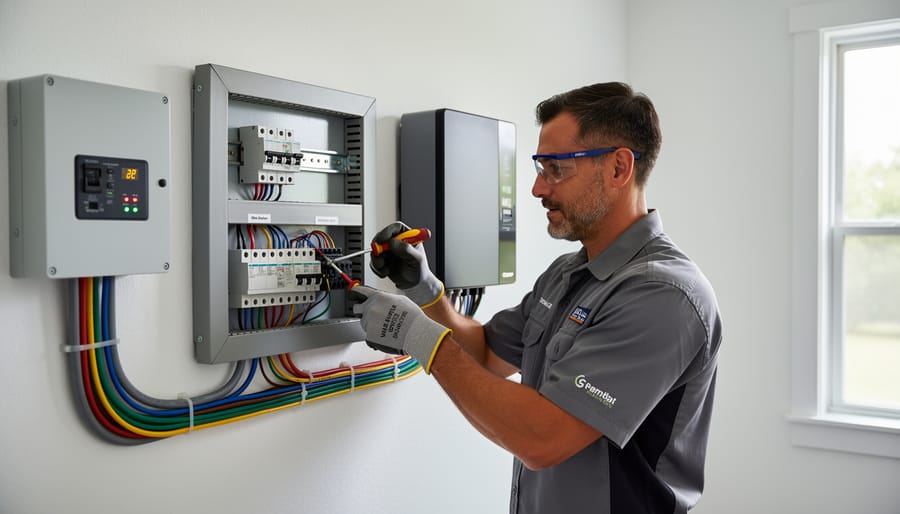
Lithium-ion batteries dominate the residential and commercial solar storage market because they pack significant energy capacity into relatively compact, lightweight units. The chemistry works by shuttling lithium ions between two electrodes through an electrolyte, storing electrical energy as chemical potential during charging and releasing it efficiently when you need power.
For Illinois homeowners, typical lithium-ion systems range from 5 kWh to 20 kWh of usable capacity. A 10 kWh battery can power essential loads, refrigerator, lights, internet, some outlets, for 8 to 12 hours during an outage, or store a full day’s excess solar generation for evening use. Commercial installations scale up to 50 kWh, 100 kWh, or more, depending on business energy demands and facility size.
These systems offer round-trip efficiency between 90% and 95%, meaning you get back 90 to 95 watts for every 100 watts you store. That efficiency, combined with lithium-ion’s ability to charge and discharge quickly, makes them ideal for daily solar cycling. Most quality systems deliver 4,000 to 6,000 charge cycles before capacity drops to 80% of original rating, translating to 10 to 15 years of reliable service with proper maintenance.
Lithium-ion became the industry standard because the technology matured rapidly, manufacturing costs dropped significantly over the past decade, and performance metrics surpass older lead-acid alternatives across every important measure: energy density, lifespan, efficiency, and depth of discharge. You can safely use 80% to 100% of a lithium-ion battery’s capacity without damaging it, unlike lead-acid batteries that lose longevity if discharged beyond 50%.
Advanced Battery Chemistries
Beyond standard lithium-ion, newer battery chemistries are making energy storage safer and longer-lasting, particularly for commercial and industrial installations in Illinois.
Lithium iron phosphate (LFP) batteries have become increasingly popular in 2026. Unlike conventional lithium-ion cells, LFP chemistry uses iron phosphate for the cathode, which eliminates the cobalt that makes traditional batteries prone to thermal runaway. This translates to significantly better fire safety, a critical consideration for large commercial systems. LFP batteries typically deliver 3,000 to 6,000 charge cycles compared to 1,000 to 2,000 for standard lithium-ion, meaning they can last 10-15 years in daily-use applications. They perform well in cold climates, which matters during Illinois winters, though they store slightly less energy per pound than other chemistries.
Solid-state batteries replace liquid electrolytes with solid materials, virtually eliminating fire risk and allowing higher energy density. They’re currently entering the market for premium residential and commercial applications, with costs expected to decrease as manufacturing scales up.
Flow batteries store energy in external tanks of liquid electrolytes, making capacity almost infinitely scalable by simply adding larger tanks. They excel in large commercial and industrial settings that need 4-8+ hours of storage duration, like manufacturing facilities smoothing demand charges or farms running irrigation equipment. Flow batteries can cycle daily for 20+ years with minimal degradation, though their higher upfront cost makes them most practical for facilities with substantial energy needs and long-term planning horizons.
Thermal and Mechanical Storage Options
Beyond batteries, larger Illinois facilities can tap thermal and mechanical storage when the application fits. Thermal storage captures energy as heat or cold rather than electricity, think ice storage systems that freeze water at night when power’s cheap, then use that ice for daytime cooling, or molten salt systems that store heat from solar thermal collectors. These work well for buildings with major heating or cooling loads: warehouses, food processing plants, and manufacturing facilities where shifting thermal demand cuts peak energy costs substantially.
Mechanical storage includes compressed air energy storage (CAES), which compresses air into underground caverns or tanks during low-demand periods and releases it to drive turbines when power’s needed, and flywheel systems that store energy as rotational kinetic energy in a spinning mass. Flywheels excel at short-duration, high-power applications, stabilizing power quality in data centers or industrial processes sensitive to voltage fluctuations.
These technologies rarely stand alone. Most Illinois commercial and industrial installations pair thermal or mechanical storage with solar arrays, wind systems, or grid connections to maximize efficiency across different time scales. A manufacturing facility might combine battery storage for immediate backup, thermal storage for process heating, and grid power as baseload, each technology handling what it does best. The complexity means these solutions require careful engineering and economic analysis, but for the right application the efficiency gains and demand charge savings justify the investment.
Hybrid Storage Systems
Hybrid storage systems pair complementary technologies to deliver benefits that single-technology setups can’t match on their own. The most common configuration in Illinois combines lithium-ion batteries with a backup generator, batteries handle short-duration outages and daily charge cycles, while the generator kicks in for extended power losses during severe weather events that can last several days.
Some commercial installations blend battery storage with thermal storage, capturing excess solar energy both electrically and as heated or chilled water. This dual approach works particularly well for facilities with significant heating or cooling loads, like warehouses or food processing plants, maximizing the value extracted from every kilowatt generated.
Advanced hybrid systems use intelligent controllers that automatically route power through the most efficient path based on current conditions. During normal operation, batteries handle routine cycling. When grid rates spike, the system draws from storage. If an outage persists beyond battery capacity, the generator supplies power while simultaneously recharging the batteries, creating a self-sustaining backup loop.
This layered approach costs more upfront but delivers superior reliability and efficiency for Illinois businesses and homes where power continuity is essential.
How Illinois Homes and Businesses Use Energy Storage
Residential Applications
For Illinois homeowners with solar panels, energy storage transforms how you use the power you generate. Instead of sending excess daytime electricity back to the grid at minimal credit rates, a battery system captures that energy for use when you actually need it, during evening hours when rates climb and your panels aren’t producing.
The most immediate benefit most homeowners notice is backup power capability. Illinois weather brings severe storms, ice events, and grid strain that can leave homes dark for hours or even days. A properly sized battery system keeps essential circuits running, refrigeration, heating controls, lighting, and communication devices, without the noise, fuel costs, or maintenance headaches of a generator. Modern interconnect devices automatically switch your home to battery power when the grid fails.
Beyond outages, storage drives real energy bill savings through several mechanisms:
- Backup power during storms and extended outages common in Illinois
- Reducing peak-hour electricity costs by using stored solar instead of grid power
- Storing excess solar production that would otherwise be exported at low rates
- Achieving 70-90% energy independence versus 30-40% with solar alone
Time-of-use optimization matters especially if your utility charges different rates throughout the day. Your battery charges when electricity is cheap (midday solar, overnight off-peak) and discharges when rates spike during dinner hours. This load shifting can cut your electricity costs by 40-60% compared to solar-only systems that still pull expensive grid power every evening.
Commercial and Industrial Uses
Commercial and industrial operations in Illinois face electricity costs that dwarf residential rates, with demand charges often accounting for 30-50% of monthly bills. These charges hit businesses whenever they draw peak power, even briefly, running several machines simultaneously or firing up HVAC systems on hot afternoons triggers expensive penalties that persist all month. Advanced energy storage eliminates these spikes by discharging stored energy during high-demand periods, keeping grid consumption below utility thresholds. A manufacturing facility in Rockford reduced demand charges by $3,200 monthly after installing a 250 kWh battery system that handles production surges.
Load shifting delivers similar savings. Warehouses and cold storage facilities charge batteries during off-peak hours when electricity costs as little as $0.06/kWh, then discharge that power during afternoon peaks when rates jump to $0.18/kWh or higher. The math works exceptionally well for operations with predictable daily patterns.
Power quality matters equally. Storage systems act as buffers against voltage fluctuations and brief outages that disrupt sensitive equipment or halt production lines. A food processing plant in Peoria maintains continuous operations during grid instability, avoiding costly downtime and product loss.
Grid instability during severe weather, common in Illinois, makes storage invaluable for mission-critical operations. Medical facilities, data centers, and manufacturers can’t afford interruptions. Battery systems bridge gaps until backup generators engage or provide complete ride-through for shorter events, protecting both operations and revenue.
Grid Services and Utility Programs
Energy storage systems in Illinois can generate revenue and grid benefits beyond just serving your property’s needs. Through utility programs administered by ComEd and Ameren Illinois, battery owners can participate in demand response events, automatically discharging stored energy during peak demand periods when the grid is stressed, then recharging during off-peak hours. You earn payments for this flexibility while helping stabilize the regional power system.
Virtual power plant (VPP) programs aggregate multiple distributed storage systems, creating a network that functions like a single large power plant. Your battery joins others across Illinois to provide grid services like frequency regulation and capacity reserves. You maintain control over your backup power needs while allowing the utility to tap your system’s capacity during critical times, essentially monetizing your battery when you’re not using it.
These programs work seamlessly with a smarter microgrid setup, where advanced controls automatically balance your energy needs with grid participation opportunities. Participation typically requires compatible equipment and enrollment through your utility or a third-party aggregator. The income potential varies, residential systems might earn $100-500 annually depending on program structure and participation frequency, but adds meaningful value to your storage investment while supporting Illinois’s renewable energy transition.
Key Components That Determine Storage Efficiency
When you’re evaluating energy storage options, six key specifications determine how efficiently the system will serve your needs and how much value it delivers over its lifetime. Understanding these factors helps you compare products accurately and choose a system that matches your energy goals.
Battery capacitymeasured in kilowatt-hours (kWh), tells you how much total energy the system can store, think of it as the size of your energy tank. A typical Illinois home using 30 kWh daily might install a 10-15 kWh battery for partial backup and solar optimization, while a 20+ kWh system provides more comprehensive coverage during outages. Commercial facilities often need 50-200+ kWh depending on their operations.
Power ratingmeasured in kilowatts (kW), indicates how quickly the battery can charge or discharge, essentially how wide the pipe is that fills or empties your tank. A 5 kW power rating can run most essential home circuits (refrigerator, lights, well pump, internet), while 10+ kW supports whole-home backup including HVAC systems. The distinction matters: you might have enough stored energy (capacity) but insufficient power output to run everything simultaneously.
- Capacity (kWh)
- Total energy storage volume; determines how long your battery can power your home or business before depleting. Good residential systems in 2026 range from 10-20 kWh usable capacity.
- Power Rating (kW)
- Maximum instantaneous power the system can deliver; determines how many appliances you can run at once. Quality systems offer 5-10+ kW for homes, 25-100+ kW for commercial applications.
- Round-Trip Efficiency
- Percentage of stored energy you can actually use after accounting for conversion losses. Modern lithium-ion systems achieve 90-95% efficiency, meaning minimal waste.
- Depth of Discharge (DoD)
- How much of the total capacity you can safely use without degrading the battery. Premium systems allow 90-100% DoD, maximizing usable storage.
- Cycle Life
- Number of complete charge-discharge cycles before capacity drops to 70-80% of original. Quality batteries deliver 4,000-10,000+ cycles, translating to 10-20 years of daily use.
- C-Rate
- Charging/discharging speed relative to capacity; a 1C rate means the battery can fully charge or discharge in one hour. Higher C-rates support rapid response for climate-resilient energy during sudden demand changes.
Thermal management deserves special attention in Illinois, where batteries face temperature extremes from subzero winters to hot, humid summers. Advanced systems include active heating and cooling that maintains optimal operating temperature (typically 50-85°F), protecting performance and longevity. Poor thermal management accelerates degradation and reduces both capacity and cycle life, especially during temperature swings common in the Midwest.
When these components work together efficiently, your storage system maximizes the value of every kilowatt-hour, whether that energy comes from your solar array during the day or off-peak grid power overnight.
Efficiency Gains from Pairing Storage with Solar
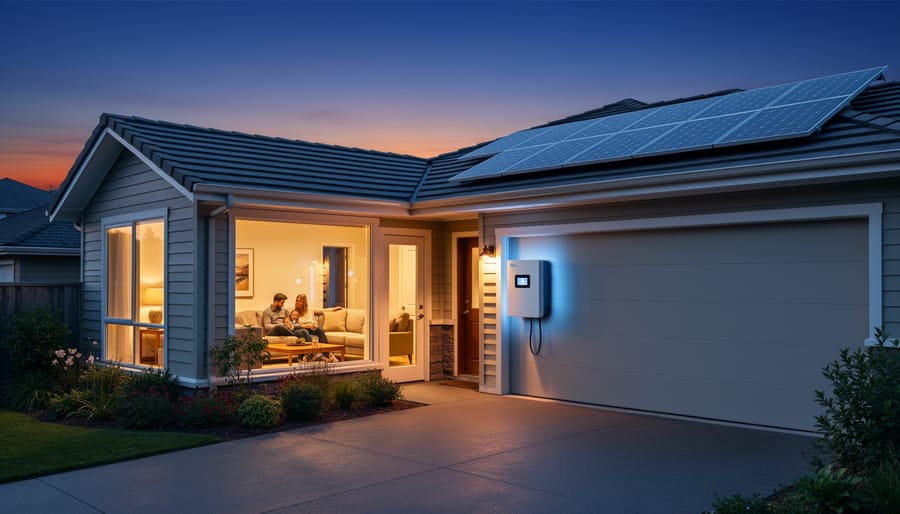
Adding energy storage to your solar system transforms it from a daytime-only power source into a comprehensive solution that captures and uses nearly all the electricity your panels generate. The numbers tell a compelling story.
Without storage, a typical Illinois solar installation achieves 30-40% self-consumption. That means you’re using just over a third of the power you generate, selling the rest back to the grid at wholesale rates while buying power at retail rates when the sun isn’t shining. Add storage, and that figure jumps to 70-90%. You’re now keeping most of your solar production for your own use, directly offsetting expensive grid electricity.
This shift translates to significant financial gains over your system’s lifetime. Instead of relying on net metering programs, which have become less generous as utilities adjust their policies, you store excess production and draw from it during evening peak hours when electricity costs the most. In Illinois, time-of-use rates can double or triple during these periods, making stored solar power worth considerably more than what utilities pay for your excess generation.
Storage also smooths out the intermittency that makes renewable energy challenging. A passing cloud doesn’t trigger an immediate switch to grid power. Your battery bridges these gaps, maintaining steady power flow to your home or business. This matters especially in Illinois, where weather patterns create rapid swings in solar production throughout the day.
Seasonal patterns benefit too. Illinois solar systems generate their highest output in summer months, often producing far more than homes can use during those long, sunny days. Storage captures this abundance, reducing summer grid dependence when air conditioning drives up both consumption and electricity rates. During winter, when generation drops and heating needs rise, your stored energy helps offset the seasonal mismatch between production and demand.
The round-trip efficiency of modern lithium-ion systems, typically 90-95%, means you retain nearly all the energy you store. For every 10 kWh your panels send to the battery, you get back 9 to 9.5 kWh when you need it. Combined with the value difference between wholesale sellback rates and retail purchase prices, storage transforms your solar investment from a partial solution into a system that delivers maximum financial and energy independence returns.
What to Consider When Choosing Energy Storage
Choosing the right energy storage system starts with understanding your actual energy needs, not just installing the largest battery that fits your budget. Track your household or business electricity usage for at least a few months to identify patterns, when you use the most power, what your overnight consumption looks like, and whether you have seasonal variations. In Illinois, winter heating loads often shift usage patterns significantly compared to summer months, so account for year-round needs rather than just peak solar production periods.
Several critical factors shape your storage decision:
- Daily energy usage patterns and total consumption in kilowatt-hours
- Backup power priorities during outages (whole-home, essential circuits only, or critical loads)
- Available installation space (indoor vs. outdoor placement, proximity to existing electrical panels)
- Budget constraints and financing options through local lenders or installer programs
- Current Illinois incentives including federal tax credits and utility-specific rebates
- Installer experience with your specific utility’s interconnection requirements
- Warranty coverage for both battery capacity retention and inverter components
- Future expansion capability if you plan to increase solar capacity or add electric vehicles
Illinois currently offers the federal Investment Tax Credit covering 30% of storage costs when paired with solar, and some utilities provide additional incentives for systems that participate in demand response programs. These financial benefits significantly impact your payback period, so factor them into your analysis from the start rather than treating them as afterthoughts.
If you’re adding storage to an existing solar installation, verify compatibility between your current inverter and the battery system you’re considering. Some older systems require inverter upgrades or additional equipment to communicate properly with modern batteries, which affects both cost and installation complexity. DC-coupled systems generally offer higher efficiency but may require more extensive modifications to existing setups, while AC-coupled batteries integrate more easily with minimal changes to your current configuration.
Work exclusively with installers who hold experience with your specific utility company’s interconnection process. Illinois has multiple utility territories, each with distinct requirements for energy storage systems, approval timelines, and net metering policies. A local installer familiar with ComEd, Ameren Illinois, or your municipal utility saves months of delays and ensures your system meets all technical and regulatory requirements without costly revisions.
Common Questions About Energy Storage Solutions
Installing energy storage alongside your solar system raises practical questions, and Illinois customers typically want straightforward answers before making investment decisions. Here are the most common concerns we hear from homeowners and business owners across the state.
How long do battery systems last, and what’s covered under warranty?
Most lithium-ion and LFP batteries installed in 2026 carry 10-15 year warranties with guaranteed capacity retention of 60-70% after that period. Real-world lifespan often extends to 15-20 years with proper maintenance, though actual longevity depends on usage patterns, cycle depth, and operating conditions.
Can I add storage to my existing solar installation?
Yes, most solar systems can be retrofitted with storage, though the process varies depending on your inverter type. AC-coupled batteries work with any existing solar setup, while DC-coupled systems may require inverter upgrades for optimal integration.
What happens during extended power outages lasting several days?
Your storage capacity determines backup duration, a typical 13 kWh residential system provides 8-24 hours of essential loads depending on usage. If you have solar, batteries recharge during daylight hours, allowing indefinite backup as long as the sun shines and you manage consumption carefully.
How much should I expect to pay for energy storage in Illinois?
Residential systems range from $8,000-$15,000 for basic 10-13 kWh units before incentives, while commercial installations cost $20,000-$100,000+ depending on capacity needs. Federal tax credits currently cover 30% of installation costs, and Illinois utilities offer additional incentive programs that vary by provider.
Do batteries work effectively during Illinois winters?
Modern systems include thermal management that maintains optimal operating temperatures even in subzero conditions. Capacity may decrease slightly in extreme cold, but properly installed batteries in temperature-controlled locations perform reliably year-round across Illinois.
Beyond these basics, maintenance requirements are minimal for most battery systems. You won’t need to perform regular upkeep beyond occasional monitoring through your system’s app or dashboard. Modern batteries are sealed units with no exposed components requiring service, unlike older generator-based backup systems that need fuel, oil changes, and periodic testing.
Safety features built into contemporary storage systems address fire risk concerns that sometimes worry potential buyers. Battery management systems monitor individual cells constantly, thermal sensors trigger automatic shutdowns if temperatures rise above safe thresholds, and fire-suppression materials are integrated into quality installations. Working with certified installers who follow current electrical and fire codes ensures your system meets all Illinois safety standards.
The Illinois Solar for All program and certain utility-specific initiatives provide additional financial support for qualifying households and businesses, particularly those in underserved communities. These programs can significantly reduce upfront costs when combined with federal incentives, making storage more accessible than many Illinois customers initially expect.
Advanced energy storage solutions have moved from optional add-ons to essential components of efficient solar power systems in Illinois. The numbers tell the story: pairing storage with solar can increase your self-consumption from around 35% to over 80%, transforming intermittent renewable generation into reliable 24/7 power. Whether you’re a homeowner seeking backup during Illinois storms, a business looking to slash demand charges, or an industrial facility aiming for energy independence, the right storage system delivers measurable efficiency gains and long-term savings.
The technology has matured considerably. Modern lithium-ion and advanced battery systems offer 10-15 year lifespans, round-trip efficiencies exceeding 90%, and warranties that protect your investment. But maximizing these benefits requires more than just purchasing equipment. Illinois has specific interconnection requirements, utility programs that can reduce your costs, and incentive structures that change how you should size and configure your system.
That’s where working with experienced local installers makes the difference. They understand ComEd and Ameren territories, know which systems perform best through harsh Illinois winters, and can navigate the permitting process efficiently. They’ll size your storage based on your actual usage patterns rather than generic estimates, ensuring you get the capacity you need without overpaying.
Start by reviewing your electricity bills to identify your peak usage times and costs. Then talk with installers who have demonstrated experience with energy storage in Illinois. The right advanced energy solution isn’t just about the technology, it’s about matching that technology to your specific situation and maximizing the efficiency gains available to you.
