

Community Solar in Illinois: Real Savings or Just Another Energy Trend?
Community solar programs in Illinois offer a compelling alternative for residents who can’t install rooftop panels but want to embrace renewable energy and reduce their electricity costs. Unlike traditional solar installations, these shared solar farms allow subscribers to benefit from clean energy without equipment installation, maintenance responsibilities, or property modifications.
Recent data shows Illinois community solar subscribers save an average of 10-15% on their monthly electricity bills while supporting local clean energy development. The state’s robust incentive programs and favorable renewable energy policies have made community solar increasingly accessible, with over 100 projects currently operating or under development across Illinois.
The decision to join a community solar program hinges on several factors: your current electricity costs, contract terms, projected savings, and the program’s reputation. While the average household can expect to save $100-200 annually through community solar participation, the environmental impact is equally significant – each subscription helps offset approximately 4-6 metric tons of carbon emissions yearly.
For Illinois residents seeking sustainable energy solutions without the complexities of personal solar installation, community solar represents a straightforward path to both environmental stewardship and energy cost reduction.
How Community Solar Works in Illinois
The Basics of Community Solar Subscriptions
Community solar subscriptions offer a flexible way to participate in solar energy without installing panels on your property. Understanding how solar energy works is helpful, but the subscription process itself is straightforward. Typically, you’ll subscribe to a portion of a larger solar array’s output based on your annual electricity usage.
There are two main subscription models in Illinois: pay-as-you-go and upfront payment. With pay-as-you-go, you purchase solar credits monthly, often at a 10-20% discount compared to your regular utility rates. The upfront payment model requires a larger initial investment but can offer greater long-term savings.
Most subscriptions are month-to-month or annual contracts, with some providers offering longer terms for better rates. You’ll receive credits on your utility bill for your portion of the solar array’s production, and these credits directly reduce your monthly electricity costs. The subscription size can be adjusted based on your needs, making it an adaptable solution for both homeowners and businesses looking to transition to renewable energy.

Local Solar Gardens and Their Operation
Community solar gardens in Illinois operate as shared renewable energy facilities, typically located on several acres of land in optimal sun-exposure areas. These solar farms consist of large arrays of photovoltaic panels that generate clean electricity for the local power grid. Unlike rooftop solar installations, these gardens are maintained by professional operators who handle all aspects of system maintenance and performance monitoring.
Participants in Illinois community solar programs receive credits on their utility bills based on their subscription size and the garden’s energy production. The solar garden’s output is measured in kilowatt-hours (kWh) and distributed among subscribers according to their share. Most Illinois solar gardens are sized between 2-5 megawatts, enough to power hundreds of homes and businesses.
Local utility companies work directly with solar garden operators to ensure seamless integration with the power grid. They track the garden’s production and allocate credits to subscribers’ bills through virtual net metering. This system allows participants to benefit from solar energy without installing panels on their property, making it an accessible option for renters, condo owners, and properties unsuitable for rooftop solar.
The Real Financial Benefits
Monthly Bill Savings
Community solar subscribers typically see savings of 10-15% on their monthly electricity bills, making it an attractive option for budget-conscious households and businesses in Illinois. For example, if your average monthly electric bill is $150, you could save between $15-$22 each month, adding up to $180-$264 annually.
These savings come from the difference between the standard utility rate and the discounted community solar credit rate. When you subscribe to a community solar farm, you receive credits on your utility bill for your portion of the solar energy produced. These credits are then purchased from you at a predetermined discount, typically resulting in the 10-15% savings on your total bill.
The exact amount you’ll save depends on several factors, including your current electricity consumption, the solar farm’s production, and the specific terms of your subscription agreement. Most community solar programs in Illinois offer flexible subscription sizes, allowing you to match your typical energy usage for maximum savings.
It’s important to note that savings can fluctuate monthly based on seasonal variations in solar production. Summer months often yield higher savings due to increased sunlight, while winter months may see slightly lower savings. However, annual savings remain consistent and predictable, making community solar a reliable way to reduce energy costs without upfront investment.
Long-term Financial Impact
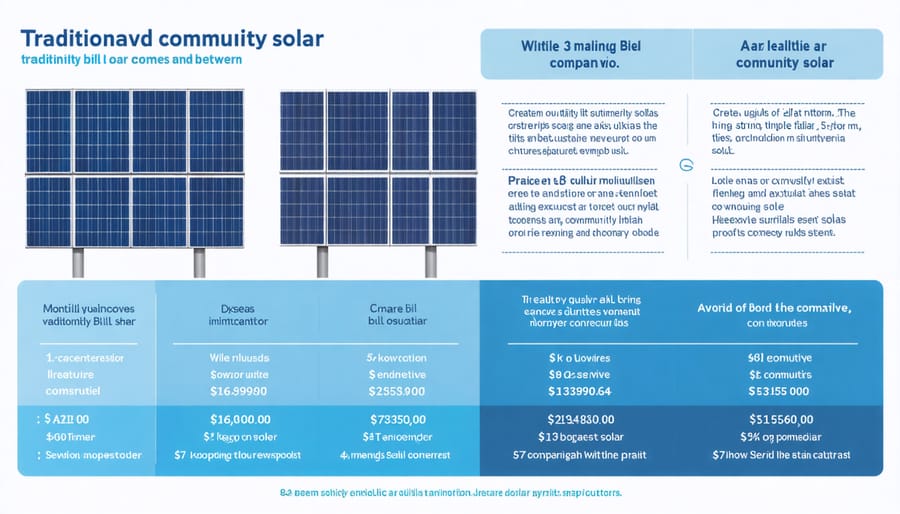
Community solar programs offer significant long-term financial benefits that extend well beyond initial subscription savings. Over a typical 20-year contract period, subscribers can expect to save between 10-20% on their annual electricity costs. To calculate solar savings specific to your usage, consider factors like current utility rates and projected energy consumption.
The financial advantages compound over time as utility rates typically increase by 2-3% annually, while community solar rates often remain stable or increase at a lower rate. For Illinois residents, this translates to estimated savings of $10,000-$15,000 over two decades for an average household. Additionally, subscribers avoid the substantial upfront costs associated with private solar installation while still benefiting from clean energy incentives.
Unlike traditional power purchase agreements, community solar subscriptions often come with flexible terms and no long-term equipment maintenance costs. This arrangement provides predictable energy expenses and protection against volatile energy market fluctuations, making it an attractive long-term investment for both homeowners and businesses seeking sustainable energy solutions.
Available Incentives and Credits
Community solar participants can access various financial incentives that enhance the program’s value. At the federal level, the Investment Tax Credit (ITC) allows subscribers to claim up to 30% of their solar investment as a tax credit. While this benefit typically flows through to subscribers via reduced subscription costs, it’s important to verify this with your provider.
In Illinois, community solar subscribers benefit from several state-specific programs. The Illinois solar incentives include Solar Renewable Energy Credits (SRECs), which provide additional savings on your electricity bills. The Illinois Shines program also offers performance-based incentives that can significantly reduce the cost of participation.
Many utility companies provide additional rebates and credits for community solar subscribers. These may include bill credits based on the energy produced by your share of the solar farm and net metering benefits. Some municipalities also offer property tax incentives and local grants to encourage participation in renewable energy programs.
To maximize your savings, consider consulting with a solar provider who can help you identify and combine multiple incentive programs for the best possible return on investment.
Environmental and Community Impact
Carbon Footprint Reduction
Participating in community solar programs offers significant environmental benefits by reducing your carbon footprint without installing panels on your property. When you subscribe to a community solar project, you’re directly supporting clean energy generation and contributing to the solar energy environmental impact in Illinois. Each household that participates in community solar helps offset approximately 4-8 metric tons of carbon dioxide emissions annually – equivalent to taking 1-2 cars off the road.
These projects also help reduce dependence on fossil fuels and decrease air pollution in local communities. By supporting solar farms, subscribers contribute to improved air quality and public health outcomes across Illinois. Community solar installations often utilize previously unused or marginally productive land, transforming it into clean energy generation sites without disrupting natural habitats or requiring extensive land clearing.
Additionally, community solar projects create a multiplier effect in environmental benefits. As more residents join these programs, the demand for renewable energy increases, encouraging further development of clean energy infrastructure. This collective action helps Illinois meet its renewable energy goals more quickly and effectively than individual rooftop installations alone. The environmental impact extends beyond carbon reduction to include decreased water usage compared to traditional power plants and reduced strain on the electrical grid during peak demand periods.
Local Economic Benefits
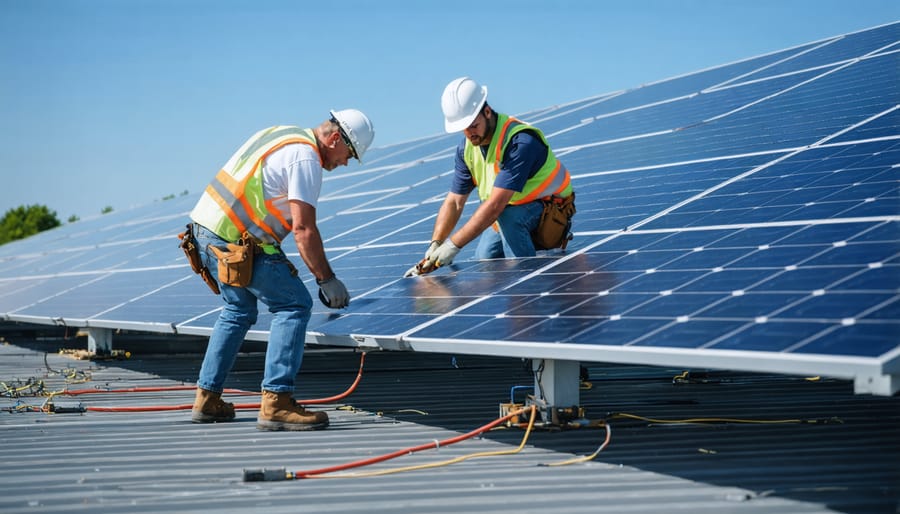
Community solar projects serve as powerful economic engines for local communities across Illinois. When these projects are developed, they create numerous job opportunities throughout various phases – from initial site assessment and construction to ongoing maintenance and operations. Local electricians, construction workers, and solar technicians find steady employment, while project managers and customer service representatives fill essential administrative roles.
Beyond direct job creation, community solar installations stimulate the local economy through multiple channels. Local businesses benefit from increased economic activity during construction phases, with workers frequenting nearby restaurants, hotels, and stores. The projects also generate significant tax revenue for municipalities, which can fund essential services and infrastructure improvements.
Property owners who host community solar installations receive steady lease payments, providing a reliable source of income while keeping the land in local hands. This arrangement is particularly beneficial for farmers who can continue agricultural activities around the solar arrays, creating dual-use opportunities that maximize land value.
The economic benefits extend to participating subscribers as well. Local businesses and homeowners who subscribe to community solar projects typically save 10-15% on their electricity bills, freeing up resources that often get reinvested in the local economy. This creates a positive economic cycle that strengthens the community’s financial foundation while supporting the transition to clean energy.
Is Community Solar Right for You?
Eligibility Requirements
Community solar programs in Illinois are designed to be accessible to a wide range of participants. Most residential customers who pay their own electricity bills are eligible to join, regardless of whether they own or rent their homes. The primary requirement is having an active account with a participating utility company in Illinois.
Homeowners who cannot install rooftop solar panels due to shade, roof orientation, or structural issues are ideal candidates for community solar. Similarly, renters who previously had no way to benefit from solar energy can now participate without making any modifications to their rental properties.
Businesses and organizations can also join community solar projects, though subscription sizes may vary based on their energy consumption. Some programs have minimum credit score requirements or require a review of utility payment history to ensure participants can meet their subscription commitments.
Geographic location within the utility’s service territory is another key factor. Subscribers typically must be located in the same service area as the community solar project. However, if you move within the same utility territory, most programs allow you to transfer your subscription to your new address.
Income-eligible households may qualify for additional benefits through Illinois Solar for All, which offers enhanced savings and eliminated upfront costs. Veterans, seniors, and other specific groups might also have access to special programs or priority enrollment opportunities in certain areas.
Decision Factors
Before committing to a community solar program, several key factors deserve careful consideration. First, evaluate your current electricity costs and usage patterns to determine potential savings. Illinois residents should review their average monthly consumption and compare it to the proposed solar credits they would receive through the program.
Location plays a crucial role – ensure the solar farm is within your utility’s service territory and that your property qualifies for participation. Check if your utility company supports community solar billing and credits, as program availability varies across Illinois regions.
Contract terms require thorough examination. Pay attention to the subscription length, cancellation policies, and any associated fees. Most Illinois community solar programs offer contracts ranging from 10-25 years, with some providing more flexible terms. Look for programs with reasonable exit options and transparent pricing structures.
Consider the project developer’s reputation and track record. Research their experience in managing solar farms, customer service quality, and financial stability. Local developers often provide better support and understanding of Illinois-specific regulations and incentives.
Finally, assess the subscription model – whether pay-as-you-go, upfront payment, or fixed monthly payments. Each option has different financial implications and risk levels. Compare multiple providers and their pricing structures to find the best fit for your budget and energy needs.
Community solar presents a compelling opportunity for Illinois residents and businesses to participate in renewable energy without the complexities of installing their own solar panels. The value proposition is clear: subscribers can enjoy significant electricity bill savings, typically ranging from 10-20%, while contributing to a cleaner environment and supporting local renewable energy development.
The flexibility of community solar programs makes them particularly attractive, as participants can subscribe without long-term commitments or upfront costs. This accessibility, combined with guaranteed savings and the ability to support local clean energy initiatives, makes community solar a worthwhile investment for many Illinois residents and organizations.
For those considering community solar, the next steps are straightforward. Start by reviewing available community solar projects in your utility service area and comparing subscription offers from different providers. Pay attention to contract terms, savings guarantees, and the provider’s track record. Consider reaching out to local solar organizations or energy advisors who can help evaluate specific offerings and ensure you’re making an informed decision.
Whether you’re a homeowner looking to reduce utility bills or a business aiming to meet sustainability goals, community solar offers a practical path to accessing clean energy benefits. With Illinois’ supportive renewable energy policies and growing number of community solar projects, now is an opportune time to explore this sustainable energy option.
