

How Food Globalization Is Reshaping Illinois’ Local Energy and Food Culture
The global food system’s dramatic transformation over the past century has fundamentally changed how we connect with our meals. Today, the average American dinner travels over 1,500 miles from farm to plate, consuming significant energy and resources along the way. This shift from local to global food networks has created a complex web of production, processing, and distribution that impacts everything from energy consumption to community resilience.
In Illinois, where agriculture remains a cornerstone of the economy, the delocalization of food systems presents both challenges and opportunities. As energy costs rise and environmental concerns mount, many communities are reconsidering the benefits of locally produced food. The intersection of renewable energy and local food production offers a promising path forward, potentially reducing transportation costs while strengthening regional food security.
This evolution in how we produce and consume food isn’t just about distance – it’s about reconnecting communities with their food sources and creating more sustainable, energy-efficient systems that benefit both producers and consumers.
The Shift from Local to Global Food Systems
Traditional Illinois Food Production
Illinois has a rich agricultural heritage built on local food systems that once connected farmers directly with consumers. Throughout the 19th and early 20th centuries, family farms dominated the landscape, producing diverse crops and livestock primarily for nearby communities. Small-scale producers supplied fresh vegetables, fruits, dairy, and meat to local markets and processors within a day’s travel distance.
These traditional food networks were characterized by seasonal eating patterns, community-supported agriculture, and strong relationships between producers and consumers. Local grain mills, dairy processors, and meat packers created a complete food production ecosystem within regional boundaries. Farm-to-table wasn’t a trendy concept – it was simply how food systems naturally operated.
The Illinois prairie’s fertile soil supported this localized approach, with different regions specializing in crops best suited to their specific growing conditions. This system minimized transportation needs and energy usage while maximizing food freshness and supporting local economies through direct market relationships.
Impact of Globalization
The globalization of food production has dramatically transformed how we grow, distribute, and consume food over the past several decades. Local food systems have given way to complex international supply chains, where products often travel thousands of miles before reaching their final destination. This shift has created a disconnect between producers and consumers, with many people no longer knowing where their food comes from or how it’s produced.
These changes have significant implications for energy consumption and environmental impact. Long-distance transportation, industrial-scale farming operations, and extensive cold storage facilities all contribute to increased energy use and carbon emissions. In Illinois, for example, the average food item travels over 1,500 miles before reaching local grocery stores, requiring substantial fuel consumption and preservation methods.
The globalized food system has also affected local economies and food security. Many communities have lost traditional farming knowledge and infrastructure as production has shifted to large-scale operations in distant locations. However, this challenge has sparked renewed interest in local food systems and sustainable agriculture practices, with solar-powered farming operations emerging as a promising solution for reconnecting local food production and consumption patterns.

Energy Costs in Modern Food Systems
Transportation Energy Footprint
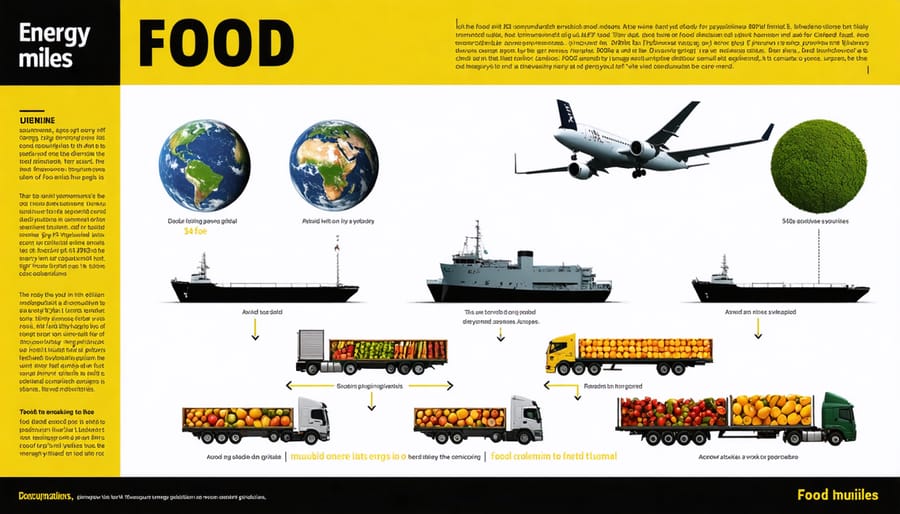
The energy required to transport food from production sites to consumers represents a significant environmental and economic challenge in our globalized food system. On average, food products travel over 1,500 miles before reaching their final destination, consuming substantial amounts of fossil fuels in the process. This long-distance transportation contributes significantly to the food industry’s carbon footprint, with estimates suggesting that food transportation alone accounts for up to 11% of food-related greenhouse gas emissions.
The energy costs extend beyond direct fuel consumption. Temperature-controlled transportation, essential for maintaining food freshness, requires additional energy for refrigeration and climate control systems. This is particularly relevant for perishable items like fruits, vegetables, and dairy products that must maintain specific temperature ranges throughout their journey.
In Illinois, where much of our produce comes from distant regions, the transportation energy footprint is especially notable during winter months. Local food systems can significantly reduce these energy costs, with studies showing that locally sourced food requires up to 17 times less fuel for transportation compared to conventional supply chains. This reduction in transportation distance not only decreases energy consumption but also helps maintain food freshness and nutritional value while supporting local economies.
Storage and Preservation Requirements
Modern global food supply chains rely heavily on energy-intensive storage and preservation methods to maintain food quality during long-distance transportation. Cold storage facilities, freezers, and refrigerated transport vehicles consume significant amounts of electricity to keep perishable goods fresh as they travel thousands of miles from production sites to consumers.
These preservation requirements create a substantial energy footprint. For example, a typical industrial cold storage warehouse can consume as much electricity as 1,000 homes annually. The energy demands increase further when considering the entire chain of temperature-controlled environments needed to preserve food from farm to table.
This energy-intensive preservation system contributes to higher food costs and environmental impact. Local food systems, in contrast, require less extensive preservation infrastructure since products travel shorter distances and reach consumers more quickly. By reducing transportation time and distance, local food networks can significantly decrease the energy needed for food preservation.
Solar energy solutions can help offset these storage costs while supporting more sustainable food systems. Energy-efficient cold storage facilities powered by renewable energy represent an important step toward reducing the environmental impact of food preservation while maintaining food safety and quality.
Renewable Energy Solutions for Local Food Systems
Solar-Powered Agriculture
Solar energy is revolutionizing local agriculture by providing sustainable power solutions for farms and greenhouses across Illinois. Modern solar installations enable farmers to operate irrigation systems, temperature controls, and agricultural equipment while significantly reducing operational costs and environmental impact.
Advanced solar-powered greenhouse systems allow for year-round crop production, even in Illinois’ varying climate. These facilities use solar panels to power climate control systems, LED growing lights, and automated watering systems. This technology extends the growing season and increases crop yields while maintaining energy independence.
Farmers are increasingly adopting solar-powered irrigation systems, which provide reliable water distribution without depending on grid electricity or fossil fuels. These systems are particularly effective during peak growing seasons when energy demands are highest, offering consistent performance even on the hottest summer days.
Small-scale farms and urban agriculture projects benefit from portable solar solutions that power essential tools and equipment. From electric fencing for livestock to solar-powered produce cooling systems, these applications help maintain food quality while reducing carbon footprint.
The integration of solar energy in agriculture supports local food production by making operations more economically viable and environmentally sustainable. This shift toward solar-powered farming methods strengthens local food systems and helps communities reduce their dependence on long-distance food transportation, creating a more resilient and sustainable local food economy.
Energy-Efficient Food Storage
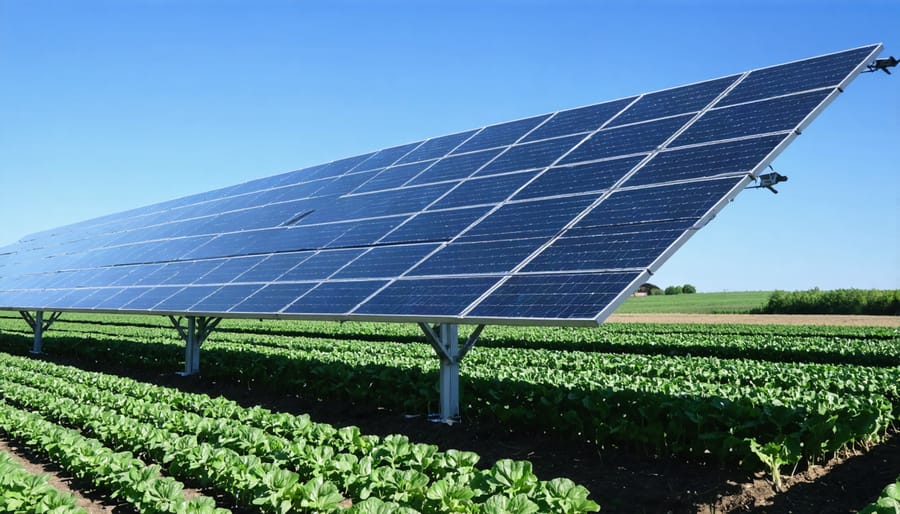
Solar-powered cold storage solutions are revolutionizing how Illinois communities preserve and store locally produced food. These energy-efficient systems combine modern solar technology with traditional food preservation methods, creating sustainable solutions for farmers, food processors, and distributors.
Local food producers can now maintain optimal temperature control for their products while significantly reducing energy costs. Solar-powered cooling systems work by converting sunlight into electricity, which powers refrigeration units during peak daylight hours. Many systems include battery storage, ensuring consistent cooling even during cloudy days or nighttime.
These installations are particularly valuable for small-scale farmers and food businesses in Illinois, who can now extend the shelf life of their produce without relying heavily on the grid. A typical solar-powered cold storage unit can maintain temperatures between 35-40°F (2-4°C) for fresh produce and much lower for frozen goods, all while using clean, renewable energy.
The benefits extend beyond energy savings. Solar-powered storage facilities help reduce food waste, maintain product quality, and enable better inventory management. This technology supports year-round local food availability, allowing producers to store seasonal harvests for extended periods and distribute them throughout the year.
For Illinois communities working to strengthen local food systems, these energy-efficient storage solutions represent a crucial link between sustainable production and consumption, helping to reduce both energy costs and environmental impact.
Revitalizing Local Food Traditions with Sustainable Energy
The marriage of renewable energy and local food systems presents a compelling opportunity to reinvigorate traditional food practices while embracing sustainable solutions. Solar-powered greenhouses, cold storage facilities, and processing centers are enabling year-round local food production in Illinois, reducing the need for long-distance transportation and preserving cultural food heritage.
Local farmers are increasingly turning to solar energy to power their operations, from irrigation systems to food preservation equipment. This shift not only reduces operational costs but also allows farms to maintain traditional growing methods while minimizing their environmental impact. These sustainable community initiatives are helping preserve time-honored farming practices while adapting them for a modern, energy-conscious world.
Community gardens and urban farming projects powered by solar energy are reconnecting residents with their food sources and cultural traditions. These spaces serve as educational hubs where older generations can pass down traditional growing methods to younger community members, all while utilizing clean energy solutions. The integration of solar technology into local food systems demonstrates how modern innovations can support and enhance, rather than replace, traditional food culture.
By combining renewable energy with local food production, communities can maintain their culinary heritage while building resilience against global supply chain disruptions. This approach ensures that traditional food practices remain viable and sustainable for future generations.
Renewable energy plays a vital role in strengthening local food systems and reducing our dependence on globalized food networks. By powering farms, food processing facilities, and storage units with solar energy, communities in Illinois can create more sustainable and resilient food production systems. This shift not only reduces transportation costs and carbon emissions but also supports local farmers and food producers while ensuring fresher, more nutritious food for consumers. Solar solutions enable year-round growing through greenhouse operations and help stabilize energy costs for local food businesses. As we work to reconnect food production with local consumption, renewable energy serves as a crucial bridge, making sustainable local food systems both environmentally and economically viable for Illinois communities.
